Reflective pavement, often called cool pavement, reduces city heat by sending a larger share of incoming sunlight back to the sky instead of absorbing it as heat. A paler surface stays cooler during the day, stores less energy, and releases less of that energy into the air at night, which eases heat around pedestrians and lowers the demand on nearby air conditioning.
Be precise about the scale of the effect, because that is where most of the confusion sits. Surface temperatures fall noticeably. Air temperature falls a little, and only where the treated area is large and exposed. The Lawrence Berkeley National Laboratory and MIT Concrete Sustainability Hub both frame cool pavement as a useful tool for reducing heat exposure and extending pavement life, not as a way to air-condition a whole city.
This guide covers the physics, the measured results from real projects, the places it helps most, and the trade-offs planners argue about in 2026.
Table of Contents
- The Science Behind Cooler Streets
- How Reflective Pavement Reduces City Heat
- What Temperature Reduction Can Reflective Pavement Achieve?
- Where Does It Work Best in a Hot City?
- How Reflective Pavement Is Made
- Does Reflective Pavement Have Any Drawbacks?
- What Performance Should Cities Measure?
- How Can Cities Maintain Reflective Pavement?
- Frequently Asked Questions
- Does reflective pavement actually cool the air?
- Is reflective pavement hotter at night?
- Does reflective pavement create dangerous glare?
- Can reflective pavement be slippery?
- Is reflective pavement suitable for every climate?
- Conclusion: Start with the Hottest, Busiest Places
The Science Behind Cooler Streets
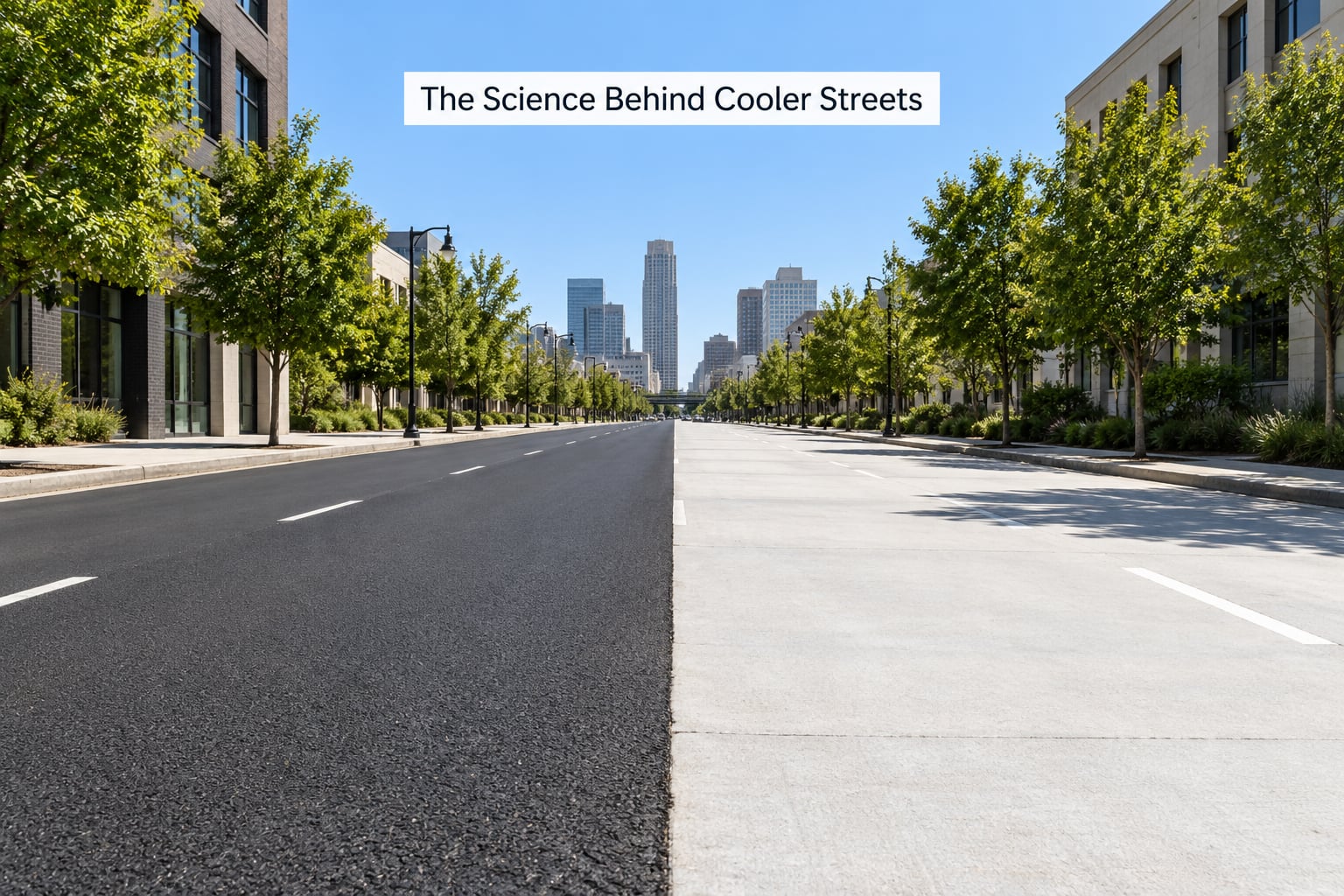
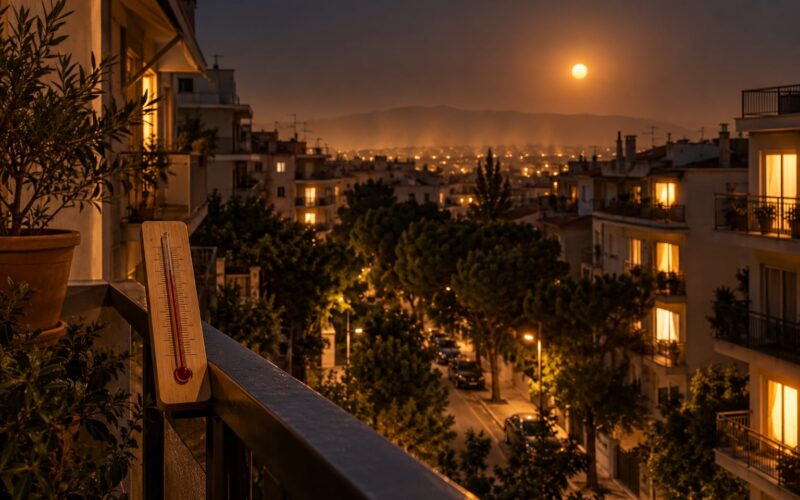
Fresh asphalt is close to a black body in appearance. It reflects only a small fraction of the sunlight that lands on it, so the rest is converted into heat inside the pavement. That stored energy does not disappear at sunset; it keeps feeding the air above the road through convection and longwave radiation well into the night.
Across a hot city this creates the urban heat island effect, where built-up areas measure warmer than their surroundings. Industry estimates put roughly 40 percent of urban land under pavement, and in the United States about four million miles of road act as one enormous solar collector with no shade over it.
How Reflective Pavement Reduces City Heat
The chain of events is short and physical. Follow the sunlight and the change is easy to see.
- Sunlight arrives. Roughly 80 to 95 percent of the energy striking fresh asphalt is absorbed rather than reflected.
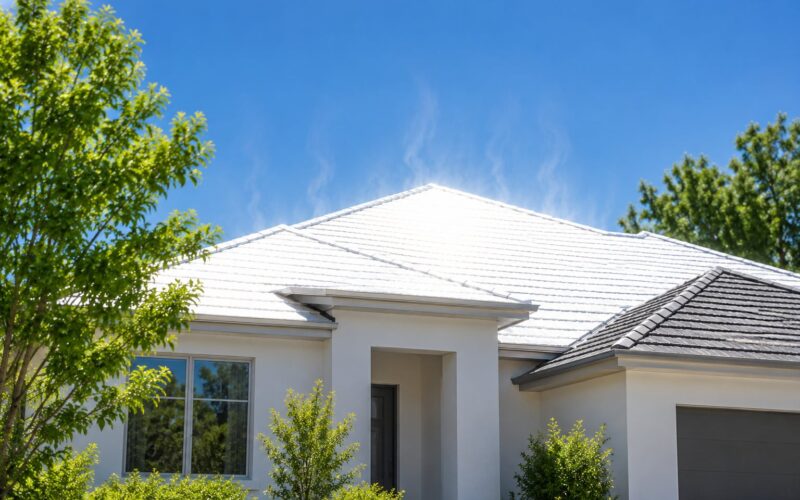
- A high-albedo surface reflects it instead. Raising reflectance sends a large share of that shortwave radiation back upward, toward the sky and surrounding buildings.
- Less heat is stored. With less energy entering the surface, the pavement’s temperature climbs less during the day and its mass holds a smaller heat store.
- Less heat is released later. Because there is less stored energy, the pavement returns less heat to the air by convection during the afternoon and by longwave radiation after dark.
- The air above cools, locally. With a lower surface temperature driving the transfer, the near-surface air warms more slowly. People standing on that pavement get less radiant heat, and the peak air temperature in the area falls modestly.
Field measurements published by Lawrence Berkeley National Laboratory put the surface effect at around 4 C (7 F) lower peak temperature for each 0.1 increase in albedo, and the ACEEE paper by Pomerantz and colleagues from 2000 found peak temperatures reduced by upwards of 5 C when albedo rose by a practical 0.2. Air temperature is a different story, and much smaller, because only one layer of a street surface is being changed.
What Temperature Reduction Can Reflective Pavement Achieve?
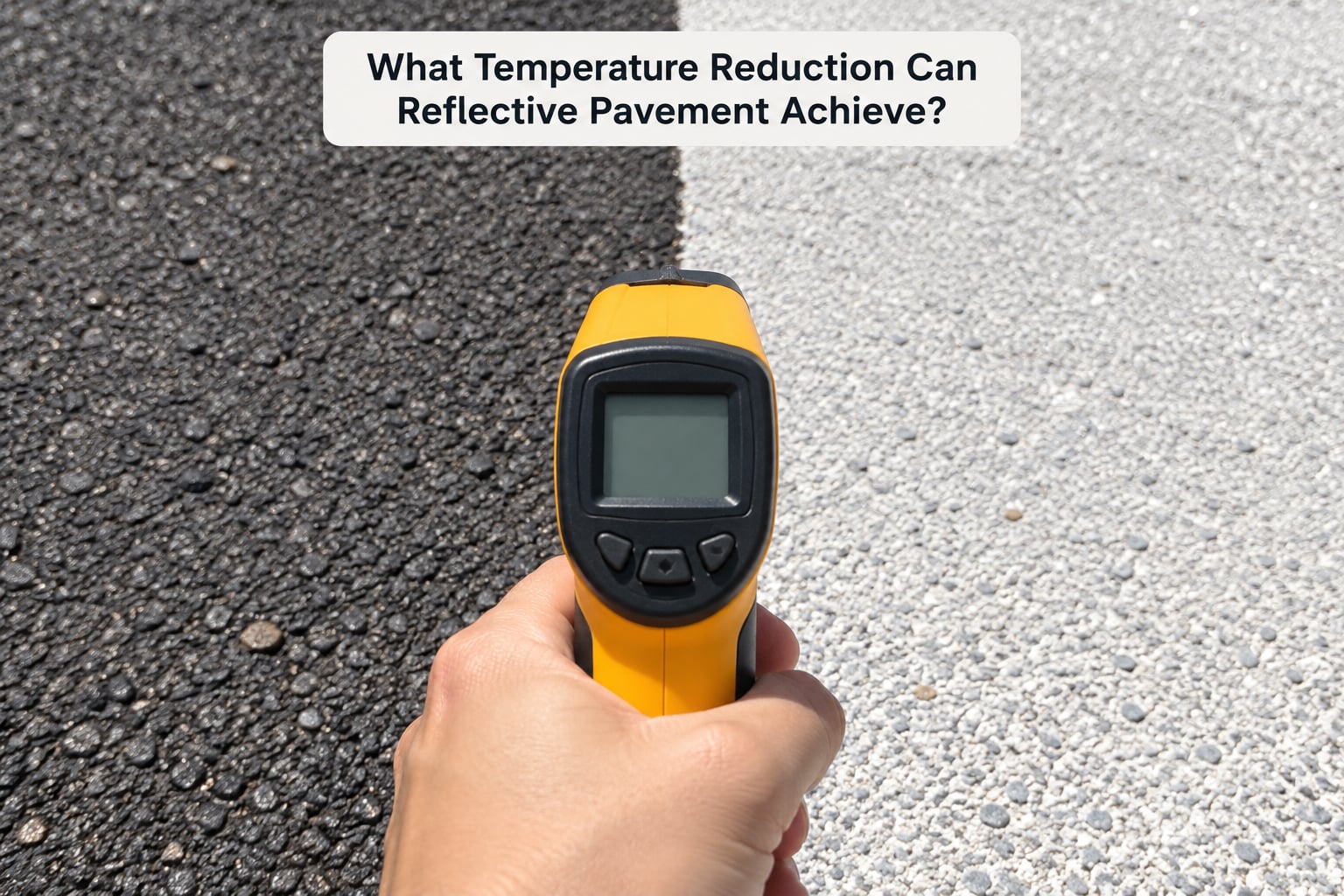
Numbers from pilots vary a wide amount, mostly because cities measure different things. A handheld infrared reading at noon and a weather station two metres above the road are not the same quantity, and comparing them produces confusing headlines.
| Project | Surface temperature | Air temperature |
|---|---|---|
| City of Phoenix pilot (first year) | 10.5 to 12 F (6 to 7 C) cooler at midday | 2.4 F (1.3 C) cooler around sunrise |
| City of Los Angeles (street-level study) | Ground surface about 11 F (6 C) cooler | Air a few feet above the ground measured warmer |
| EU LIFE project on innovative pavement | 7 to 11 C lower | 1.5 C lower ambient |
| US city modelling (MIT Concrete Sustainability Hub) | Pavement surface markedly cooler | Air temperature reductions of 1 to 3.6 F, climate dependent |
The pattern is consistent: surface effects are large, air effects are modest and local. Studies that report air temperature reductions of more than 2.5 F (1.4 C) across a network of streets, alongside a drop in heat wave frequency, come from city-scale modelling rather than a single street measurement, and they assume a substantial share of the paved area is treated.
Approximate albedo, the share of sunlight a surface reflects, is the fastest way to predict what a treatment can achieve. New asphalt sits near 0.05 to 0.10, weathered concrete about 0.40, grass roughly 0.25, and white paint close to 0.80. First-year coated asphalt tested in Phoenix measured around 0.19 to 0.30. Anything that reaches 0.30 or above is doing real work; a treatment that adds only 0.05 will barely register at a bus stop.
Where Does It Work Best in a Hot City?
Reflective pavement earns its cost where people are standing in direct sun on hot paving, and where there is little or no shade. The cooling benefit is proportional to exposure, so treat the places with the worst exposure first.
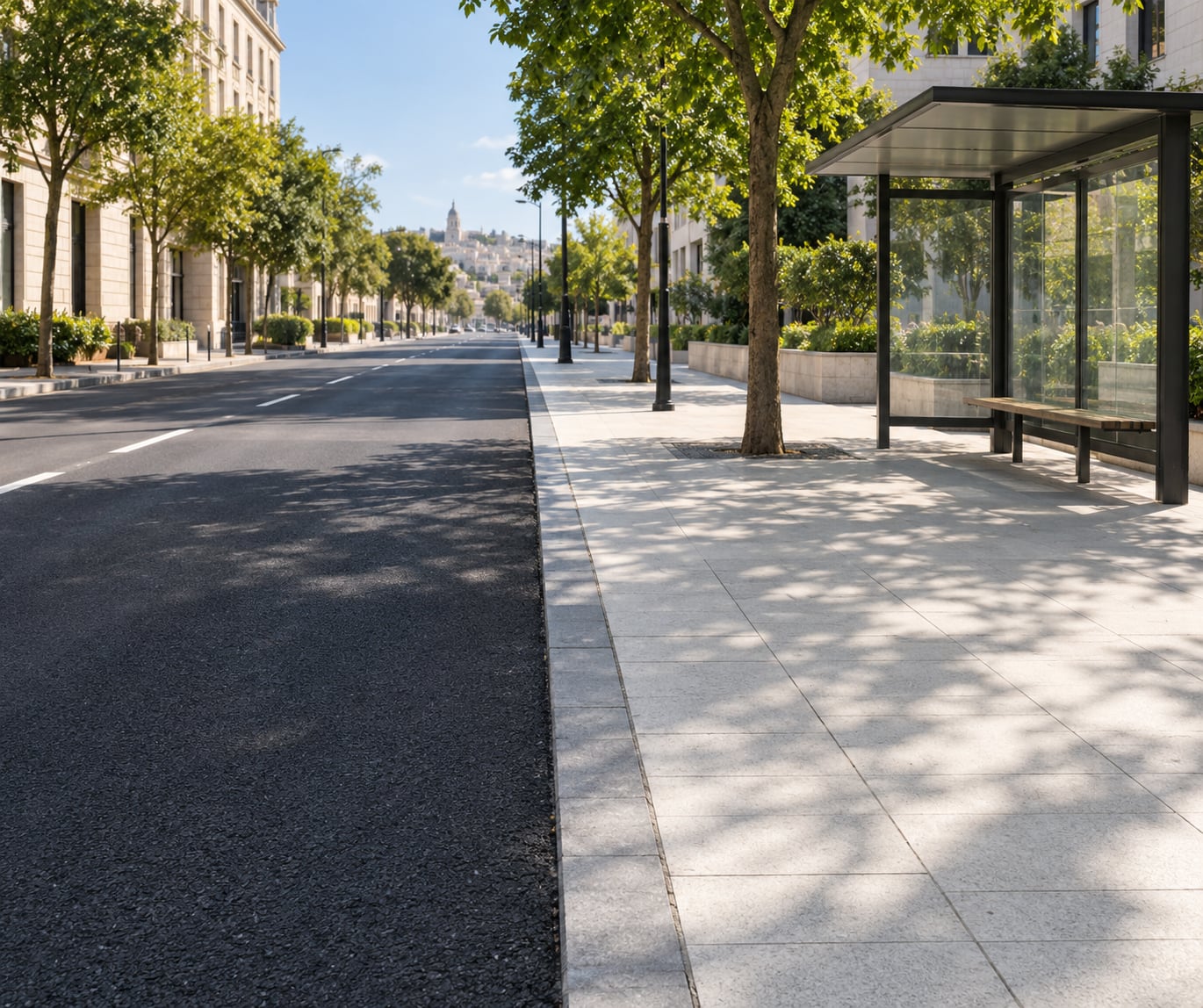
- Bus and tram stops. Long dwell times in full sun, often with shelters that trap heat rather than block it.
- Pedestrian crossings and school entrances. Short, hot, unshaded waits where children and older adults stand still.
- Parking lots and schoolyards. Large uninterrupted asphalt areas with high radiant load and no canopy.
- Wide arterials and bus lanes. Open sky views, so reflected light leaves the scene instead of bouncing between buildings.
- Plazas and market areas. Hard surfaces, long hours of use, and vendors who work outdoors through the afternoon.
Dense downtown street canyons tell a different story. With tall buildings on both sides, much of the reflected radiation strikes the facades opposite, adding to the heat load on upper floors and on air-conditioning units. Modelling of low-rise, sparse neighbourhoods has even found that cooling can go the wrong way when surrounding surfaces reflect that energy back down.
How Reflective Pavement Is Made
There is no single technology. Cities combine approaches depending on whether they are building new surface or coating what is already there.
- Light-colored concrete. Portland cement concrete mixed with lighter sand and gravel, or a white top layer. The most durable option, and the one that costs most to build, but its reflectivity lasts as long as the slab.
- Water-based reflective coatings. A sprayed or rolled light-gray film over existing asphalt. Cheap and fast, and the standard retrofit for bus lanes and parking lots. It fades fastest.
- Reflective aggregate. Aggregate blended with a light binder, or crushed glass coated to hold a bright surface, so the reflectivity is built into the mix rather than applied on top.
- Titanium dioxide concrete. A photocatalytic additive, typically 3 to 5 percent by mass, that keeps the surface bright and breaks down some airborne pollutants at the same time.
- Pervious and porous surfaces. Water held in the voids adds evaporative cooling on top of the reflective effect, which makes it useful in dry climates where irrigation is possible.
- Retro-reflective films and markings. Engineered to send light back toward its source, which makes crossings and raised markings far more visible to drivers at night.
Does Reflective Pavement Have Any Drawbacks?
Yes, and anyone presenting cool pavement as a free win is selling something. The honest list is longer than the marketing.
- Glare and visual contrast. A bright surface under low sun can dazzle drivers. This is manageable, but it has to be engineered, not ignored.
- Radiant heat at head height. Reflected shortwave radiation travels horizontally, and on sidewalks and playgrounds it can raise the radiant load on pedestrians rather than lower it. Head-height comfort is not the same as surface temperature.
- Winter effects. In cold climates a brighter surface means less solar heating in winter, which can add to frost and salt use, and can increase glare when the sun is low.
- Skid resistance. A coating can seal the surface texture that tyres rely on. Mix designs have to be tested for wet friction, not just appearance.
- Cost and embodied carbon. Light cement and specialty coatings use more material per square metre, and life-cycle comparisons favour reflective treatment mainly when it extends the life of the surface underneath.
- Uncertain air-temperature benefits. The air cooling depends on treated area, sky view and climate. Where it is small, the energy return is small.
What Performance Should Cities Measure?
If a city is going to spend money here, it needs numbers that can be defended in public. Six indicators cover it.
- Solar reflectance of the treated surface at installation, then annually, measured with an instrument rather than estimated.
- Surface temperature at midday and peak, which is where the largest gains appear.
- Air temperature at a fixed height above the street, with an untreated control street for comparison.
- Pedestrian mean radiant temperature, measured at head height where people actually stand, and the metric most often skipped.
- Pavement lifespan and skid resistance, since lower peak temperatures slow rutting, shoving and binder aging, which is the durability argument first made in the 2000 ACEEE paper.
- Runoff and lifecycle cost across the whole service life, including cleaning, recoating and resurfacing.
How Can Cities Maintain Reflective Pavement?
Reflectivity is not a permanent property, and treating it as one is the most common mistake in pilot programmes. In the Phoenix trials, coated surfaces fell from an initial reflectivity of 33 to 38 percent down to 19 to 30 percent within about ten months, while untreated asphalt stayed near 12 percent. The treatment still worked, just less well.
A workable maintenance routine looks like this.
- Inspect and measure solar reflectance on a schedule, so declining performance is a number rather than a complaint.
- Clean the surface to remove sand, silt and rubber deposits, all of which darken the film and cut reflectance.
- Repair with compatible material. A conventional dark patch seal on a light surface undoes the work locally and looks worse than leaving it alone.
- Resurface on the normal cycle with a reflective treatment, rather than waiting until a failure forces an emergency repair.
- Keep control sites untreated and instrumented, so every claim about cooling can be checked against real data.
Frequently Asked Questions
Does reflective pavement actually cool the air?
Partly, and less than most headlines suggest. Reflective pavement cools the surface strongly, often by 6 to 7 C at midday, and that reduces the heat the surface drives into the air above it. Measured air-temperature improvements are typically 1 to 3.6 F and depend heavily on how much of the paved area is treated and how open the sky view is. Dense street canyons get very little air benefit. Treat cool pavement as a way to cut heat exposure on the ground, not as a way to cool a whole city.
Is reflective pavement hotter at night?
No. Because a reflective surface absorbs less energy during the day, it also has less stored heat to release after dark. That is a genuine benefit in warm climates, where the pavement otherwise stays warm well into the night. In cold climates the same logic works against the surface in winter, when a darker pavement absorbs more of the weak winter sun and can thaw frost faster. The trade-off is seasonal, not permanent.
Does reflective pavement create dangerous glare?
It can, and this is the most legitimate criticism of the technology. A bright surface near the angle of a low sun can dazzle drivers, and in dense streets the reflected light can also strike upper-floor windows and air-conditioning units. In practice the glare problem is engineered around with surface texture, aggregate choice and careful siting rather than avoided entirely. Cities that reported trouble generally had it in specific, unshaded locations rather than across a network.
Can reflective pavement be slippery?
A coating can seal the macrotexture that tyres depend on, so slipperiness is a real design question rather than a myth. Mix designs and films used for cool pavement are specified and tested for wet skid resistance, the same way conventional surfaces are. Poorly specified coatings, or ones that build up a smooth polished film over time, will reduce grip. Any specification should include a measured friction value after installation and again after a few seasons of traffic.
Is reflective pavement suitable for every climate?
It suits hot, sunny climates best, where the cooling benefit lasts through a long season and the avoided air-conditioning load is large. In cooler climates the summer gain is smaller and the winter loss, from less solar heating and potentially more frost and salt use, has to be weighed against it. Latitude matters more than average temperature, and so does how much sky a street can see. Testing a small area through one full year is the sensible first step.
Conclusion: Start with the Hottest, Busiest Places
How reflective pavement reduces city heat comes down to one change in the surface energy balance: more sunlight leaves, so less heat is stored, so less is released into the air and onto the people standing on it. Surface cooling is large and reliable. Air cooling is real but modest, and it depends on how much pavement you treat and how open the sky is.
So start where the exposure is worst. Bus stops, crossings, school entrances, parking lots and unshaded plazas give the clearest benefit for the least money, because they can be coated rather than rebuilt. Measure solar reflectance, midday surface temperature, head-height radiant temperature and wet skid resistance at the start and again a year later, keep an untreated control street, and decide from the data whether to scale it up. That sequence has served cities far better than a citywide coat of white paint chosen for the photograph.