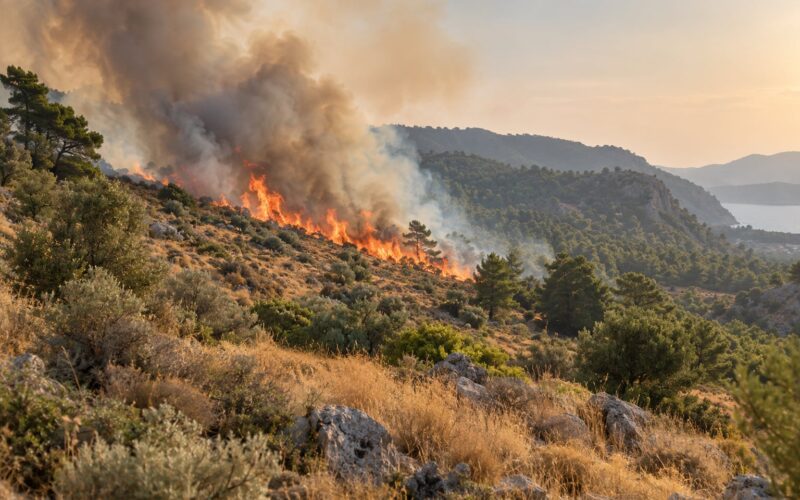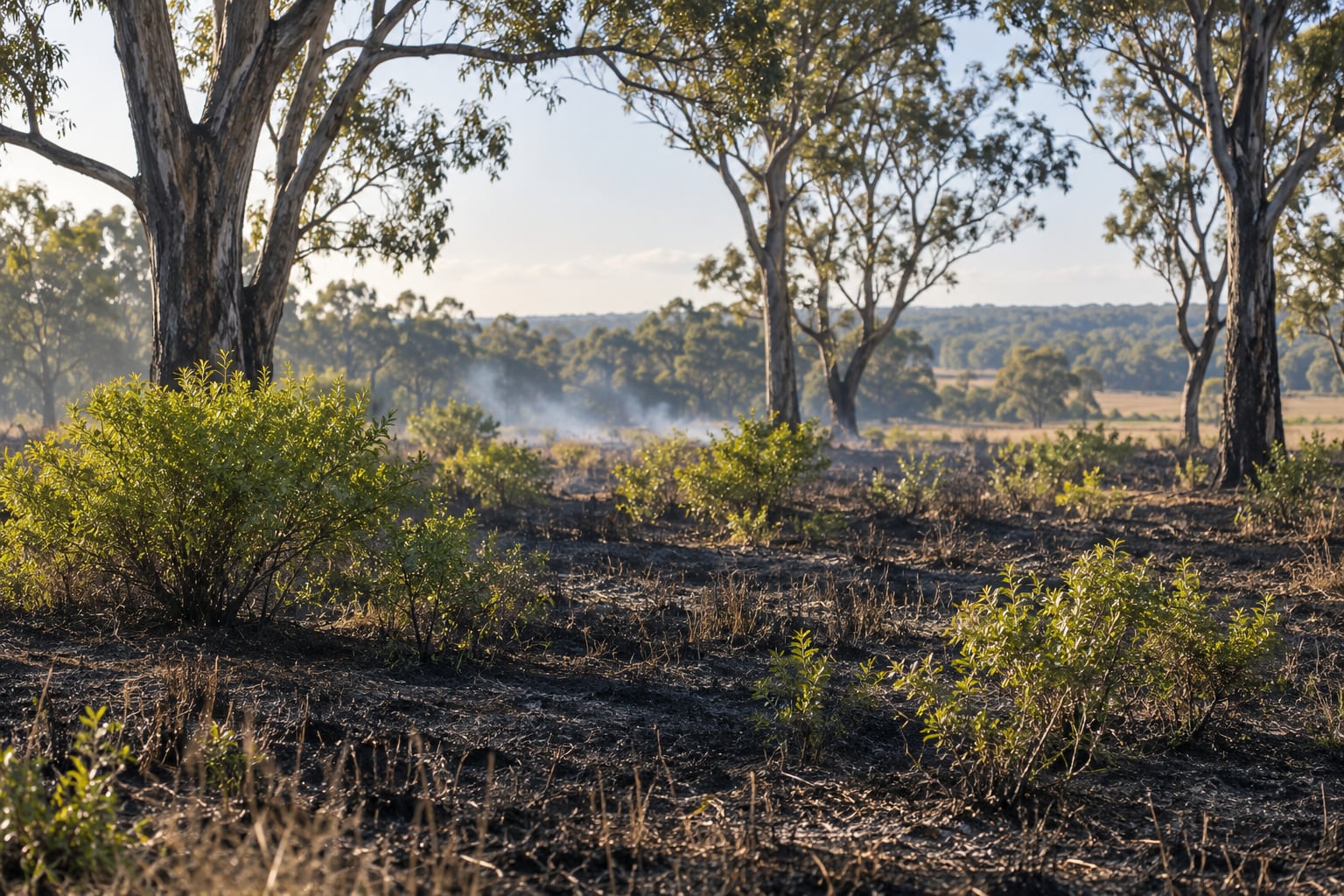
How prescribed burns prevent bigger wildfires is simpler than it sounds: they burn off the dry grass, leaves, twigs and brush that have piled up since the last fire, before that material can join up into one continuous fuel bed. An area treated ahead of fire season has less to burn, produces shorter flames, and gives crews a place to stop a fire that would otherwise run unchecked.
That is the whole mechanism, and it is worth understanding precisely, because prescribed fire is often sold as either a miracle or a menace. It is neither. It is a managed tool with a narrow window of safe conditions, real limits, and a set of rules that professional crews follow before a single flame is lit.
This guide covers what prescribed fire is, the fuel types it removes, when it works best, how it differs from a wildfire, why it cannot remove every risk, and who decides where and when it happens.
Table of Contents
- What Is a Prescribed Burn?
- How Prescribed Burns Prevent Bigger Wildfires
- Which Fire Fuels Does a Prescribed Burn Remove?
- Why Fuel Breaks Can Slow a Wildfire
- When Are Prescribed Burns Most Effective?
- What Makes Prescribed Burns Safer Than Unplanned Fires?
- Why Doesn’t a Prescribed Burn Eliminate Wildfire Risk?
- Who Decides Where and When to Burn?
- How Prescribed Burns Fit Into a Larger Fire Prevention Strategy
- Frequently Asked Questions
- Do prescribed burns really prevent wildfires?
- Are prescribed fires safe for nearby homes?
- How often does land need to be treated with prescribed fire?
- Can a prescribed burn spread beyond its planned boundaries?
- What can residents do if they are near a planned burn?
- Does prescribed burning eliminate smoke and evacuation risk?
- Conclusion: Reduce Hazardous Fuel Before Fire Season
What Is a Prescribed Burn?
A prescribed burn, also called a controlled burn or prescribed fire, is a fire started on purpose under a written plan, inside a defined boundary, and within weather limits that a trained burn boss has checked that morning. The goal is a low-intensity burn that consumes surface fuels while leaving heavier trees, soil and forest structure intact.
It is useful to separate three things people often lump together. A wildfire is unplanned and uncontrolled. A hazardous or unauthorized burn is someone burning debris or brush without a permit, often on a windy day, which is illegal in most jurisdictions and is not a prescribed burn under any name. A prescribed burn is the third category: planned, permitted, monitored, and stopped the moment conditions drift outside the prescription.
The term cultural fire describes burning carried out by Indigenous practitioners using long-standing ecological knowledge, often in a cultural context rather than a production one. Many agencies and tribal nations now plan these burns together, and the practice has grown well beyond what it was a few decades ago.
Conditions matter enormously. Prescribed fire is generally lit when fuel moisture is moderate rather than bone dry, wind is light and steady, humidity is reasonable, and the air is stable enough that smoke will lift rather than pool at ground level. Miss those conditions and the fire is not safer than a wildfire. It is a wildfire started by someone with a plan.
How Prescribed Burns Prevent Bigger Wildfires
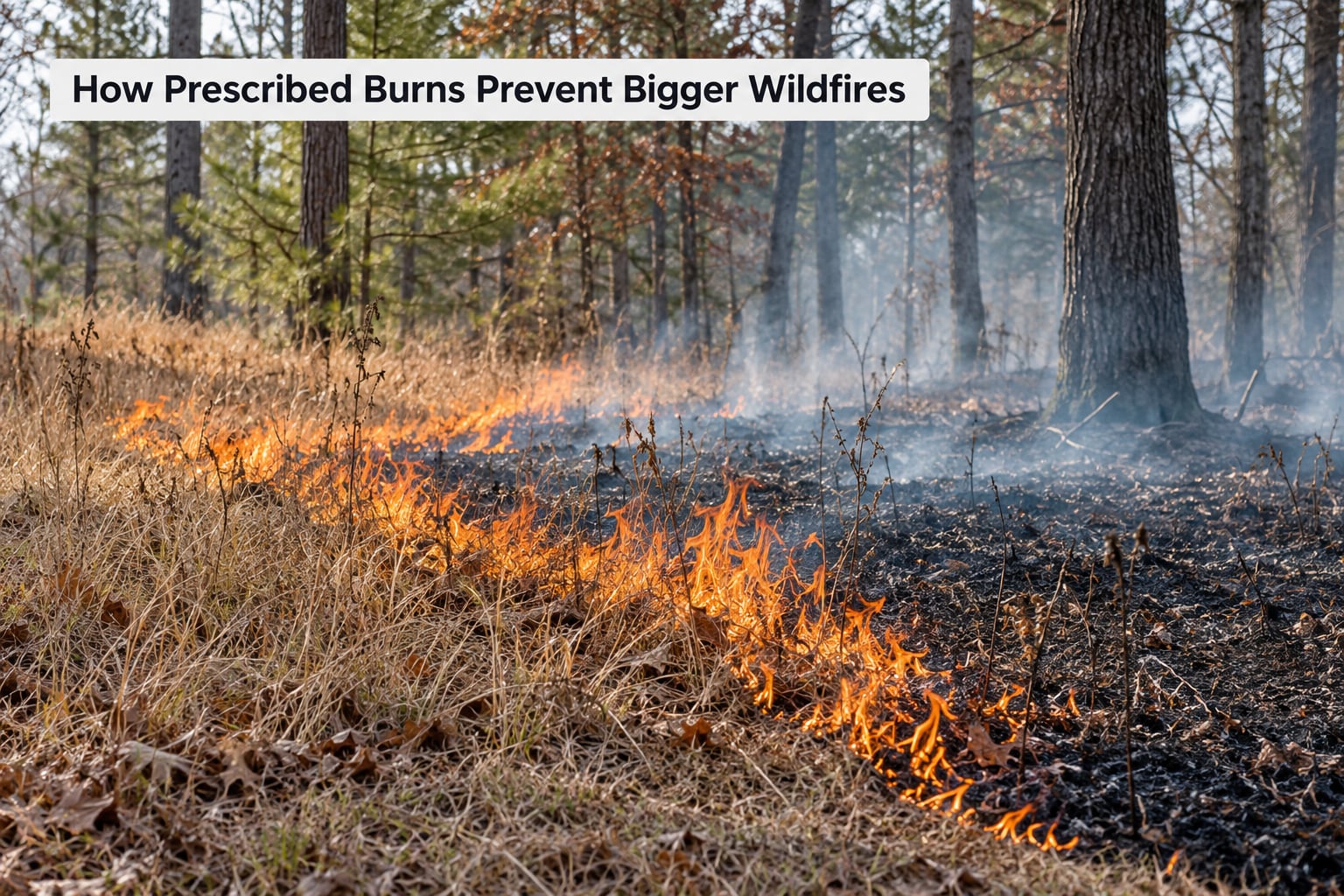
Planned burns consume the grasses, leaf litter, twigs and small brush that accumulate between fires. A wildfire that arrives later has less material to feed on, so flames stay shorter, spread more slowly, and are far less likely to climb from the ground into tree crowns. Shorter flames give firefighters a realistic chance to hold a line.
Three effects matter most in practice:
- Less fuel to consume. Fire behavior is driven by how much burnable material sits in a given area. Remove the accumulation years ago and the same fire has less to work with.
- Broken continuity. A treated unit is not a wall of fuel. Gaps between treated patches change how a flame front moves when it reaches that area.
- Safer staging areas. Crews need open, low-hazard ground to stage equipment, rest and refuel. Treated ground with short flame length and limited brush gives them somewhere workable near the fire line, instead of forcing them to fall back further away.
Research supports the effect at a large scale. Studies have reported roughly a 64 percent reduction in high-intensity fire in areas where low-intensity burning had been used beforehand, and other work has found wildfire intensity reduced by more than 70 percent in treated areas.
At Blodgett Forest Research Station, plots treated with a combination of thinning and prescribed fire were used as staging areas during the Mosquito Fire, while nearby untreated ground burned at high severity. During the Bootleg Fire, areas that had received mechanical thinning plus prescribed fire survived in noticeably better condition than adjacent untreated ground. These are not laboratory results. They are before-and-after observations from real fires.
There is an ecological argument too. Many forests and grasslands depend on periodic fire to recycle nutrients, clear invading woody plants, and trigger seed germination for species that need heat to sprout. Where fire was excluded for decades, the accumulated load is not just a fire problem. It is a habitat problem, and a firmer, denser forest burns worse when it finally goes.
Which Fire Fuels Does a Prescribed Burn Remove?
Not every fuel behaves the same way. Some sits on the surface and burns easily. Some connects the ground to the canopy, and that connection is what turns a manageable fire into a crown fire.
| Fuel type | What it looks like | What it does for a wildfire |
|---|---|---|
| Fine grasses and annuals | Dry grass, cured forbs, dead crop residue | Spreads fast and produces long flame length; the usual carrier of a wind-driven fire |
| Leaf litter and duff | Accumulated needles and leaves over the soil surface | Feeds smoldering ground fire that dries out deeper organic layers |
| Shrubby plants | Dense brush, low woody growth, saplings | Holds fire in the understory and blocks crews from reaching the ground |
| Dead twigs and small branches | Ladder fuels, fallen sticks, brush piles | Carries flame upward toward the canopy, the step that starts a crown fire |
| Downed wood and slash | Fallen limbs, logging residue, heavy debris | Burns for a long time and hard to extinguish; a smoldering source in dry conditions |
Prescribed fire is aimed mainly at the first four. Heavy downed wood is often handled by mechanical removal or piling and burning instead, because a single log can burn far longer and hotter than a low-intensity prescription allows.
Why Fuel Breaks Can Slow a Wildfire
A fuel break is an area where the continuous fuel has been reduced or removed, and it changes how an approaching fire behaves. Flame length drops because there is less material within reach. Rate of spread drops because the fire front runs out of fuel and re-establishes itself more slowly. Critically, flame height drops too, which means less radiant heat reaches up into the canopy and less chance the fire climbs into tree crowns.
Breaks also give firefighters a place to anchor. A crew holding a treated edge is working on ground where fuel is short and backing is limited, rather than trying to cut a line through untreated brush in front of advancing flame. That is the difference between a defensible position and a dangerous one.
The limitation is honest: breaks are not walls. Wind-driven fire can carry embers past a narrow treated unit and land in fuel on the other side. That is why effective programs combine prescribed fire with mechanical thinning, treated areas spaced close enough to overlap, and roads that serve as control lines.
When Are Prescribed Burns Most Effective?
Prescribed fire works best inside a narrow window set by fuel moisture, wind, humidity and air stability. Too wet and the fire will not carry, which wastes a burn day and the crews assigned to it. Too dry, and the fire can produce flame and behavior the prescription never allowed for.
Low wind is the other condition. Many crews refuse to burn above a stated wind threshold, and they stop when gusts or mixing conditions change. Terrain matters as well: a burn on a slope behaves differently from the same burn on flat ground, and a burn near a road, power line or structure carries extra risk that changes the prescription.
Timing has to leave room for execution. A burn takes more calendar time than people expect. Clearing drip lines, patrolling containment and mopping up the edges can extend well past the flaming period, and crews need enough daylight and stable weather to finish the job rather than leaving a smoldering edge behind.
Then there is the cycle. Fuels regrow. Grasses cure and shrubs fill back in, and untreated ground builds load again. In fire-adapted ecosystems, fire return intervals are often on the order of a few years to a decade or more depending on the system. Missing a cycle is how an area ends up with the dense, continuous fuel that produces the worst outcomes.
A century of suppression policy accelerated this accumulation. Broad suppression, and in the United States the 10 a.m. rule adopted in the era of the Big Blowup that kept fires burning until mid-morning, kept small fires out and let fuel build for decades. When a large fire finally arrived, it found far more to burn than forests had in centuries.
What Makes Prescribed Burns Safer Than Unplanned Fires?
Prescribed fire is not inherently safe. It is actively managed, and the management is what separates it from a wildfire. The differences show up in specific, practical decisions.
| Factor | Prescribed burn | Unplanned wildfire |
|---|---|---|
| Location | Chosen unit with mapped boundaries and control lines | Wherever ignition occurred, often remote terrain |
| Timing | Day, season and weather window selected in advance | Driven by lightning, equipment failure or human error |
| Intensity | Capped by the prescription, checked by measuring fire behavior | Driven by weather and fuel, rising without limit |
| Monitoring | Trained crews on site with holding and patrol duties | Response builds over hours to days |
| Termination | A named burn boss can call a stop while containment is still possible | Decisions made under pressure with limited options |
| Smoke | Planned with a smoke management plan, timed to move air, shared in advance | Unplanned, often widespread, no notification |
| Escape risk | Managed with contingency lines, mop-up and pre-agreed protocols | No containment plan exists at ignition |
The single most important difference is the authority to stop. A burn boss can end a burn in minutes, while a wildfire cannot be called off. That decision point, available early and used deliberately, is the core of prescribed fire safety.
Smoke deserves its own note, because it is the most common public complaint. Prescribed fire does produce smoke, sometimes for days as a smoldering edge works through downed material. Good smoke management aims at that: burning when wind carries smoke away from populated areas, coordinating with air quality regulators, and warning neighbors before the burn rather than after.
Why Doesn’t a Prescribed Burn Eliminate Wildfire Risk?
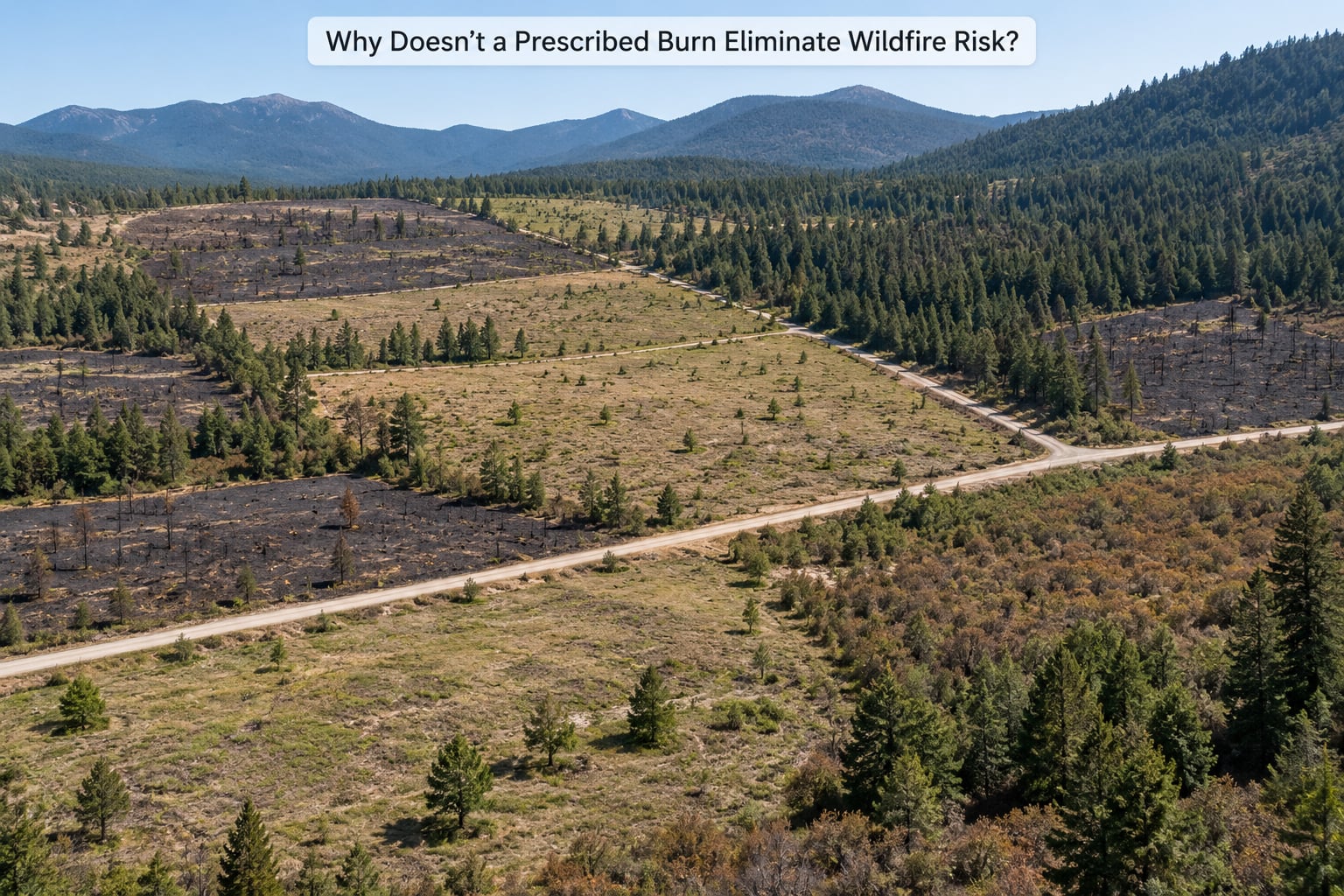
Because it removes one layer of risk, not all of it. Extreme wind can push fire beyond treated ground, embers can land well ahead of the front, and drought can dry fuels past the point where a low-intensity burn behaves predictably. Any single burn is also subject to escapes, equipment failures and weather that changes faster than anyone forecast.
Physical limits matter too. Steep terrain, dense canopy and rocky ground make work difficult. Power lines, gas lines, roads and structures add risk that may rule an area out entirely, even when the fuels would benefit from treatment.
And the effect decays. A treatment that worked well in year one is less effective by year three, and nothing by the next cycle. Keeping an area prepared means treating it again and again, which requires crews, funding, permits and public tolerance year after year.
This is why nobody serious presents prescribed fire as a guarantee. It is one component of a resilience strategy, sitting alongside defensible space around homes, fire-resistant construction, fuel reduction near settlements, emergency planning, and timely evacuation when conditions turn dangerous.
Who Decides Where and When to Burn?
Decisions sit with fire agencies and land managers rather than individual property owners. Federal land agencies including the Forest Service and the Bureau of Land Management, state fire agencies such as CAL FIRE, tribal nations, county fire districts, private landowners and conservation organizations all run prescribed fire programs.
Inside a program, a written burn plan defines the unit boundary, objectives, acceptable weather limits, contingency lines, resource requirements and smoke management approach. A named burn boss holds final authority on the day. If the morning weather check fails the prescription, the burn is postponed. That is routine, not a sign of failure.
Private landowners who want to use prescribed fire face a different path, and a growing number are working through it. Typical steps include getting a permit from the local fire district or state agency, completing a fuel management plan, hiring or partnering with a qualified burn boss, satisfying liability insurance requirements, coordinating with neighbors, and following rules about notification and timing that vary considerably between jurisdictions.
Prescribed Burn Associations exist for exactly this reason. They pool expertise, equipment and liability coverage across a group of neighbors so that people who could not run a compliant burn alone can participate in cooperative work. If you own land in a fire-prone area and want to manage fuel, a local association or your state forestry agency is the place to start asking questions.
How Prescribed Burns Fit Into a Larger Fire Prevention Strategy
For households, the fuel that matters most is the fuel closest to the building. Clearing vegetation from the roof and gutters, creating a non-combustible zone near the walls, spacing trees so a crown fire cannot reach the house, and removing dead wood from a yard all change the outcome of a nearby fire. Prescribed fire in the woods behind a property complements that work; it does not substitute for it.
For communities, resilience is built at the neighborhood level. Emphasized zones, evacuation routes people have actually driven, notification systems that reach people who do not check news, and shelters that are stocked are all part of the same picture as treated fuels.
For land managers, the honest assessment is that prescribed fire works well and is used far less than the science supports. Florida is the most commonly cited example of a different operating model, where year-round prescribed fire is treated as routine maintenance of the state’s forests and grasslands rather than an emergency tactic. California, after the Camp Fire and Dixie Fire disasters, has moved toward wider use with expanded budget, though permitting, air quality constraints, workforce limits and public tolerance still slow the pace.
Federal funding has grown as well, including large allocations for hazardous fuels reduction and community resilience under the Bipartisan Infrastructure Law and the Inflation Reduction Act. Money helps, but the binding constraints are often crews, permits, air quality approvals and coordination across property lines.
The practical takeaway for a homeowner is unglamorous. Ask what fuel is near your buildings, remove what you can, support the local prescribed fire program when a burn is announced, take smoke warnings seriously, and know your evacuation route before you need it.
Frequently Asked Questions
Do prescribed burns really prevent wildfires?
They reduce the severity of fires that happen, rather than stopping them from happening. Research has recorded drops in high-intensity fire of roughly 64 percent in areas with prior low-intensity burning, and reductions in wildfire intensity above 70 percent in other treated sites. Treated ground also gives crews safer positions near the fire line. No burn guarantees an outcome.
Are prescribed fires safe for nearby homes?
Planned burning is permitted, monitored and stopped by a named burn boss when conditions leave the prescription. Crews clear defensible space, patrol containment and mop up edges before leaving. Distance from structures and buildings changes the prescription itself. A burn that cannot be executed safely near homes is normally postponed or excluded.
How often does land need to be treated with prescribed fire?
It depends on the fuels and the ecosystem. Grasses may need treatment every year or two, shrub-dominated land every few years, and some forested systems on longer intervals. Because untreated areas accumulate fuel continuously, most programs treat on a repeating cycle rather than treating once and moving on.
Can a prescribed burn spread beyond its planned boundaries?
Escape is a real risk that crews plan for with contingency lines, holding resources and mop-up duty. Wind shifts, spotting and equipment problems can push fire past a boundary. If fire leaves the unit, crews and supervisors respond under established protocols, which is why planning and monitoring are not optional parts of the process.
What can residents do if they are near a planned burn?
Ask for advance notification, keep windows and doors closed during the burn, run air filtration if you have it, and move sensitive people or pets indoors if conditions worsen. Smoke is usually lighter and shorter-lived than wildfire smoke, but it can be uncomfortable for anyone with asthma or COPD. Know the burn schedule before the season starts.
Does prescribed burning eliminate smoke and evacuation risk?
No. Prescribed fire produces smoke, sometimes for days as edges smolder, and wind can still bring it to neighborhoods. Good smoke management plans time burns for favorable winds, coordinate with air quality regulators, and warn neighbors early. Evacuation risk also remains for fires that start outside treated areas.
Conclusion: Reduce Hazardous Fuel Before Fire Season
Prescribed fire works because it removes the material a wildfire would otherwise feed on. Less grass, litter and brush means shorter flames, slower spread, fewer paths into tree crowns, and safer ground for crews working the fire line.
Start locally: find your state forestry agency or fire district and ask about prescribed fire programs and Prescribed Burn Associations, clear hazardous fuel from around your own buildings, and set up smoke notification before the season starts. Then know your evacuation route.