Wildfires are getting worse because the conditions that let them start and spread are arriving more often and lasting longer. Warmer air dries vegetation and soil, wet years grow extra fuel that the next dry year cures, strong wind events push flame faster than crews can respond, and more homes now sit inside the terrain these fires cross. Understanding why wildfires are getting worse means weighing all of those pressures together, because no single one of them explains what we are seeing.
Last updated in October 2026. The numbers below come from published research and agency reporting, not from a single bad fire season.
Table of Contents
- What does it mean that wildfires are getting worse?
- Is climate change making wildfires worse, and by how much?
- Why wildfires are getting worse: the causal chain, step by step
- How scientists attribute a fire to climate change
- How do drought and heat affect wildfire risk?
- Why do forests, grasslands and shrubs burn differently?
- Boreal forest: crown fire in remote wilderness
- Mediterranean-climate shrubland: the southern Spain, California and southern Australia pattern
- Grassland and savanna
- What role do land use and human activity play?
- How can wildfires spread so quickly?
- Why are wildfire seasons starting earlier and lasting longer?
- What can reduce wildfire risk and damage?
- For households and neighbourhoods
- For communities, land managers and utilities
- Frequently Asked Questions
- Are wildfires getting worse everywhere?
- Does drought alone cause bigger wildfires?
- Why do wildfires spread faster on hillsides?
- Can prescribed fires make wildfires worse?
- How does climate change affect wildfire seasons?
- Can people living in wildfire-prone areas do anything useful?
- What to take away
What does it mean that wildfires are getting worse?
It means fires burn more land, run longer, produce more heat and cause more damage than the same kind of fire did a few decades ago. Researchers track burned area, fire size, season length, how long a burned site takes to recover and how severely the ground is scoured. The pattern is clear overall but uneven, because conditions differ enormously between a Mediterranean hillside and a boreal forest.
One thing worth separating early: the number of ignitions has not exploded nearly as much as the size and severity of the worst fires. Average burned area per fire, the share of fires that turn extreme and the length of the season have all moved more than the raw count of fires.
Is climate change making wildfires worse, and by how much?
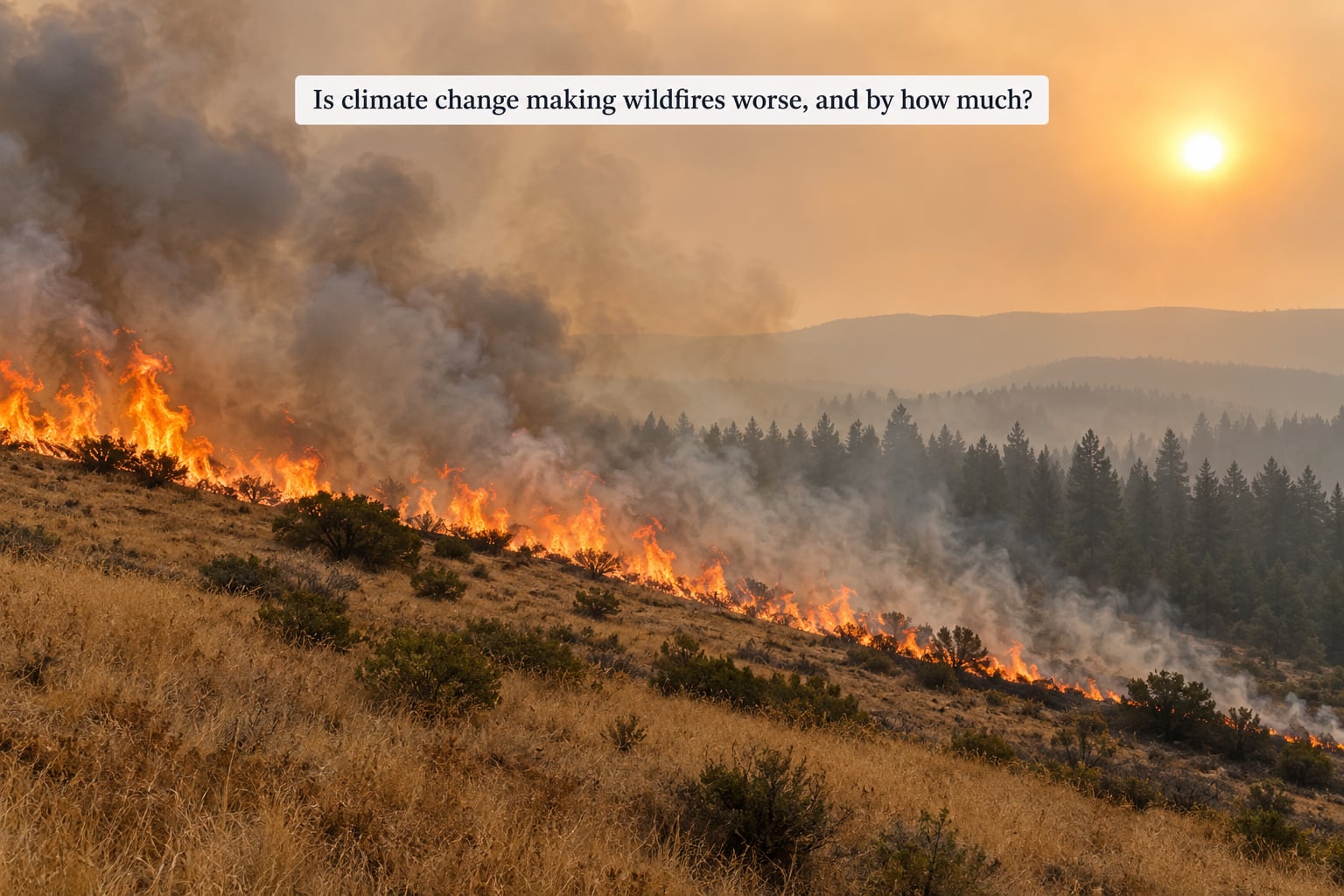
Yes, and the effect is measurable rather than rhetorical. Warming raises temperatures, pulls more moisture out of soil and vegetation through evaporation and plant transpiration, melts mountain snowpack earlier and pushes dry seasons longer. The atmosphere holds more water vapour, so relative humidity during a hot spell drops further than it used to, drying fine fuels like grass, needles and twigs that ignite from a single ember.
The headline figures that come up most often in the research:
- Hotter, drier fire seasons burn roughly 80% more forest for every 1°C of warming.
- Fire seasons have lengthened by about 40 to 80 days in many of the regions studied.
- Extreme fire events have approximately doubled in frequency over the past two decades.
- Hydroclimate volatility, the whiplash between wet and dry spells, has risen by 31 to 66% since the mid-20th century, according to a review in Nature Reviews Earth & Environment.
Satellite and agency data show the same signal from the ground up. Root-zone soil moisture across the western United States has been tracked by the National Interagency Fire Center and mapped with Landsat imagery by NASA, and in recent seasons it has sat in the lowest few percent of the 1981 to 2013 record. Vegetation greenness indices show the same drying.
None of that means a particular fire was caused by climate change. A campfire, a power line or a lightning strike starts it. Climate change changes the odds that whatever started will become large, hot and hard to catch.
Why wildfires are getting worse: the causal chain, step by step
- Warmer air and soil. Every degree adds drying. Plants close their stomata, soils lose moisture to evaporation, and the moisture that remains in vegetation drops.
- Earlier snowmelt and a shorter wet season. Winter and spring rain that once refilled soils arrives later or in fewer, heavier events, leaving a longer window of dryness.
- Whiplash. Wet years produce lush growth and heavy dead-fuel accumulation. The following dry year cures that growth into the kind of fine and medium fuel that carries fire fast. Alternating is worse than steady dryness.
- Fire weather. Heat waves, low relative humidity and strong wind events can turn a manageable fire into an extreme one in a single afternoon.
How scientists attribute a fire to climate change
This is the part almost no explainer covers, and it is the reason the science holds up. Attribution does not ask whether climate change caused an ignition. It asks how much more likely this fire was because of it, using a counterfactual.
- Measure the fire weather that actually occurred: temperature, humidity, wind, fuel dryness, with satellite and weather-station records.
- Estimate what the same area would have looked like without human-caused warming, using climate models and observed historical variability.
- Compare the two worlds and calculate the change in probability, often expressed as a relative fire risk: this fire was several times more likely, and burned several times more area, because of warming.
- Report a range with a confidence level, because any single fire is also shaped by one fire’s luck, its fuel and the resources sent at it.
Zeke Hausfather, a climate scientist who has worked extensively on boreal fire, has used that framing to make the point that the Canadian boreal burn is not a management failure in the way western forest policy debates suggest. Management there protects towns and infrastructure. It does nothing about fire in remote forest, where more than 90% of the record-setting burned area in recent years was ignited by lightning far from any road.
How do drought and heat affect wildfire risk?
Drought removes the moisture that vegetation and soil normally hold, and a fire needs less energy to ignite dry fuel. A relative humidity reading in single digits, common during a heat wave, means the air itself starts pulling moisture out of grass and needles.
Drought is not the whole story, and the distinction matters. Weather is what a place experiences this week: a heat wave, a dry wind event, a month without rain. Climate is the shifted baseline those events now happen against. Two seasons with the same rainfall total can behave differently if one arrives on a soil already parched by a warm spring, and a single offshore wind event can undo a season of rain.
Flash drought is the version that surprises people. Soil moisture can fall to wilting levels in a matter of weeks rather than months, sometimes with no clear change in the monthly rainfall total, because warm air and wind drive loss faster than the soil can resupply it.
Snowpack used to act as a slow-release reservoir. As it melts earlier, the water arrives before the fire season peaks and the ground stays dry longer into autumn.
Why do forests, grasslands and shrubs burn differently?
The same hot windy afternoon produces completely different fire in different vegetation, which is why a global number flattens an important truth.
Boreal forest: crown fire in remote wilderness
In Canada’s boreal and Alaska’s interior, fire often starts in the canopy and moves from tree to tree, especially where spruce and pine are dense and continuous. These forests hold a lot of moisture compared with western US forests, and the fires burn in places with no roads, no settlements and no realistic suppression option. Only roughly a fifth of boreal burned area sits on managed land, so fuel treatment is not the lever people assume it is there.
Mediterranean-climate shrubland: the southern Spain, California and southern Australia pattern
Hot, dry summers and wet winters produce dense scrub, chaparral and shrub slopes that carry flame readily, and dry winds can push it across open ground for kilometres. Once a stand of shrubs burns hot enough, the woody stems survive as standing skeletons, and the site often returns as shrubland rather than woodland. Researchers call this type conversion. Work in the southern Rocky Mountains on ponderosa pine and Douglas fir has projected that a large share of currently suitable area could be lost by mid-century, with the pessimistic end of those scenarios under 5%.
Grassland and savanna
Grass burns fast, often in a single pass, because fuel is fine and continuous and the ground is exposed. Recovery depends on rain arriving before the next dry spell. Grazing, cultivation and tree planting have changed how these systems carry fire, and in some places grassland has replaced the woodland that used to interrupt it.
Forest resilience also depends on timing. A fire that fits the historical return interval for a forest, roughly every decade or two for many of these ecosystems, can clear competing shrubs and release tree seeds. Research on re-burns found that after ten to twenty years, a previous burn has largely stopped reducing the chance of burning again, so an area stuck in a short re-burn cycle loses its fire-adapted character.
What role do land use and human activity play?
Climate sets the ceiling on how bad a fire can get. Human decisions decide how much fuel is there, where the fire starts, how much of it is treated, and how many people are standing in the path when it arrives.
- Ignition sources. Lightning dominates in remote boreal and mountainous areas. Power lines, damaged equipment, vehicles, campfires and discarded debris account for a large share of ignitions closer to settlements. In the January wildfires around Los Angeles, investigators pointed to both the wind conditions and the accumulation of vegetation after unusually wet years.
- More people in the way. Housing has spread into the wildland-urban interface, on slopes and in canyons. The same fire that once burned forest now burns forest, roads, vehicles and neighbourhoods, which is why losses per fire have risen faster than burned area.
- Suppression and accumulated fuel. Decades of extinguishing every fire that could be reached meant many areas received the low-intensity burns that clear small fuel piles. Fuel loads built up in the meantime. A fire that now arrives finds more to burn and less time to stop it.
- Access and equipment. Crews and machinery need roads, water and safe work conditions. In a national-scale fire event, resources are rationed across many simultaneous incidents, and the first priority is protecting lives rather than fully extinguishing a fire in remote terrain.
The result is that a fire’s damage has two components: how the fire behaved, and how much was exposed to it. Both have grown.
How can wildfires spread so quickly?
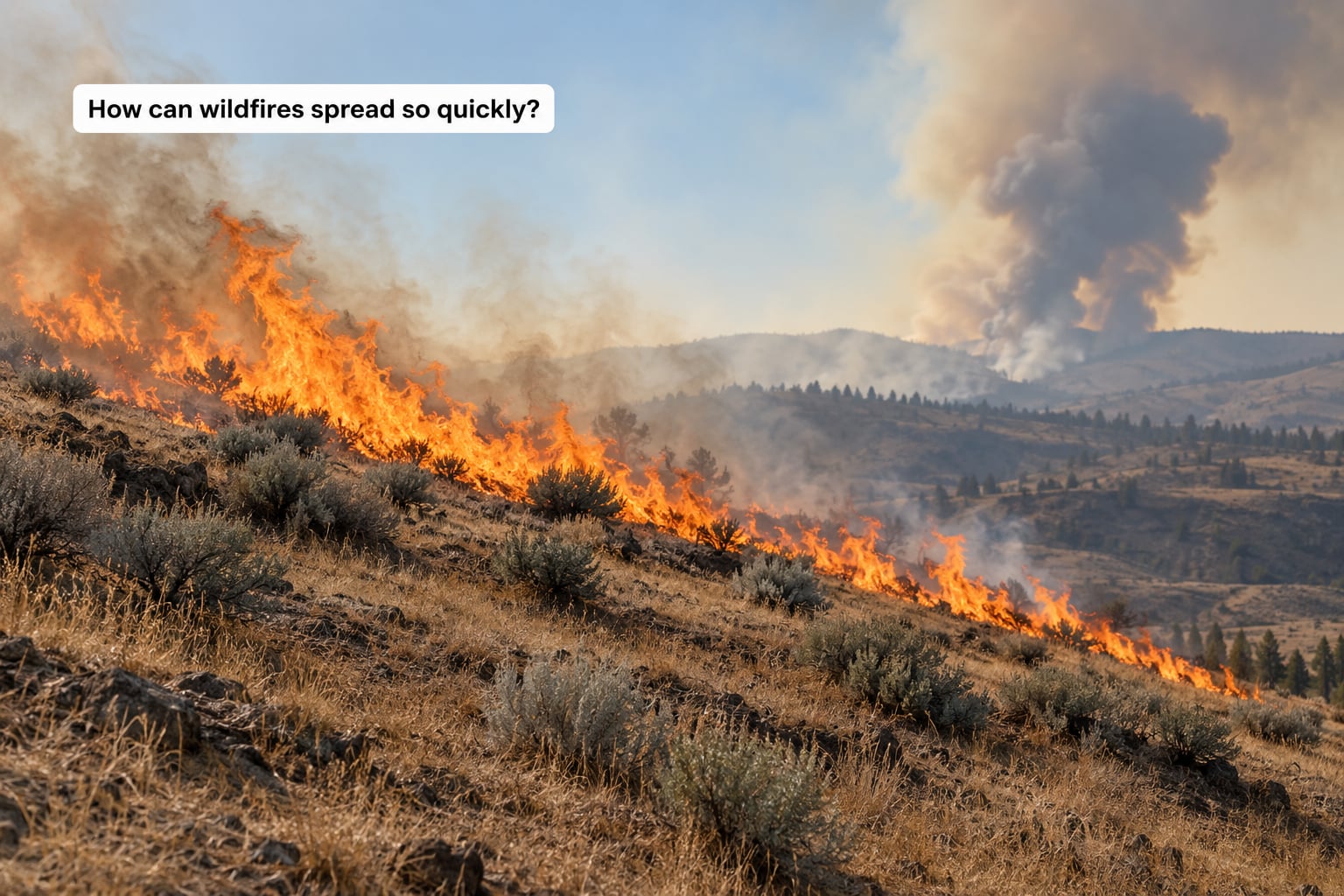
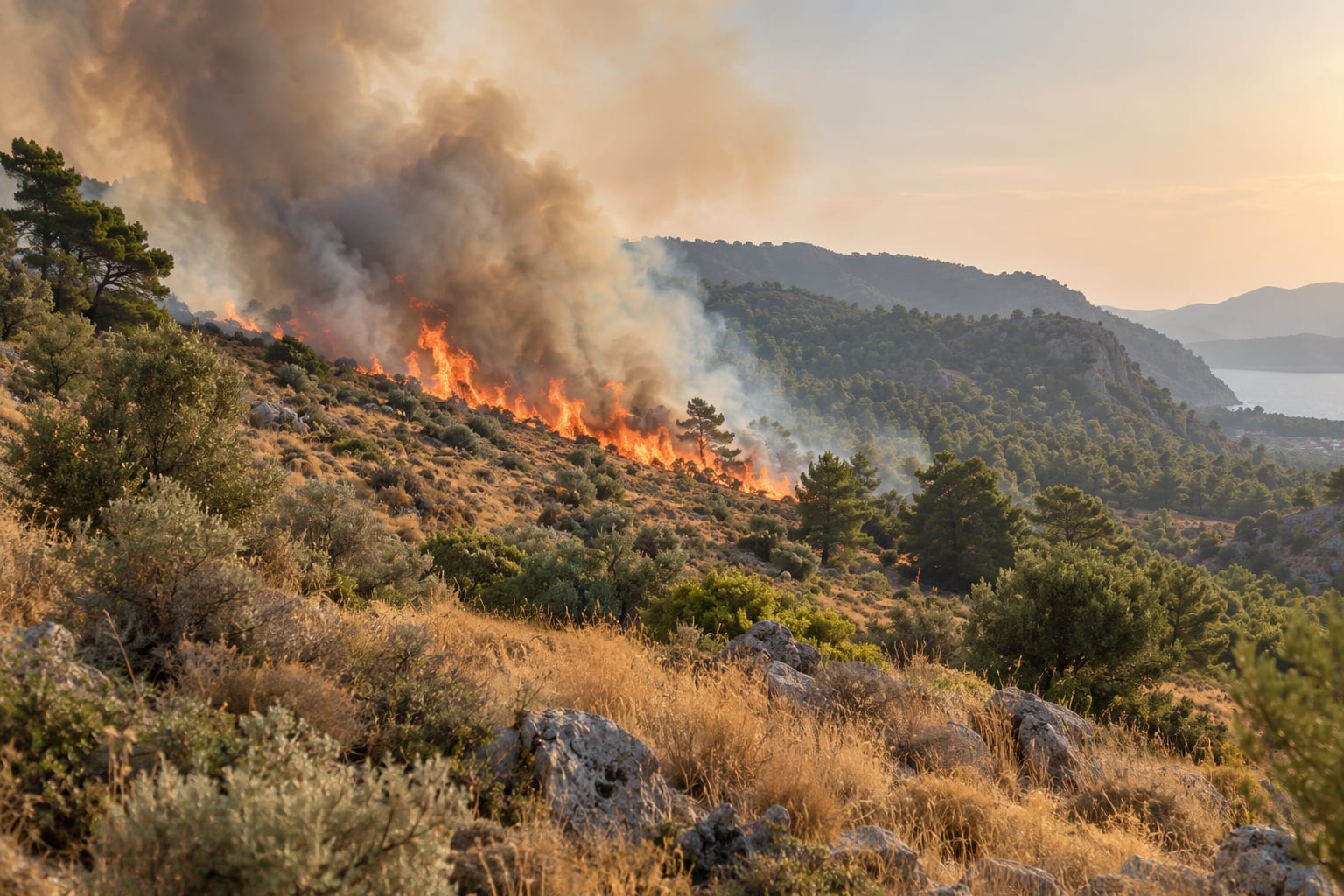
Spread speed comes down to four things: the wind, the slope, the heat coming off the flame and the dryness and continuity of the fuel. Wind supplies oxygen and pushes the flame front forward, and it is usually the single biggest factor. Slope does something less obvious but just as powerful: rising heat preheats and dries the fuels uphill, so a fire moving uphill runs much faster than the same fire on flat ground, and a fire running with the wind is faster still.
Then there is spotting. The convection column above a big fire throws embers and lofted burning material up and downwind, sometimes kilometres ahead of the front, and they start new fires in fuel that is still untouched. A fire that is already producing its own weather is harder to catch than one that is only responding to the atmosphere.
When conditions align, a small ignition can become a different fire in minutes. That is the honest answer to why crews cannot always stop it: a fire running in wind-driven heavy fuel at low relative humidity is already operating beyond the conditions where hand crews and light machinery can hold a line. The realistic goal on day one is often to get people out and protect the values that can still be protected.
Why are wildfire seasons starting earlier and lasting longer?
Season length is one of the clearest trends in the data, and it is easy to explain mechanically. Spring arrives earlier, vegetation dries earlier, snowpack releases earlier and rain returns later, so the window of fire-ready conditions grows at both ends. Studies commonly find seasons extending by around 40 to 80 days, and the extra days at the front and back of the season are the ones that catch crews and residents off guard, because they do not match the calendar people plan around.
In Mediterranean-type regions such as southern Spain, Portugal, Greece and southern Australia, the shift shows up as autumn rain arriving later after a drier summer and springs drying out faster. In boreal regions the season tracks thaw and drought instead, and can be compressed into a short intense burst rather than stretched. Comparing a boreal season with a Mediterranean one and concluding that one is worse is a category error: they are different fire systems with different vegetation, different ignition patterns and different management options.
Longer seasons also mean more ignitions before crews and equipment are fully mobilised, and more fires burning at once in the same region, which spreads thin resources thinner.
What can reduce wildfire risk and damage?
Nothing here reverses climate change, and pretending otherwise wastes the conversation. These measures reduce how much is available to burn, how many people are exposed, and how much damage a fire does when it arrives.
For households and neighbourhoods
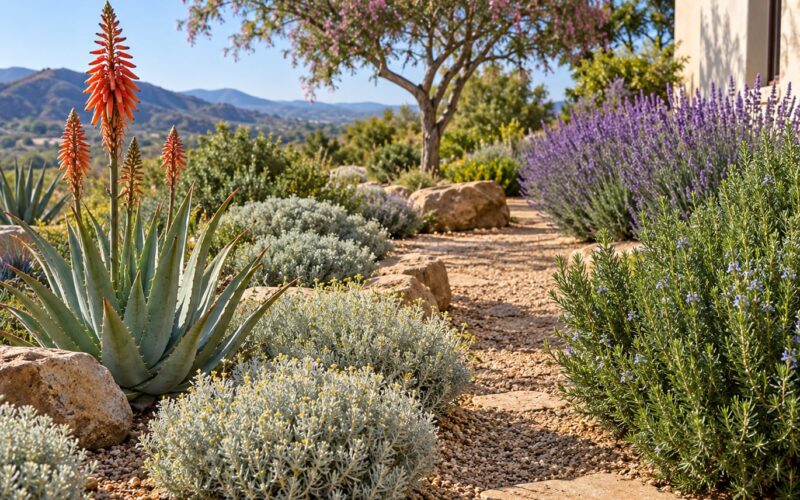
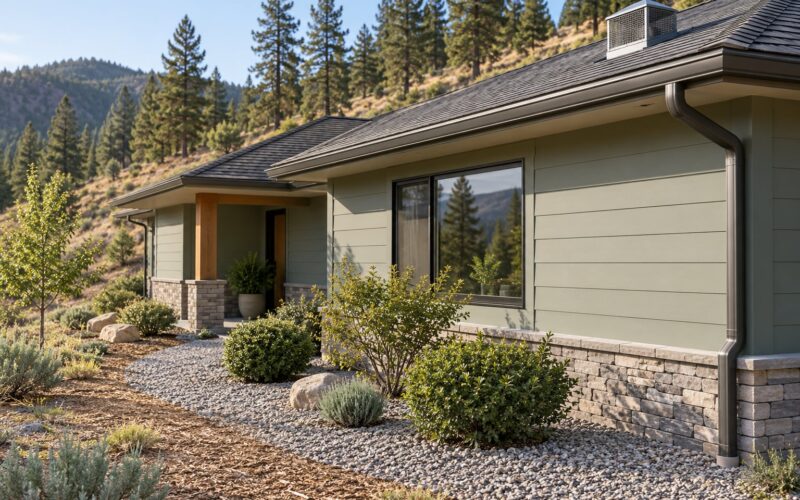
- Clear defensible space: remove dead branches, leaves and stored material near the building, and prune or remove the vegetation that connects ground fuel to the roof.
- Ember-proof openings. Mesh screens over vents, metal covers on chimneys and enclosed eaves make a surprising difference, because most home losses start with embers rather than direct flame.
- Subscribe to official air-quality and evacuation alerts, and keep two escape routes in mind. Decide a trigger for leaving in advance, not during the alert.
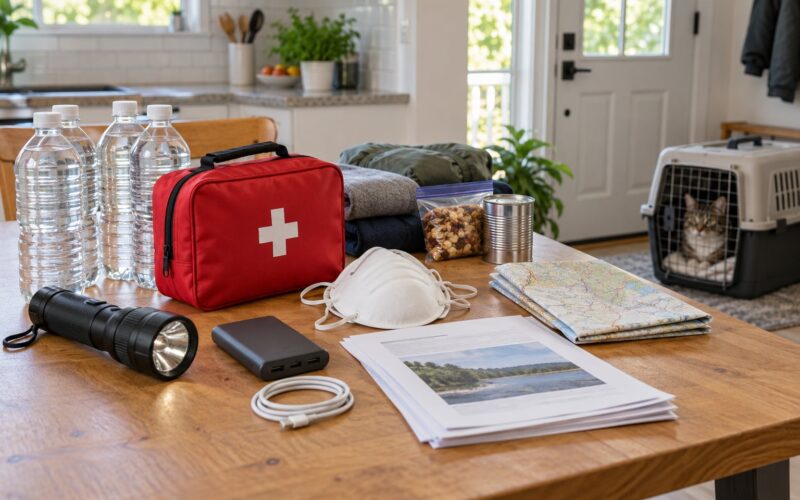
- Prepare a go-bag and plan for pets, medication and power outages. Leave early. A house is replaceable; a decision made too late is not.
- Filter indoor air during smoke events. A properly rated HEPA unit or a DIY Corsi-Rosenthal box reduces indoor particle levels noticeably while windows are shut.
For communities, land managers and utilities
- Reduce fuel near where people live first, since that is where the loss is highest, then work outward.
- Use prescribed fire and cultural burning in systems where those burns belong, in the right season and under the right conditions. Prescribed fire that escapes is a real cause of large wildfires, and using it where the ecosystem is not adapted to frequent burning is counterproductive.
- Manage power lines, clear vegetation around utility corridors and harden equipment, since the infrastructure causes ignitions that would not otherwise happen.
- Plan development with fire risk in mind: road access for emergency vehicles, evacuation routes that do not dead-end, and building codes that assume high fire weather.
- Improve early detection through aerial and satellite alerting, and pre-position crews when fire-weather forecasts line up.
Two safety rules apply throughout. Do not try to watch a home during a fast-moving fire, and do not improvise burning. Follow local authority instructions and evacuation orders over anything written here.
Frequently Asked Questions
Are wildfires getting worse everywhere?
No, the trend is uneven. In the western United States, Mediterranean Europe, parts of Australia and much of Canada, burned area, extreme fire counts and season length have risen. Other regions show flat or mixed records, and some have seen fewer large fires in short windows. Why wildfires are getting worse is best answered as a global shift in background conditions with a local expression shaped by vegetation, wind and settlement patterns, so read your own regional agency data rather than the headlines.
Does drought alone cause bigger wildfires?
No. Drought dries vegetation and soil, but it decides whether a fire stays small, not whether it becomes huge. Start point, fuel continuity, temperature, relative humidity and wind do that. A drought year with calm, moist nights and no wind can produce a dull season, and a single hot dry wind event after a wet winter can do more damage than a year of moderate drought. Whiplash matters most because wet years build the fuel that dry years then burn.
Why do wildfires spread faster on hillsides?
Heat rises. As a flame front climbs a slope, it preheats and dries the fuels above it before the front arrives, so they ignite more easily and the fire accelerates. Uphill spread is usually far faster than downhill spread, and a fire running with a steep slope and a strong wind is the worst combination there is. That is why crews prioritise ridgelines, canyons and windward slopes when a fire is growing quickly.
Can prescribed fires make wildfires worse?
Yes, when a planned burn escapes, is burned at the wrong time of year, or is used in an ecosystem that is not adapted to frequent fire. Escaped prescribed fires are a documented cause of some large wildfires. In the right system, at the right time and with the right conditions, low-intensity fire removes small fuel, opens space for mature trees and interrupts fuel continuity. The tool works in fire-adapted forests and grasslands, and it is not the answer in boreal forest or peat systems.
How does climate change affect wildfire seasons?
It extends them at both ends. Spring temperatures rise, vegetation dries earlier, snowmelt advances and winter rain returns later, so the window of fire-ready conditions widens. Studies commonly find seasons around 40 to 80 days longer, with more ignitions in late autumn and early winter. Regional patterns differ, so boreal seasons can become more compressed and intense while Mediterranean-type seasons stretch later into winter.
Can people living in wildfire-prone areas do anything useful?
More than most people assume, especially on the home. Clear defensible space, screen vents and eaves against embers, and keep the roof clear. Subscribe to air-quality and evacuation alerts, keep a go-bag ready and plan two ways out. Filtering indoor air during smoke events protects health, particularly for children, older people and anyone with a heart or lung condition. The most useful action is deciding in advance when to leave.
What to take away
Fire is not getting worse because of one cause. Warming sets a higher ceiling on severity, drought and whiplash supply the dried fuel, wind sets the speed, decades of suppression built the fuel load, and more people in the path multiply the damage.
If you only remember one thing, make it this: the most useful actions happen before a fire starts, at home and on the land. Reduce fuel around the places people live, ember-proof the openings, decide early when to leave, and use fire deliberately where an ecosystem can carry it. Understanding why wildfires are getting worse is the first step; acting on that understanding before 2026‘s fire season is the useful one.