You can improve indoor air quality without buying an air purifier by doing three things in order: remove the source, dilute the remaining pollution with outdoor air, and clean what settles. None of that needs a powered appliance, and for most homes it costs nothing but time and a few ordinary supplies.
It helps to know which problems this approach solves. It does a good job with dust, cooking smells, humidity, pollen and everyday VOCs from paint or cleaning products. It does nothing for carbon monoxide, radon or combustion gases, and it will not rescue a house with a structural leak or a gas appliance problem. Those need alarms, repairs and qualified tradespeople, not a checklist.
Budget about two hours for the first deep clean, then fifteen minutes a day and an hour a week to hold the gains. The order below matters. Most people start with a product and get nowhere.
Table of Contents
- What You Need
- Step-by-Step: How to Improve Indoor Air Quality Without Buying an Air Purifier
- Identify and Remove Hidden Pollution Sources
- Increase Safe Ventilation Throughout the Day
- Clean Dust and Allergens Without Stirring Them Up
- Control Humidity, Condensation and Mold Risk
- Manage Cooking, Heating and Daily Habits
- Try Low-Cost Odor Control Without Masking Problems
- Maintain Results With a Weekly Indoor Air Routine
- Common Mistakes
- Frequently Asked Questions
- How long should I air out my room each day?
- Are essential oils or air fresheners good for indoor air quality?
- Can houseplants improve indoor air quality?
- How often should I clean to reduce indoor dust and allergens?
- When should I hire someone to assess poor indoor air quality?
What You Need
The whole plan runs on items you probably already own or can pick up in a single hardware store run. None of it is specialized equipment.
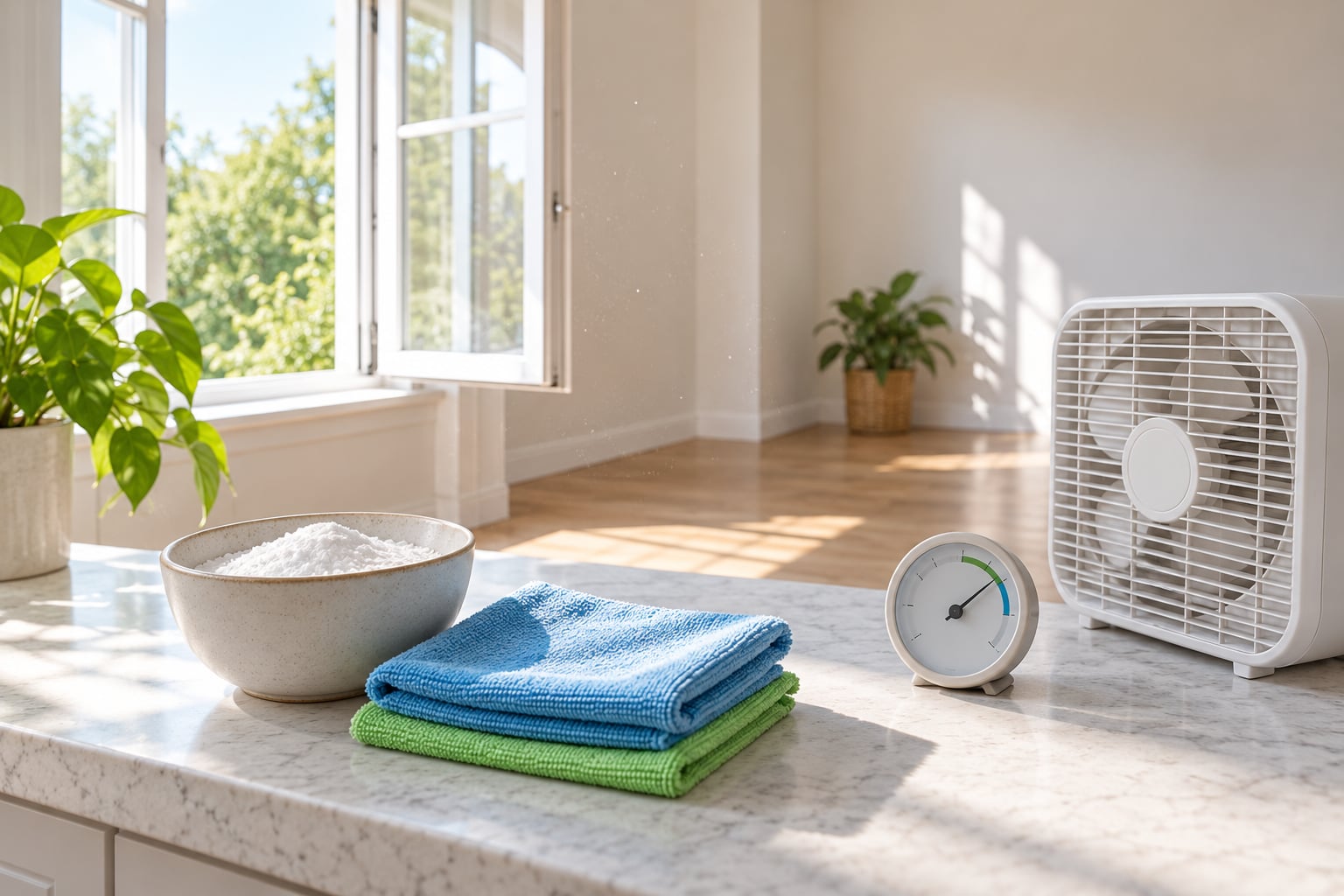
- A hygrometer or humidity meter to read relative humidity. A basic dial model is enough.
- Clean microfiber cloths, one for the kitchen and one for the bathroom so you never carry residues between rooms.
- Mild, unscented cleaning products you already have. No specialty brand needed.
- Baking soda for absorbing small, temporary odors, and a shallow container to hold it.
- A box fan or small fan to move air through a room during airing. A single fan is a ventilation aid, not a purifier.
- Basic repair materials such as sealant, washers and screwdrivers, for small leaks and loose vent covers.
Two rules keep this safe. Never mix cleaning products, especially bleach with an ammonia-based cleaner, and never combine an acid such as vinegar with hydrogen peroxide. And a fan or dehumidifier plugged into an outlet near water, or an extension lead under a rug, is a fire risk you do not need.
Call your landlord rather than attempting the work yourself if the problem is a persistently blocked vent, a ceiling stain in a rental, or anything involving the gas supply, a chimney or the electrical panel. Structural leaks, widespread mold and gas work are for licensed professionals, full stop.
Step-by-Step: How to Improve Indoor Air Quality Without Buying an Air Purifier
Seven actions, in the order that gives you the biggest return for the least effort. Start at the top and work down.
Identify and Remove Hidden Pollution Sources
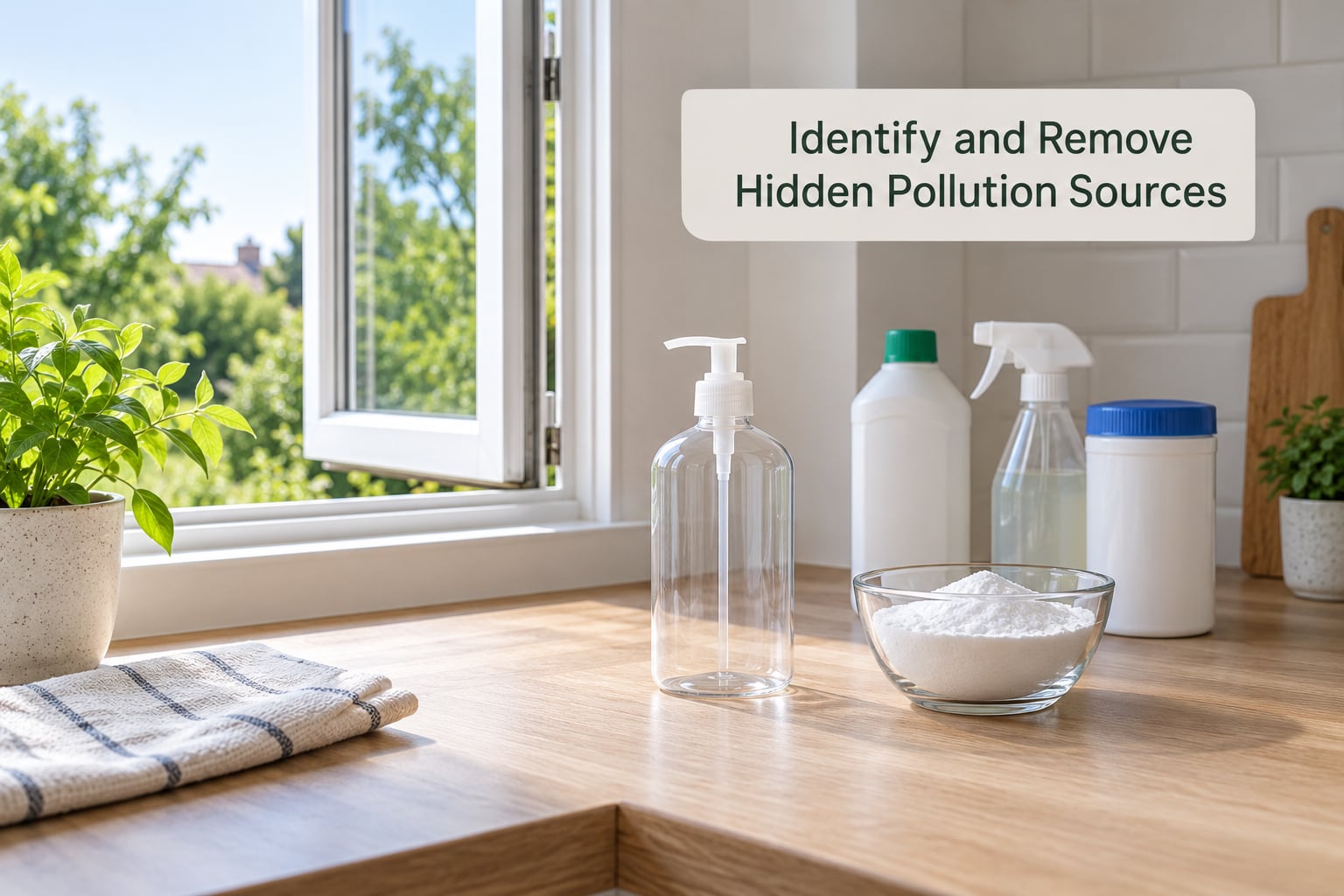
The fastest gains come from finding what is making the air dirty and then removing or containing it. Most homes have two or three sources, not twenty.
Walk through each room with a short checklist: any smoke or strong fragrance, cooking fumes, recently opened cleaning products, damp patches, visible dust bunnies, a blocked or bent vent cover, or a new rug or sofa. Pay attention to the room you use least, since nobody cleans it. Check behind the washing machine, under the sink and inside the bathroom cabinet for water damage, since those are the spots people avoid.
Do it in this way: open windows immediately after cooking or after a rainstorm so the source disperses, then take the source out or seal it. If the smell is gone within a few hours of leaving the room ventilated, you found a plausible source. Success looks like less odor, less condensation on glass and visibly less dust on horizontal surfaces within a week.
Increase Safe Ventilation Throughout the Day
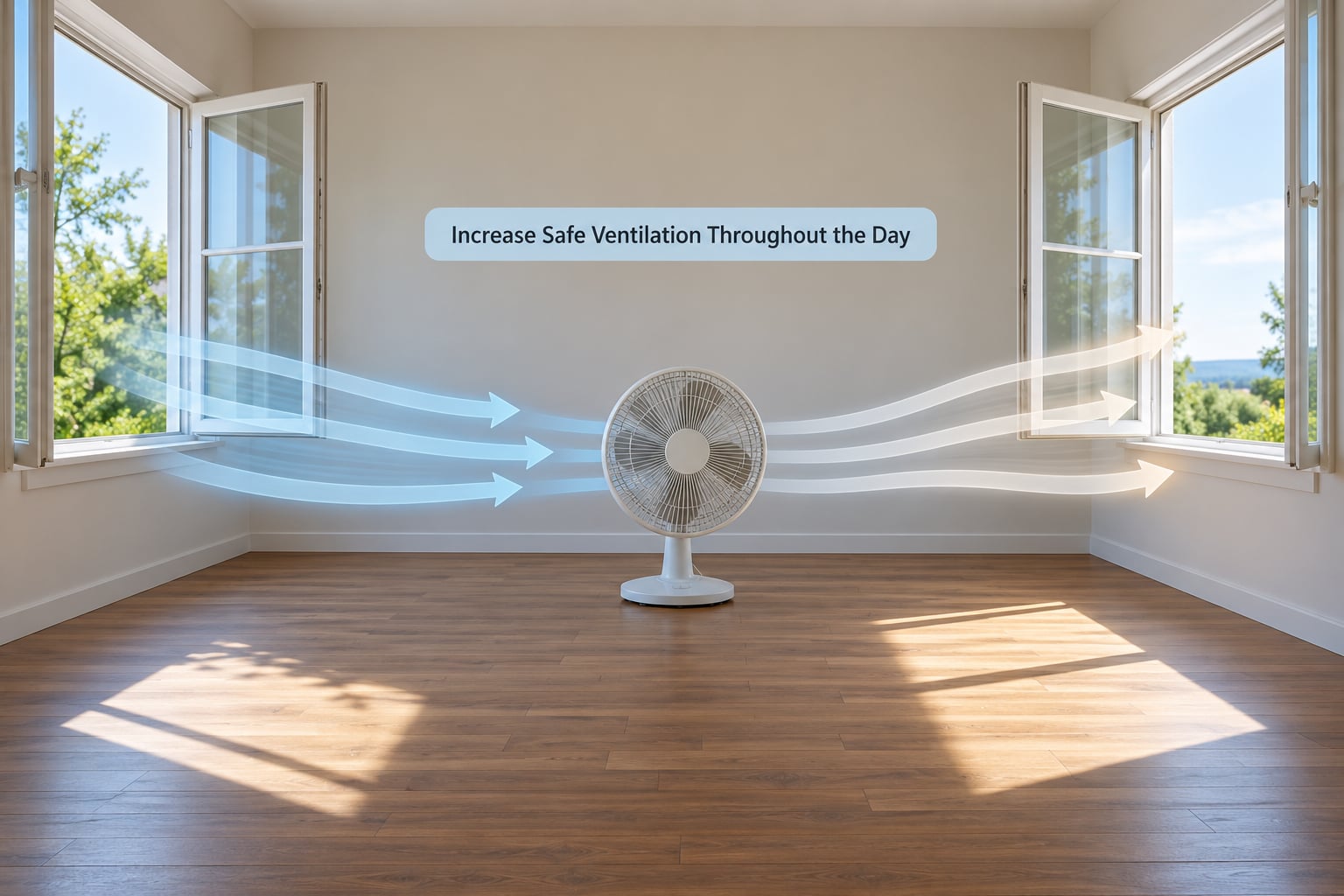
Ventilation dilutes whatever you cannot remove. Open windows on two sides of a room at once, opposite each other, so air actually flows through rather than pooling in a corner.
Short and intense beats long and lazy. Fifteen minutes of cross-ventilation in the morning and again in the evening does more than an hour of a propped-open single window, which mostly lets air in and lets polluted air out of the room without exchanging anything.
A fan makes a closed room far more useful: point it out of one open window while a second opening is on the opposite side and you get a directed flow across the room. Never run a fan with every opening closed; that just recirculates stale air.
Check the outdoor air index before you do this. During wildfire smoke, heavy traffic pollution, or a pollen peak, close the windows, keep the indoor air as clean as you can, and ventilate later when readings improve. Running a fan outdoors while the outdoor air is bad pulls the bad air straight in.
Success means the room stops feeling stuffy and odors fade within minutes, with no new dust, smoke haze or condensation appearing.
Clean Dust and Allergens Without Stirring Them Up
Dust is the single most common indoor air pollutant, and the fastest way to make more of it is to sweep it. The trick is a sequence that keeps it on the cloth.
Start by removing clutter and anything that traps dust, so you are not moving it around later. Work top down, high to low, so falling dust lands on surfaces you have not cleaned yet. Dust with a clean microfiber cloth, or dampen it slightly for vertical and painted surfaces. Vacuum carpets, rugs and upholstery with a sealed-system vacuum, using the HEPA setting or bagged mode if your machine has one, and go slowly rather than fast. Wash bedding and reusable fabric at the temperature the care label allows, and clean soft furnishings on the same schedule.
A damp method beats a dry one on dusty surfaces, because a wet cloth captures what a dry brush pushes back into the air. Fragrance-free products matter here too: many people sneeze near an irritant they cannot identify because it smells nice. And clean in a room you can ventilate right after.
You have succeeded when a surface stays dust-free for a week and the air is less hazy right after cleaning than right before it.
Control Humidity, Condensation and Mold Risk
Mold needs moisture, and moisture is the most common serious indoor air problem in otherwise well-kept homes.
Read relative humidity on the hygrometer first. Below about 30 percent you may get more static and dry throats; sustained readings above 60 percent invite mold and dust mites. Condensation on a cold window pane is normal and a different thing from dampness: it forms on cold glass and disappears after the room dries out, whereas damp wood, a musty smell or a stain that keeps coming back points to a real moisture source.
Fix what you can yourself. Drip from a tap is a washer change. Drying wet materials within a day, and keeping airflow moving in bathrooms and kitchens during and after use, prevents most problems. Run the bathroom fan for twenty minutes after a shower rather than five, and close the door while it runs so it exhausts outside rather than into the hall.
If moisture persists once the obvious leaks are handled, a dehumidifier becomes reasonable, but it treats the symptom, not the cause. A recurring stain on a ceiling, mold in more than one room, or a persistently climbing humidity reading needs someone qualified to find the water. You have fixed it when surfaces stay dry, the musty smell does not return, and the humidity number stops drifting upward.
Manage Cooking, Heating and Daily Habits
Cooking and combustion are the biggest day-to-day source of indoor particles and gases, and both are habits rather than purchases.
Use the range hood every time you cook, on high for anything that produces steam or smoke, and let it run another ten minutes after the pan is off. Make sure it actually vents outdoors: a recirculating model with charcoal filters only removes some grease and odor, and adds no fresh air. A bathroom or kitchen fan that blows into an attic or a wall cavity is doing nothing useful either. Dry wet laundry outside or in a ventilated room instead of on an indoor rack, skip candles and incense, keep the home smoke-free, and have the stove, flue and fireplace serviced on the manufacturer’s schedule. Run the heating at the lowest setting that keeps you comfortable, since drier indoor air means less condensation.
You will notice less grease odor, fewer droplets on window glass near the stove, and less haze after cooking.
Try Low-Cost Odor Control Without Masking Problems
Baking soda and activated charcoal absorb a limited amount of odor, and that is all they do. Keep expectations straight and they are genuinely useful for a small, temporary smell after you have already ventilated and cleaned.
Put baking soda in an open dish so air can reach all sides, or stir it, and replace it every few weeks once the smell stops disappearing. Same rule for a sachet of activated charcoal, which works by adsorption and saturates over time. Dispose of used material in the household waste and keep it away from children and pets. Skip the aerosol air freshener and the plug-in scent, because they add volatile organic compounds to the air you are trying to clean, and a fragrance you can smell is proof of it.
If a smell fades only while a freshener is running, you have covered a source rather than removed it. Keep digging back to the first section.
Maintain Results With a Weekly Indoor Air Routine
The plan works in a week and unravels in a month unless the last step holds it together.
Pick a slot, usually Sunday evening, and cover a short list. Air each room for fifteen minutes. Wipe surfaces with a clean damp cloth and vacuum the main floor. Clean or shake out the vent covers and confirm the extractor fan actually runs. Check the hygrometer and write the number down. Look at the same ceiling, the same window corner and the same under-sink area you looked at last week. Keep washing sheets and wiping the bathroom fan grille. Once a season, add the slower jobs: check smoke and carbon monoxide alarms, inspect for damp in closets and behind appliances, and give the fridge coils and filters a clean.
If odors, condensation or dust return faster than that, something in the list slipped. A notebook with four columns, date, humidity reading, what you did and what you noticed, is usually enough to spot the pattern in a few weeks.
Common Mistakes
Most disappointing results come from one of six habits.
Opening one window in a polluted room. A single opening in a room with no cross-flow tends to pull stale, contaminated air toward that opening rather than sweeping it out. Open two opposite sides, or open one and run a fan out of it.
Using fragranced products to fix a smell. Air fresheners mask odors by adding new ones, and the volatile organic compounds they emit can aggravate irritation. Use fragrance-free, and note that “unscented” only means no added fragrance while “fragrance-free” means none, so the second label is the one to look for.
Wiping with a cloth that is already dirty. A damp cloth spreads whatever it has just picked up instead of capturing it. Change cloths per room and wash them in hot water before they get dingy.
Cleaning only the carpet. A large share of household dust settles on horizontal surfaces above floor level, curtains and bedding. Top down, not just downward.
Leaving lids off cleaning products. An open bottle releases fumes continuously. Close them and store them away from heat and children.
Treating a dehumidifier as a mold fix. It pulls moisture from the air, so mold spore counts drop, but the water source is still feeding the problem and damp materials can remain wet. Find and repair the source first.
One habit ties it together: treat freshness as a maintenance schedule, not a one-off project. A fifteen-minute airing, a weekly wipe-down and a monthly look at the damp-prone spots will hold a room steady for most of the year, which is exactly how you improve indoor air quality without buying an air purifier or keeping a machine running.
Frequently Asked Questions
How long should I air out my room each day?
Fifteen minutes of cross-ventilation, morning and evening, is enough for most homes. Open two windows on opposite sides so air moves through the room, and let a fan point out of one of them. Skip the airing when your local air quality index reports wildfire smoke or heavy pollution, and ventilate later instead.
Are essential oils or air fresheners good for indoor air quality?
No. Both add volatile organic compounds to the air, which is the opposite of what you want, and a strong scent only proves molecules are being released. If you enjoy a scent, a reed diffuser is no better for the air. Remove the source, ventilate, and use baking soda or charcoal for what is left over.
Can houseplants improve indoor air quality?
A little, and much less than popular claims suggest. The famous sealed-chamber studies used far more plants than a room holds and no air exchange, so real rooms are a different test. An office study found roughly a fifth drop in nitrogen dioxide with five plants, which is modest. Treat plants as decoration, not a ventilation plan.
How often should I clean to reduce indoor dust and allergens?
A weekly pass works for most homes: wipe horizontal surfaces with a clean damp cloth, vacuum with a sealed-system vacuum, and wash bedding weekly at the temperature the label allows. Reduce how much you disturb by decluttering first. If someone in the house has asthma or a dust mite allergy, vacuum twice a week and wash bedding hot.
When should I hire someone to assess poor indoor air quality?
Hire an inspector when the cause is not obvious, or when you see widespread mold, a repeating ceiling or wall stain, or a musty smell that returns after cleaning. Smoke or gas odors, and any symptoms that do not settle after a week of ventilation, deserve professional and medical attention rather than another DIY fix.
Start with one afternoon: find and remove the sources, open two windows in the rooms that smell worst, then dust the whole home top down and note your humidity reading. That single pass tells you which of the seven steps matters most in your house, and you will know within a week whether the air is genuinely better. If anyone in the household has asthma or persistent symptoms, talk to your doctor or a local public health service rather than treating the checklist as medical advice.