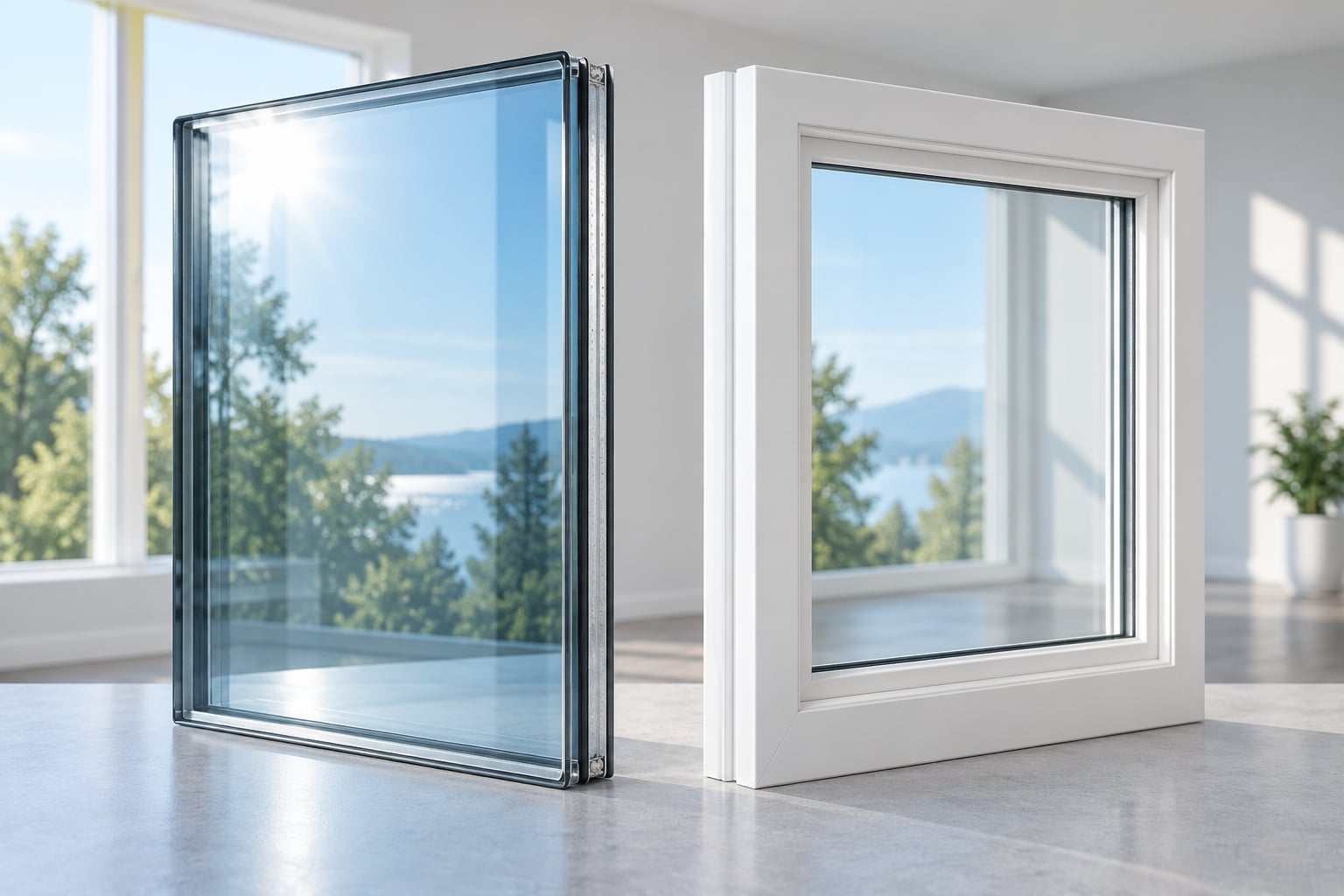
Window film is the cheaper, faster option, and it does a genuinely good job of cutting solar heat, glare and UV. Replacement windows cost far more and take days, but they are the only fix for drafts, failed seals and thin single-pane glass. Deciding between window film vs replacement windows for energy savings comes down to one question: which problem does your window actually have?
I get asked this constantly, and the honest answer is that most of the dramatic percentages floating around the internet are marketing, not measurement. So this guide lays out what each option really does, what it costs relative to the other, and where film is the sensible choice and where replacement is the sensible one.
Table of Contents
- Window Film vs Replacement Windows for Energy Savings at a Glance
- How Window Film Saves Energy
- How Replacement Windows Save Energy
- Energy Performance: Which Option Performs Better?
- Cost, Installation, and Return on Investment
- Comfort, Appearance, and Everyday Use
- Durability, Maintenance, and When Each Option Makes Sense
- Which Should You Choose?
- Frequently Asked Questions
- Is window film worth it?
- How effective is window film as insulation?
- What are the disadvantages of window film?
- How much can energy-efficient windows save?
- Should 20 year old windows be replaced?
- Is there a tax credit for energy-efficient windows?
- Conclusion: Start With Your Windows’ Biggest Problem
Window Film vs Replacement Windows for Energy Savings at a Glance
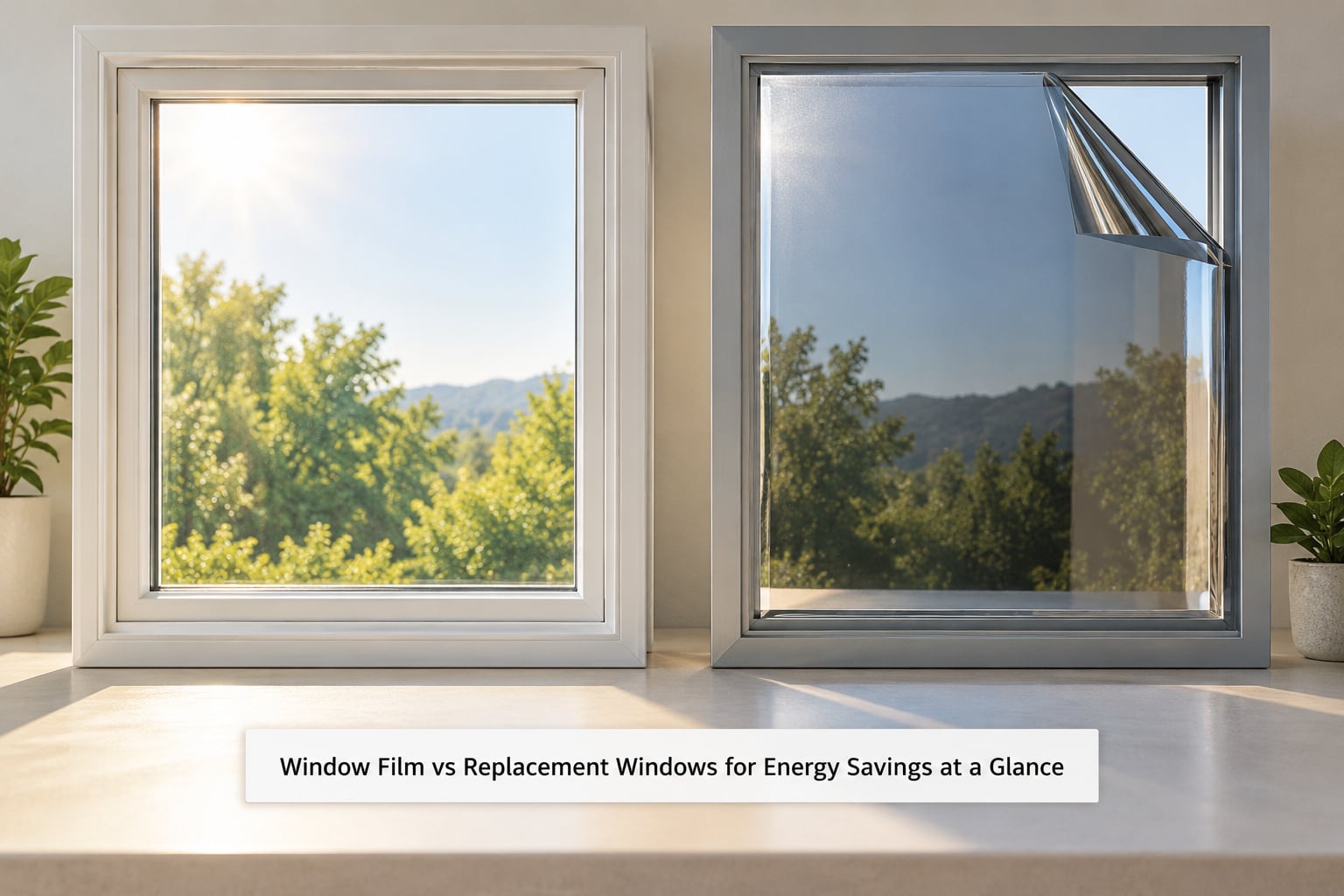
The table below is the fastest way to see where the two options genuinely differ. Note the two rows where film has no answer at all: air leakage and heat loss through the frame.
| Factor | Window film | Replacement windows |
|---|---|---|
| Upfront cost | A fraction of replacement cost | Several times the film cost, per window |
| Cost driver | Film type, glass size, installer | Unit count, size, frame material, glass package, removal labour |
| Installation time | Often a day or less for a whole home | Several days for a full house |
| Disruption | Minimal, rooms stay usable | Scaffolding, interior trim work, dust |
| Solar heat gain (SHGC) | Large reduction on sun-facing glass | Good reduction with Low-E and spectrally selective glass |
| Winter heat loss (U-factor) | Small improvement, mostly a radiant-heat effect | Substantial improvement with double or triple pane |
| Drafts and air leakage | Does nothing | Rebuilt seals and frame fix this |
| UV protection | Strong, and covers the frame and interior | Good with Low-E, varies by package |
| Appearance | Nearly invisible if specified well | New sightlines, new frame colour, full curb appeal gain |
| Lifespan | Several years before hazing or edge lift | Decades, tied to the frame warranty |
| Reversible | Yes, though removal is work | No |
| DIY feasible | Small jobs, yes, with patience | No |
| Best for | Renters, historic facades, sun-facing rooms | Drafty single-pane homes, failed seals, whole-home upgrades |
How Window Film Saves Energy
Window film is a thin, optically clear sheet applied to the inside or outside of existing glass. It is a retrofit coating on a window you already own, not a new window.
Solar-control film works by reflecting part of the incoming infrared radiation before it turns into heat in the room. Low-emissivity film works in the opposite direction, reflecting radiant heat back toward the interior in winter so you keep more of the warmth already inside. Both are thin films with a microscopic metal or ceramic coating, and the difference is which part of the spectrum they target.
Film also blocks a large share of ultraviolet light, which is why it protects furniture, flooring and the window frame itself from fading. Glare reduction comes as a side effect, and some products add a hard layer that holds broken glass together.
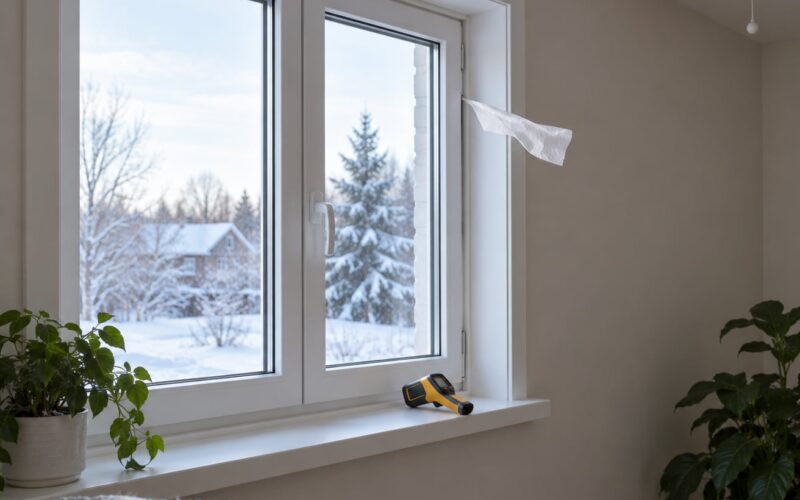
Here is the catch that decides a lot of comparisons. Film sits on the glass, so it can only affect energy that passes through the glass. Air moving around the frame, through failed seals, or through gaps in the sash does not care how good the film is. If you can feel a draught on a cold day, film will not help.
How Replacement Windows Save Energy
Replacement windows work on three levels at once, which is why they outperform film in a properly matched comparison.
The first is air leakage. New units have new gaskets, new weatherstripping and a properly sealed perimeter, so the convection that leaks past a warped sash or a hardened seal is gone. Homeowners on home improvement forums often describe this as the change they notice first, a room that finally stops feeling like it is being ventilated by the outside.
The second is glazing. Single-pane glass has one layer and a lot of conductive loss. The U.S. Department of Energy has attributed roughly 25 to 30 percent of residential energy loss to single-pane windows, which is why replacing them shows up on utility bills. Double or triple pane with an argon fill and an insulated spacer cuts that number substantially.
The third is the frame. Wood, vinyl and composite frames all insulate better than a thin metal or badly conditioned frame, and a Low-E or spectrally selective coating on the glass surface changes the solar heat gain coefficient rather than just reflecting a slice of it.
Replacement also repairs conditions film cannot touch: fogging between panes from a failed seal, frame rot, sashes that no longer close, and broken muntins or glazing points.
Energy Performance: Which Option Performs Better?
On raw performance, well-specified replacement windows win, because film only changes one layer of the system. In practice, though, the best option depends on your climate and which windows face which direction.
| Situation | Better option | Why |
|---|---|---|
| Hot, south- and west-facing rooms | Film | The problem is solar heat gain through the glass, which film targets directly |
| Hot-humid climate | Film first | Heat rejection is the priority, and film costs far less to apply across a whole facade |
| Cold climate, drafty single-pane | Replacement | The problem is heat loss and infiltration, and only new units address it |
| Mixed climate, whole house | Replacement | Whole-window performance across seasons beats a partial retrofit |
| Rental or historic facade | Film | Reversibility and appearance keep the original glazing in place |
| Fogged panes, rotted frames | Replacement | Those are component failures, not energy problems |
You will see the Department of Energy quoted for film cutting cooling costs by up to about 30 percent and heating costs by up to about 25 percent. Those are real published figures, but they are best-case numbers measured against unfilmed glass under specific conditions. Vendors quote them because they sound large, and homeowners distrust them because their own bill barely moved.
The gap is usually explained by three things. The window area being treated is often a small share of total wall area. The room gets its heat from other sources anyway, including infiltration through doors and walls. And the baseline matters enormously, since film helps most on already-efficient double-pane glass and least on thin single-pane in a leaky house.
This is why you should compare U-factor and SHGC figures rather than a single headline percentage. The U-factor measures heat passing through, which is the winter number, and SHGC measures solar heat gain, which is the summer number. A product rated on one and silent on the other may be solving the opposite problem from yours.
Cost, Installation, and Return on Investment
Window film is materially cheaper per window and usually far cheaper per house. Professionally installed film is commonly quoted as a small fraction of the cost of a comparable replacement window, and DIY film adds only the material cost. Replacement pricing varies enormously with size, count, frame material and how much interior trim work has to be disturbed, which is why forum readers talk about quotes ranging from a few hundred dollars per window to well over a thousand for larger units.
Installation is where the difference feels largest. A crew can film an entire house in a day or two, and you can stay in the rooms. A full replacement takes days, needs exterior access, and leaves sawdust in the sill cavities.
On payback, be sceptical of any number you are handed. The honest calculation is annual savings divided by installed cost, with the assumptions written down, and the assumptions are usually where the disagreement lives: how much of your bill is heating and cooling at all, which windows you treat, and what the weather does. A HomeImprovement poster put it bluntly, saying the savings from replacing windows is not competitive with other energy saving measures around the home and usually sits near the bottom of a payback ranking. That is broadly true when the windows are not the worst part of the envelope.
One offsetting factor sits on the other side of the ledger. A full replacement discards a functioning frame and sends it to landfill. On a site like this one, that waste and the embodied carbon of manufacturing new vinyl and glass is a real argument for a retrofit where the retrofit actually works.
Comfort, Appearance, and Everyday Use
The everyday differences show up before the utility bill does.
Film cuts glare on a screen you actually want to look at, which is the single most common complaint about a hot west-facing room. It protects rugs, artwork and wood from UV fading. Applied to a bathroom or street-facing window, it can add daytime privacy while keeping the room lit.
It also changes how the glass looks from outside. Good solar-control film is nearly invisible, but a dark film turns a window into a mirror at night and hides the view out in daylight. Ask for samples and check them at several times of day before committing a whole house.
Replacement windows deliver comfort in a different way. They remove the cold downdraught at the sill, they cut noise noticeably because two panes and an air gap damp sound, and they often clear interior condensation. New frames restore the sightlines that old paint-blobbed sashes had lost. What they do not do is change the glare coming through, unless the glass package includes a solar-control coating.
Durability, Maintenance, and When Each Option Makes Sense
Film is a consumable. Quality products last many years in sheltered interiors, but edges can lift, the adhesive can go cloudy, and film stuck on a pane that has already fogged will trap that haze forever. It needs gentle cleaning, and it has to be removed before you can reglaze a sash. Removal is a job, not a weekend.
Film on top of an existing Low-E coating is a question worth asking the retailer. Applying an external film over coated glass can trap heat in the coating and shorten the life of both. Some installers decline the job for that reason.
Replacement windows come with warranties measured in decades and are repairable part by part. Seals can be renewed, glass can be replaced, hardware adjusted. The failure mode is the opposite problem, a new unit with a bad seal can fog within a few seasons, so it is worth asking about spacer type and getting the workmanship right.
Rules matter too. Renters cannot replace windows without a landlord conversation, and historic districts, conservation areas and some HOAs restrict changes to the facade. Film keeps the original sightlines and can be taken out later, which is why it remains the default answer in those situations.
Which Should You Choose?
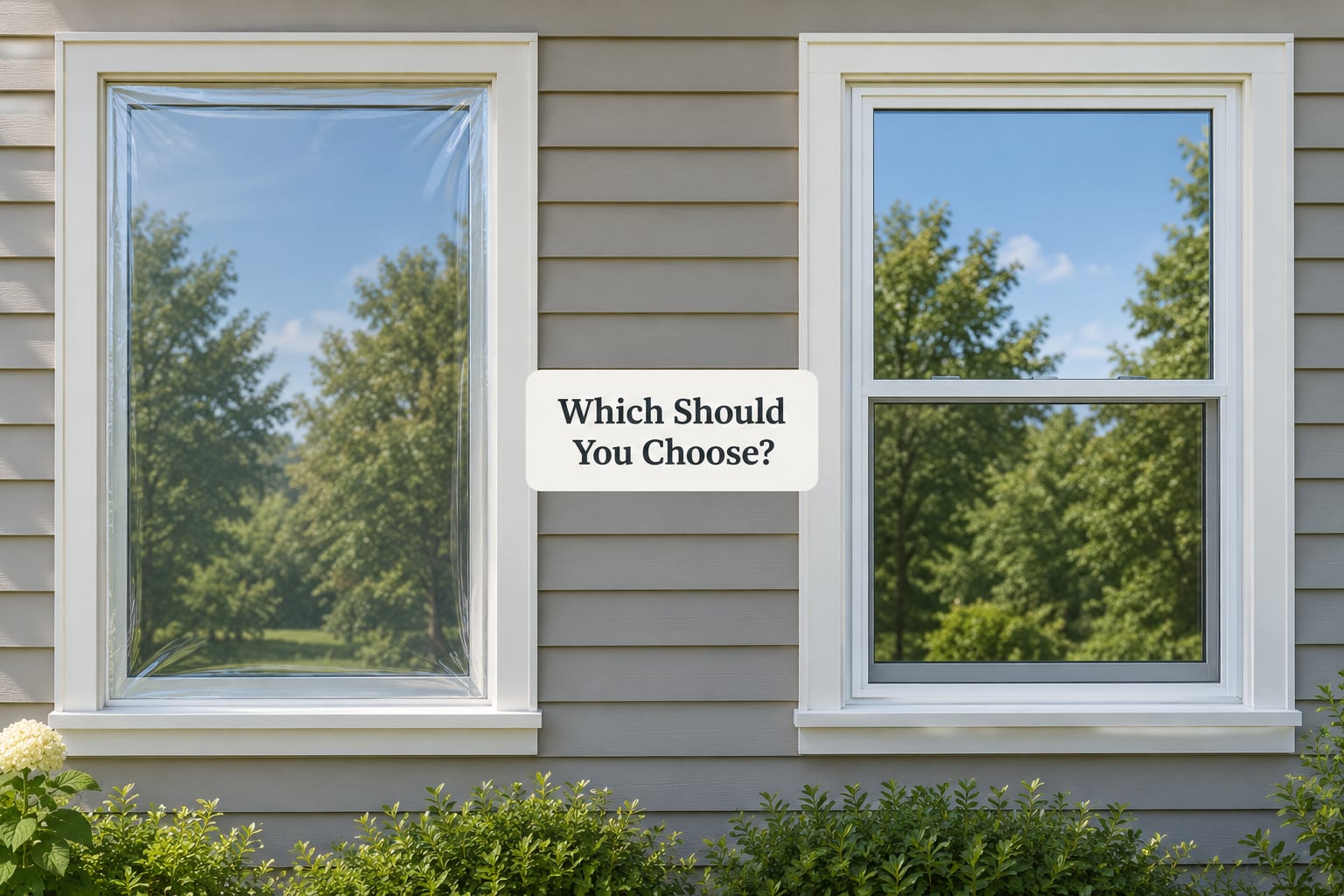
Choose film if you rent, if you are in a historic district or under an HOA that protects the facade, or if the room that hurts most is the one screaming with afternoon sun. It is also the right call when your windows are already double-pane and sound, the draughts are minimal, and you want to stop UV fading and glare now rather than fund a whole-house project.
Choose replacement windows if you feel real draughts around the sashes, if panes are fogged or the frames are soft, if you have single-pane glass in a house you plan to keep, or if you are doing a wider renovation anyway. It is the only option that improves winter heat loss and air sealing at the same time.
Choose neither yet if the windows are fine and the house is not. Rank your options by payback and start at the top, which usually means attic insulation and air sealing at penetrations, then weatherstripping and caulking around the frames. A blower door test costs very little and tells you how much air the house is actually moving, which tells you whether the windows are worth solving first.
Frequently Asked Questions
Is window film worth it?
It is worth it when the problem is solar heat, glare or UV, which is the case for most south- and west-facing rooms. It is not worth it when the problem is draughts, fogged panes or thin single-pane glass, because film cannot fix air moving around the frame. Treat any claim of 80 percent savings as a best case rather than an expectation.
How effective is window film as insulation?
Window film is a solar control measure more than an insulation measure. It reflects part of the incoming infrared heat and, in low-emissivity form, pushes radiant heat back indoors in winter, so it helps with both seasons. But it sits on the glass and cannot add a second pane, so the winter heat loss benefit is modest compared with real double or triple glazing.
What are the disadvantages of window film?
The main drawbacks are durability and flexibility. Edges can lift and adhesive can haze after several years, film over an existing Low-E coating can shorten the life of both, and removal is real work. Dark film also makes a window act as a mirror at night and hides the view out during the day, so sample the shade before committing.
How much can energy-efficient windows save?
Savings depend far more on your climate, glazing and air leakage than on any headline figure. The Department of Energy attributes roughly 25 to 30 percent of residential energy loss to single-pane windows, so replacing them matters most in leaky, older homes in cold climates. On an efficient modern home with good glass, the improvement is far smaller.
Should 20 year old windows be replaced?
Age alone does not decide it. Replace them if they leak air, have failed seals or fogged panes, have rotted frames, or are single-pane in a cold climate. Keep them if the seals are sound, the sashes close tight, the glazing is double-pane, and the problem is glare rather than temperature. Test for draughts before you decide.
Is there a tax credit for energy-efficient windows?
Eligible replacement windows can qualify for a federal residential energy credit, and many utility programmes offer rebates for both windows and film. Rules, rates and eligible product lists change, so check the current programme requirements and ask your utility before you buy. Film is usually covered by utility programmes rather than the federal window credit.
Conclusion: Start With Your Windows’ Biggest Problem
Window film versus replacement windows is not really a fight over performance. Film solves heat gain, glare and fading on glass that is otherwise fine. Replacement windows solve heat loss, air leakage and failed components. Identify which of those your windows actually have, and the decision usually makes itself.
If the room is too hot, start with a film quote. If the house is cold and drafty, get a replacement quote and a blower door test in the same visit, then compare. Updated for October 2026, this guide reflects the guidance published by the U.S. Department of Energy, NFRC and ENERGY STAR.