New windows rarely cure a drafty house, because a window is a small share of the air leaking out of a home. What you feel near the glass is usually air arriving from somewhere else in the building: the attic floor, leaky ductwork, an uninsulated extension wall, or a pressure difference created by a fan or a chimney.
The useful part of this guide is the diagnosis, not the fix. Find the moving air first, then repair the exact layer that failed. Seal the wrong joint and you will be back in the same spot next winter with a bigger caulk gun.
Table of Contents
- Why Your House Feels Drafty Even With New Windows
- How to Tell Whether the Draft Comes From the Window or the Wall
- The 7 Common Causes of Drafts Around New Windows
- 1. Loose interior or exterior trim around the opening
- 2. Installation gaps hidden under caulk
- 3. Failed or incorrectly fitted weatherstripping
- 4. Sash alignment and hardware faults
- 5. Damaged glazing and frame seals
- 6. Pressure differences from fans, chimneys and appliances
- 7. Air arriving through nearby walls, roofs, doors and vents
- Installation Problems That New Windows Do Not Fix
- Window Seals, Weatherstripping, and Sash Problems
- How Air Pressure Creates Drafts You May Mistake for Bad Windows
- How to Fix Drafts Without Replacing the Windows
- Frequently Asked Questions
- Do new windows stop drafts in a house?
- Will double glazing keep my house warmer?
- Is caulk a proper fix for a drafty window?
- Why are my windows sweating on the inside?
- How do I know whether my house is leaking air?
- Should I fix the attic before replacing windows?
- What to Check First
Why Your House Feels Drafty Even With New Windows
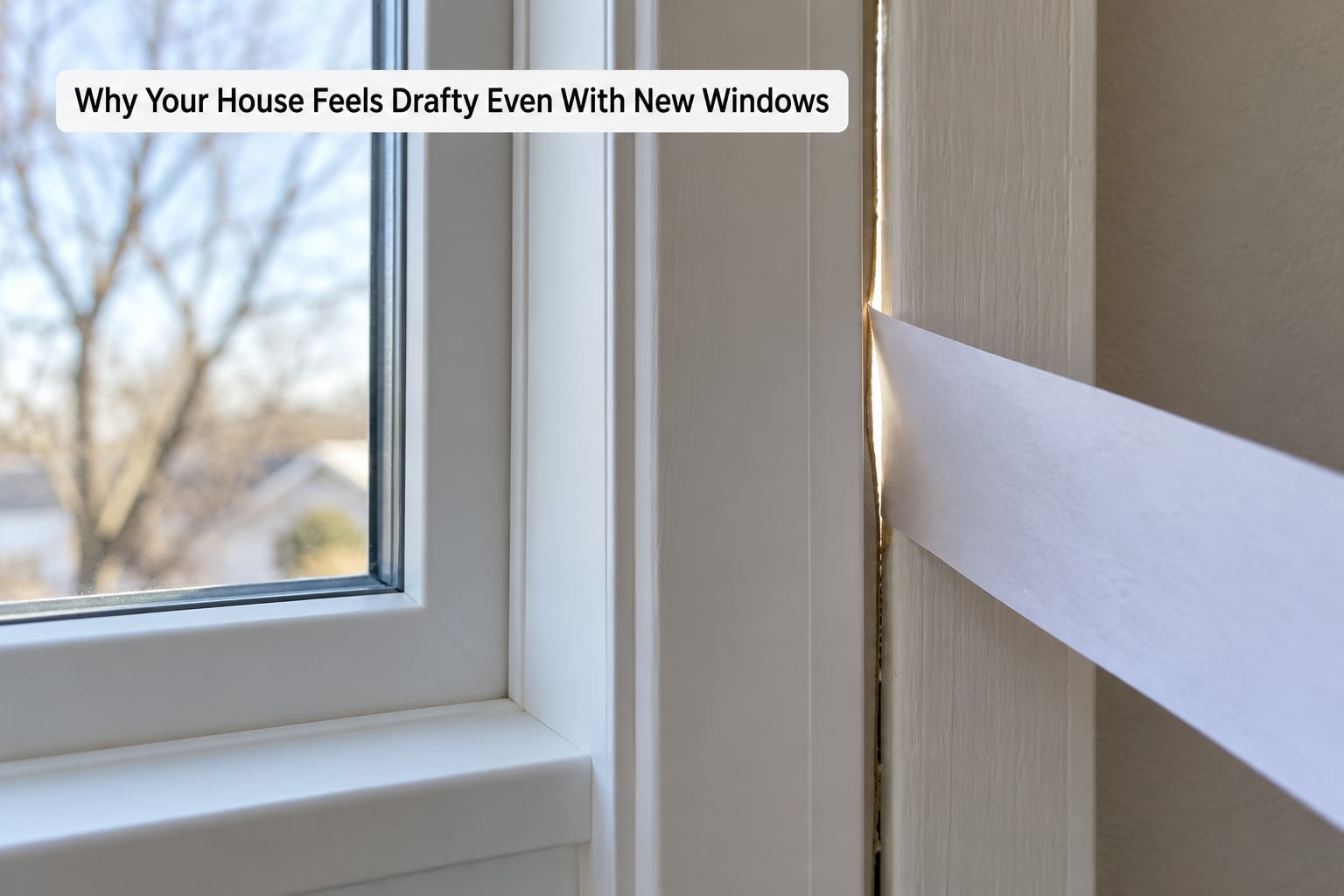
Your house feels drafty even with new windows because the replacement units fixed one opening out of many, while the air path that actually pulls cold into the room stayed untouched. Warm indoor air rises and leaks out high in the house, which pulls outdoor air in low down and along the nearest path of least resistance. If that path runs past a window, the window gets blamed for a leak that started somewhere else entirely.
Pressure differences make this worse, and they are not subtle. Bathroom and kitchen exhaust fans, a running fireplace, a clothes dryer and a leaky duct system all push or pull air, and a house with many small leaks moves a lot of air very quickly.
Start by matching what you feel to where it comes from. This table is the whole diagnostic in one view.
| Where you feel moving air | Most likely cause | First check |
|---|---|---|
| Along the sash, window fully closed | Failed or compressed weatherstripping | Hold a tissue at the meeting rail and the sash-to-frame joint |
| Outside the glass, around the frame | Missing expanding foam or sealant in the rough opening | Run a smoke pencil slowly around the full perimeter |
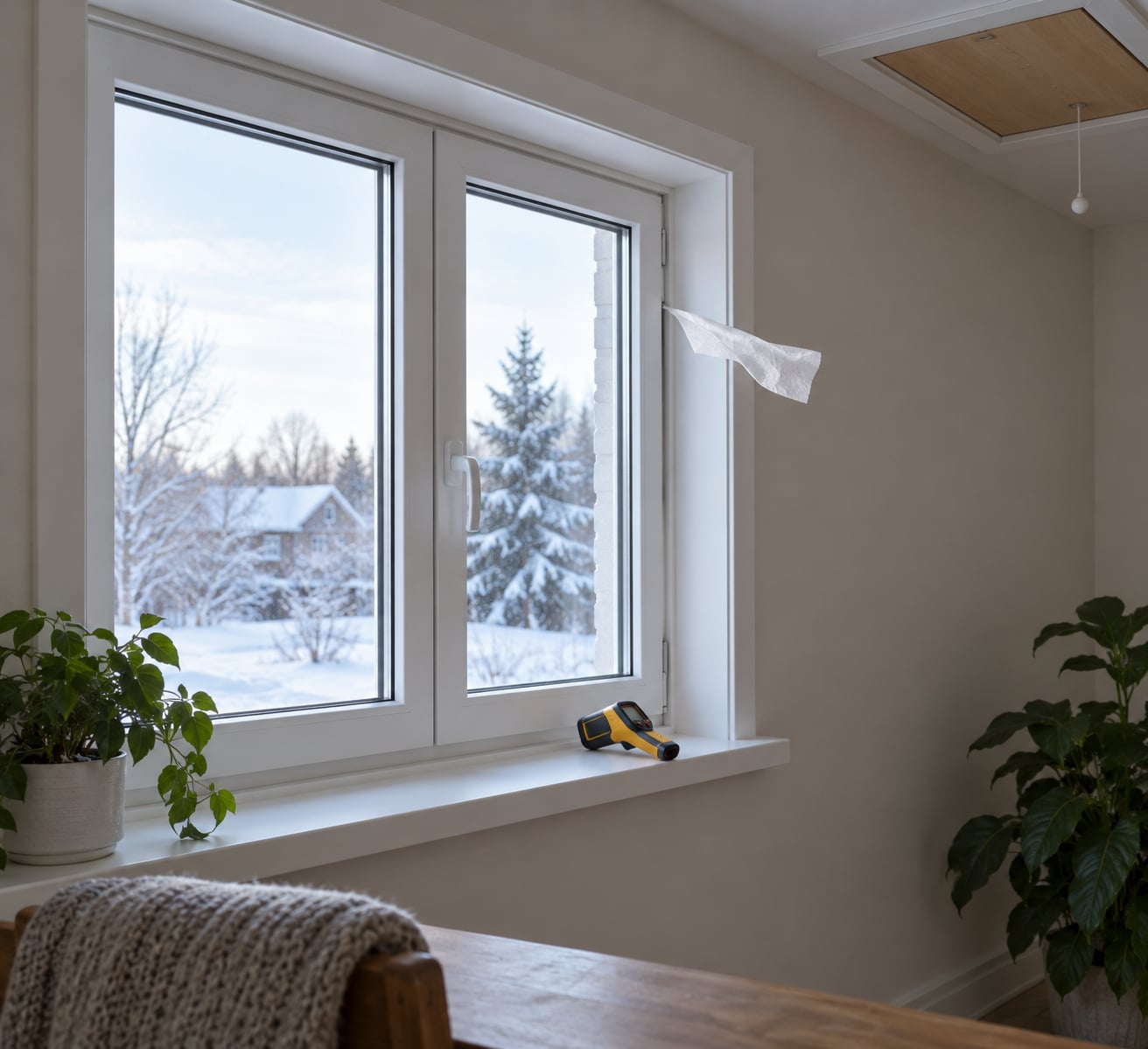
| Wall above or beside the window, cold to touch | Missing cavity insulation or an uninsulated addition | Compare wall surface temperature with an infrared thermometer |
| Along the ceiling line, worst on the top floor | Attic bypasses around pipes, ducts, wiring or the top plate | Inspect attic penetrations on a cold, windy day |
| Appears and disappears with a fan running | Pressure difference from exhaust fans or a combustion appliance | Switch the fan on and off and watch the tissue |
| Present in every room, all weathers | Duct leakage or whole-house infiltration | Ask for a blower door test and a duct leakage test |
Two quick orientation checks before anything else. Shut off supply vents in the suspect room and the draft usually gets worse, which points at the envelope rather than the duct system. Then try a tissue at the window head, jambs and sill in turn, and note where it moves most.
How to Tell Whether the Draft Comes From the Window or the Wall
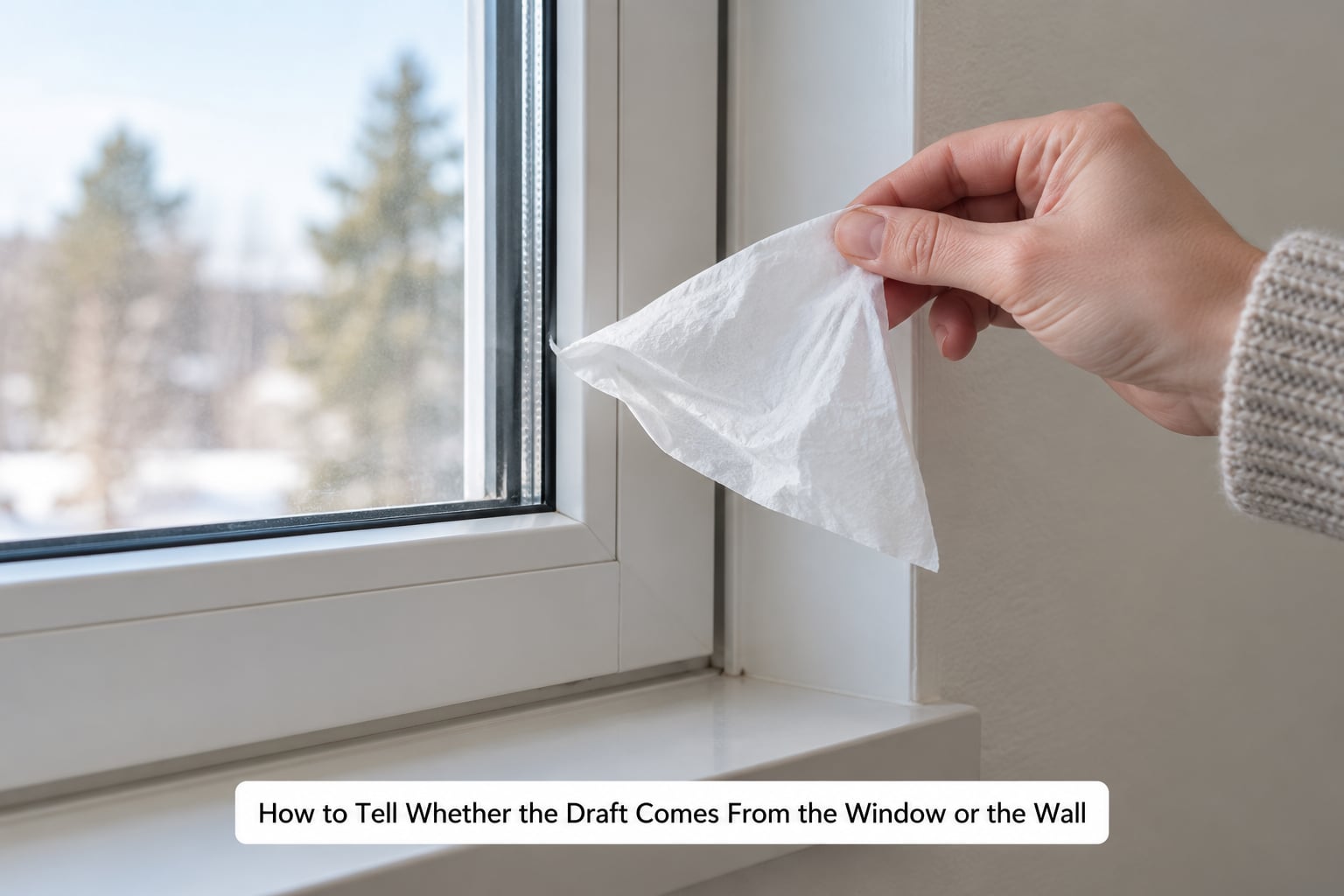
Testing takes about twenty minutes per room and needs nothing more expensive than a tissue. Work systematically around the opening, moving in small steps, because air leaks concentrate at joints rather than spreading evenly.
- Run a visual pass in daylight. Close the curtains and look for daylight around the frame, at the sill and along the top. Owners on home repair forums regularly find their first leak this way, and it costs nothing.
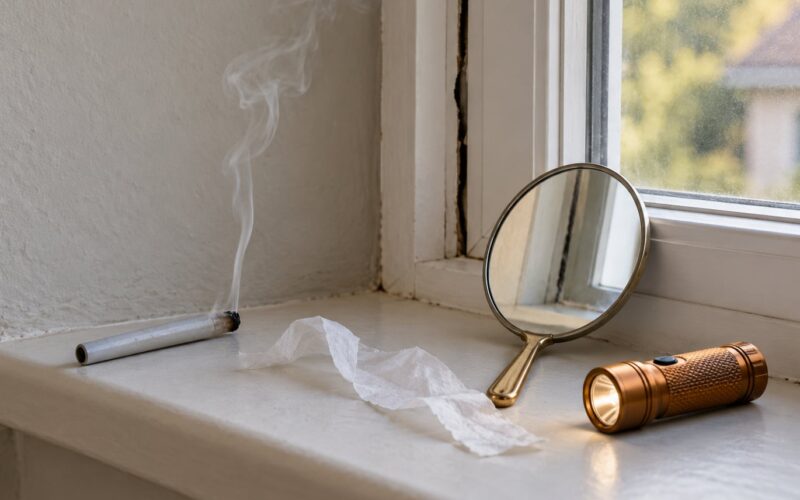
- Use a tissue at the closed sash. Hold a thin strip at the meeting rail, then the sash-to-frame joint, then the perimeter. Where the tissue moves, air is moving.
- Trace the perimeter with a smoke pencil. A smoke pencil or a stick of incense shows direction and speed. Keep the smoke away from the glass and check the sash does not scratch while you work.
- Use a handheld anemometer for numbers. If you want a repeatable reading, a cheap vane anemometer held just outside the frame gives a wind speed you can compare between locations.
- Move beyond the window. Repeat the tissue test at the ceiling line, the doorway, and any wall outlet in the same room. A draft that keeps travelling is a house problem, not a window problem.
- Test on a windy, cold evening. Pressure differences are far easier to feel when the inside and outside are 20 degrees apart.
Before you deliberately change the pressure inside the house, check what combustion appliances are running. Do not run a fireplace, furnace or water heater while the house is depressurised or while you have fans exhausting hard, because that combination can pull combustion gases back down a flue. If you are unsure, ask a qualified heating professional rather than experimenting.
The 7 Common Causes of Drafts Around New Windows
1. Loose interior or exterior trim around the opening
Trim boards move as timber dries and as the wall shifts, which opens a gap that no window part can seal. Confirm it by pushing on the trim and watching for movement, or by running smoke along the joint. The fix is refixing loose boards and resealing the joint with a suitable exterior sealant, not packing the gap with filler.
2. Installation gaps hidden under caulk
A bead of caulk over a gap that was never sealed leaves the air path intact underneath. Tradespeople on builder question-and-answer forums describe the correct standard as foaming the frame to the rough opening and sealing it as well. Confirm by looking for a continuous foam line at the frame edge, or by smoke-testing with the interior trim removed by a professional.
3. Failed or incorrectly fitted weatherstripping
Compression seals harden, flatten or get fitted upside down, so the sash no longer seals evenly. Look for a window that needs force to latch, or a seal that shows daylight through it. Replace with the part the manufacturer specifies for that sash type, following the fitting instructions.
4. Sash alignment and hardware faults
A window installed out of square, or with hinges and hardware not adjusted after delivery, binds and leaves gaps on one side. Signs include a sash that will not close evenly, rubbing on the frame, or a lock that never fully engages. This is an installation and adjustment fault rather than a defect in the window itself, so it belongs with the installer.
5. Damaged glazing and frame seals
Rubber glazing seals split or pull away from the glass bead and let moving air straight through, which also brings dirt and moisture with it. Check with a tissue at the glass-to-frame joint while the window is closed. Failed edge seals need a glazing kit from the manufacturer; fogging between panes is a different fault and is covered below.
6. Pressure differences from fans, chimneys and appliances
Exhaust fans, dryers, combustion appliances and duct leakage change the pressure balance of the whole home. A window can be perfect and still leak because the air is being pulled past it. Confirm by switching fans on and off: a draft that comes and goes with the fan is pressure, not the unit.
7. Air arriving through nearby walls, roofs, doors and vents
Attic bypasses, missing insulation in a new extension, leaky doors, recessed light housings without air-tight covers and unlined duct chases all feed the same pressure path. Confirm by widening the search: test the ceiling line, the door perimeter and any wall in the same room. If the draft keeps moving away from the window, stop blaming the window.
Installation Problems That New Windows Do Not Fix
A high-quality window fitted into a badly prepared opening inherits every flaw in that opening. The unit closes beautifully and still sits inside a continuous air channel that runs from outside to inside.
Four things go wrong most often. The rough opening is not cleared and squared before fitting. Expanding foam is omitted, or applied in blobs rather than as a continuous fill. Sill flashing and the sill plate are missing or wet-damaged, which lets water into the joint. And the wall cavity itself is left with no insulation, which is common in extensions built quickly.
Homeowners on r/HomeImprovement have described an extension that stayed about four degrees cooler than the rest of the house, with a constant draft and the window creaking in wind; the tradespeople who inspected it attributed the problem to missing expanding foam and wall insulation, not to the double glazing. That pattern is common enough to be worth naming early.
Caulk alone is rarely a permanent repair, because it is designed to flex with a joint rather than fill a cavity. It works as the final weather seal over properly prepared, foamed and flashed openings. Used on its own over a hollow gap, it bridges the outside and leaves the air path running underneath.
If your windows are recent, gather evidence before the conversation rather than after it. Photographs of the rough opening during the work, if you have them, settle arguments quickly. If you do not, a smoke-pencil test around the perimeter and an inspection of visible foam edges still give you something objective. Raise it early with the installer while the warranty and any defects obligations are live.
Window Seals, Weatherstripping, and Sash Problems
There are four distinct joints in a window, and they get confused constantly. Knowing which one you are looking at decides who should fix it.
- The glass seal. The rubber or gasket holding the pane in its bead. Failures show as air moving across the glass and as fogging or moisture between the panes.
- The compression seal. The weatherstripping between the operable sash and the frame. This is the seal that stops moving air when the window is closed, and it is the one that most often gets replaced.
- The sash hardware. Hinges, rollers, balances and the lock. These decide whether the sash closes evenly and whether the compression seal is engaged all the way round.
- The perimeter joint. Where the frame meets the wall. No part of the window controls this; it belongs to the installation.
Inspect in daylight with the window open and closed, then check the four corners, where alignment faults are most visible. Look for a sash that rubs, a lock that catches only on the second try, and daylight through a seal that should be continuous.
Fit any replacement part exactly as the manufacturer specifies, and follow their maintenance instructions for cleaning and lubrication. A seal squeezed into the wrong channel can look fitted and leak worse than the one it replaced.
How Air Pressure Creates Drafts You May Mistake for Bad Windows
Heated air rises through the house and escapes at the highest openings it can find, while cold outdoor air is drawn in low down. This stack effect moves far more air than any single window gap, and it gets stronger the taller the building and the larger the temperature difference between inside and out.
The mechanical equipment adds to it. A running exhaust fan, a dryer venting outdoors, a fireplace with an open damper, and supply or return ducts that leak all shift the balance. Combustion appliances need replacement air, and where that air comes from is often through small leaks distributed around the house.
| What you observe | What it points to | Next step |
|---|---|---|
| Draft appears within seconds of a fan or dryer starting, and eases when it stops | Pressure difference created by the equipment | Balance the ventilation and check duct and flue sealing |
| Draft stays the same in every weather and at every fan setting | A fixed leak in the envelope or the window itself | Smoke-test the perimeter and the attic in turn |
| Warm outdoor air entering on a cold day | Exhaust-driven negative pressure, or strong solar gain | Check fan run times and duct leakage |
One warning worth repeating: a strong, persistent draft near a fireplace, furnace or water heater is not a comfort problem. Stop testing and call a qualified heating professional, because the same pressure conditions that pull air through the house can affect how combustion appliances take in air.
How to Fix Drafts Without Replacing the Windows
Match the repair to the cause and most of these are straightforward jobs rather than replacement projects.
- Reseal a failed joint. If the gap is a joint that is meant to move, use a quality exterior sealant and a backer rod where the gap is wider than the sealant can bridge.
- Replace worn weatherstripping. Buy the manufacturer part for your sash type, cut to the exact lengths, and seat it in the correct channel.
- Adjust or repair the sash. Hardware adjustment, hinge placement and square setting usually belong to the installer, especially on recent work.
- Add or refix interior trim. A loose board with a sealed joint behind it stops the rattling and the visible gap.
- Correct the wall and the pressure. Insulate the cavity, air-seal attic bypasses, seal duct connections and check combustion-air provisions. This is where the real comfort gain usually is.
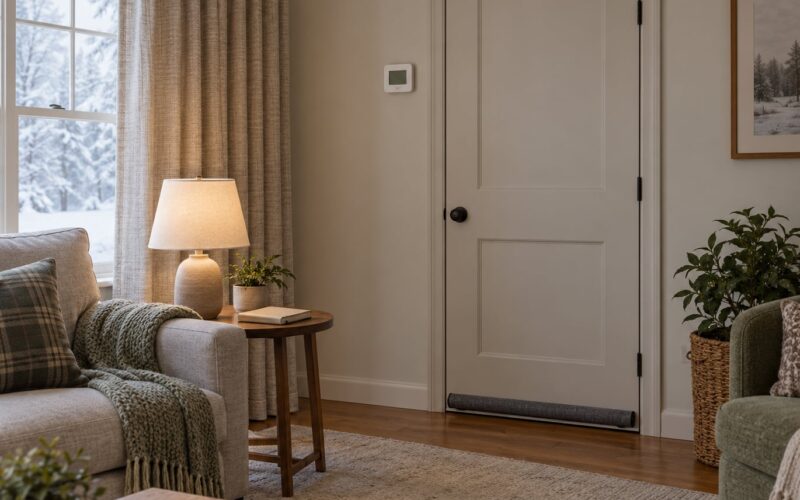
Removable sealants such as window film, draft stoppers and insulated curtains are worth using while you diagnose, and they can hold a room comfortably through one winter. They are not a repair, because they treat the symptom at the warm side of the assembly and add no lasting seal to the opening.
Hand over to a window installer when the sash or hardware is at fault, and to a building professional or energy auditor when the leak is in the wall, the attic, the ducts or the combustion-air system. Requested test results rather than opinions: a blower door measurement and a duct leakage test tell you where the air goes, and an opinion does not.
Frequently Asked Questions
Do new windows stop drafts in a house?
New windows close one opening properly, but they are a small share of total air leakage in a home. If a house still feels drafty afterwards, the air is usually arriving through the attic floor, ductwork, uninsulated walls or a pressure difference created by fans and chimneys. Test the whole room before buying anything else.
Will double glazing keep my house warmer?
Double glazing slows heat loss through the glass, which is genuinely useful, but it does little for air moving around a window. A well-sealed double-pane unit in a badly prepared opening still sits inside an air channel, and it will not warm a room where the leak is in the wall cavity. Comfort comes from sealing the path, not only from the glass.
Is caulk a proper fix for a drafty window?
Caulk is a final weather seal over a properly prepared, foamed and flashed opening. Applied alone across a hollow gap, it bridges the outside and leaves the air path running underneath, so the draft returns. Inspect for a continuous expanding foam line at the frame edge before deciding that caulk is enough.
Why are my windows sweating on the inside?
Interior condensation happens when warm, moist room air touches glass colder than the room’s dew point, which is a humidity problem rather than a leak. Running an extractor fan and opening curtains away from the glass usually clears it. Fogging between the panes is different: that is a failed insulated glass unit and needs replacing.
How do I know whether my house is leaking air?
Start with a tissue and a smoke pencil, testing the sash, the frame perimeter, the ceiling line and any nearby door in turn. For a measurement, ask for a blower door test, which depressurises the house to 50 pascals and measures the flow, plus a duct leakage test. A number settles arguments that an inspection opinion cannot.
Should I fix the attic before replacing windows?
In most houses, yes. Attic bypasses and duct leakage usually move more air than the windows do, and sealing them costs far less than new glazing. Fix the attic and ducts first, then reassess which openings still leak and whether any window actually needs replacing.
What to Check First
Why your house feels drafty even with new windows comes down to one habit: find the moving air before you repair anything. Test the whole perimeter of the opening, then keep going outward until you reach a joint that is not leaking. Repair that exact layer, because sealing a sound joint while an unsealed one stays open moves the problem rather than fixing it.
- Run a tissue and smoke pencil around the sash, the frame and the wall around it, on a cold windy evening.
- Look for daylight, moving trim and a continuous expanding foam line at the frame edge.
- If the draft survives all of that, move to the attic, the ducts and the pressure balance of the whole house.
Call a window installer for sash, hardware or perimeter sealing faults on recent work, and a building professional or energy auditor for structural, flashing, duct or combustion-air issues. Recurring moisture around an opening is not a comfort issue to live with, and it should be looked at properly.