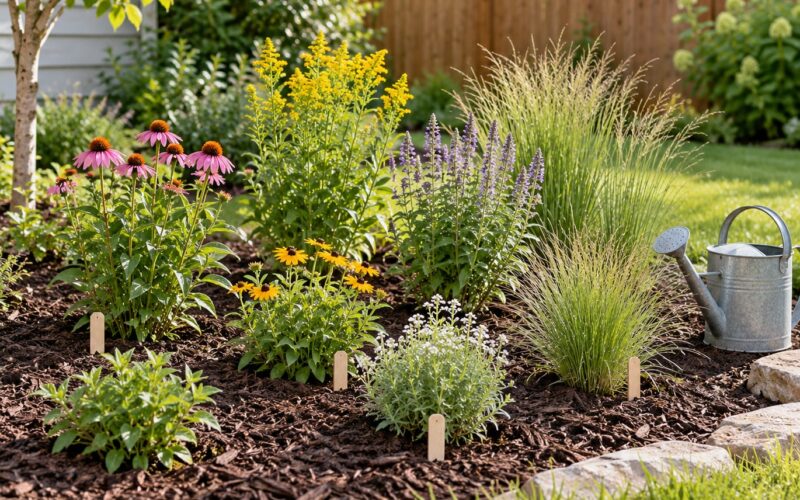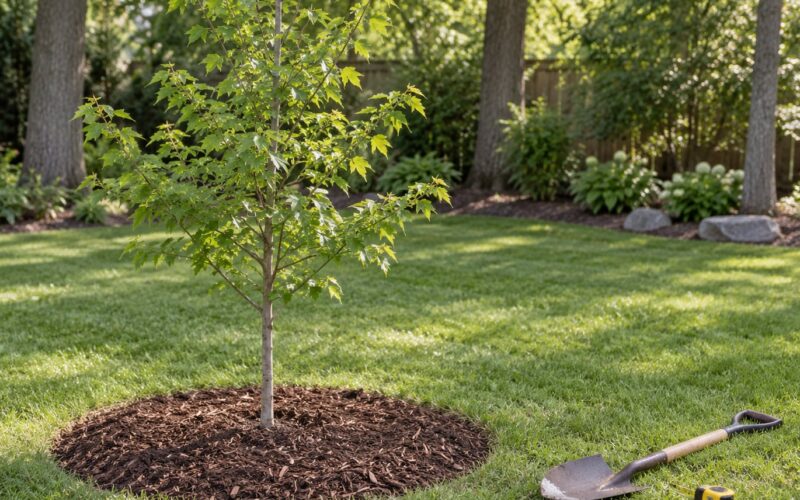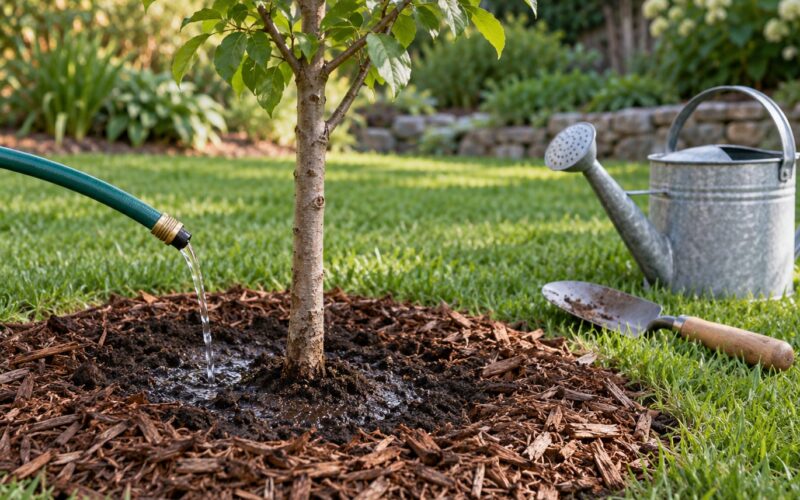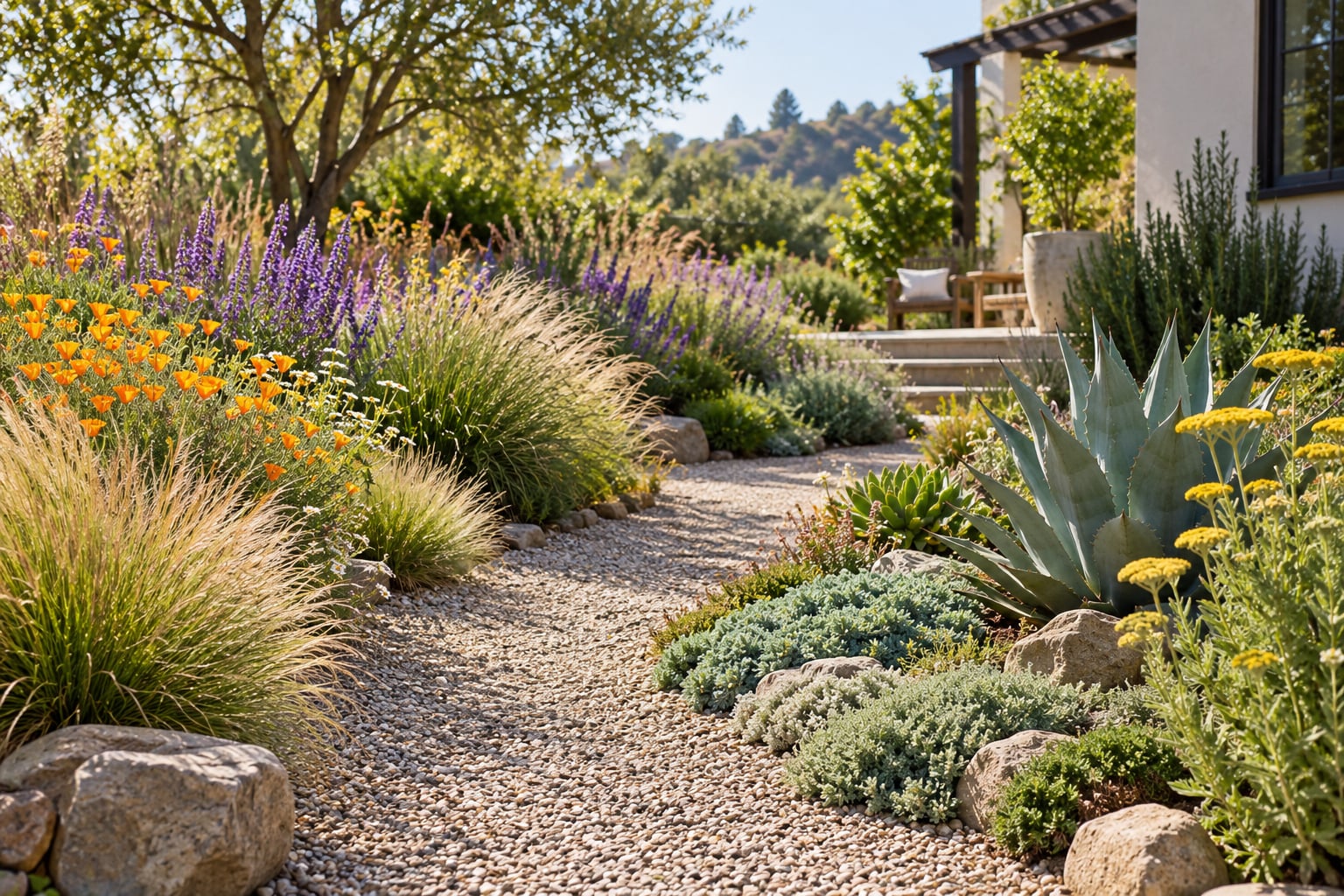
The most water-hungry thing on most properties is the lawn, and the fix is usually not better irrigation but a different surface. Lawn alternatives that need less water include nitrogen-fixing clovers, creeping thyme, native fescues and sedges, meadow mixes, mat-forming groundcovers, succulent beds and permeable gravel. All of them cut irrigation, and most of them cut mowing and fertilizer too.
Pick by site, not by wishful thinking. A meadow mix that thrives in an open Colorado yard will sulk under a mature oak, and a moss carpet that looks wonderful in a damp corner will struggle against a south-facing wall. The ten options below are sorted by the conditions that actually decide the outcome.
Table of Contents
- 10 Lawn Alternatives That Need Less Water at a Glance
- 1. Native Grasses and Meadow Mixes for Sunny Yards
- How to Choose a Native Meadow Mix
- 2. Clover Lawns for Pollinators and Low Irrigation
- 3. Hardy Groundcovers for Shaded Areas
- Lawn alternatives that need less water for deep shade
- 4. Succulent and Xeriscape Planting
- 5. Ornamental Grasses for Structure and Low Water Use
- 6. Gravel, Stone and Permeable Aggregates
- 7. Moss and Moss Alternatives for Moist, Shady Corners
- 8. Low-Water Fruit and Edible Gardens
- 9. Woolly and Mat-Forming Native Groundcovers
- 10. A Mixed Low-Water Yard Instead of a Single Surface
- Frequently Asked Questions
- What is the lowest-water alternative to grass?
- Can I replace my lawn without installing artificial grass?
- Are native lawn alternatives suitable for hot and dry summers?
- Will groundcovers or meadow plantings spread into neighboring gardens?
- How much watering do new lawn replacements need during establishment?
- What is the easiest lawn alternative for a heavily used yard?
- Conclusion
10 Lawn Alternatives That Need Less Water at a Glance
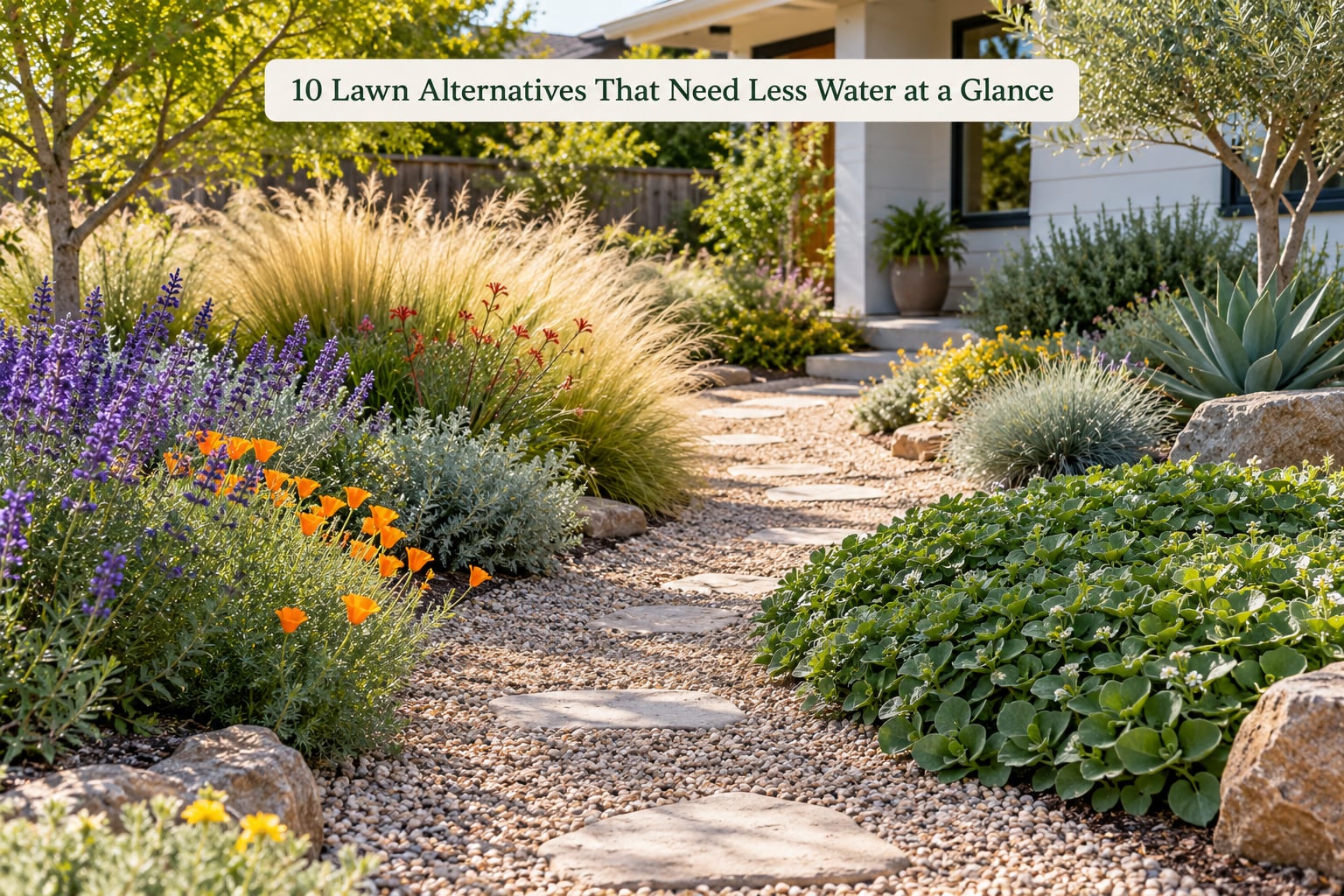
| Alternative | Best site | Water after establishment | Mowing | Maintenance level |
|---|---|---|---|---|
| Native grasses and meadow mix | Open, sunny, large areas | Low to none once rooted | 1 to 3 cuts the first year, then none | Low |
| Microclover and white clover | Mild to moderately dry full sun | Low | Low mow, or no mow | Low |
| Shade groundcovers (ajuga, pachysandra, carex) | Under trees, north and east walls | Low to moderate, summer water | None | Low |
| Succulents and xeriscape beds | Hot, exposed, previously irrigated | Very low | None | Low |
| Ornamental grasses | Full sun borders, slopes, back of yard | Low | One annual cutback | Low |
| Gravel, stone, decomposed granite | Paths, dry slopes, high-use zones | None | None | Medium (weeds, raking) |
| Moss and moist-corner plants | Shaded, north-facing, consistently damp | Low, but not drought-proof | None | Low to medium |
| Edible beds, herbs and berry bushes | South and west edges, fenced corners | Moderate but targeted | None | Medium |
| Mat-forming groundcovers (thyme, ice plant) | Full sun slopes, curbside strips | Low | None | Low |
| Mixed low-water yard | Any property, especially irregular ones | Low | Minimal | Low after year one |
Two columns deserve a caveat. Water need is listed for established plantings in their second season and later, not year one, and every seed or plug conversion needs real irrigation until roots are deep. Maintenance means your attention, not the plants: a gravel path asks for almost none, a vegetable bed asks for a weekly look.
1. Native Grasses and Meadow Mixes for Sunny Yards
Native grass and wildflower mixes are the closest thing to a lawn replacement that also scales to an acre. Once established, the deep-rooted prairie types draw water from far below the surface, hold soil through storms, and go dormant through drought instead of dying.
Good choices include little bluestem and switchgrass in the tall-grass prairie regions, and the shorter fine fescues and blue grama further west. Cheaper and slower, bunchgrasses such as fescue keep a mowable, lawn-like texture at four to six inches. What you give up is the manicured stripe and the playability.
Meadow mixes work because of diversity. A blend of a dozen species keeps something flowering from early spring to frost, which keeps more insects on the plot than any single-species planting. The seed sits on the soil surface, so keep it moist until the seedlings are up, and do not bury it under mulch.
How to Choose a Native Meadow Mix
Start with your hardiness zone and your actual rainfall, not with a catalogue category. Extension services and state wildflower programs publish regional seed mixes matched to zone, soil texture and annual precipitation, and they are more reliable than any generic online blend.
Then check the species list for invasives. A few common garden plants are aggressive outside their native range: English ivy, vinca, goutweed and the buttercup-leaved ivy that gardeners in the Northeast fight every spring. Reject any mix whose list you cannot verify against your regional native plant database, such as Calscape in California or the USDA PLANTS database elsewhere.
Finally, look for pollinator content. Native forbs, the flowering plants in the mix, are what turn a grass patch into habitat. A grass-only no-mow blend cuts mowing and watering, but it does very little for insects.
2. Clover Lawns for Pollinators and Low Irrigation
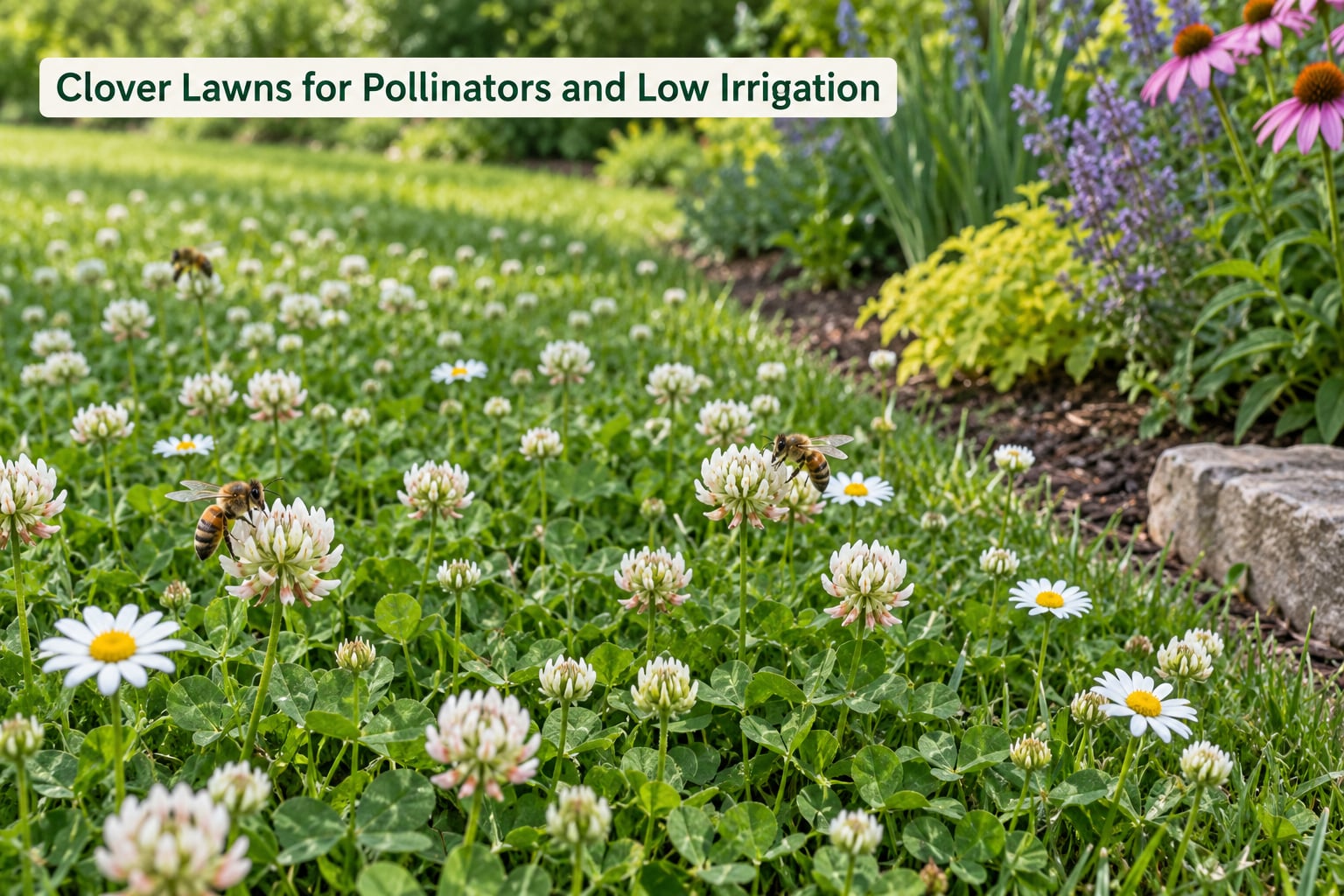
Clover is the fastest conversion most people will ever do, and the reason is simple: it makes its own nitrogen and it tolerates mowing heights grass hates. White clover (Trifolium repens) grows eight to fifteen inches and flowers visibly. Microclover is a low-growing selection that stays under about five inches, so you mow it two or three times a year at most.
Water-wise, clover outperforms turf in exactly the conditions turf fails: hot spells, sandy soil, moderate shade under open-canopy trees. It has a deeper taproot than most turfgrass and fixes nitrogen through rhizobia in its own roots, which is why a clover lawn needs no fertilizer and no herbicide once closed.
Set expectations honestly. Clover browns in deep shade and in the harshest drought, and it gets lumpy if you skip mowing for a full season. It is also more attractive to bees than to most people, which matters if you have small children or a severe bee allergy in the household.
3. Hardy Groundcovers for Shaded Areas
Shade is the most common failure point in lawn conversion, and most published guides treat it as an afterthought. A shaded yard is usually shaded because of a large tree with a dense canopy and a root mat that drinks rainfall before it reaches the ground. Shade is not a lighting problem, it is a competition problem.
| Groundcover | Light | Spread | Notes |
|---|---|---|---|
| Ajuga (bugleweed) | Part shade to shade | Runs by stolons, fills in fast | Evergreen in mild zones, can spread into beds |
| Japanese pachysandra | Shade | Rhizomes, dense evergreen mat | Reliable under trees where little else grows |
| Sedge (Carex) clumps | Shade to part shade | Clumping, not running | Sedges are the recommended lawn alternative where the site stays damp; many need regular summer water |
| Vinca and periwinkle | Shade to part shade | Fast, aggressive | Check your regional invasive list; invasive in parts of the US |
| Native woodland perennials (foamflower, wild geranium, violet) | Mottled shade | Slow, from seed or plugs | Best long-term answer, needs three years to fill |
Two things to accept before you start. First, deep shade under a mature canopy supports very low-water options, not zero-water ones: something has to drink during a dry August. Second, native woodland groundcovers arrive small. Plugs at six-inch spacing can look sparse for two growing seasons, so mulch them and pull weeds by hand rather than judging them in July of year one.
Lawn alternatives that need less water for deep shade
Under dense tree canopy, prioritize plants from your own region that evolved in woodland, and pair them with mulch instead of expecting a carpet of lawn bloom. Shade-tolerant fescue mixes, ajuga, pachysandra and native woodland perennials cover most cases, and each of them needs less irrigation in spring than a turf lawn does.
If the tree is the problem, shade reduction beats plant selection. Cutting a lower branch raises light at the soil without hurting the tree, and selective limb pruning on deciduous species in winter is a cheap intervention.
4. Succulent and Xeriscape Planting
Xeriscaping is the big-league version of this whole conversation: design the whole yard around low water use, group plants with similar needs, and add mulch. For an exposed south-facing bed that gets baked in July, succulents and other drought-adapted perennials are the sensible conversion.
Drainage decides whether this works. Water that sits in winter kills more succulents than drought does, so raised beds, berms and amended soil matter more than plant selection. Get the water off the bed before you choose the plants.
Match species to frost. Agaves, aloes and most opuntia cacti cannot survive a hard freeze, and many popular ice plants are annuals in cooler zones. Check the hardiness rating for your zone rather than the tag’s photo, and mix flowering perennials such as penstemon, yarrow and blanket flower with structural succulents so the bed has a season of interest.
Group by hydrozoning: one irrigation zone for everything on that slope. It is dull advice that pays for itself, because it lets you water deeply and rarely instead of lightly and often.
5. Ornamental Grasses for Structure and Low Water Use
Ornamental grasses give you height, movement and winter structure without the water bill of a turf lawn. Left standing, the seed heads catch low light through the autumn and give the bed a shape that a flat lawn can never have.
Choose by climate, because this group splits cleanly. Miscanthus, fountain grass and pennisetum suit warm, moist gardens. In the dry West, look at blue grama, Muhlenbergia species, and the regional bunchgrasses. Most of these need no irrigation after the first season in areas with at least moderate winter rainfall.
Cut them back once a year, late winter, before new growth starts. The old rule of leaving the stems standing is aesthetic preference, not a horticultural requirement.
One warning: miscanthus, ribbon grass and pennisetum self-sow and escape gardens in many regions. Check your regional invasive plant list before planting, and pick sterile cultivars where you can.
6. Gravel, Stone and Permeable Aggregates
Gravel, crushed stone and decomposed granite are the practical answer for the path, the dog run, the side yard nobody mows and the slope that was never worth turf. They drink no water at all, they warm up faster than grass, and they drain rather than pond.
The trade-offs are real. Loose gravel migrates and ends up in the lawn mower, and it is miserable to walk barefoot on. Decomposed granite compacts into a firm, comfortable path that reads as a surface rather than as rubble, which is why most contractors use it for accessible routes.
Weeds still arrive in any permeable surface, and they are harder to pull once roots anchor in the aggregate. Landscape fabric under the base layer helps more than most people expect. Keep the edging rigid, because an unedged gravel edge slowly disappears into the bed next to it.
Raked clean and topped up every couple of years, aggregate lasts decades. It is not zero maintenance, and anyone who tells you otherwise has not had a gravel path through a wet winter.
7. Moss and Moss Alternatives for Moist, Shady Corners
Moss grows where grass refuses: north-facing walls, shaded crevices, stone steps, the north side of a fence, and anywhere with steady damp and poor air movement. There, moss is a genuine lawn alternative that needs no irrigation because rain does the work.
It fails in the wrong place. Direct afternoon sun, wind, and a site that bakes out and bakes dry will crack a moss lawn into patches within a few weeks. Moss is also not walkable, not dog-friendly, and does not tolerate a mower at all.
For corners that are shaded but not reliably damp, ferns, hostas, heuchera and native woodland perennials are the more dependable route. They still need consistent moisture, so plan for that from the start rather than treating them as drought plants. Group them on one irrigation zone and water the bed, not the surrounding soil.
Shade-tolerant sedge mixes, sold as no-mow lawn seed, are worth a trial in damp shade. They need a moderate amount of summer water, so treat them as low-water, not zero-water, and read the seed label’s water requirements before you buy a large bag.
8. Low-Water Fruit and Edible Gardens
A productive garden is the strongest argument a homeowner has for giving up ornamental lawn, because it does something grass never does. Berries, herbs and compact fruit trees put food where the sprinkler used to run.
Place them on the edge, not the centre. A row of blueberry bushes, a compact peach or columnar apple, currants and gooseberries, and an herb bed of rosemary, thyme, oregano and sage will occupy a tenth of a lawn’s footprint and absorb the same household attention more usefully.
Water use is higher than a meadow, but it is targeted water. Deep drip or soaker lines under mulch cut evaporation, and hydrozoning means the thirsty herb bed gets its own valve. Improve clay with compost before you plant, because most edible plants resent the compacted soil turfgrass leaves behind.
Choose regionally adapted varieties over the trendier heirloom names, and check pollination needs: many self-pollinate, some do not, and the difference decides whether you get fruit at all. Keep the bed mulched, fenced or edged, because bed edges stop low-water plantings from wandering where they were not invited.
9. Woolly and Mat-Forming Native Groundcovers
Low, dense, mat-forming groundcovers are the closest replacement to a walkable lawn that does not drink like one. Once a mat closes, it excludes light, and most annual weeds fail to germinate underneath. That weed suppression is where the real maintenance saving comes from.
Creeping thyme (Thymus serpyllum) is the most dependable for full sun and dry soil. Give it good drainage, trim the edge once a year, and it flowers for weeks and handles light foot traffic. It does have a real weakness: it hates wet feet, and in humid summers it can rot out from the crown.
Ice plants, gazanias and hardy succulents cover warm, dry, exposed sites where nothing else survives. Ice plant is invasive in some coastal regions, so check the state weed list first. On a slope, low mat-formers do double duty: they hold soil against erosion and shade the ground surface.
Two honest limits. Most mat-formers are flowers before they are groundcovers, so they look their best in bloom and sparse after. And they are not lawn: a dog that digs will find the soil, because a two-inch mat does not stop a determined animal.
10. A Mixed Low-Water Yard Instead of a Single Surface
The conversion most likely to succeed is the one that never tries to replace the whole lawn with one plant. Real yards have sun and shade, slope and flat, traffic and quiet. A mixed low-water yard assigns each area the surface that suits it, and nothing carries more than it can.
Keep a mowable strip near the door and along the path for dog walks, use clover or fine fescue for the open middle, woodland groundcovers under the trees, gravel on the slope, and a small herb bed against the warm wall. Total irrigation falls because each zone is watered on its own schedule, and the yard keeps looking finished in August, when a single-species conversion often does not.
Start with the worst five percent. The strip that never stays green, the corner the mower cannot reach, the patch under the downspout. Convert that, live with it through one full season, and let your own reaction decide whether you expand. Most people do.
Frequently Asked Questions
What is the lowest-water alternative to grass?
Gravel, stone and permeable aggregate use no irrigation at all, so they sit at the bottom. Among living options, native bunchgrasses, creeping thyme, and the mat-forming succulents such as ice plant and gazania need the least water after establishment. In shady damp sites, moss is the only carpet that relies on rainfall alone.
Can I replace my lawn without installing artificial grass?
Yes, and every option in this guide is a living plant or a mineral surface, not synthetic turf. Artificial grass still needs irrigation for cooling in hot weather and it does not fix soil or support insects. If you want a green surface without grass, microclover and fine fescue blends give the closest look, and meadow mixes give the biggest ecological gain.
Are native lawn alternatives suitable for hot and dry summers?
They suit hot dry summers better than turfgrass does, because deep-rooted native grasses and drought-adapted groundcovers go dormant rather than dying when water is short. Pick species rated for your hardiness zone, group plants with similar water needs into one irrigation zone, and mulch. Expect a normal irrigation cycle through the first growing season while roots establish.
Will groundcovers or meadow plantings spread into neighboring gardens?
Several do, and that is the question to ask before buying. Ajuga, vinca and pachysandra spread by stolons or rhizomes and can cross a property line, so install an edging barrier and check your regional invasive list first. Meadow grasses seed themselves readily, and some ornamental grasses such as miscanthus are invasive outside their native range. Choose sterile cultivars and pull seed heads before they set.
How much watering do new lawn replacements need during establishment?
More than the established planting, and this is where most conversions fail. Water new seed and plugs shallowly and often, keeping the top few centimetres of soil consistently moist, until plants are rooted and growing. Deep infrequent watering comes later. A drip line under mulch on a timer is the most reliable way to do this and keeps you from standing outside with a hose.
What is the easiest lawn alternative for a heavily used yard?
Decomposed granite or compacted gravel paths handle the most foot traffic of anything on this list, and they need no water. For a play lawn, a microclover and fine fescue blend is tough enough for feet and dogs and needs little mowing. Avoid moss, which cannot take wear, and avoid steep gravel slopes, which are a tripping hazard.
Conclusion
Start the same way every time: walk the yard once a day for a week and note where grass struggles, where water runs, and where the dogs go. That tells you which of these ten options to use. Then convert the worst patch, not the whole yard, and keep watering it the way you watered the lawn for the first season. Measure what you use in year two, and decide from that.
When you do start buying, check your regional native plant database before anything else, and see whether your water provider offers a turf removal rebate. Several utilities now pay for lawn conversion, and it changes the arithmetic faster than you would expect.