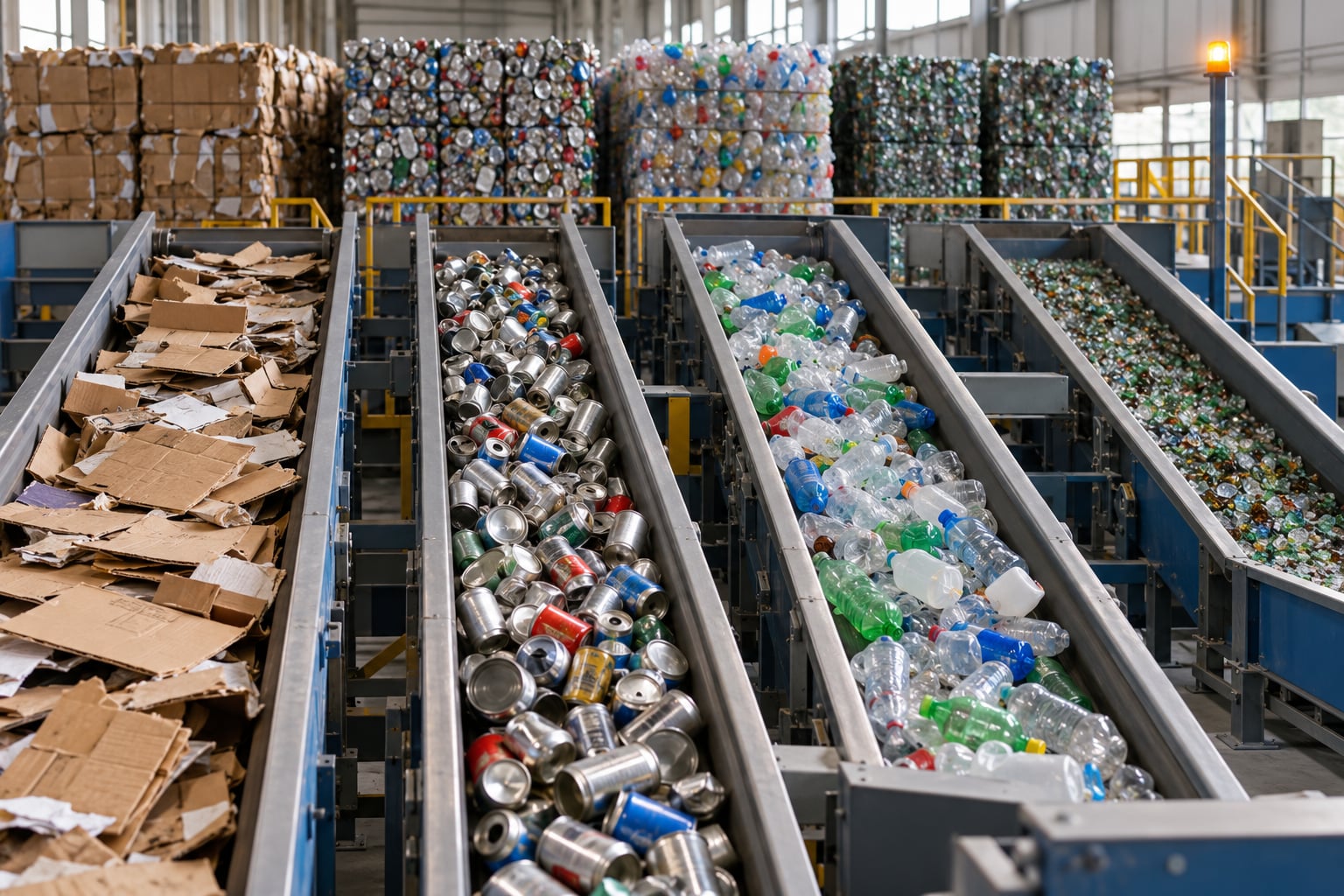
Single stream recycling sorting works by putting every acceptable recyclable into one bin and letting machinery do the separating. Your paper, cardboard, bottles, cans and glass arrive commingled at a materials recovery facility, where screens, magnets, near-infrared optical sorters and human pickers pull them apart into clean streams that get baled and shipped to reprocessors. You never touch the sorting machinery. You only decide what goes in the bin.
The honest part of that answer is that it works when the bin is clean, and it works badly when it isn’t. Understanding the machinery explains most of what you have heard on the news, and most of what residents argue about on forums. It also tells you which habits genuinely help.
Here is the process in plain language, followed by what goes wrong and what you can do about it.
Table of Contents
- What Is Single Stream Recycling?
- How Single Stream Recycling Sorting Works From Collection to Mill
- What Happens Inside a Sorting Facility?
- How Materials Are Separated
- Why Some Recycling Ends Up as Waste
- How Household Recycling Rules Affect the Process
- Frequently Asked Questions
- Do recyclables really have to be separated at home?
- What can actually go in a single stream recycling bin?
- Does single stream recycling really work?
- What happens to the bales after they leave the facility?
- Why can’t plastic bags and film go in the recycling bin?
- Can shredded paper be recycled?
- What to Do First
What Is Single Stream Recycling?
Single stream recycling is a collection system where all the recyclable materials a household generates go into one container instead of being separated at the source into bins for paper, glass, metal and plastic. The container gets emptied by a collection truck, the mixed load travels to a sorting facility, and everything is separated there by machine and by hand.
In a typical single stream bin you can expect the following to be accepted:
- Cardboard and boxboard, including corrugated cardboard
- Mixed paper: newspapers, magazines, catalogues, office paper, envelopes
- Steel food and drink cans
- Aluminium drink cans
- Glass bottles and jars in the colours your local scheme accepts
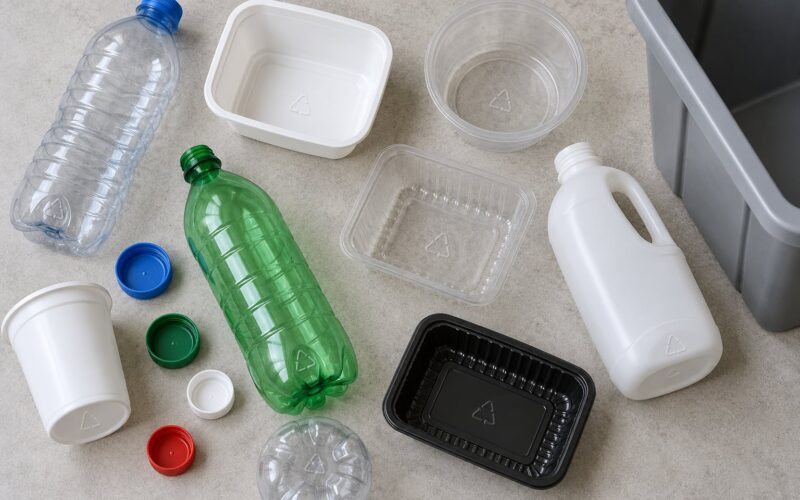
- Plastic bottles, jugs and containers made from accepted polymers, usually numbered 1 and 2
The design goal is participation. A system that asks one bin of loose containers gets far more material back from households than one that asks people to rinse, sort and cross-contaminate five separate boxes. That trade-off is the entire argument, and it runs through the rest of this guide.
Source separation, also called multi-stream recycling, asks residents to sort at home into separate containers, usually a paper bin, a container bin and a glass bin. It produces cleaner material and lower contamination because each stream arrives already grouped, but it also loses participation to confusion and inconvenience.
How Single Stream Recycling Sorting Works From Collection to Mill
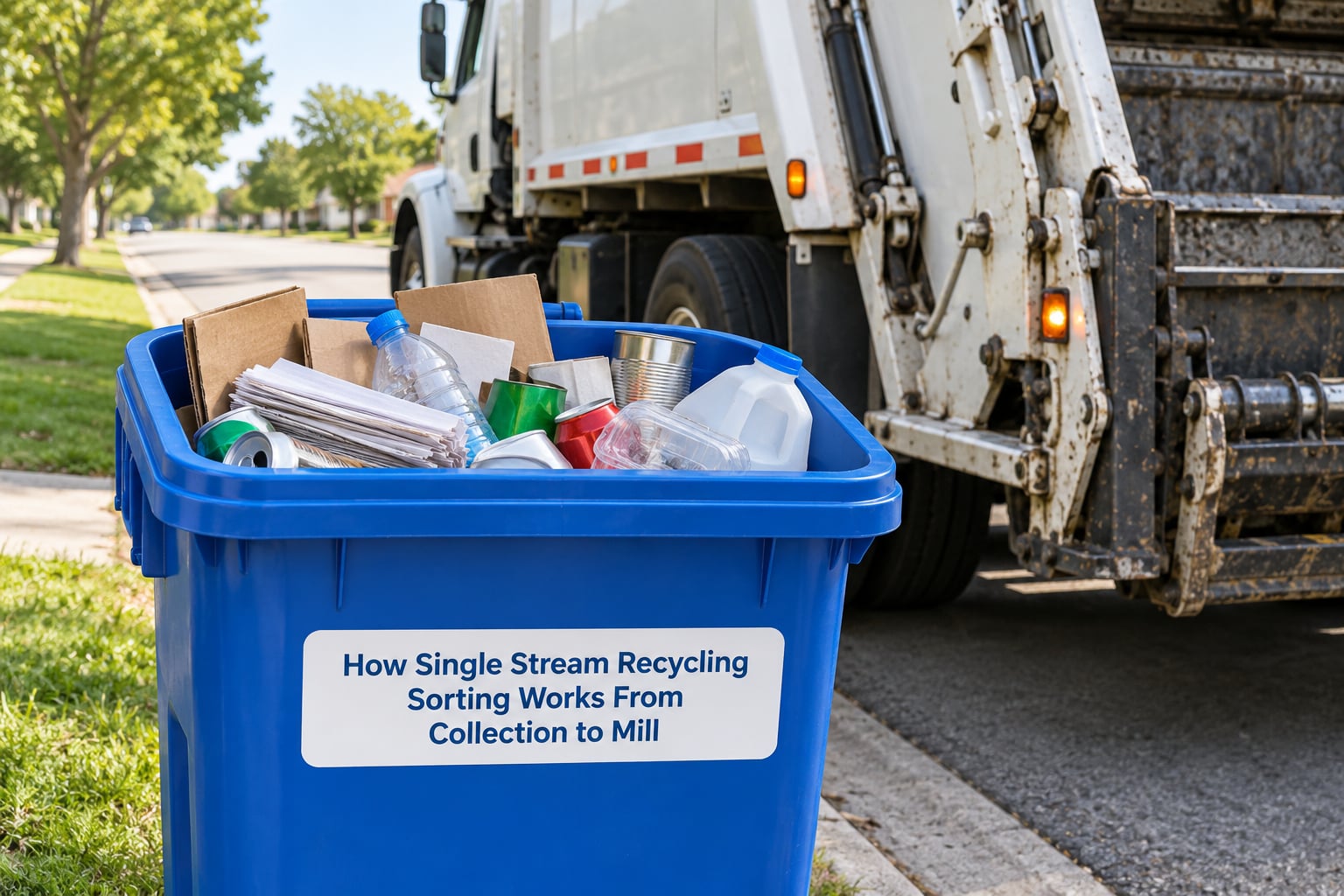
Eight stages cover the full route from your kerb to the factory that turns the material into something new. Each stage exists because the previous one removed everything it reasonably could.
- Collection. A collection vehicle lifts the bin and empties it, often alongside the household’s residual waste from a separate compartment. From that moment the load is mixed and the responsibility for separation moves from you to the facility.
- Transfer. The truck drives to a transfer station, tips the load onto a floor, and pushes it into a container that will be taken to the processing site. Some regions go straight from truck to facility; most go via a transfer station.
- Tipping and pre-sort. The container is emptied on the facility’s tipping floor. Staff and machinery remove the obvious problems first: bags of rubbish, textiles, wood, bulky items, batteries and anything that could damage or jam a machine downstream.
- Screening by size. A rotating drum screen called a trommel turns the pile. Small items fall through the holes, large items ride over the top, and the middle fraction carries on. This is the first major separation and it happens because material streams differ in size.
- Metals removal. An overhead magnet lifts ferrous steel out of the belt. Further down, an eddy current separator uses a spinning magnetic field to make an aluminium can jump away from the rest of the stream.
- Paper and container split. A ballistic separator throws the stream into the air. Flat, light items such as paper and cardboard flutter and drop onto one belt while rigid containers such as bottles and cans arc forward onto another.
- Optical plastic sorting. Near-infrared sensors shine a light at each item and read the reflected signature, which identifies the polymer. When a container of the wanted polymer passes the ejector, a short burst of compressed air fires and pushes it into the right bunker.
- Quality control and baling. Picking stations beside the belts remove what the machines missed and pull contaminants out of the clean lines. The sorted material is then compressed into bales by a baler, weighed, labelled and sold to the reprocessing market.
That is the whole route. Everything after it is manufacturing: paper mills pulping bales into new sheet, smelters melting metal, bottle converters washing and shredding PET flake, glass processors crushing cullet into new jars.
What Happens Inside a Sorting Facility?
A materials recovery facility, usually called an MRF, is essentially a series of conveyors, screens and separators arranged so that each machine handles one property of the material: size, magnetism, shape, density or colour signature. The order is not random; each stage is arranged so the material arrives in a condition the next stage can handle.
Fewer than 300 facilities in the United States process single stream material at scale, which means each one handles material from a wide area and a wide mix of habits. A plant is configured for its incoming stream, so the same bin of recyclables sorted in one region can meet a different accepted list in another.
How Materials Are Separated
Paper and cardboard. The ballistic separator is the key machine here. It uses the difference between flat paper and three-dimensional containers, and it also sends heavier fibre like corrugated cardboard to a separate belt because paper mills pay more for clean OCC than for mixed paper. Mixed paper itself is baled and sold to mills making lower-grade products such as boxboard and tissue.
Metals. Steel is separated magnetically, which is fast, cheap and very accurate. Aluminium needs the eddy current separator, a conveyor with a rotating rotor beneath it that induces a current in the metal and makes it leap forward when it reaches the head of the belt. Light ferrous fragments that are not cans, such as bottle caps and small steel items, sometimes travel with the steel and get removed at picking stations.
Glass. Glass is separated largely by size and colour rather than by chemistry. Small glass falls through screens with the fines, and colour sorters and screens direct flint, amber and green into separate bunkers. Facilities accept different colours depending on what the local glass market can use, which is one reason two adjacent towns can have different glass rules.
Plastics. This is the most demanding stage and the one most sensitive to contamination. The near-infrared optical sorter identifies a container by polymer, but it identifies the surface. A bottle with food residue, a wet label or a sleeve covering it can be misread. Multi-layer packaging such as a foil-lined drink carton or a multi-layer snack pouch is also a problem, because those cannot be recycled into a single material and most sorting lines cannot split them.
PET, usually bottle to bottle, and HDPE, usually milk jugs and detergent bottles, are the two main streams. Polypropylene is sorted separately where volumes justify it. Anything the optical sorter does not confidently recognise travels to a bunker for manual sorting, and anything it recognises but cannot eject correctly becomes residue.
Empty liquids matter more than people expect. A container holding water or soda adds weight that changes how it behaves on a screen and how it lands on a picking station belt, so emptying and a quick rinse of containers is the single cheapest improvement a household can make.
Why Some Recycling Ends Up as Waste
Not everything in a single stream bin gets recycled. The fraction that cannot be sorted into a clean, marketable stream is called residue or rejects, and it usually goes to landfill or to energy recovery, meaning incineration with heat or power recovery rather than recycling. On a sorting line, residue is what reaches the final bunker: shredded paper that fell through the trommel, tangled film wrapped around screens, and items too small or too mixed to separate.
The most common causes are ordinary household habits rather than industrial problems.
Food and liquid residue. Grease and sauce on a pizza box section, drink left in a bottle, or a jammed jam jar can contaminate the paper fibre or cause an optical misread. One wet item in a bale can downgrade the whole bale, which is why a cheap rinse pays for itself many times over.
Plastic bags and film. This is the problem residents mention most often on recycling forums, and it is the one most likely to stop a line. Film wraps around screens, shafts and the rims of discs and jams the equipment, forcing shutdowns and maintenance. Film has a real recycling route at specialist drop-off points, but almost never through the household bin, because the machinery is built for rigid containers, not soft film.
Shredded paper. Paper shredder output is too small to be picked up off a belt and far too small to sort cleanly by type. It falls through screens and becomes unrecoverable residue. Shredding paper for confidentiality is fine; shredding it into the recycling bin is not.
Tangled material. Charging cables, string, Christmas lights, hose, extension leads and small textiles wrap themselves into a mat. That mat drags other items off the belt with it, so one tangled item can spoil several kilograms of otherwise good material. Battery and phone chargers are a specific hazard because the lithium cells can be crushed and ignite.
Wrong-stream items. Textiles, shoes, plastic toys, garden hose, nappies, food waste and wood are the usual remainder. Many communities ask for textiles and some plastics to go to dedicated drop-off points rather than the bin, precisely because they jam or contaminate the line.
The cost side of this is worth stating plainly. A contaminated bale is rejected at the mill or sold at a discount, and the facility pays twice: once to remove the problem and again to sell the material for less. That cost is one reason collection charges and acceptance lists exist, and one reason the criticism aimed at single stream systems focuses on contamination rather than on the sorting machinery itself, which works well when fed clean input.
How Household Recycling Rules Affect the Process
Accepted items differ from one municipality to the next, and that difference is deliberate. A facility buys material that a local mill can actually use, so the accepted list follows the local end market rather than a national standard. Glass is the clearest example: one town takes green and clear, the next takes clear only, and a third takes no glass at all because its glass market went away.
| System | What the household does | Contamination | Material quality | Typical setting |
|---|---|---|---|---|
| Single stream | One bin for all accepted recyclables, kept loose | Higher, because everything arrives mixed | Lower per bale, offset by much higher volume | Most large municipal kerbside programmes |
| Multi-stream | Separate bins, usually paper, containers and glass | Lower, since streams stay separated | Higher, cleaner bales command better prices | Some UK, European and commercial multi-tenant schemes |
| Dual stream | One bin for paper and cardboard, one for containers | Moderate, and easier to manage than three or more bins | Good compromise between volume and purity | Common where glass needs separate handling |
Packaging labels help but rarely decide. A resin code on a bottle tells you the polymer, and it is a genuine clue, but the local facility may not have a buyer for that polymer and may still be filtering it. An item marked recyclable is only recyclable somewhere in the world, not necessarily in your collection.
The reverse also holds: an unmarked plastic item may be accepted locally. The only reliable answer comes from your municipal or regional waste operator’s own guidance, which lists what your facility’s equipment is configured to handle.
For readers in Spain and the wider European Union, the picture is similar with a different vocabulary. Container deposits mean drink containers often travel back to the shop in their own return system rather than through kerbside collection, so volume in the bin is mostly paper, cardboard and non-deposit packaging. Municipal programmes are increasingly working toward the European Waste Framework Directive targets for municipal waste collection for recycling and recovery, and several regions are moving towards separate collection of textiles, metals, glass and hazardous household waste. Region-specific rules still govern what your household bin accepts.
What the sorting machinery cannot catch is worth knowing, because it explains why your bin is not the whole system. Anything smaller than about a fingernail, anything black on an optical sorter, anything wrapped in film, and anything the local scheme never accepted will not be captured. Multi-layer composites, ceramic, mirrors, window glass and Pyrex-type heat-resistant glass are examples of items that look recyclable and are not accepted almost anywhere.
Frequently Asked Questions
Do recyclables really have to be separated at home?
In a single stream system, no. Paper, cardboard, cans, bottles and accepted glass all go into the same bin, and separation happens later inside the materials recovery facility using screens, magnets, optical sorters and pickers. In a multi-stream or dual-stream system, residents do separate at home, usually into two or three bins. Which one you have depends entirely on your local waste operator, so check their guidance rather than assuming.
What can actually go in a single stream recycling bin?
Usually cardboard, mixed paper, steel cans, aluminium cans, accepted glass colours, and rigid plastic containers made from accepted polymers such as PET and HDPE. Keep items loose and empty, with a quick rinse of liquids. Leave out plastic bags and film, shredded paper, tangled cords and cables, batteries, electronics, textiles, food waste and anything your local scheme does not list. Acceptance varies by municipality, so the local guide is the final word.
Does single stream recycling really work?
Yes, where the input is reasonably clean, and that is where the criticism has a point. Sorting equipment separates materials by size, magnetism, shape and infrared signature reliably, but it cannot undo contamination that arrives mixed in. Items wrapped in film, coated in food, tangled into a mat or too small to screen simply become residue. The system is not a scam, but a bin that is half full of bags and rubbish does not get recycled just because the intent was there.
What happens to the bales after they leave the facility?
Each bale goes to a reprocessor that handles that specific material. Mixed paper and old corrugated cardboard go to paper mills that pulp them into new sheet. Steel goes to a mill and aluminium to a smelter. Sorted plastic goes to a bottle-to-bottle or injection moulding converter that washes and shreds it into flake. Glass goes to a cullet processor that crushes it into new container glass. Whatever cannot be processed cleanly is residue, which is usually landfilled or sent for energy recovery.
Why can’t plastic bags and film go in the recycling bin?
Because film wraps itself around screens, shafts and rotating discs instead of falling into a bunker like a rigid container does. A jammed line has to be stopped and cleared by hand, which costs money and time, so facilities ban film at the kerb. Bags and film often do have a second route: supermarket drop-off points and specialist collection schemes, which send the material to plastic film recycling. Check whether your area runs one.
Can shredded paper be recycled?
Not through the kerbside bin, and the reason is mechanical rather than philosophical. Shredded paper is too small to be picked off a conveyor belt and falls through the sorting screens into residue, where it cannot be recovered. Whole paper, envelopes and even newspaper are sorted and pulped successfully. If you shred for confidentiality, the paper still counts as paper for energy recovery in most schemes, but it should go through the route your local authority specifies rather than the recycling bin.
What to Do First
Four habits cover almost everything. Find your local authority’s recycling guide and use that accepted list, because it describes what your facility can actually process rather than what can theoretically be recycled. Empty your containers and give them a quick rinse, since liquids and food cause misreads and downgrades. Keep accepted materials loose in the bin rather than bagged, because bags are what wrap around the sorters and stop the line. And pull out the obvious contaminants before collection: plastic film, batteries, cables, textiles and food waste.
None of this requires understanding the machinery in detail, but knowing how single stream recycling sorting works makes the rules feel reasonable rather than arbitrary. The sorting line is genuinely capable, and it is also genuinely limited by what you hand it.