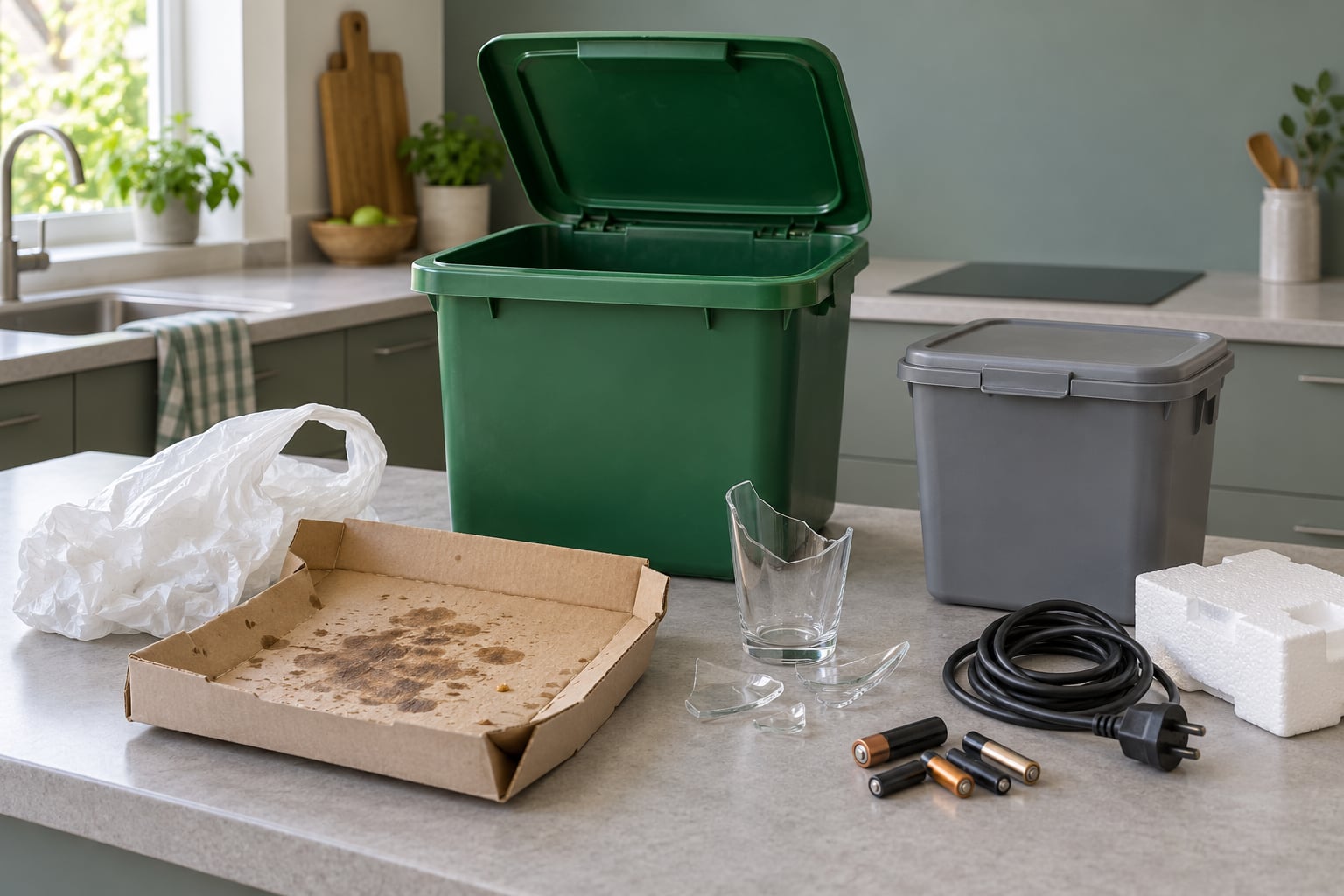
What not to put in your curbside recycling bin is a short, specific list: plastic bags and film, food-soiled paper, broken glass and mirrors, batteries, electronics, textiles, tanglers like hoses and wire hangers, paint and solvents, propane cylinders, and foam. Each one either jams the sorting equipment, contaminates a load that would otherwise be recycled, or starts a fire in a collection truck. Your local authority or waste provider sets the final list, so check their accepted-materials page before you assume.
I have made every one of these mistakes, and the greasy pizza box was the expensive one. A single food-soiled sheet can get paper fibres coated in oil, and those fibres end up in the pulping process as unusable sludge. Multiply that by one cart and you have a load the facility may downgrade to trash.
Here is the practical version: what each banned item does to the system, and the specific place it should go instead.
Table of Contents
- Why Contaminants Make Recycling More Expensive
- What Not to Put in Your Curbside Recycling Bin
- Plastic Bags, Film, and Flexible Packaging
- Food-Soiled Paper and Single-Use Items
- Broken Glass, Ceramics, and Mirror
- Batteries, Chargers, and Power Cords
- Electronics, Light Bulbs, and Fluorescent Tubes
- Textiles, Shoes, and Other Tanglers
- Paint, Solvents, Chemicals, and Propane Cylinders
- Foam, Waxed Paper, Compostable Plastics, and Other Specialty Items
- Items Curbside Recycling May Accept
- How to Prepare an Item for Curbside Recycling
- Check Your Local Recycling Rules
- What to Do When You Are Not Sure
- Frequently Asked Questions
- Can pizza boxes go in curbside recycling?
- Should plastic bags and carrier bags go in the recycling bin?
- Where should batteries and power banks be disposed of?
- Do recycling containers need to be rinsed before collection?
- Does a recyclable or compostable label guarantee curbside collection?
- How can apartment residents find the recycling rules for their building?
- What to Do First
Why Contaminants Make Recycling More Expensive
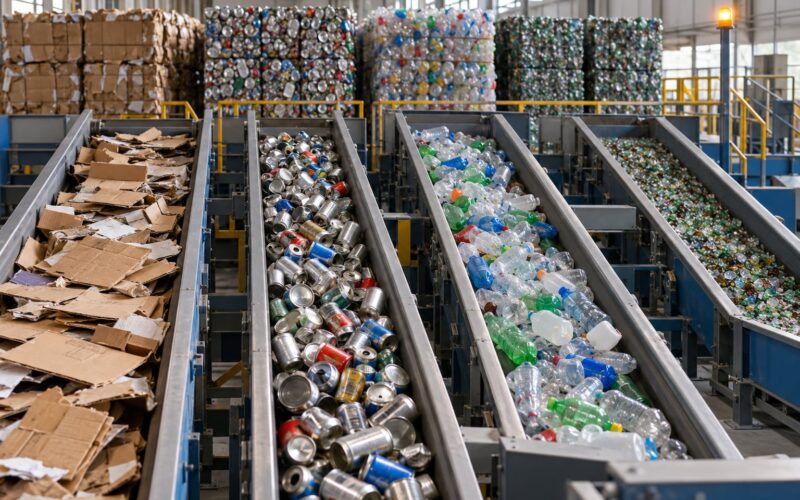
Most curbside programs are single-stream, which means one truck collects everything and the sorting happens later at a material recovery facility, usually shortened to MRF. The load arrives mixed, gets tipped onto a floor, and machines separate it by material: screens shake out the flats, magnets pull steel, eddy currents jump the aluminium, and optical sorters read shapes and colours.
Anything the machines cannot handle becomes contamination. That includes the obviously wrong item, like a garden hose, and the subtler ones, like a bag full of perfectly good bottles. A bag is a contaminant because sorting machinery expects loose material; the bag itself goes to landfill with everything inside it.
Glasses and ceramics are a good example of why contamination is expensive rather than just inconvenient. Container glass can be melted again at a fairly low temperature. Drinking glasses, Pyrex dishes and mirrors contain materials with different melting points, so a small amount mixed into a batch ruins it, and the whole furnace load is downgraded.
The financial consequence is blunt: a contaminated load that fails quality checks is often rejected wholesale and landfilled. Energy spent collecting and sorting it is wasted, and the materials are lost even though they were recyclable in theory. Some programs charge contamination fees to cover the gap, and in a growing number of municipalities they do.
Enforcement varies, but the pattern is consistent. Crews leave a cart tag or oops tag on the bin, and the next collection is refused until the material is corrected. Elsewhere residents are fined under local waste ordinances, sometimes over items they did not even put there.
| Contaminant | What goes wrong |
|---|---|
| Plastic bags and film | Wraps around sorting equipment and jams screens |
| Food and liquid | Ruins fibre quality in the pulping process |
| Batteries and power banks | Fire risk in the collection truck and on the sorting floor |
| Non-container glass | Different melting point ruins a whole glass batch |
| Tanglers | Wrap around shafts, belts and sorting machinery |
| Bagged recyclables | The whole bag is treated as one unprocessable lump |
What Not to Put in Your Curbside Recycling Bin
Each ruling below applies to most curbside programs in North America and Europe. Your hauler’s list wins wherever the two disagree.
Plastic Bags, Film, and Flexible Packaging
Carrier bags, produce bags, shrink wrap, bread bags, vacuum-sealed pouches, padded mailers and bubble wrap all fall into the film category. Film is a contaminant because it is light, stretchy and wraps around anything it touches, so it stops screens and belts from working properly.
Where it goes instead: a store drop-off bin if a supermarket near you has one, which is now common in most countries. Otherwise a dedicated soft plastics drop-off or household hazardous waste site. Keep bags clean and dry, and fold large sheets rather than rolling them into a ball.
Food-Soiled Paper and Single-Use Items
Paper napkins, paper towels, greasy takeaway packaging and heavily soiled pizza boxes do not belong in the recycling bin. Fibre quality drops the moment oil soaks in, and a grease spot on a single sheet is enough to affect it.
The pizza box is the item people argue about most. The useful rule is not all or nothing: tear off the clean top and lid and recycle those, and compost or trash the greasy base. Grease spots on the lid are usually tolerated, but a soaked-through box is not.
Other paper exclusions include coated or waxed takeaway coffee cups, paper plates, napkins and paper tablecloths. Compostable or biodegradable paper does not change that, since most curbside facilities are not set up for it. Many programs now run a separate organics or food-waste collection, so food-soiled paper can go there when you have one.
Broken Glass, Ceramics, and Mirror
Bottle and jar glass is fine. Drinking glasses, ceramics, pottery, bakeware, mirrors and window panes are not, for the melting-point reason above.
Do not drop broken glass loose into the bin, because it breaks other people’s material and cuts crews. Wrap small pieces in cardboard, tape the bundle closed and check whether your local rules accept broken glass in a separate box or require a household hazardous waste visit.
Batteries, Chargers, and Power Cords
Lithium-ion batteries and power banks are the most dangerous item in this whole article. A damaged or sweltering battery in a collection truck can ignite the load and destroy the vehicle, so almost no curbside program accepts them.
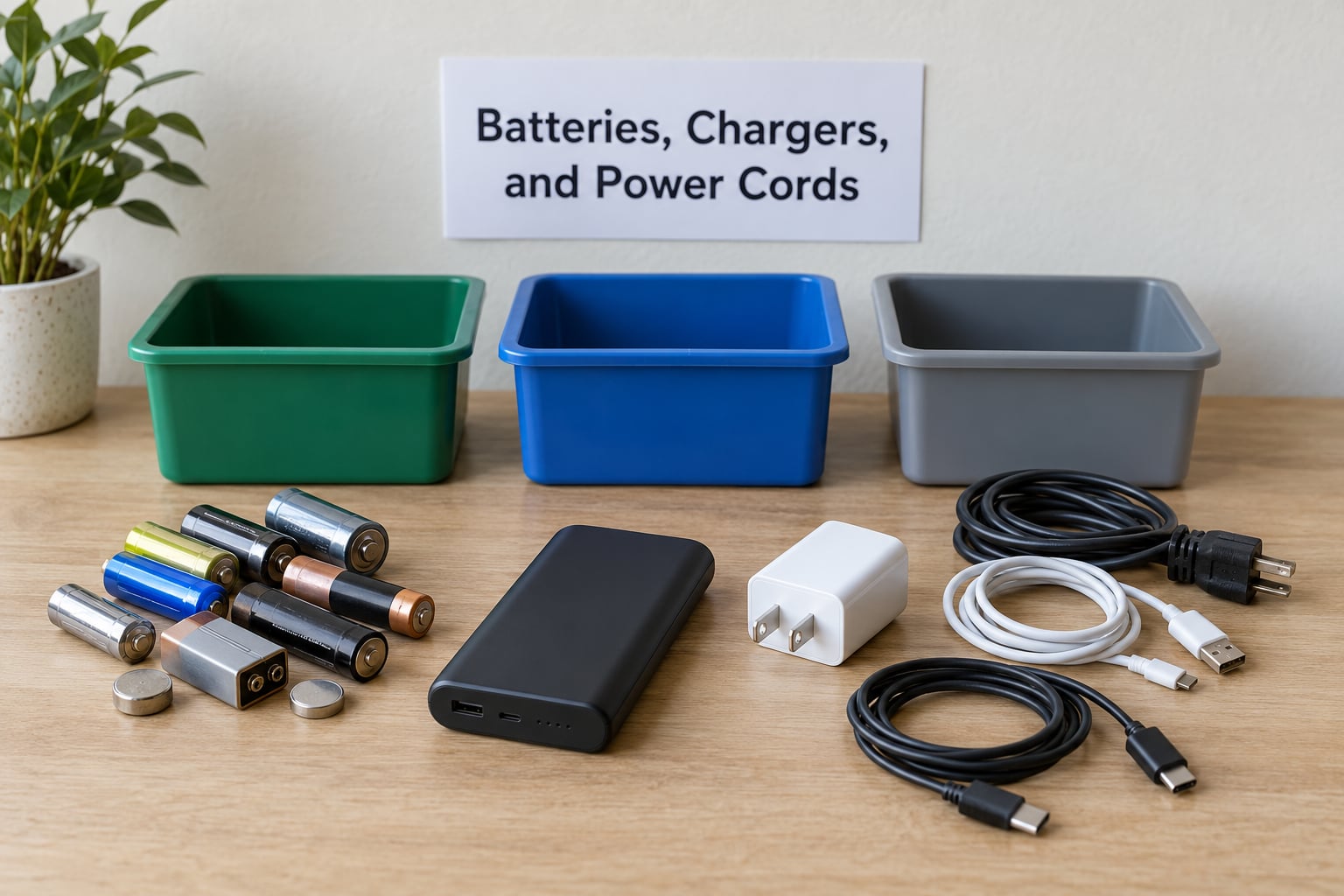
Where they go instead: a retailer take-back point, which many hardware and grocery stores have near the entrance, a municipal household hazardous waste facility, or a scheduled collection event. Tape the terminals of loose lithium cells with clear tape before you transport them, and keep them out of a hot car.
Electronics, Light Bulbs, and Fluorescent Tubes
Televisions, computers, phones, microwaves, printers and small kitchen appliances are e-waste, not curbside recycling. Screens and circuit boards contain lead, mercury and other materials that facilities are not licensed to handle through the bin route.
Light bulbs follow the same logic. LED and incandescent bulbs have metal bases and gas fill, and fluorescent tubes contain a small amount of mercury. Check whether your program runs periodic bulb or tube drop-off, and whether the store you bought from takes them back. Many hardware shops and pharmacies are take-back points.
Use a certified e-waste recycler or the manufacturer’s own take-back programme rather than a generic scrap-metal yard, which often refuses electronics.
Textiles, Shoes, and Other Tanglers
Clothing, shoes, handbags, belts, towels and bed linen rarely belong in the curbside bin, and almost no North American curbside programme takes them. They are heavy tanglers that wrap around equipment.
Rope, garden hose, extension leads, string lights and metal wire hangers are the classic no. Hangers and cord can cinch around a shaft and stop a line cold.
Before the bin, use the item. Repair the jacket, list the shoes, or take textiles to a collection point. In Spain and Portugal, the container deposit system and the textile drop-off network at supermarkets handle most of this, and much of it never needs to reach a waste stream at all.
Paint, Solvents, Chemicals, and Propane Cylinders
Oil-based paint, solvents, fuels, pesticides, pool chemicals and pressurised cylinders are household hazardous waste. Unemptied aerosol cans belong here too, since the propellant keeps them pressurised.
Propane and camping cylinders are the notable exception to metal being recyclable. They are pressure vessels, so they go to a hazardous waste site or a retailer that accepts cylinders, never into the bin. The same goes for hot tubs, dehumidifiers and large propane tanks.
Foam, Waxed Paper, Compostable Plastics, and Other Specialty Items
Styrofoam and EPS foam peanuts, packing foam, and rigid foam packaging are not accepted curbside in most places, even though the resin code says polystyrene is technically recyclable. It usually means a specialist drop-off only.
Compostable plastics are the most misunderstood category. The certification applies to industrial composting facilities, not to curbside trucks or garden heaps, so a compostable bag or cup still contaminates your local stream. Waxed paper, photographs, laminated sheets, receipts on thermal paper and playing cards also stay out.
Then there are the odds and ends: concrete, bricks, soil, ceramics, dog waste, kitty litter, human waste, matches and cigarettes, and jewellery. These belong in general waste, and some go to a separate collection altogether.
Items Curbside Recycling May Accept
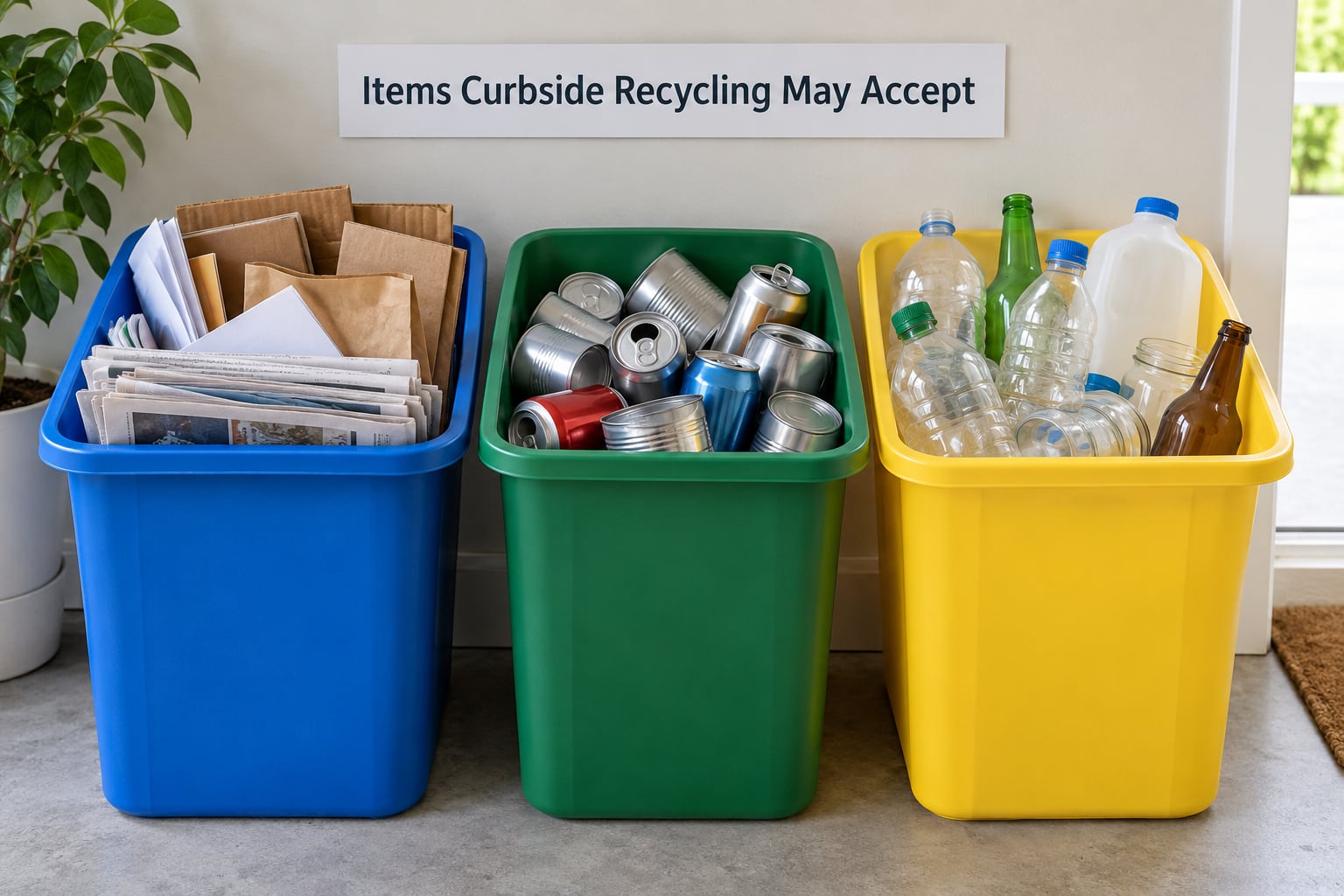
The list below is the commonly accepted core. Your local authority or waste provider sets the final word, and accepted items change when recycling markets shift, so treat this as a starting point rather than a guarantee.
| Material | Usually accepted | Notes |
|---|---|---|
| Paper | Newspaper, office paper, envelopes, catalogs, clean cardboard | Keep dry. No food or grease. |
| Cardboard | Corrugated boxes, flattened, packing paper | Flatten and cut the tape off where you can. |
| Metal | Aluminium cans, steel food cans, empty metal lids | Rinse. Lids can stay on. |
| Glass | Bottles and jars only | No mirrors, ceramics or drinking glasses. |
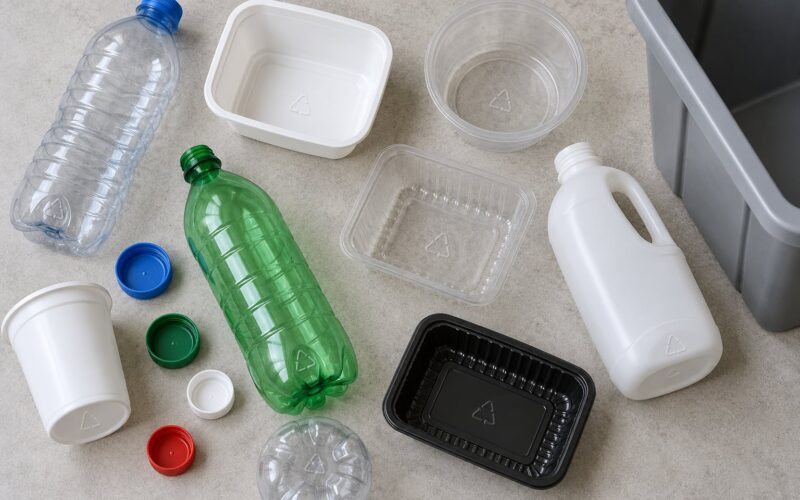
| Plastic | Eligible bottles, jugs and containers | Loose, empty and dry. Not film. |
How to Prepare an Item for Curbside Recycling
Empty it. That means scraping out peanut butter, rinsing out sauce bottles and pouring out the last of the juice. You do not need to wash to perfection, because a wipe or a quick rinse usually works and full washing wastes water.
Dry it. Liquid left in a container is one of the most common reasons a load gets downgraded, and it also carries food into paper in the same bin.
Loosen it. Leave caps and lids on, because facilities generally sort them along with the container and small loose caps are easily lost. Do not remove labels; plastic labels are sorted with the bottle.
Flatten cardboard, and bag nothing. If you use bags for the recycling, they go in the trash, not the cart, unless your program specifically accepts bagged material.
Check Your Local Recycling Rules
The fastest route to the right answer is your hauler’s own page. Search the name of your city or county plus recycling rules, then look for the accepted-materials list, since that page settles most of these questions.
Your council or municipal website usually carries the collection calendar and details of hazardous waste drop-offs and special collection events. The bin itself often carries a QR code or printed list, and the waste hauler app is faster than digging through a website when you are standing at the curb.
Also look for a container deposit return system in your area. Those run separately from curbside collection and can take back bottles and cans for a refund in a way that no recycling bin ever will.
What to Do When You Are Not Sure
When an item is ambiguous, run it through six questions in order. Is it on my local accepted-materials list? If not, it stays out.
Next, is it dirty? If so, it is contamination no matter what it is made of. Then ask whether it is a hazard, which covers batteries, pressurised cylinders, chemicals and mercury-containing items, and route it accordingly.
After that, ask whether it tangles. If it is longer than about a foot or one metre, or it is rope, hose, cord or wire, it does not go in the bin.
Then ask whether it is worth repairing or reusing first, which applies to lamps, furniture and clothing. And finally, is there a specialist take-back scheme for it, because that route usually exists for exactly the items the bin cannot take.
If the answer is still unclear, the safest default is to leave it out and check the list. A wrong item in the bin is harder to undo than one held back for a day.
Frequently Asked Questions
Can pizza boxes go in curbside recycling?
Usually partly. Tear off the clean top and lid and put those in the bin, and compost or trash the greasy base. A grease spot on the lid is normally tolerated, but a box soaked through the bottom is fibre contamination and is not accepted. Rules vary, so check your hauler’s accepted-materials page.
Should plastic bags and carrier bags go in the recycling bin?
No. Bags and film wrap around sorting equipment and jam the line, and a bagged load is usually treated as one unprocessable lump, so the recycling inside is lost too. Take bags and film to a supermarket drop-off bin, a soft plastics drop-off, or a household hazardous waste site instead.
Where should batteries and power banks be disposed of?
Through a take-back point or hazardous waste route, never in the curbside bin. A lithium battery can ignite inside a collection truck and destroy the whole load, which is why nearly every program refuses them. Many hardware and grocery stores have a drop-off near the entrance, and tape the terminals of loose cells before transport.
Do recycling containers need to be rinsed before collection?
Empty is the requirement, not spotless. Scraping out peanut butter or rinsing a sauce bottle is usually enough, and full washing is a waste of water. What must go is the liquid, because leftover liquid carries food onto paper in the same load and degrades the fibre. Keep everything dry after rinsing.
Does a recyclable or compostable label guarantee curbside collection?
No. Recyclable only describes what a suitable facility could do with the material, not what your truck accepts, and compostable plastics are designed for industrial composting facilities rather than curbside trucks or garden heaps. The two numbers on a plastic bottle, the resin code and the recycling symbol, describe material and intent, and neither decides what your local program takes.
How can apartment residents find the recycling rules for their building?
Start with your property manager, who should hold the contract with the hauler and the accepted-materials list for your address. Then check the hauler’s own site using your city or postal code, since rules are set per address and shared bins are often stricter than single-family ones. Post the list by the bin door; most contamination in shared bins comes from residents who simply never saw it.
What to Do First
Find your hauler’s accepted-materials page today and check it against what is actually in your bin. That single step settles most of the questions people search for.
Then handle the four categories that cause the most damage: keep bags, batteries, electronics and textiles out of the collection entirely, and give each one its own drop-off route. Empty and dry the containers that do qualify, and leave them loose.
Lastly, remember that what not to put in your curbside recycling bin is a moving target. Accepted lists shift with recycling markets, so check the page once a year rather than trusting what you learned years ago.