You can compost pet waste, but only in a dedicated system that gets monitored and kept apart from your food compost, and never on food crops. If you cannot run that system, or your local rules do not allow it, bagging it for municipal collection is the safe answer. This guide covers both routes, plus the conditions that rule out home composting altogether.
The reason the question splits in two is that a normal backyard bin is a cold system. It never reaches the sustained heat needed to neutralise the bacteria, parasites and Toxoplasma gondii oocysts that live in pet feces, so pet waste mixed into it simply sits there, drying and stinking while the pathogens wait.
Table of Contents
- What You Need
- Can Pet Waste Go in a Regular Compost Pile?
- Step-by-Step: How to Compost Pet Waste Safely or Not at All
- Step 1: Choose a Legal, Suitable Disposal Route
- Step 2: Set Up a Separate Managed System
- Step 3: Collect and Prepare the Pet Waste
- Step 4: Maintain the Correct Balance and Conditions
- Step 5: Verify Sanitation Before Using Finished Material
- Step 6: Seal, Store, and Clean Up Safely
- Common Mistakes
- Frequently Asked Questions
- Can I put dog or cat waste in my regular backyard compost pile?
- How long does pet waste take to compost safely?
- Does pet compost smell bad if it is managed correctly?
- Can I use finished pet-waste compost on vegetables or herbs?
- What should I do if my municipality does not allow home composting pet waste?
- The Safeest First Step
What You Need
First, the three routes that actually work. A locally approved pet-waste collection point or curbside program, a permitted commercial composter that accepts pet waste, or a dedicated enclosed system you manage yourself with consistent high temperatures. There is no fourth option worth considering.
Do not put pet waste in an ordinary backyard compost pile, and do not put it in a municipal green bin. Collection staff treat it as a biohazard regardless of what bag it arrives in.
For a managed home system, you need:
- Disposable gloves and a dedicated scoop that never touches food or potting soil
- A washable collection container that keeps the material contained and out of reach of animals
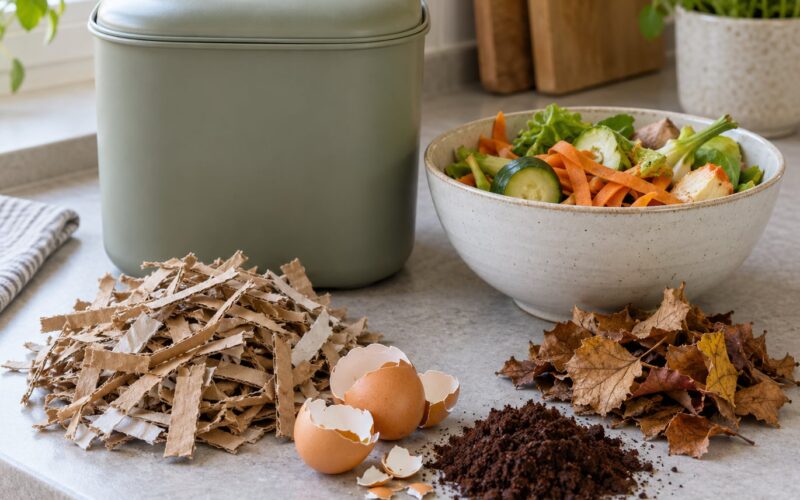
- Carbon-rich plant material in quantity: dry leaves, untreated wood chips, sawdust, coir or shredded cardboard
- A moisture source, used only when the mix reads too dry, usually just water
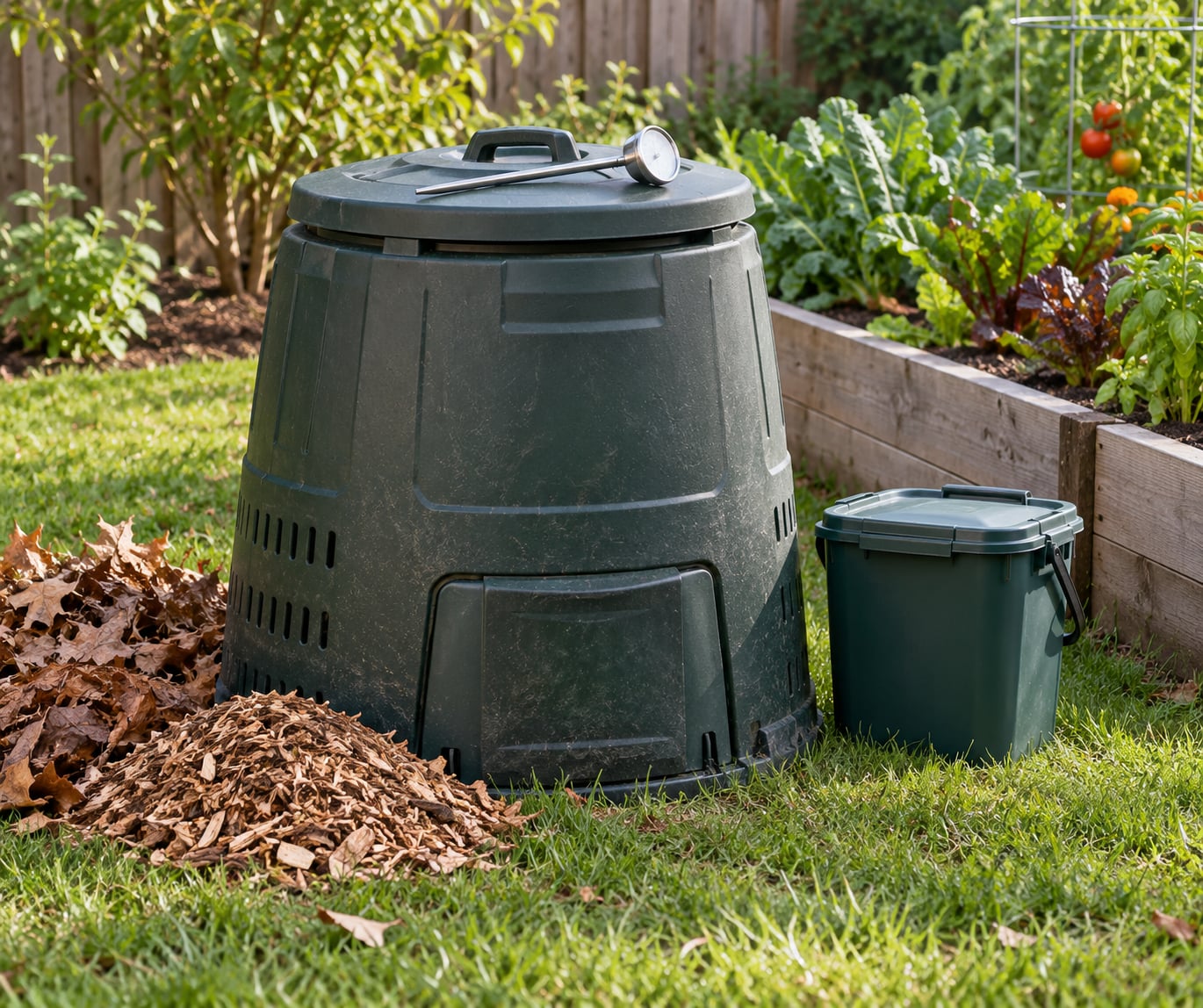
- A long-stemmed thermometer that can reach the middle of the pile
- A covered storage spot for finished material, away from runoff and direct contact
You will also want gloves that fit, handwash after every collection, and somewhere to wash the scoop that is not the kitchen sink.
Can Pet Waste Go in a Regular Compost Pile?
No, not with any confidence. An ordinary home pile rarely heats past the low thermophilic range, and it is never held there long enough or monitored closely enough to treat pet waste properly.
Three things go wrong at once. Pathogen kill needs sustained heat above roughly 60°C, which a mixed kitchen-and-garden bin simply does not produce reliably. Pet waste also draws flies, rats and raccoons far more aggressively than vegetable scraps, and readers on composting forums report raccoons emptying an open cat-waste pile overnight. The smell, meanwhile, is enough to push people out of the system entirely.
Local rules often prohibit it outright, and a landlord or allotment committee can refuse it even where the city does not. If you cannot maintain a dedicated, monitored system, or you cannot confirm an approved alternative in your area, do not compost it at home. Bag it.
Step-by-Step: How to Compost Pet Waste Safely or Not at All
Read the gate before you collect anything. Ask yourself two questions: is there a legal, suitable route in my area, and can I monitor the system to a documented standard? If either answer is no, follow the disposal route. If both are yes, set up a dedicated system. Never begin collecting pet waste into an ordinary pile.
Step 1: Choose a Legal, Suitable Disposal Route
Check your municipal waste guidance and look for a designated pet-waste station or a curbside program before you start. A permitted commercial composter is the other verified route, and the facility should confirm in writing that it accepts pet waste.
Some material never enters a home system in the first place: litter and its bags, medicines, sharps, and fecal material from a sick or recently ill animal. If your pet is on anti-worming medication, keep that animal’s waste out of the system for at least two weeks after the dose, and check with your vet for anything longer-acting. Waste from an animal with a known parasite or infection goes to the disposal route, full stop.
Step 2: Set Up a Separate Managed System
For a home route, use an enclosed unit or a securely managed ground-level system with a defined process and enough capacity to accept dry carbon material with every addition. Keep your garden compost completely separate, and never substitute a small plastic storage bin left in the sun as a passive holding pen.
Set it where children, pets, wildlife and neighbors cannot reach it, and well away from water. Place it at least a metre from edible plants and from native or phosphorus-sensitive plants. The setup is ready when you can reach in, turn it, and read a temperature without exposing yourself.
Step 3: Collect and Prepare the Pet Waste
Put on disposable gloves, remove feces promptly from the pet area, and drop it straight into the managed container. Do not flush it and do not wash it down a storm drain, a grass verge or any outdoor tap. Those routes carry waste into waterways where it does real damage.
Cover each addition with the dry carbon material the system specifies. Keep out litter, plastic, food, chemicals, and every pet product, including toys, bedding and flea treatments. The material should stay contained, should not leak, and should not dry out into dust that blows around.
Step 4: Maintain the Correct Balance and Conditions
Follow the chosen system’s verified ratio and operating instructions rather than any general recipe you find online. Mix fresh material into the active carbon-rich portion, keep the mix about as damp as a wrung-out sponge, and correct standing liquid immediately, since pooled moisture is what turns a system anaerobic and foul.
Monitor from a safe distance, on a schedule the system specifies. If you are running a hot system, the heat is the treatment, so losing temperature means the pathogen kill has stopped with it.
Step 5: Verify Sanitation Before Using Finished Material
Use a system or facility that documents its treatment. A few hot days are not proof of sanitation, and neither is the absence of smell. Look for the documented temperature hold and time period the system is designed to reach, then check that the process actually completed.
Inspect the finished material and reject anything that still shows recognisable pet waste or that never matured properly. Unfinished compost goes back to the active system or into the municipal route, not onto the garden. Follow any local restriction on use near food gardens, and keep it away from the vegetable patch even when it looks perfect.
Step 6: Seal, Store, and Clean Up Safely
Bag or return treated material the way your system or facility requires, then store it covered, away from runoff and away from direct contact. Wash your hands after every collection session.
Clean the scoop, gloves and container following the product or system instructions, and keep that cleaning separate from anything that touches food. If a setup has failed and you cannot identify the cause, clear it out entirely through the disposal route rather than trying to rescue it. The job is done when the area is clean, the tools are handled safely, and no material can reach drains, soil, water or roaming animals.
Common Mistakes
Mixing pet waste into a general cold pile. Fix: keep a dedicated system, or stop composting it at home entirely.
Judging sanitation by odour. Fix: require a documented temperature hold and time period. A pile that smells fine is not proof of anything.
Adding too much moisture. Fix: hold the mix at the damp-sponge stage and remove standing liquid the day you see it.
Using plastic bags. Fix: bags prevent proper processing and go straight to the municipal route. Forum users report compostable bags failing in storage before use, and paper bags soaking through into something messy and unsanitary.
Failing to exclude litter and medicines. Fix: clay, silica gel and zeolite litter never decompose. Bag it. Keep all medicated-animal waste out for at least two weeks after treatment, longer if your vet advises it.
Treating compost as safe after an arbitrary number of days. Fix: use the documented timeline for your system instead of a calendar guess.
Using a tumbler. Fix: turning pet waste throws material and pathogens into the air. Choose a system you turn downward, or use a commercial facility.
Flushing it away. Fix: flushing moves waste into waterways and sewage systems untreated. Bag it for collection instead.
Spreading finished compost on vegetables, herbs or soft fruit. Fix: use it on ornamental perennials, shrubs, trees and turf only, and keep it a minimum of a metre from anything you eat.
Ignoring local rules. Fix: check before you set anything up. Municipal staff will not accept pet waste in a curbside green bin no matter what bag it is in.
Two habits cover most of the rest. Pick disposal over uncertain home processing whenever you are unsure, and keep your handling exposure short: gloves, a separate tool, handwashing, and no children or immunocompromised household members near the system.
Frequently Asked Questions
Can I put dog or cat waste in my regular backyard compost pile?
No. An ordinary backyard bin does not heat or hold temperature long enough to neutralise the bacteria, roundworm and Toxoplasma gondii oocysts in pet waste, so the pathogens survive. It also attracts rats, raccoons and flies and smells far worse than vegetable scraps. Keep pet waste in a dedicated monitored system or bag it for municipal collection instead.
How long does pet waste take to compost safely?
There is no single number, because time alone does not make pet waste safe. A hot system is defined by a sustained temperature hold, generally above 60 C, combined with time. Cold or enclosed systems run on a much longer maturation period, commonly six to twelve months. Use the documented cycle for your specific system rather than counting weeks on a calendar.
Does pet compost smell bad if it is managed correctly?
A correctly managed system should not, and smell is a warning sign rather than a success signal. Odour appears when the mix is too wet, when nitrogen-rich material is added without enough carbon bedding, or when a system is anaerobic. Add dry carbon material such as leaves, sawdust or shredded cardboard, correct standing liquid, and keep the container lidded. Odour is never evidence that pathogens have been killed.
Can I use finished pet-waste compost on vegetables or herbs?
Do not. Public health guidance and extension services consistently advise keeping pet-waste compost off edible crops, including herbs, leafy greens and soft fruit. Use finished material on ornamental perennials, shrubs, tree and shrub planting holes, and lawn turf, keeping it at least a metre from anything edible and away from play areas and water sources. This rule holds even when the compost looks and smells finished.
What should I do if my municipality does not allow home composting pet waste?
Bag it for the approved collection route and stop trying to work around the rule. Municipal staff treat pet waste as a biohazard regardless of bag type, and trying curbside anyway risks refused bins and fines. Look instead for a designated pet-waste collection point, a permitted commercial composter, or a veterinary clinic that accepts waste. If none exists locally, ask your council directly for the nearest option.
The Safeest First Step
Find out what your area actually accepts before anything else, and name a route: a pet-waste collection point, a permitted commercial composter, or a dedicated system you can monitor. Until one of those is in place, keep pet waste out of your ordinary pile and bag it for collection.
Once a route is confirmed, the two rules that matter most are simple. Never let pet waste into a general cold compost bin, and never put the finished material on anything you plan to eat.