If you want to know how to store produce so it lasts longer, the answer comes down to four levers: moisture, temperature, ethylene gas and airflow. Fresh fruit and vegetables keep breathing after harvest, using up their own sugars and their own water, so anything that slows that respiration buys you extra days. Get those four right and a week’s shop stretches into most of a week and a half; get them wrong and you are running a mould farm in the crisper drawer.
There is no single rule for all produce. A banana and a head of lettuce want opposite conditions, and the difference is usually a few degrees, a paper towel and a bag that breathes. This guide walks through the whole process, from sorting at the sink to freezing the surplus, and it answers the questions that show up most often on forums, including the one everybody argues about: whether to wash produce before it goes in the fridge.
That washing question has a clear answer, so here it is. Store most produce unwashed and dry, and wash it right before you eat or cook it. Washing early puts surface moisture against the skin, and that moisture is what mould and bacteria feed on. The exception is produce you will cut and eat within a day or two, and produce that grows in dirty conditions or that you know is contaminated, where a rinse at the point of use matters more.
A note on numbers: the shelf-life ranges below are the ones university extension services and food-safety agencies commonly publish, and they assume a refrigerator holding 40°F or below. Warmer kitchens, older fridges and produce that arrived already tired will all shorten them.
Table of Contents
- What You Need
- Step-by-Step: How to Store Produce So It Lasts Longer
- Step 1: Sort produce before storing
- Step 2: Choose the right storage environment
- Step 3: Use suitable containers and wrapping
- Step 4: Store ethylene-sensitive produce separately
- Step 5: Check freshness weekly and use produce in order
- Common Mistakes
- Frequently Asked Questions
- What three vegetables should never be refrigerated?
- What two fruits should not be stored together?
- Should I wash produce before storing it?
- Do ziploc bags keep fruit fresh longer?
- Is it better to store veggies in glass or plastic?
- How do you keep fresh herbs for weeks?
- Conclusion
What You Need
None of this costs much, and most of it is already in your kitchen.
- Paper towels for lining containers and rolling around herbs. Replace them when damp, which on berries is usually every few days.
- A marker or masking tape to date containers. A date on a box does more for waste than any storage trick, because it turns “is this still good?” into a glance.
- Perforated produce bags, or a large bag with a few holes punched in it, for leafy greens and anything that needs to breathe.
- Shallow rigid containers for berries. The ones people use for leftovers are usually too deep, and stacking berries in a deep tub is what crushes the ones at the bottom.
- A jar or glass with a loose lid for soft herbs, so stems can sit in water.
- A salad spinner or a clean towel for getting greens genuinely dry.
- White vinegar, for the one-to-ten wash you can use on firm produce like berries before storing.
- Freezer bags or an air-freezer bag, for surplus you cannot use in time.
If your fridge has one crisper drawer rather than two, decide what goes in it and keep it for that one job. More on that below.
Step-by-Step: How to Store Produce So It Lasts Longer
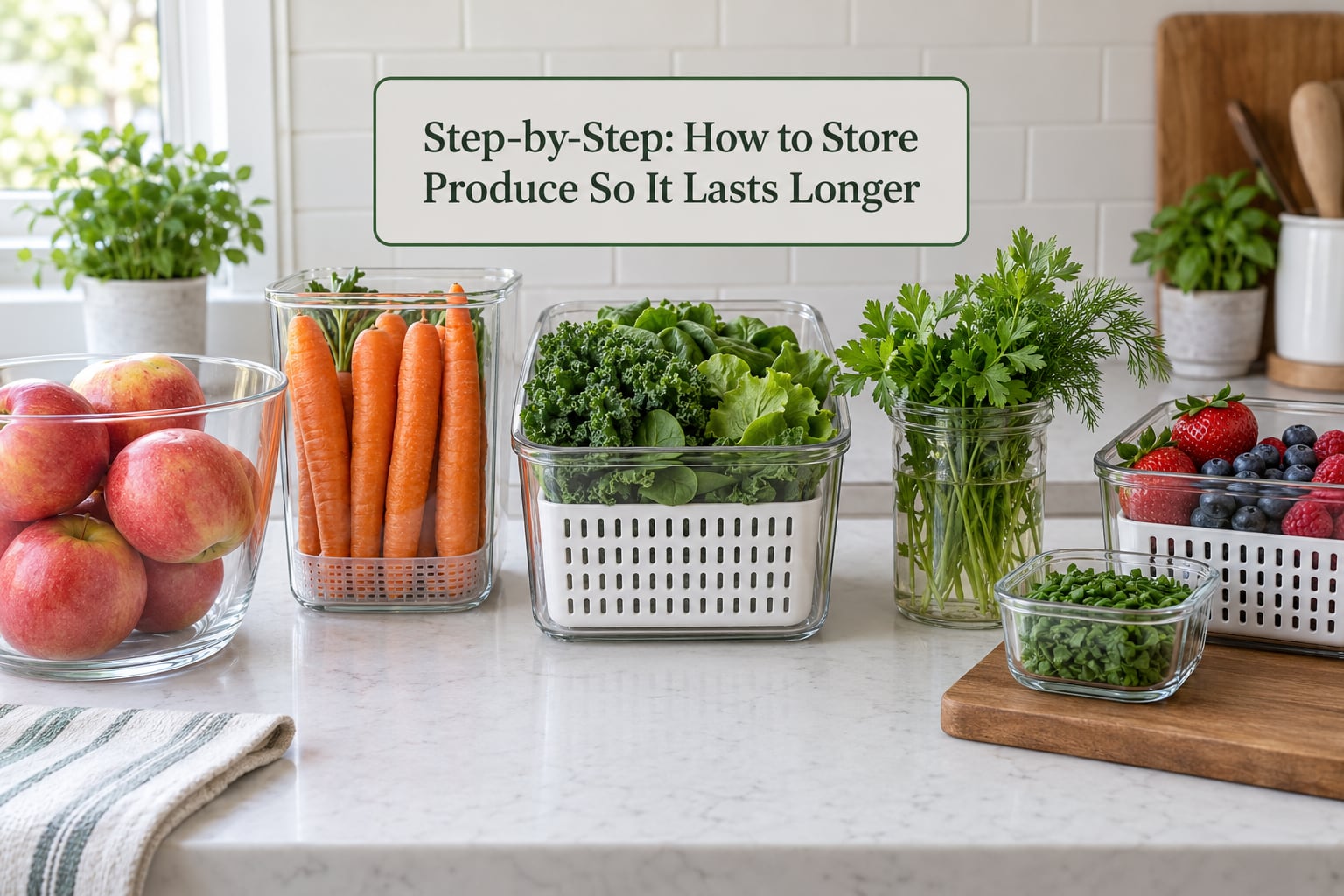
Step 1: Sort produce before storing
The sorting you do at the sink decides everything that happens next. Start by removing anything already soft, split, bruised or mouldy, because one bad apple quietly takes a bowl of apples with it.
Then sort by storage need, not by type. Fruit that ripens and gives off ethylene goes in one place, hardy roots go in another, and anything delicate goes in the top of the fridge where the temperature is most stable. Washing comes last: give produce a quick rinse only if you are about to use it within a couple of days, and let it dry completely before it goes anywhere.
If you do wash firm produce before storing, the ratio people use is one part white vinegar to ten parts water, then a full dry. Rinse under cool water afterwards and dry on a towel. Skip this for leafy greens you are not eating within a day or two, and skip it entirely if you suspect contamination, where rinsing at the point of use is the safer choice.
Step 2: Choose the right storage environment
Temperature is the biggest lever you control. A refrigerator at or below 40°F slows respiration dramatically, which is why a week-old carrot from a cold drawer tastes better than one left on the counter for a week. Cold alone is not enough though. What makes leafy greens limp is a combination of moisture and warmth, and what makes strawberries go fuzzy is a combination of moisture and still air.
So think in two axes: how cold, and how humid or dry the air around the item should be. Leafy greens, herbs and broccoli want cold and humid. Berries, mushrooms and cut fruit want cold and dry. Potatoes, onions, garlic and bananas want neither, they want cool, dark and ventilated with no cold at all.
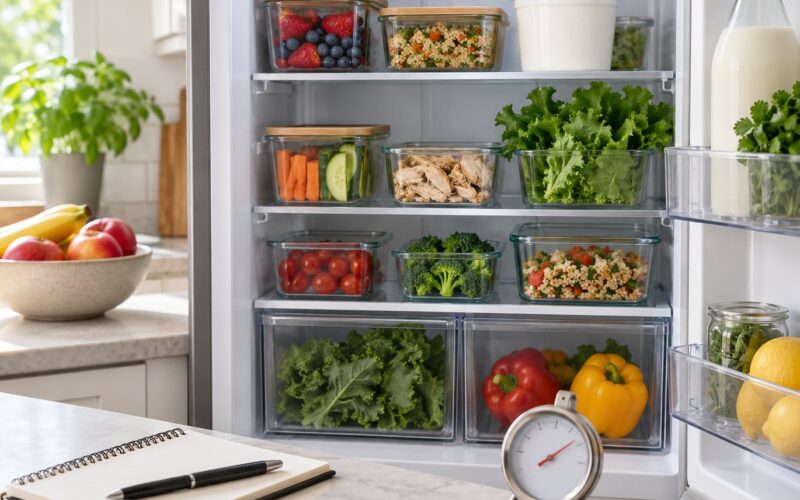
The crisper drawers exist precisely to hold those two settings at once. Most have a slider or a vent that controls airflow, and closing it partway keeps humidity up while still letting gases escape. Use one drawer for high-humidity greens and the other for low-humidity items like mushrooms and cut fruit if you have two. If you have one, give it to the greens, which have the most to lose.
Two smaller details that matter more than they sound. Put herbs and anything that bruises on the top shelf, where the air is coldest but the least disturbed, and keep heavy, hard items low so they cannot crush what is under them. And a shallow dish of water in the crisper raises humidity a little, which helps the wilting-cabbage problem a surprising amount.
Step 3: Use suitable containers and wrapping
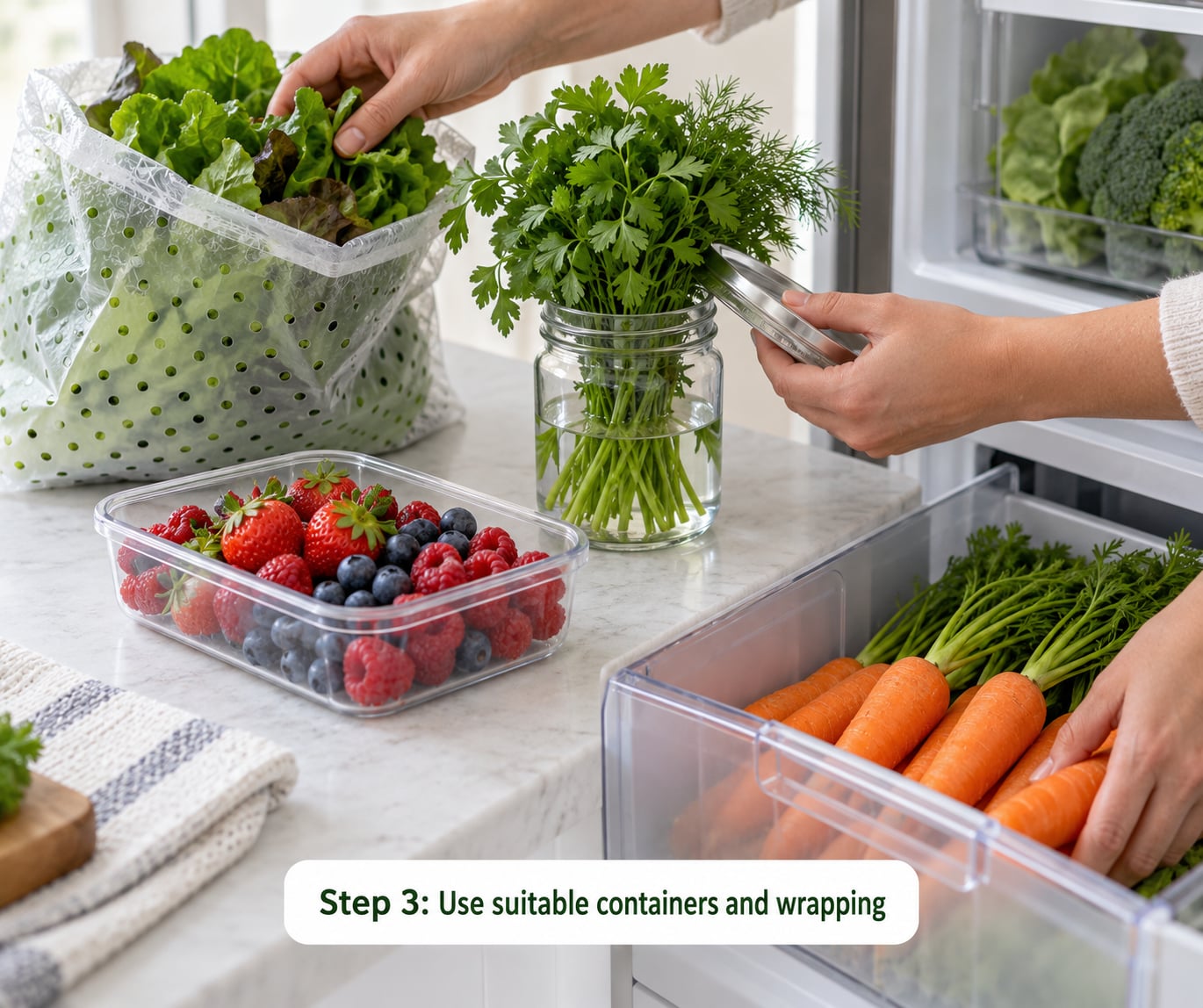
Container choice is mostly a decision about whether an item needs to breathe. Produce is alive and respiring; a sealed bag around something that still holds moisture creates the exact conditions mould wants.
| Container | Best for | Watch out for |
|---|---|---|
| Perforated produce bag or bag with holes | Leafy greens, broccoli, herbs wrapped in a towel | Too small a bag bruises leaves; open one end so gas escapes |
| Paper towel lined rigid tub, lid ajar | Berries, mushrooms, cut fruit | Replace the towel once it is damp; do not seal it airtight |
| Brown paper bag | Mushrooms, onions in a cool spot | Gets soggy if it sits anywhere damp |
| Airtight container | Cut fruit and vegetables, leftovers, chopped onions | Only cut produce, only once you have sealed in some air, never for whole berries |
| Glass jar with loose lid and water | Soft herbs: parsley, cilantro, dill, basil stems | Basil dislikes the fridge; keep it on the counter in water instead |
| Mesh bag | Onions, garlic, shallots, potatoes, kept out of the fridge | Do not use it for anything that needs humidity |
| Small bowl of water | Cut carrots and celery stood upright in the fridge | Change the water every few days |
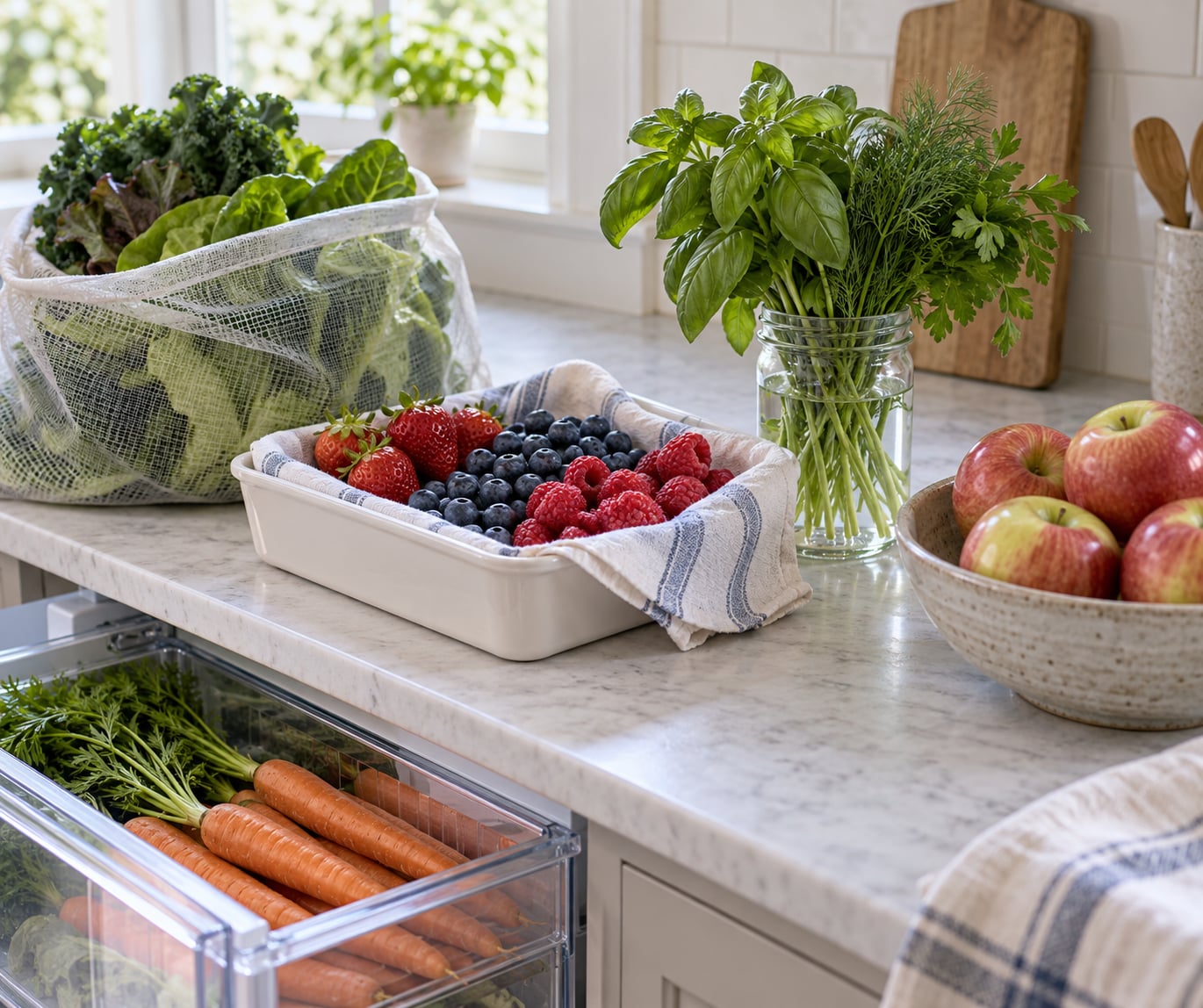
A few practical wrappings. Line the tub with a dry paper towel and put a second one over the top of berries, loose, and they last markedly longer because the surface stays dry. For greens, dry them properly in a spinner, wrap the bunch loosely in a dry towel and stand it in an open bag. For herbs, trim the stems and stand them in a jar with an inch of water, loosely covered so the leaves can breathe.
For cut produce, airtight is correct. Cut melon, pineapple and cubed fruit keep in a sealed container in the fridge for a few days, with the juice drained off before you close the lid. An avocado half keeps with the pit still in and the skin on, in an airtight container, and the cut surface browns less. Cut carrots and celery stand upright in a small amount of water, covered, which keeps them snapping rather than bending.
Step 4: Store ethylene-sensitive produce separately
Ethylene is a natural gas that produce itself releases as it ripens. It is harmless to eat and useful for ripening, but in a closed drawer it turns the ripening speed up on everything nearby. That is the whole mechanism behind the single most complained-about kitchen problem: the bowl of apples and bananas sitting next to the salad.
The main producers are apples, bananas, pears, avocados, peaches, apricots, ripe mangoes, kiwi, cantaloupe, honeydew, figs, tomatoes and ripe persimmons. The items damaged by ethylene are mostly the leafy and delicate ones: lettuce, spinach, kale, broccoli, green beans, asparagus, cauliflower, cucumbers, zucchini, herbs, peas, Brussels sprouts and prepared salad greens.
So the practical rule is simple. Keep your ripening fruit together in one bowl, ideally in the open air on the counter rather than in the fridge, and keep it away from the greens. Move the greens to their own bag in the crisper, or move the fruit to a corner of the kitchen if you are tight on space. Do not seal an apple into a bag with lettuce and expect the lettuce to last.
A few pairings worth knowing beyond that. Store potatoes away from onions and any ethylene-producing fruit, and never in the fridge, where the starch turns to sugar and the taste goes sweet. Keep cucumbers in the crisper away from fruit rather than on the shelf next to it. Leave the stems on grapes and cherries where you can, since the dry stem is less of a path for rot to travel through. If you buy avocados or bananas from a shop and want them slower, keep them apart from everything else; a small ethylene absorber packet in the crisper does the same job, though it is a nice-to-have rather than the fix.
Step 5: Check freshness weekly and use produce in order
The storage system only works if you look at it. Once a week, take thirty seconds: open the crisper, feel the greens, and check the berries at the bottom of the tub. Slightly wilted lettuce and spinach often revive if you trim the stems, dunk the whole bunch in ice water for ten minutes, dry it well and put it back. Berries that are only just beginning to soften are still fine today; ones with fuzzy patches are not.
Eat in the order that matters. Soft and ripe fruit goes first, then anything cut, then delicate greens, then roots and squash, which will still be there in two weeks. Anything approaching spoilage becomes the start of the next meal rather than a trip to the bin: soft tomatoes and zucchini go into a stir fry or a tray of roasted vegetables, overripe bananas go into banana bread, tired greens go into soup, and celery and carrot ends go into stock.
Here is the reference table. Times assume a fridge at or below 40°F and reasonable handling, and treat them as a guide rather than a promise.
| Produce | Where to store | Container | Expected shelf life |
|---|---|---|---|
| Leafy lettuce, spinach, kale | Fridge, crisper | Vented bag with a dry towel | 7 to 10 days |
| Herbs: parsley, cilantro, dill | Fridge, jar of water, loosely covered | Jar | 1 to 2 weeks, more in water |
| Carrots | Fridge, crisper | Airtight bag or bag with a little dampness | 3 to 4 weeks |
| Celery | Fridge, crisper or in shallow water | Airtight bag, or standing in water | 2 to 3 weeks |
| Broccoli and cauliflower | Fridge, crisper, high humidity | Perforated bag | 7 to 10 days |
| Green beans | Fridge, crisper, high humidity | Perforated bag | 5 to 7 days |
| Cucumbers | Fridge, crisper, away from fruit | Airtight tub, dry towel | 5 to 7 days |
| Zucchini and summer squash | Fridge, crisper | Perforated bag | 4 to 7 days |
| Bell peppers | Fridge, crisper in a dry bag | Perforated bag | 1 to 2 weeks |
| Mushrooms | Fridge, low humidity | Paper bag or towel-lined tub | 5 to 7 days |
| Strawberries | Fridge, very dry | Shallow tub, paper towel, unwashed | 3 to 5 days |
| Blueberries | Fridge, very dry | Shallow tub, towel lined | 1 to 2 weeks |
| Raspberries | Fridge, very dry | Shallow tub, single layer, unwashed | 2 to 3 days |
| Grapes | Fridge, in the perforated hole of the bag | Bag, stems trimmed | 1 to 2 weeks |
| Apples | Fridge, away from greens | Crisper or shallow tub | 4 to 8 weeks |
| Oranges and other citrus | Fridge or on the counter | Crisper or mesh bag | 2 to 4 weeks |
| Bananas | Counter, away from other produce | Open bowl | 3 to 7 days once ripe |
| Avocados | Counter to ripen, fridge to slow | Bowl, or in the crisper once firm | 3 to 5 days, up to 2 weeks slowed |
| Tomatoes | Counter, stem side down, unwashed | Open bowl, not the fridge until ripe | 3 to 7 days on the counter |
| Potatoes | Cool, dark, ventilated, no fridge, away from onions | Mesh bag or paper sack | 2 to 3 months |
| Onions and shallots | Cool, dry, ventilated, away from potatoes | Mesh bag or open basket | 1 to 2 months |
| Garlic | Cool, dry, ventilated | Mesh bag | 2 to 3 months |
| Winter squash | Cool, dry, about 55°F if you have it | Single layer on a shelf | 1 to 3 months |
| Beets | Fridge, tops off | Airtight bag or a lidded tub | 3 to 5 weeks |
| Lemons and limes | Counter in a bowl, or fridge for longer | Bowl or airtight tub | 1 to 2 weeks, 3 to 4 weeks refrigerated |
Two things worth checking on your own fridge, because they change the numbers above. Every shelf is fine as long as nothing is pressed against a heating element at the back, which is what dries out berries and greens in a few days. And a fridge packed solid has no air moving through it, so leave some space around the drawers if you can.
When you have more than you can eat, preservation beats the bin. Blanch and freeze greens, beans, carrots, corn and berries, spreading them in a single layer on a tray first so they do not clump, then bag them. Roast or steam squash, peppers, tomatoes and zucchini and freeze those with no blanching needed. Dry herbs, mushrooms, onions, peppers and sliced root vegetables in a dehydrator or a warm oven on the lowest setting. Salt cucumbers as quick pickles, and can anything you know is properly acidic in a tested recipe, following tested jar and processing guidance rather than improvising.
Common Mistakes
Washing everything the night you shop. Surface moisture sitting against skin is the single biggest self-inflicted wound. Store it dry and unwashed, wash at the point of use.
Sealing damp produce in an airtight container. Condensation plus no airflow is how a tub of strawberries becomes a tub of mould. Lids ajar, a paper towel in there, and a dry surface.
Putting fruit and vegetables in the same bowl. One apple sets off a chain reaction across the greens. Fruit gets its own bowl, at least a foot from anything leafy.
Refrigerating things that should never be refrigerated. Potatoes go sweet and lose their texture in the cold, and whole onions, garlic and citrus lose their flavour. Bananas blacken, and tomatoes and cucumbers turn mealy and watery. Keep all of those on the counter in the dark.
Crowding the crisper. Produce touching and packed tight bruises and heats itself up. One loose layer per drawer beats two packed ones, and leave the vents partly open.
Storing soft or mouldy produce and hoping. Rot spreads to its neighbours, sometimes overnight. Bin the bad item today. Empty the drawer and wipe it before restocking.
Believing the crisper drawer keeps everything forever. It slows things down; it does not stop time. A drawer full of greens bought three weeks ago is already past saving, and labels are the cheapest fix there is.
Frequently Asked Questions
What three vegetables should never be refrigerated?
Potatoes, whole onions and garlic are the three most commonly named. Refrigerated potatoes turn their starch into sugar, which makes them taste sweet and mealy and degrades how they cook. Whole onions and garlic in a cold, moist drawer lose their flavour and start to sprout or mould. Corn and winter squash are often listed alongside them: keep both in a cool, dry cupboard rather than the fridge. If you only change one thing, move the potatoes out.
What two fruits should not be stored together?
Apples are the heaviest natural ethylene producer in a normal kitchen, and bananas are close behind, so those two together in a closed bowl will ripen everything around them fast. A single apple will not ruin a drawer overnight, but the effect compounds over days. Keep high-ethylene fruit in one open bowl away from lettuce, spinach, kale, broccoli and herbs, which are the items that visibly suffer.
Should I wash produce before storing it?
Store it unwashed and dry, then wash right before you eat or cook it. Washing early leaves moisture against the skin, which speeds up mould and bacterial growth. The exception is firm produce such as berries, where a dip in one part white vinegar to ten parts water followed by a full dry can pay off. If you suspect contamination, do not store it: rinse at the point of use and use it or bin it.
Do ziploc bags keep fruit fresh longer?
They keep things fresher than an open bowl, but only for produce that should be sealed, such as cut fruit, chopped onions and herbs kept dry. For whole berries, greens and anything with surface moisture, a ziploc traps condensation and speeds spoilage. Use perforated produce bags for leafy items, a towel-lined tub with the lid ajar for berries, and ziplocs for cut produce only. Air-tight is not the same as better.
Is it better to store veggies in glass or plastic?
Material matters far less than breathability. Glass is non-porous, does not absorb smells, and lets you see what is inside, which makes it good for cut produce, chopped vegetables and dry pantry goods. Plastic is lighter, cheaper and less likely to break, and a perforated plastic produce bag is the right choice for leafy greens. Do not pay extra for glass; pay attention to whether the container seals or breathes, and match that to the item.
How do you keep fresh herbs for weeks?
Trim the stems and stand them in a jar with an inch or two of clean water, then cover loosely with a bag or lid that lets air through so the leaves do not rot in trapped damp. Change the water every couple of days. Soft herbs like parsley, cilantro and dill last a week or two this way; chives and mint go slightly longer. Basil dislikes the fridge and keeps best on the counter in water, and dry herbs need a dark cupboard, not the drawer.
Conclusion
Start with one habit: put the produce away dry and unwashed, and keep the fruit bowl away from the greens. That single change does more than any gadget, because it addresses moisture and ethylene, the two levers that do most of the damage. From there, date what you store, use the tender things first, and freeze or dry anything you will not get to.
Storage only extends the life you already have. The real saving comes from buying less often and using what you bought.
If there is a particular item that never lasts in your kitchen, say which one and how you are storing it, and the answer is usually a small change to humidity, airflow or separation rather than a new piece of equipment.