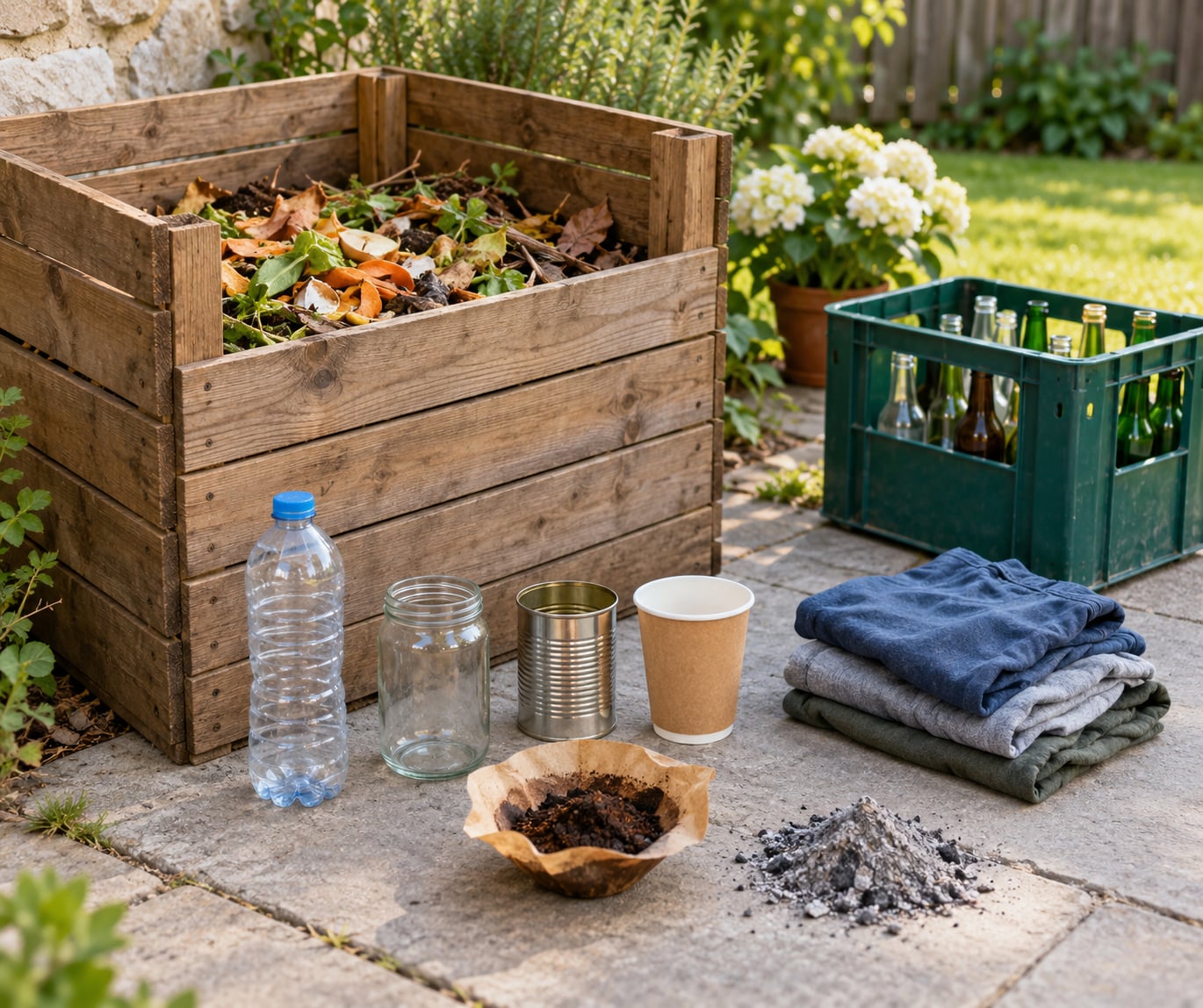
If you are sorting weekly kitchen waste, the short answer is that what you cannot compost at home is anything that is not plant-based organic matter: plastics and their certified compostable cousins, glass, metal, coated paper, rubber, treated wood, ash, pet waste, diapers, meat, fish, dairy, bones and cooking fats. A home bin is a cool, aerobic system run by fungi, worms and microbes, and it simply cannot break most of those things down. This guide walks through each material, why it stays out, and where it goes instead.
I keep a backyard bin and, until I read the local authority’s own guidance, I was quietly throwing out perfectly good orange peels because a list somewhere said citrus attracts pests. It does not, at normal quantities. Most of the alarmist lists you will find online are not wrong so much as uncalibrated, so each section below gives you the reason behind the rule rather than just the rule.
Two things change the answer. The first is method: a worm bin and a Bokashi bucket are far stricter and more forgiving respectively than a backyard pile. The second is your municipality, since a curbside green bin in one town may take meat while the next rejects it. Check your own collector’s rules before you assume.
Table of Contents
- What You Cannot Compost at Home: At a Glance
- 1. Plastic Bottles, Containers and Packaging
- 1. How to identify what you cannot compost at home
- 2. Glass Bottles and Jars
- 3. Metal Cans, Foil and Small Metal Objects
- 4. Waxed Paper, Greaseproof Paper and Paper Cups
- 5. Glossy, Foil and Laminated Paper
- 6. Synthetic Fabrics and Clothing
- 7. Rubber Products
- 8. Treated or Painted Wood
- 9. Ceramic Plates, Crockery and Pottery
- 10. Charcoal, Barbecue Ash and Wood Ash
- 11. Cat Litter and Pet Waste
- 12. Human Waste from Diapers and Hygiene Products
- 13. Meat, Fish, Dairy Products and Bones
- 14. Cooked Oils, Sauces and Grease-Saturated Materials
- 15. Certified-Compostable Products Marked for Industrial Facilities
- Frequently Asked Questions
- Can I compost food scraps in a home bin?
- Are compostable bags and containers always safe to compost at home?
- Can I compost citrus peels, coffee grounds and paper towels?
- What should I do if I accidentally put plastic or glass in my compost?
- Does every municipal compost collection accept meat, dairy and pet waste?
- How do I remove a bad item from an active home compost pile?
- Conclusion: Check the Label Before You Compost
What You Cannot Compost at Home: At a Glance
Here is the short version, with the disposal route for each material so nothing simply piles up on the counter.
| Material | Why it stays out | Where it goes instead |
|---|---|---|
| Plastic bottles and packaging | Does not biodegrade at home temperatures | Curbside recycling bin |
| Certified compostable packaging | Needs industrial heat and time | Store drop-off only if it is accepted locally |
| Glass bottles and jars | Inert, breaks into sharp fragments | Glass container bank or bottle bank |
| Metal cans and foil | Inert, damages shredders, contaminates compost | Metal recycling stream |
| Waxed and coated paper | Coating stops water and microbes reaching fibres | Household waste, or certified paper stream |
| Glossy, laminated and receipt paper | Clay, adhesive and foil layers resist breakdown | Household waste |
| Synthetic fabrics | Does not degrade, leaves plastic fragments | Textile collection or repair and reuse |
| Rubber products | Inert, low value recovery routes | Specialist collection or repair |
| Treated or painted wood | Preservatives and coatings contaminate the batch | Household hazardous waste drop-off |
| Ash and charcoal | Can carry chemicals, coal and fats | Careful local disposal, often sealed bags |
| Cat litter and pet waste | Pathogen and parasite risk, litter is inert | Bagged household waste |
| Meat, fish, dairy and bones | Pests and odour in a cool pile | Municipal organics if they accept it, else household waste |
| Cooking oils and grease | Clumps, mats and seals the pile from air | Used cooking oil collection point |
| Diapers and hygiene products | Contaminated, mostly plastic, cannot break down | Household waste |
1. Plastic Bottles, Containers and Packaging
Conventional plastic does not biodegrade in a home compost pile, and that stays true however thoroughly you shred it or bury it deep. It sits there as visible flecks in the finished compost, which is exactly what you did not want from a slow process you have been feeding for months.
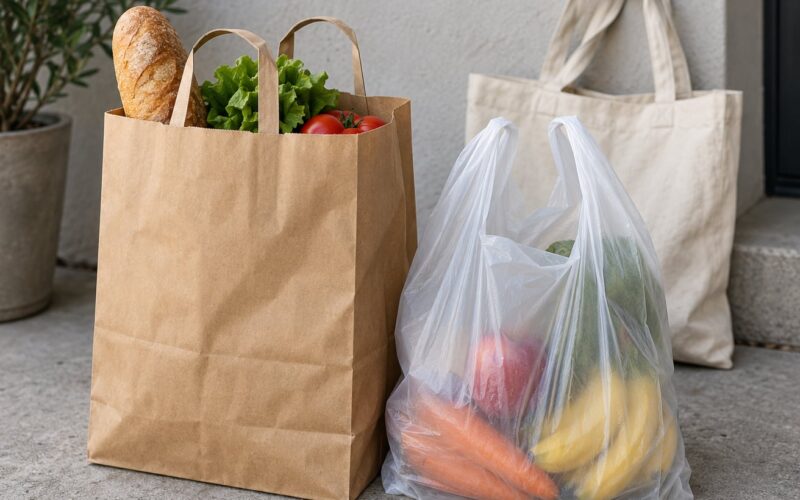
The distinction that trips people up is between plastic that is recyclable and plastic that is compostable. Recycling only happens if you put the item in the recycling bin, and certified compostable packaging only breaks down under the heat, moisture and time of an industrial facility.
1. How to identify what you cannot compost at home
Check three things in this order. First, the resin code stamped on the base of a plastic item: anything numbered 1 through 7 is conventional plastic and belongs in recycling, not the compost bin. Second, coatings, since anything greasy, glossy, non-tear or shrink-wrapped is treated as a composite and will not separate into recyclable streams. Third, the certification wording, where a label that mentions an industrial composting facility is telling you a home bin is not the destination.
A label reading compostable with nothing else does not settle it either way. Ask your municipal waste team, and if you have no way to confirm, treat the item as ordinary plastic and recycle or bin it.
2. Glass Bottles and Jars
Glass is inert. It will look exactly the same in five years, which is why it is such good packaging material and such poor compost. Broken glass in a pile gets churned by the turning fork into small sharp fragments that hide in the finished compost and end up in someone’s soil.
Where a container bank or curbside glass collection exists, that is the correct route. Otherwise many authorities accept small quantities of glass wrapped in household waste, though rules differ enough that checking first saves a trip.
3. Metal Cans, Foil and Small Metal Objects
Metal does not break down like organic waste. A run of shredded can in a pile kills the aeration the microbes need, and stray pieces will wreck a home shredder if they get near one. Foil balls out into dense lumps that sit wet and anaerobic in the middle of the bin.
Rinse cans and put them in the metal stream, balling up clean foil so it does not blow away. Rusted cans are still usually recyclable. Small metal items like bottle caps, paper clips and aluminium pie tins go in the same place.
4. Waxed Paper, Greaseproof Paper and Paper Cups
Paper decomposes because water and microbes get into the fibres. Wax, oil and plastic coatings seal those fibres off, so the sheet keeps its shape for months and then goes into the compost as a stiff grey flake.
Greaseproof wrapping and paper cups that carry a plastic or plant-fibre lining are the usual offenders. Cups and bags sold as compostable only count where they are certified for the system you actually use, and most home bins do not meet it.
5. Glossy, Foil and Laminated Paper
Magazines, catalogues and glossy packaging are covered in clay, ink and varnish that slow breakdown, and they are frequently rejected by paper recyclers for the same reason. Laminated sheets, envelopes with foil windows and receipts are worse: the adhesive, the metallic layer and the thermal paper coating all resist both breakdown and clean recycling.
Tear-off receipts are a genuinely bad addition because they shred into a fine grey powder that disperses through the whole pile and is effectively impossible to screen out. Shredded office paper in a small quantity is usually fine if the shredder is cross-cut rather than straight-cut.
6. Synthetic Fabrics and Clothing
Polyester, nylon, acrylic and elastane are petroleum-derived plastics, so they behave exactly like plastic packaging inside a compost pile. Broken down by shredding, they leave microfibers in the finished compost, which is a contamination problem rather than a decomposition one.
Blended fabrics are the harder case because the natural and synthetic fibres are spun together. Rather than compost an old jumper, take clothing to a textile collection point where one exists, mend what can be mended, and pass the rest on.
7. Rubber Products
Tyres, rubber gloves, erasers, boots and rubber-soled shoes are made of vulcanised rubber, which is deliberately engineered not to break down. There is no home system that will process them, and burying them means you simply move the problem into your soil.
Where a repair shop can resole footwear, that is the highest-value route by far. Tyres and other rubber are sometimes collected through dedicated drop-off schemes or taken at household hazardous waste points.
8. Treated or Painted Wood
Painted, stained, glued, varnished or pressure-treated wood carries preservatives, lead where older paint is involved, and copper-based fungicides. Added in quantity to a batch, those compounds can travel into the finished compost and end up on whatever you grow next.
Clean, untreated wood is a different case and is conditionally suitable: bare sticks, plain offcuts and untreated sawdust work well as browns, as long as you avoid pieces with any coating or adhesive, and avoid cedar and other resinous woods because they inhibit seeds.
9. Ceramic Plates, Crockery and Pottery
Ceramics are fired clay, so they share none of the properties of plant matter. A plate dropped into a compost pile stays intact, then becomes a sharp shard once the pile is turned and screened.
Intact crockery is worth keeping or passing on rather than discarding. When it finally breaks, the pieces usually go in household waste because they cannot be separated from the general ceramic stream in most kerbside collections.
10. Charcoal, Barbecue Ash and Wood Ash
This category splits into two very different groups. A small quantity of cool, plain wood ash from a clean fire is sometimes allowed by local guidance, because ash is mineral and can add potassium to finished compost. It must be fully cold and free of paint, chemicals or accelerant.
Barbecue ash is a different question entirely. Charcoal retains combustion gases, and ash from a fire that burned lighter fluid, coated timber or fatty food carries those residues with it. The safest habit is to wrap cold ash in a sealed bag and put it in household waste unless your collector states otherwise.
11. Cat Litter and Pet Waste
Pet waste is excluded from ordinary home composting because of disease risk: roundworm, hookworm and toxoplasma eggs survive cool piles and would put a gardener and their soil at risk. Most used litter is bentonite clay or silica, which does not decompose at all, and paper or wood pellets slow the pile while they absorb moisture.
Worm bins are harsher still, and compost worms avoid the material entirely, so it ends up sitting at the bottom. In most places the answer is the household waste stream in a sealed bag. If your municipal organics collection accepts pet waste, follow their packaging rules exactly.
12. Human Waste from Diapers and Hygiene Products
Diapers, sanitary pads, tampons, incontinence products and moist wipes cannot compost, partly because the absorbent core is a superabsorbent polymer and mostly because they carry body fluids that create a pathogen handling problem. Wipes labelled flushable are still designed to be captured at a treatment plant, not to break down in soil.
Household waste is the normal destination. For nappies and pads, many councils and retailers run a collection scheme or accept bags at a household hazardous waste point, which is worth a search before you give up on them.
13. Meat, Fish, Dairy Products and Bones
Raw meat, fish, bones, dairy and cooked leftovers belong on the exclusion list for a home pile because they attract vermin faster than anything else you can add, and because the low, slow heat of a backyard bin encourages anaerobic decomposition that smells badly. A single dropped chicken carcass can sour a whole batch.
This is also where the online lists contradict each other, so here is the position I would defend. Bread and baked goods are fine in reasonable amounts. Stale bread, crusts and plain pasta are dry carbon materials that actually help a pile, and the fear of mould on bread is misplaced, since the same microbes that break mould down in compost break down everything else. The stale-bread-in-compost advice is old for a reason. Small quantities of mouldy soft fruit and vegetables are likewise tolerable, while a whole wheel of mouldy cheese is not.
Raw allium and citrus peels get singled out more than they deserve. Cooked onion skins left over from a meal can suppress seed germination, so those go in the bin, but peels and ends in sensible amounts are ordinary green material. The one place opinions genuinely diverge is meat and dairy at scale, and municipal organics programs often accept them, processed in hot windrows that reach temperatures and turn far more frequently than anything on a domestic pile. Check the collection service’s own list rather than assuming either way.
14. Cooked Oils, Sauces and Grease-Saturated Materials
Cooking oil behaves unlike liquid food scraps. In a pile it mats together with fibrous material, coats the particles and blocks the air the aerobic process needs, so you end up with wet anaerobic pockets and a bad smell rather than compost.
Grease-soaked paper, oven trays lined with fat and butter-clotted kitchen paper all belong in household waste. Oil is also the easiest thing on this list to divert properly, since used cooking oil can be collected at a recycling point in many towns and turned into fuel for vehicles or industry rather than sent to landfill.
15. Certified-Compostable Products Marked for Industrial Facilities
This is the item most often accepted by mistake, and it deserves its own section. A product labelled compostable is not automatically suitable for a backyard bin, because certification usually means it breaks down in an industrial facility that heats material to thermophilic temperatures and turns it on a schedule a home bin cannot match.
Carry-out containers, cutlery, coffee cups, produce bags and compostable bin liners all fall into this trap, and compostable utensils in particular are raised again and again in composting communities as the item that cannot go anywhere near a home pile. Where a certified industrial facility near you accepts the items, that is the correct destination, and many stores run a drop-off box for exactly this. If you cannot find one, the packaging goes to household waste unless your recycling stream explicitly takes it.
Frequently Asked Questions
Can I compost food scraps in a home bin?
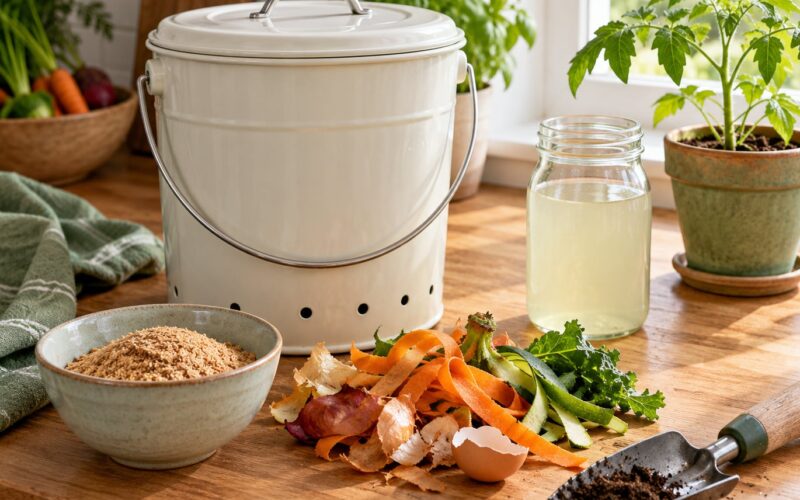
Yes, for fruit and vegetable scraps, coffee grounds, tea leaves, egg shells, uncoated paper napkins and plain cardboard. This applies to a backyard pile or a worm bin. It does not apply to meat, fish, dairy, bones, cooking oils or heavily coated packaging, and municipal green bins set their own narrower list. Households that want to include cooked food and small meat scraps can use a Bokashi bucket, which ferments organics in a sealed container without the pests and odour a pile would attract.
Are compostable bags and containers always safe to compost at home?
No. Most certified compostable packaging is certified for industrial composting facilities, where material reaches high temperatures and is turned regularly. A backyard bin or worm bin never gets hot enough or stays hot long enough to break those items down, so they survive as plastic flakes in your finished compost. Check whether the certificate covers home composting, and only then check whether your municipality accepts certified compostable items in the curbside green bin.
Can I compost citrus peels, coffee grounds and paper towels?
All three are fine in normal amounts. Citrus peels and coffee grounds are nitrogen-rich greens, and uncoated paper towels torn into pieces act as a dry brown that balances them. The two conditions are worth knowing. Skip heavily waxed, plastic-coated or printed towels, since the coating will not break down. And if the pile is already heavy on nitrogen, add more browns such as shredded cardboard or plain paper before adding more peels or grounds.
What should I do if I accidentally put plastic or glass in my compost?
Take it out. For a tumbler or an enclosed bin that is easy, and for a heap, fish the visible pieces out while turning. Small amounts of shredded plastic dispersed through the batch are impossible to recover, which is why prevention beats rescue. Once the material is fully cured, screening it through a coarse mesh separates larger fragments, though microfibers and film cannot be screened out at home. Note what went in and add it to a mental list for next time.
Does every municipal compost collection accept meat, dairy and pet waste?
It depends entirely on the system and the contractor running it. Many curbside green bin programs reject meat, fish, bones, dairy, fats and coated paper wrappers outright, and many also reject pet waste for pathogen reasons. Others accept food organics because the material is processed in hot windrows at a facility that maintains thermophilic temperatures. Your collector’s written list is the only reliable answer, and it is worth reading before you fill the first bin.
How do I remove a bad item from an active home compost pile?
Gloves on, and fork rather than hands. Turn the pile first so the material sits near the surface, then pick out what you can see. A frozen bag of dry leaves is an effective lifting pad for small fragments, though a wide-weave screen only removes pieces larger than the mesh. If the contamination is severe enough that the pile smells, has compacted or is visibly full of plastic, the realistic options are heavy layering with fresh browns and waiting, or starting again with a clean core buried inside the old material.
Conclusion: Check the Label Before You Compost
If you remember one habit from this guide, make it the five-second check before anything goes in: read the label, find the resin code or certification, and decide which stream it belongs to. Knowing what you cannot compost at home is less about memorising a list of banned items than about checking each one before it reaches the bin. When a material is uncertain, keep it out and look up your council’s own guidance rather than a generic internet list, because the method and the municipality decide more than any rule here.
Keep the good stuff flowing. Most food scraps, uncoated paper, cardboard and untreated wood belong in the bin, and a bin that is mostly greens and browns in sensible balance is easy to run and easy to keep pest-free.