Learning how to shop secondhand without buying junk comes down to one thing: a fixed inspection routine you run before you pay. Check condition, materials, measurements, function and price against a number you wrote down beforehand, and walk away the moment one of them fails. Ten minutes of discipline per item is the whole difference between useful finds and a garage full of things you regret.
The method works the same in a charity shop bin and on a resale listing, which is good news because most of the advice online covers only one of those two. The categories differ too — clothing has stains and pilling, appliances have cords and recalls, furniture has hidden joints. What follows covers all three.
Table of Contents
- What You Need
- A shortlist, not a wish list
- A tape measure and a phone
- Safety information for the category
- A comparison record
- A firm maximum price
- Step-by-Step: How to Shop Secondhand Without Buying Junk
- 1. Decide what you actually need
- 2. Research prices before you search
- 3. Check the listing for red flags
- 4. Filter for quality rather than bargain-hunting
- Clothing: fabric beats the label
- Electronics: test the function, read the label
- Furniture: joints, structure and the parts nobody photographs
- Toys and kids’ gear: the recall check is not optional
- 5. Ask the right questions before paying
- 6. Verify the item at collection or delivery
- 7. Decide whether it is worth keeping
- Common Mistakes
- Buying because it was scarce
- Trusting polished listing photos
- Ignoring dimensions until delivery
- Treating cheapness as value
- Skipping safety checks under a good deal
- Buying without measurements in hand
- Forgetting the costs around the purchase
- Frequently Asked Questions
- How do I tell if a secondhand item is good quality?
- What is a fair price for a used item?
- Should I buy furniture or electronics without seeing them in person?
- What questions should I ask a secondhand seller?
- Are thrift-store items cheaper than online marketplaces?
- Which secondhand items are usually not worth buying?
- Start With a Buying Checklist, Not a Bargain
What You Need
Five things, and none of them expensive. Collect them once and the rest is discipline.
A shortlist, not a wish list
Write down the two or three categories you actually need this month. Thrift shoppers on r/ThriftStoreHauls almost all describe the same failure: walking in with no list and leaving with four things that never get worn. A shortlist turns browsing into a task, and a task is much easier to walk away from.
A tape measure and a phone
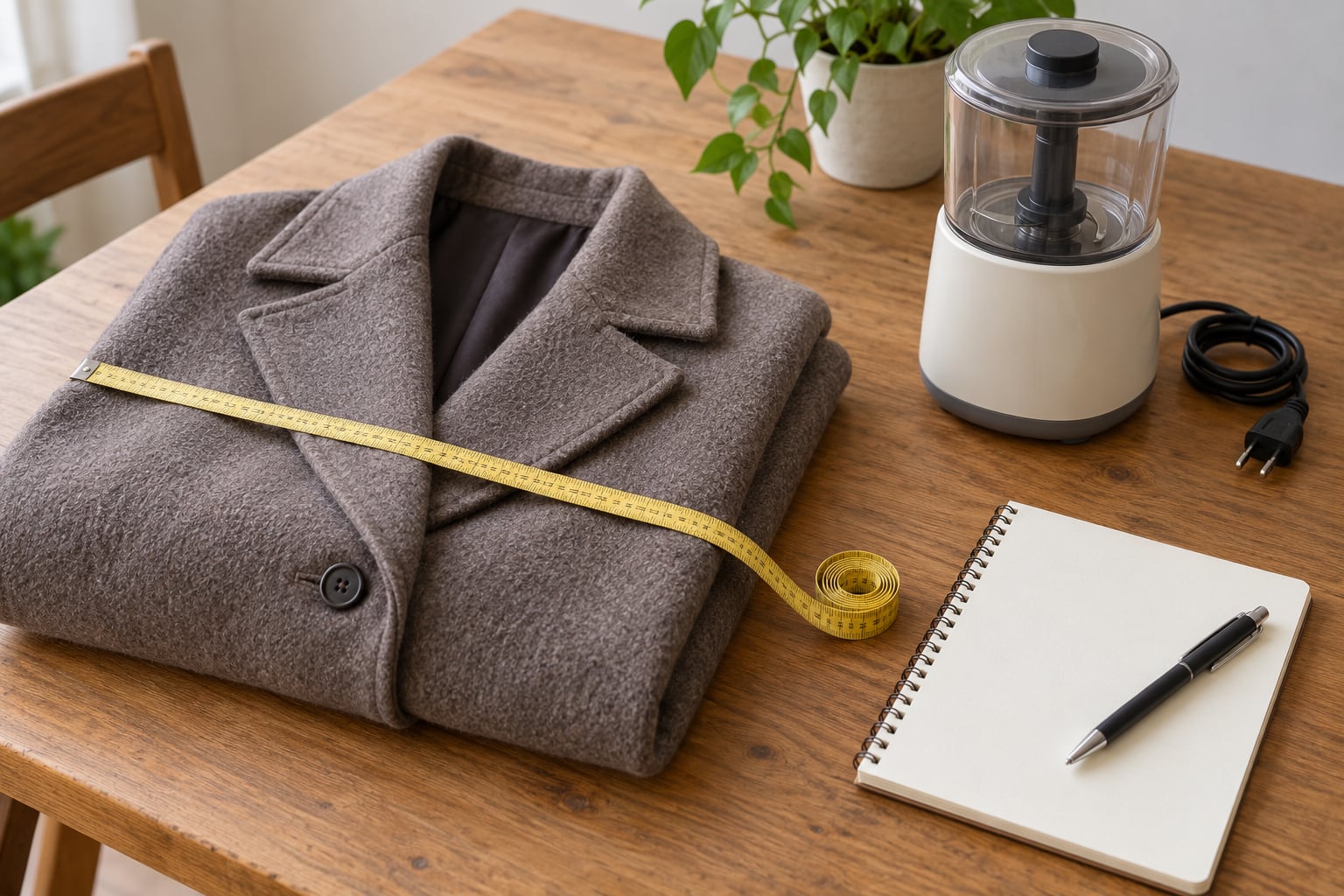
The tape measure settles every furniture and fit argument in about ten seconds. The phone does three jobs: it stores the listing photos so you can compare them to the item in front of you, it gives you a flashlight for crevices, and its camera catches the details your eye skips — a loose seam, a scratch on the back, a stain under the collar.
Safety information for the category
Before you look at anything, find out which items you will refuse on principle. Car seats, cribs and mattresses have expiry dates because the frame and the foam degrade. Electronics need a recall check. Knowing the exclusions in advance stops a bargain from talking you into them at 6pm on a Saturday.
A comparison record
Open a note on your phone and paste in the going rate for each thing you want: recent sold prices where you can see them, and what a new one costs today. People who benchmark before buying consistently pay less. Without a record, every listing becomes its own island, and a high number always feels reasonable in isolation.
A firm maximum price
Not a range — one number, written down, decided before you start. The number accounts for what you would spend new, what the item will realistically do for you, and what you will eventually pay to get rid of it. Once the number exists, deciding becomes arithmetic instead of a negotiation with yourself.
Step-by-Step: How to Shop Secondhand Without Buying Junk
1. Decide what you actually need
Define the item before you search: category, size range, budget, acceptable condition, and the exact dimensions it has to fit. Then audit what you already own, because secondhand shops are full of near-duplicates of things sitting unworn in your closet right now.
The test is whether a gap exists. If you do not have a gap, the item is not a bargain, it is a second copy.
It worked if: you can say the item’s purpose in one sentence before you type anything into a search box.
2. Research prices before you search
Do this from home, not in the aisle. Look at recent sold prices for the same item, note what a new equivalent costs today, and estimate how long the item will actually serve you.
Then divide the price you expect to pay by the uses you will get from it. That number is your cost per use, and it is the most honest measure of value available.
Resale potential matters too if you might buy something you will pass on. An item with an obvious next owner is easier to resell than one that needs its own listing photo shoot. Add your transport cost at this stage, before you fall in love, because a heavy item picked up across town can erase a saving quickly.
It worked if: you set one number and you can explain why you picked it.
3. Check the listing for red flags
Online, the listing is your only evidence, so read it like a witness statement. Ask who took the photos — sellers who photographed their own item show wear, floor tiles, a date stamp, a receipt. Images lifted from a brand’s product page are square, evenly lit and free of dust. Descriptions that say only “great condition” and nothing more are usually describing average condition.
Then check the details that cost you. Are the measurements garment measurements or body measurements? Does the seller know the difference? Is there a date anywhere, or does the account look like it appeared last week? Are the photos recent, or are they the ones from when the item was listed a year ago and never taken down? Deep discounts on items nobody else wants are not bargains, they are explanations.
If something is missing, ask. A seller who answers a specific question in detail is telling you something about the item and about themselves.
It worked if: every claim in the listing is backed by a photo you can check.
4. Filter for quality rather than bargain-hunting
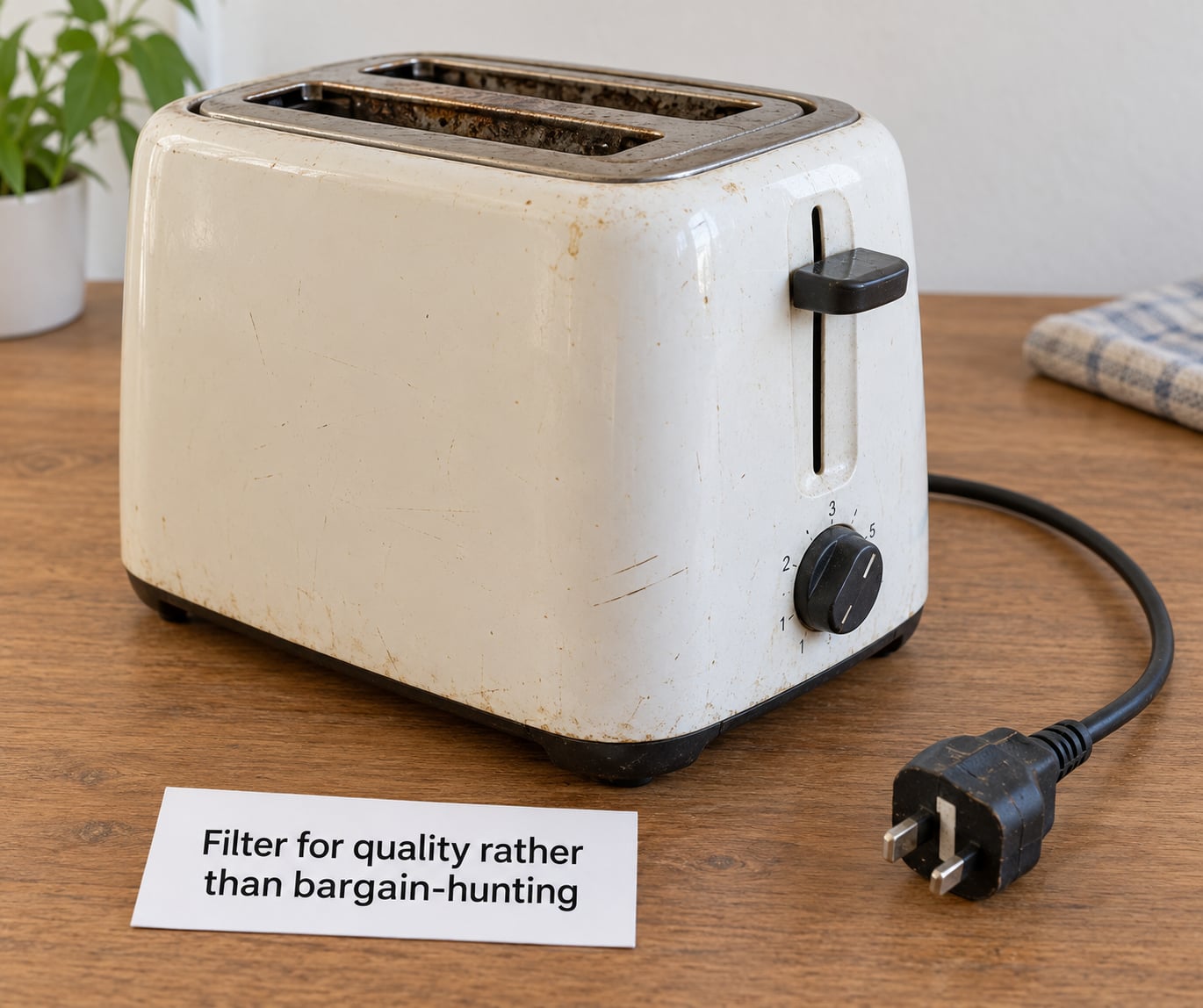
This is where most secondhand purchases quietly fail, so know the category-specific warnings.
Clothing: fabric beats the label
Read the care label and feel the fabric. Thin polyester with a famous name on the tag will not survive a season, while a plain wool blend from an unknown label will outlive the trip.
Check for pilling at the underarm and elbow, stretched elastic at the waistband and cuffs, faded or thinning spots, and care labels that are torn or missing. Check the seams, especially the armhole and the side seam. Check soles on shoes, and smell everything near the collar and armpit for smoke.
Electronics: test the function, read the label
For anything with a screen, a battery or a motor, power it on in front of the person selling it. A dead battery is not a fault you should inherit. Look for a serial or model number and check it against recall notices before you pay, not after.
Inspect cords, plugs and batteries for cracks, corrosion or heat damage, and treat any burn or chemical smell as an immediate walk-away. For larger appliances, a local repair shop or refurbisher can test an item for a small fee, which is cheap insurance against a dead compressor.
Furniture: joints, structure and the parts nobody photographs
Sit on it. Wiggle every joint, especially where the back meets the seat. Look underneath for insect damage, water staining or a sagging support, and check the underside of cushions for flattened foam that will not recover.
Confirm the piece actually fits your space by measuring it before you commit to carrying it away.
Toys and kids’ gear: the recall check is not optional
Skip car seats with an unknown history, drop-side cribs, and anything with a recalled model number. For everything else, check the age and the missing pieces, because a toy missing its battery cover is a toy that collects dust.
It worked if: the item passes its category check with no exceptions you have talked yourself into.
5. Ask the right questions before paying
Keep this list short so you actually use it: How old is it? How often was it used? Has it ever been repaired or altered? Are there any odors, stains or marks not shown in the photos? What is missing from the box, and is the manual or the original accessory included? What are the exact dimensions? Does everything work, and can you show me? And the one most people skip — why are you letting it go?
That last question is the most informative. A moving, a growing child, a declutter or a failed attempt at a hobby are all ordinary reasons. Vagueness is a reason to slow down.
Sellers on r/Flipping will tell you that the honest answer about a scratch usually costs less than the argument does.
It worked if: the answers match the listing and the photos.
6. Verify the item at collection or delivery
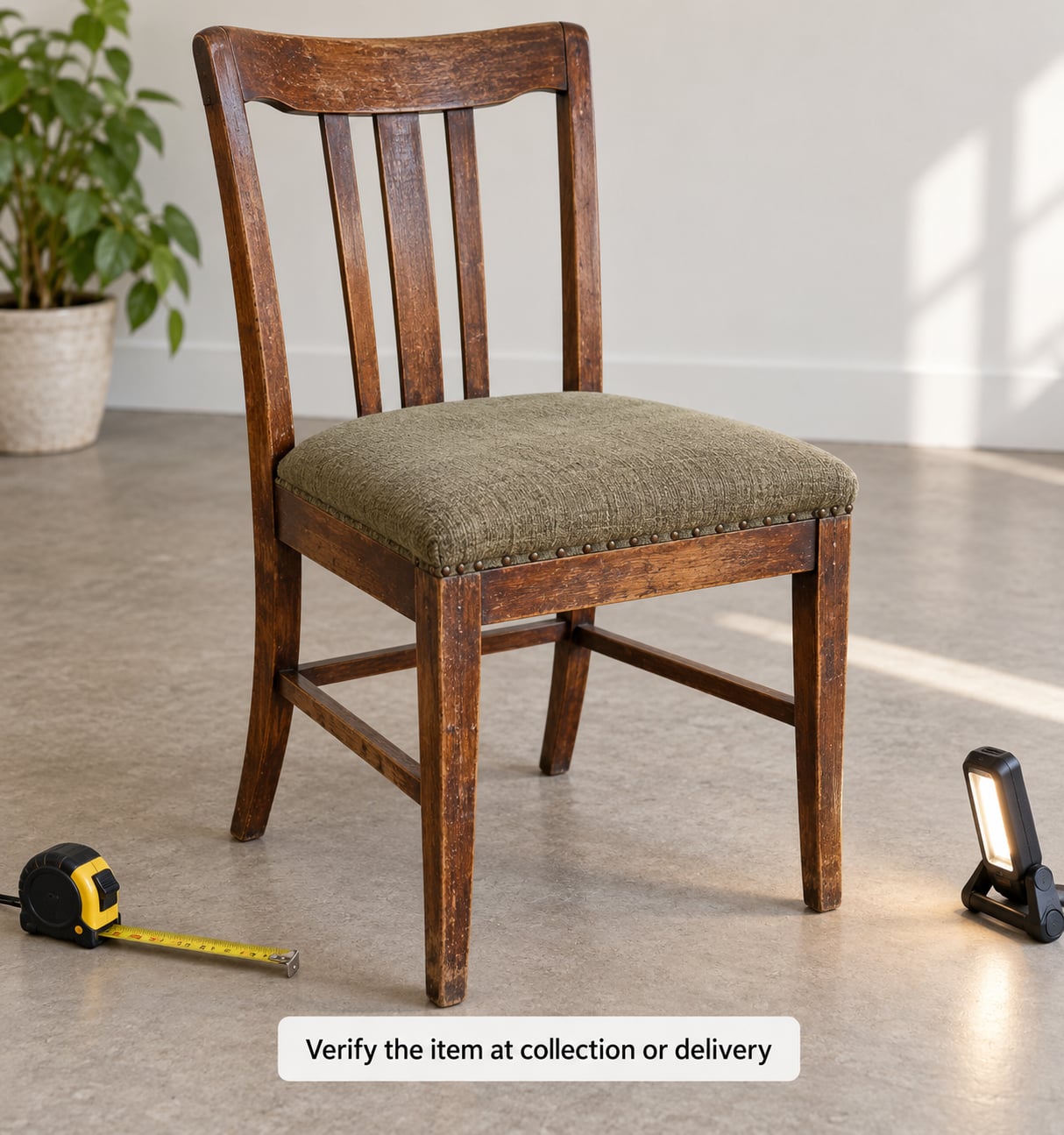
Compare what arrived with the listing photos before you unpack anything else. If the item differs in a way that matters, you have a decision to make on the spot — and collecting in person is exactly why you asked about condition in step 5.
Test the functions the seller said work, one by one, with them watching. Look in the places photographs rarely reach: under cushions, inside the back of a cabinet, behind a panel, underneath the seat.
Confirm the dimensions against your own measurements, because a sofa that is five centimetres wider than the gap will not go in the door. If it is materially different from what was described, decline it. That is not rude; it is the arrangement you agreed to.
It worked if: the item matches the listing in every detail that affects your use of it.
7. Decide whether it is worth keeping
Run the final arithmetic. Divide what you paid by the realistic number of uses — a winter coat used twice a year for four years is eight uses, and that changes the picture entirely.
Then ask the repair question: if this breaks, is a fix easy, cheap and something you can do? An item that needs a professional repair on day one was already a bad deal.
Then check it against your actual life, not your imagined one. Will you use it in the room where it is going? Does the gap in your shortlist still exist now that you are holding it?
Decide fast and without ceremony: accept, make one counter-offer and accept the answer either way, or walk away. Negotiating is fair when the item is good and the price is simply high. It is not fair when you are trying to talk someone into shipping you their problem.
It worked if: the decision followed your number, not your mood.
Common Mistakes
Buying because it was scarce
The most expensive words in secondhand shopping are last one and only seller. A single seller holding a single copy does not make an item valuable, it makes it unavailable. Walk away and check back next week or next season, and the right thing at the right number usually reappears.
Trusting polished listing photos
Photos taken in good light on a clean background hide exactly what you care about: wear, odour, missing parts. Ask for a photo in ordinary light, or better, ask the seller to film the item turning slowly in their hand.
Ignoring dimensions until delivery
Measure the item, the doorways on the route, and the space it will live in. This single habit prevents most of the furniture disappointments people describe online.
Treating cheapness as value
An item at a tenth of the new price that fails in two months is not a saving. Value is price divided by how long and how well it serves you, which is why a plain wool coat that lasts five years beats a famous label that pills in five months.
Skipping safety checks under a good deal
Refusal is a decision you make before you are tempted, not during. Keep your exclusion list where you can read it, and let it outrank every other consideration.
Buying without measurements in hand
Know your own numbers: bust, waist, hip, inseam, rise, and the chair or door widths that matter at home. Garment measurements and body measurements are different things, and confusing the two is the most common complaint in secondhand clothing communities.
Forgetting the costs around the purchase
Repairs, transport, and disposal all count. A heavy item across town, a part you have to source, or a broken thing you will eventually pay to haul away — add them before you commit, not after.
Two habits close most of this off. Clean and sanitise what you buy before using it: wash clothing on a hot cycle or steam it, clean upholstery properly, use a mattress protector, and wipe down hard surfaces.
Then follow the one-in-one-out rule, so each new arrival displaces something rather than joining it. That is the habit behind buying less and choosing well, and it is the whole environmental argument — a secondhand item you keep for five years beats a new one you regret in a month.
A quiet note on thrift shops run by charities. If you can afford to buy new and the shop needs donations, take coats, winter wear and children’s clothing instead of the odd decorative item, and leave tagged goods on the rack. It costs nothing and it keeps good stuff flowing to the people who came for it.
Frequently Asked Questions
How do I tell if a secondhand item is good quality?
Check the fabric, construction and wear rather than the label. Feel the material, read the care label, look for pilling, thinning spots and stretched elastic, and check seams, soles and hardware. For furniture, sit on it and test every joint. For electronics, power it on in front of the seller and check the model number against recalls. If a category check produces doubt, walk away rather than average it out.
What is a fair price for a used item?
Compare recent sold prices for the same item with what a new equivalent costs today, then divide your intended price by the number of uses you expect to get. Add transport, repair and eventual disposal to that figure. Write down one maximum number before you start shopping and treat it as fixed, because a pre-set number is the only reliable defence against a persuasive listing.
Should I buy furniture or electronics without seeing them in person?
It is possible online, but you give up your strongest check. Buy unviewed only when the listing includes clear photographs of every angle, written measurements, a model or serial number you can verify, and a return window you can realistically use. For anything heavy, gas-powered, or with a battery, seeing it first and testing it costs you little and protects you from the most expensive secondhand mistakes.
What questions should I ask a secondhand seller?
Ask how old it is, how much it was used, whether it has been repaired or altered, whether there are odors, stains or marks not shown, what is missing from the box, and the exact dimensions. Ask them to demonstrate that it works. Finish with why they are letting it go, because the honest answers are ordinary ones and vague answers mean slow down.
Are thrift-store items cheaper than online marketplaces?
It depends on the channel. Charity shops and pay-by-weight stores usually cost less per item and everything is immediate, but nothing can be returned. Curated resale platforms like ThredUp and The Real Real cost more because they inspect and list items, while peer-to-peer apps such as Poshmark, Depop, Mercari and eBay vary widely because the sellers vary. You pay more for certainty of condition and a return window.
Which secondhand items are usually not worth buying?
Buy these new: underwear, socks, bras, swimwear, worn footwear, opened cosmetics and anything else that touches skin. Avoid car seats and cribs with unknown history, drop-side cribs, mattresses, and recalled electronics. Skip items whose measurements you cannot confirm, sellers who will not answer questions, and anything whose only appeal is that it was cheap. Basics such as plain white tees are rarely donated in wearable condition.
Start With a Buying Checklist, Not a Bargain
Here is the first action, and it takes five minutes. Pick one category you genuinely need, write down the maximum you will pay and the condition you will accept, then compare a handful of sold listings before you search for anything new. Message a seller only when the item meets every essential criterion on your list, and let everything else go.
That is how to shop secondhand without buying junk in practice: the checklist does the filtering, so the only thing left for you to do on a Saturday afternoon is enjoy the hunt and go home with three things instead of eleven.
Most people never find a great bargain on their first try out, and that is the normal result. r/Anticonsumption regulars keep repeating the same number: two or three things worth keeping a month. Buy those, and let the rest stay where they are.