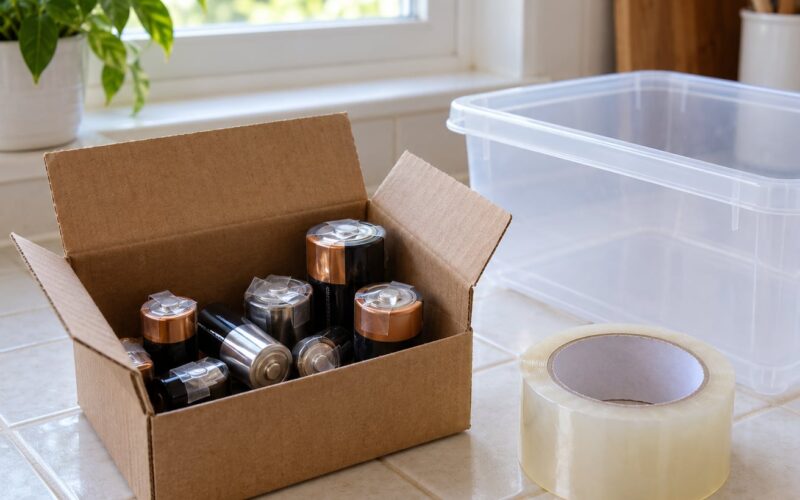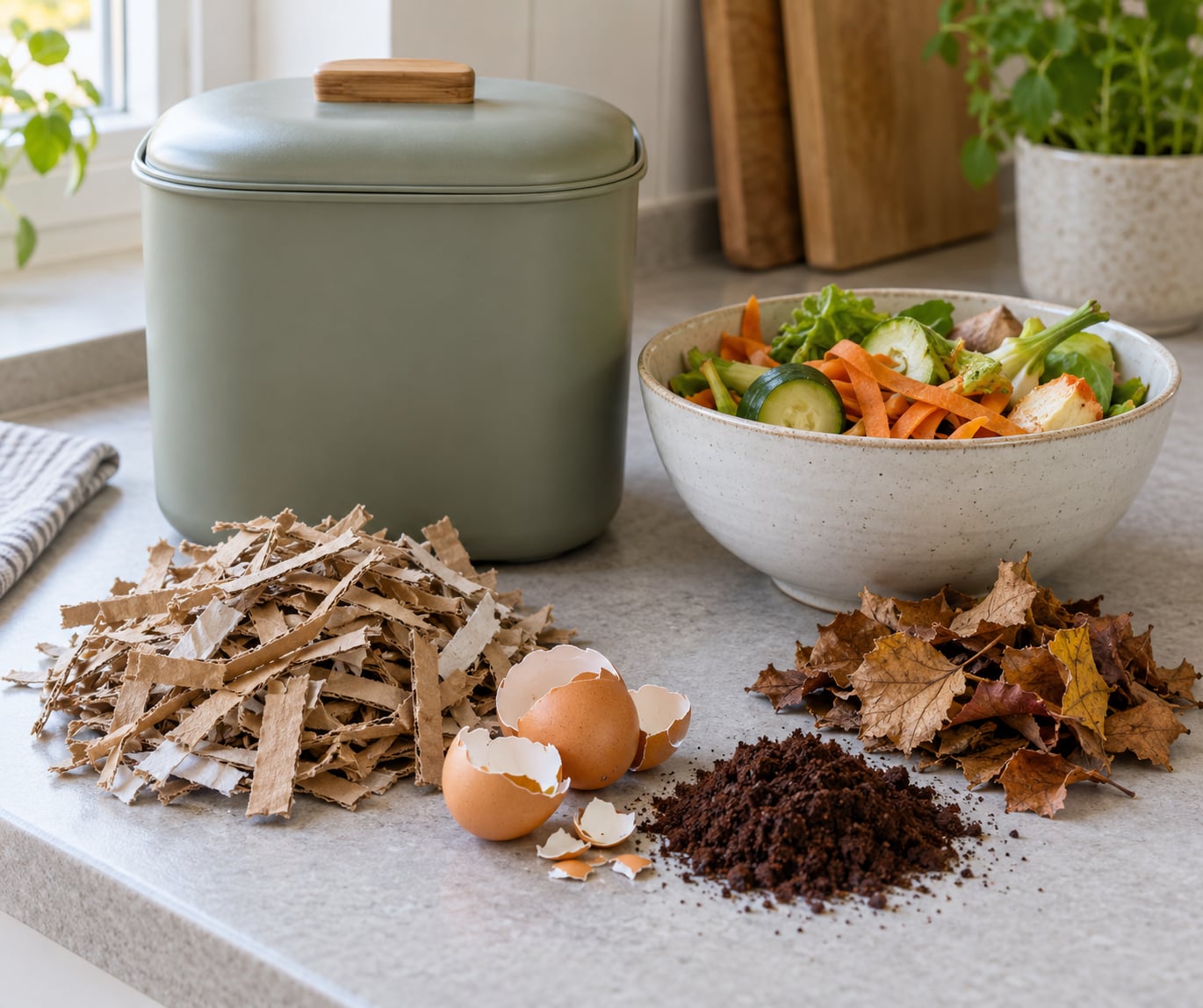
You can compost in an apartment without smell, and the whole fix comes down to three things: more browns than you think you need, air, and a lid. Odor is not caused by composting itself. It is caused by bacteria working without oxygen, so a bin that gets buried under wet vegetable scraps will reek within days, while a bin capped with shredded cardboard every single time stays neutral. Setup takes about 20 minutes, upkeep is five minutes a week, and most people see finished compost in two to three months.
That last part surprises people. Renters assume composting is a yard activity, but the systems that work indoors — a worm bin under the sink, a bokashi bucket on the counter, or a simple lidded container you freeze — all fit inside a flat and none of them need a garden.
This guide covers the equipment, the layering, the moisture and airflow rules, and what to do with the result when you have no beds to spread it on.
Table of Contents
- What You Need
- Step-by-Step: How to Compost in an Apartment Without Smell
- How to Compost in an Apartment Without Smell: Choose the Right Setup
- How to Compost in an Apartment Without Smell: Add Materials in the Right Layers
- How to Compost in an Apartment Without Smell: Control Moisture and Airflow
- How to Compost in an Apartment Without Smell: Use the Finished Compost
- Common Mistakes
- Frequently Asked Questions
- Can you compost on a balcony?
- How often should I turn apartment compost?
- Why does my compost smell like ammonia?
- What is the laziest way to compost in an apartment?
- What do I do with finished compost if I have no garden?
- Conclusion
What You Need
Start small. A single household produces about a third of a bucket of suitable scraps a week, and a bin that is too big stays wet and empty-looking in the middle.
- A bin with a lid. Any lidded container works to begin with. A 5-gallon bucket, a plastic cereal container with a flip-top lid, or a small commercial bin all keep smells in. If you plan to use worms, buy a tray-style worm bin with drainage holes and a lid instead.
- Browns you can always get. Shredded cardboard, dry leaves, plain paper bags, pine bedding pellets, and small amounts of untreated sawdust. Cardboard is the workhorse — tear it into walnut-sized pieces and keep a bag of it near the bin so you never reach for a green when you need a brown.
- A starting brown layer. A handful of shredded cardboard or dry leaves at the bottom of an empty bin gives the first scraps somewhere to sit.
- Greens from your kitchen. Vegetable scraps, fruit peels, coffee grounds and filters, tea leaves, and crushed eggshells.
- A cover for every addition. Another bag of shredded cardboard kept beside the bin. This one habit prevents most odor problems before they start.
- Something for aeration. A wooden stake, a chopstick, or a knife handle for poking holes, plus a small fork for turning.
- Optional extras. A charcoal filter cartridge if your bin has a filter slot, a freezer bag or container for scraps during busy weeks, and a spray bottle with a 1:1 vinegar-and-water mix for cleaning the outside of a bin.
Before buying anything, check your lease and your building rules. A sealed countertop bin is not the same as an outdoor pile, and most leases care about pests and shared hallways rather than a lidded container in a kitchen.
Step-by-Step: How to Compost in an Apartment Without Smell
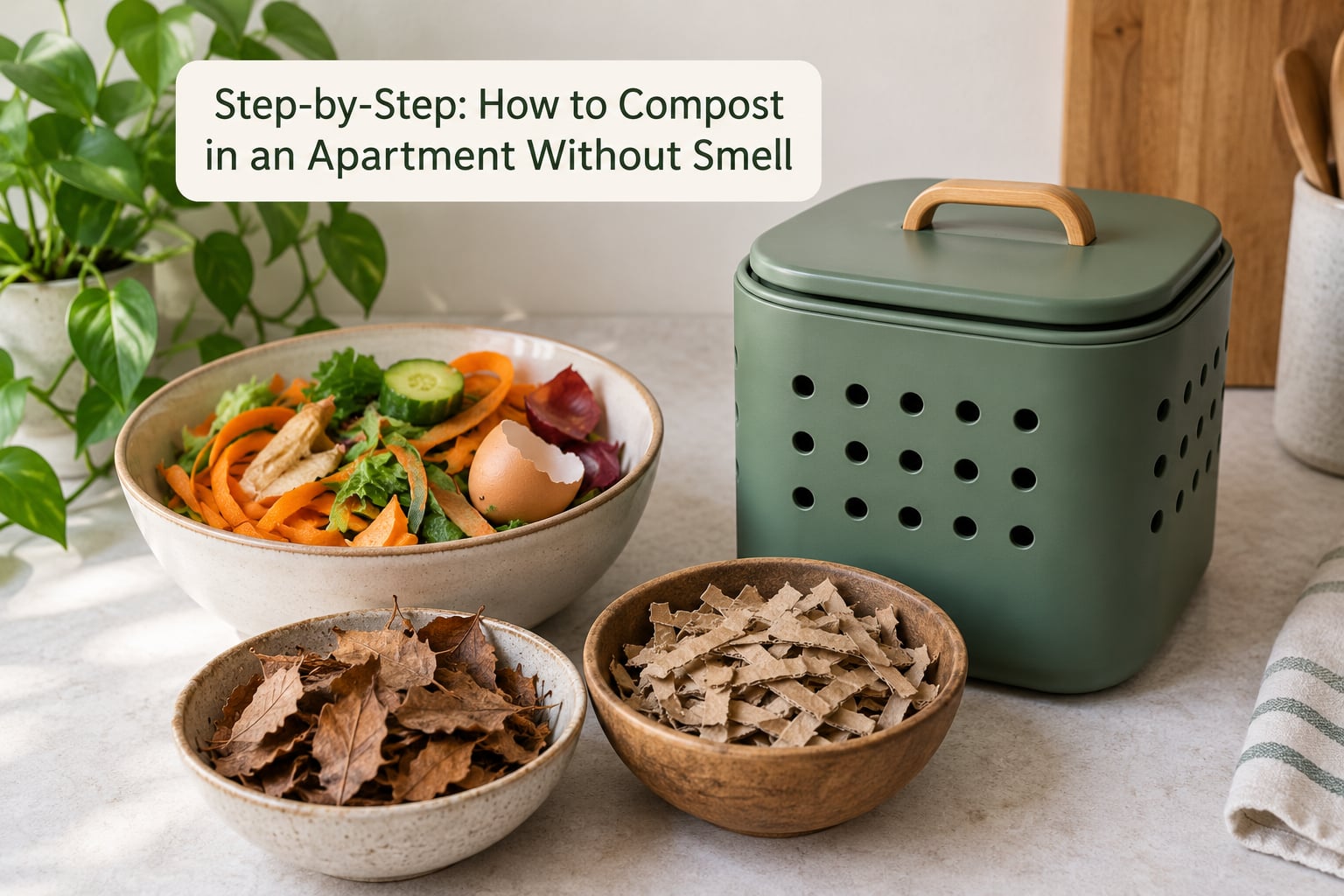
How to Compost in an Apartment Without Smell: Choose the Right Setup
Pick the method that matches your tolerance for attention, not the one that sounds most virtuous.
Worm bin (vermicomposting). Red wigglers live in a shallow tray, usually under the sink, and turn kitchen scraps into finished compost in about three months. Once the balance is right, a worm bin is genuinely odorless, and worm castings are the richest material you can add to a houseplant. The trade-off is a learning curve of a few weeks, and worms are a hard sell in a shared flat.
Bokashi bucket. A sealed bucket with a spigot, inoculated with bran, ferments scraps rather than rotting them. It takes meat, dairy and cooked food, which is a genuine advantage in a small kitchen, and it never smells like a compost pile. The catch is that the pre-compost has to be buried in soil when you are finished with it, and the liquid that drains out has to go down a drain rather than into a storm drain.
Countertop collection bin. The lowest-effort option: a small lidded bin that you fill, then transfer to a freezer bag or a balcony tumbler once or twice a week. On its own it does not compost. Paired with freezing scraps for a few days before they go in, it stops both odor and fruit flies completely, because nothing is warm or wet enough to attract either.
Balcony tumbler or municipal collection. If your building allows it and your balcony gets some sun, a small tumbler handles larger volumes with a turn of the handle each week. If it does not, most cities run curbside food waste pickup or accept drop-offs at community gardens and some farmers markets — the least smelly option of all, since nothing is stored in your home.
How to Compost in an Apartment Without Smell: Add Materials in the Right Layers
Aim for roughly two to three parts browns to every one part greens by volume, and measure browns loosely. A fistful of greens might need two heaped handfuls of shredded cardboard.
Work in layers rather than mixing. Add a couple of inches of browns, then a thin layer of scraps, then more browns, and repeat. When you put scraps in, bury them under at least an inch of browns and stir the surface so nothing wet and green is sitting in the open air. That top cover is what keeps fruit flies and vinegar-sour smells out.
Keep the greens list short and predictable: vegetable scraps, fruit peels, coffee grounds, tea leaves, crushed eggshells, and small amounts of uncoated paper. Skip anything oily, dairy-heavy, or animal-based if you are running a plain bin — grease does not break down well and it coats everything around it. Meat, dairy and oily foods work in bokashi, which is one of the better reasons to keep a second bucket.
Two things people add by mistake: “compostable” plastic bags and cotton tea bags with plastic mesh. Most certified compostable bags need industrial heat to break down and will sit in a home bin for years, so put those in the municipal organics bin instead.
How to Compost in an Apartment Without Smell: Control Moisture and Airflow
Moisture is the switch that flips a bin from aerobic to anaerobic. A wrung-out sponge is roughly the right texture: damp, with no stream of water coming out.
Test once a week. Squeeze a handful. If water drips, you have too much: add a layer of dry shredded cardboard or dry leaves on top and leave the bin open for a day. If it crumbles dry, add a cup of water and turn it. Vegetable scraps release a lot of liquid on their own, which is why a bin that only ever receives greens turns into a swamp within a fortnight.
Aeration matters just as much. Poke five or six holes into the center of the pile with a stake once a week, and turn the outer layer into the middle when you add the next batch. If you have a heap big enough to hold heat, that heat itself kills most odor and weed seeds, but small indoor bins never get hot enough for that, so manual aeration is doing the work instead.
Give the bin airflow where you can. A bin with a charcoal filter or a lid that sits slightly ajar while it works is better than a sealed airtight tub with no air holes. And keep scraps from sitting exposed: bury them, or freeze them first for a few days so flies never find them.
How to Compost in an Apartment Without Smell: Use the Finished Compost
Compost is finished when it looks dark and crumbly, smells earthy rather than sour, and no longer heats up or changes after you turn it. Worm castings reach that in two to four months; bokashi pre-compost needs another four to eight weeks in soil before it stops being sharp.
If you have no garden, you still have options. Mix a spoonful into potting soil for houseplants, using roughly one part compost to four parts soil, and go easy on succulents and orchids. Blend it into seed-starting mix for windowsill starts. Top up window boxes and balcony pots at the start of each growing season, which is also the cheapest way to see visible results. Give a community garden or allotment plot a bucket, which most coordinators welcome. Or store it dry in a lidded jar and add it later when a bed becomes available.
Worm castings soaked in water for a day make a mild liquid feed for leafy houseplants — weak, so use it every fourth watering at most. Dilute heavily; compost tea at full strength can burn roots.
Common Mistakes
Too many greens, not enough browns. This is the cause of most failures. Fix it now by topping the whole pile with a thick layer of dry browns and stirring until nothing green is visible.
A soggy, compacted pile. Wet scraps pressed together exclude air and breed the bacteria that make rot. Spread additions in thin layers instead of dumping a week’s worth on top, and add dry cardboard every time.
Leaving food exposed. Fruit flies arrive within days of uncovered scraps. Cover every addition, clean the bin rim, and rinse scraps before they go in so nothing sits in a wet film.
Composting things that never break down. Citrus in thick layers, onion skins in quantity, oils, and bioplastic packaging all stall or foul a bin. Citrus and onions are fine in small amounts mixed well with browns.
An airtight bin with no air. A sealed container sounds hygienic but creates exactly the oxygen-free conditions that produce the worst smells. Use bokashi for true sealing, or leave a bin with some ventilation.
Ignoring the building and the people you live with. Roommates and neighbours rarely object to a quiet, clean bin; they object to flies and a corridor that smells. Keep the container inside your own kitchen, wash it monthly, and if you go the worm-bin route, tell people before the worms arrive rather than after.
Frequently Asked Questions
Can you compost on a balcony?
Yes, if your lease and building rules allow it and the balcony gets some sun. A small tumbler or a lidded bin on a stand handles week-to-week scraps, and burying food under a layer of browns keeps flies out. Avoid open piles, which dry out fast in summer and pull in wasps. If the balcony is shaded in winter, keep the scraps indoors and add them to the bin in layers when conditions improve.
How often should I turn apartment compost?
Once a week is enough for a small indoor bin. Turn the outer layer into the middle and poke a few holes in the center so air reaches the dampest parts. If you add scraps more than once a week, just stir the new layer into the browns beneath it rather than turning the whole bin. A sealed bokashi bucket needs no turning at all, since the process is fermentation rather than aerobic breakdown.
Why does my compost smell like ammonia?
That sharp, acrid smell means too much nitrogen, so your greens are outnumbering your browns. Fix it by adding a thick layer of dry shredded cardboard or dry leaves and turning thoroughly so the material mixes through the whole pile. Ammonia usually shows up alongside a soggy texture, so check for excess moisture at the same time and add more dry browns than you think you need.
What is the laziest way to compost in an apartment?
Keep a small lidded bin on the counter, drop scraps in as you cook, and freeze the contents for two or three days before moving them to a balcony bin or a municipal organics collection. Freezing kills fruit fly eggs and stops any smell forming, and you only handle the scraps once a week. If your city collects food waste curbside, that is the laziest option of all, since the bin never needs turning.
What do I do with finished compost if I have no garden?
Blend one part compost with four parts potting soil for houseplants, top up window boxes and balcony pots each season, or mix it into seed-starting mix. Finished worm castings soaked in water make a weak liquid feed for leafy plants. You can also donate a bucket to a community garden or allotment, which most coordinators accept year-round. Keep any surplus dry in a lidded jar until you find a use.
Conclusion
Start with the smallest container you can find and put a layer of shredded cardboard in the bottom before anything else. The single most useful habit is keeping that cardboard bag next to the bin and covering every batch of scraps, because a covered bin does not smell. From there, check the moisture once a week, poke a few holes in the middle, and give the mixture two to three times as much brown as green by volume.
Keep your city’s waste rules in mind, especially for bioplastics and citrus, and check whether your building already offers a shared compost or organics collection before setting up your own. Start small, keep the balance, and you will never be the neighbour with the smell.