Short answer: biodegradable packaging is material that microorganisms can break down into water, carbon dioxide and biomass, under specified conditions and within a specified timeframe. The word printed on the front of the pack usually specifies neither. That is what biodegradable really means on packaging in practice: a statement about chemistry, not a promise about where the pack ends up or how fast it disappears.
Any natural material is biodegradable to some degree. Paper, cotton, wood and food scraps all break down. So does a PLA cold cup, given enough heat, moisture and active microbial life, and a cotton tea bag given almost none of those things. The label describes a capability that exists whether or not the conditions ever come together, which is exactly why the claim on its own settles very little.
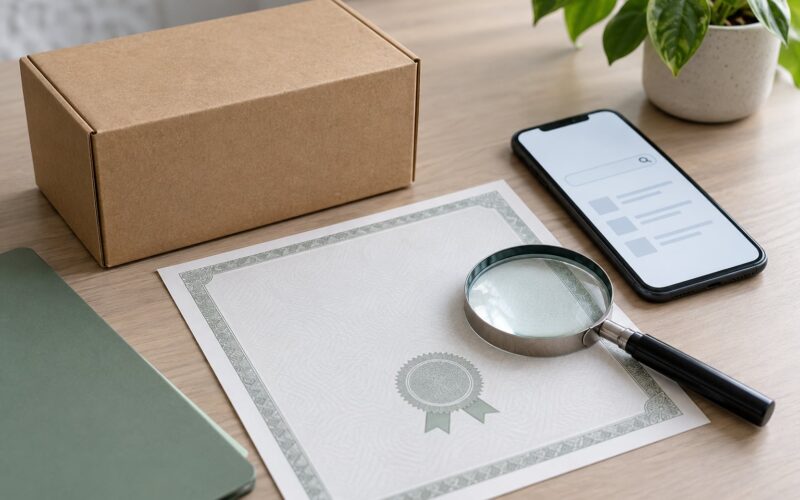
The detail that matters is nearly always printed in small type on the back, while the big environmental claim goes on the front. Reading that small type is a skill, and it is what this guide walks you through: what the terms mean, what has to happen for the material to actually break down, which symbols are worth trusting, and what to do when your local bin will not take the thing.
Last reviewed: October 2026
Table of Contents
- What Does Biodegradable Mean on Packaging?
- What Needs to Happen for Packaging to Biodegrade?
- Which Biodegradation Conditions Matter?
- Is Biodegradable the Same as Compostable?
- What Can Make a Biodegradability Claim Misleading?
- Oxo-degradable packaging fragments without biodegrading
- Claims that quietly leave out the environment and the timeframe
- Bio-based read as biodegradable
- Degrading only after the package becomes litter
- Contamination and greenwashing rules
- How Do Biodegradable and Compostable Packaging Labels Work?
- How to Read What Biodegradable Really Means on Packaging
- What Should Consumers Look for on Biodegradable Packaging?
- Frequently Asked Questions
- Does biodegradable packaging dissolve like food?
- Can biodegradable plastic be put in a household recycling bin?
- Why can something be certified compostable but not break down at home?
- Is biodegradable packaging better than recyclable packaging?
- Does biodegradable mean a product has no environmental impact?
- How long does biodegradable packaging take to break down?
- Conclusion
What Does Biodegradable Mean on Packaging?
Biodegradable means a material can be broken down by microorganisms into water, carbon dioxide and biomass. The definition says nothing about where that breakdown happens, how long it takes, or what is left behind. On its own, the word is closer to a description of chemistry than a disposal instruction.
An honest definition also leaves out three things a shopper would assume are included. The first is the environment: compost heap, garden soil, industrial composting facility, seawater or landfill are completely different worlds for a polymer chain. The second is the timeframe, which can range from weeks in a hot windrow to never in practice. The third is the degree of breakdown, because a material can fragment into small pieces without any of it converting into biomass or gas.
Two more details routinely get assumed and are not covered by the bare word. Biodegradable says nothing about toxicity, so a material can break down completely and still leave residues that harm soil organisms, and it says nothing about where it breaks down at your expense. An item that only decomposes in a facility you cannot reach has not solved a waste problem, whatever the front of the pack says.
What Needs to Happen for Packaging to Biodegrade?
Bacteria, fungi and other microorganisms secrete enzymes that latch onto the polymer chain and cleave it into smaller molecules the organisms can consume. Nothing happens on its own. Speed depends on moisture, temperature, oxygen, surface area, a healthy microbial population and the absence of anything toxic that would kill the organisms doing the work.
Because those requirements are specific, the same bag behaves in four completely different ways depending on where it ends up. Industrial composting is warm, wet and heavily aerated, which is close to ideal. A backyard heap is warm only seasonally and often dries out. A landfill is dry, cool and largely without oxygen, so decomposition stalls at the anaerobic stage and can take centuries. The sea is cold, salty and constantly diluting, so the material disperses long before it converts.
It helps to separate four levels of breakdown, because marketing copy mixes them up constantly:
- Fragmentation: the item breaks into smaller pieces while the material itself stays plastic. Nothing has biodegraded. This is what oxo-additives cause.
- Disintegration: the item loses its shape and passes through a standard test sieve. Individual fragments are still there, which is why certification sets a limit on residue.
- Biodegradation: microorganisms convert the polymer into biomass, carbon dioxide and water, measured as carbon conversion over a set period.
- Mineralisation: conversion is essentially complete and only stable, non-toxic residue is left. This is the outcome a label should be pointing at, and the rarest one to guarantee.
Certification tests treat disintegration and conversion as two separate scores. A pack can pass a disintegration test comfortably and still disappoint on conversion, which is why the conversion threshold is the number worth finding on the label.
Which Biodegradation Conditions Matter?
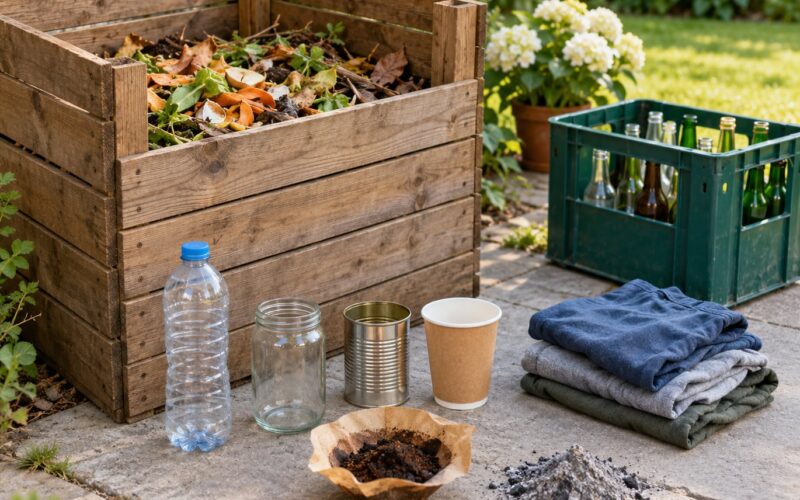
Four environments get called biodegradable in packaging conversations, and they are not interchangeable. A material can be genuinely designed for one and completely inert in the others, so the useful question is always which environment the claim covers.
- Industrial composting: aerated piles and tunnels held well above 55 degrees Celsius, often closer to 60 to 70, with controlled moisture. This is the setting almost all certified food-service packaging is designed for, and it is why a hot summer does not make a cold cup disappear in your kitchen.
- Home composting: a garden heap or worm bin working roughly between 20 and 40 degrees Celsius. Far slower, with real seasonal swings. Very few packaging products are certified for it, and those that are carry a separate home-compost mark.
- Soil and marine environments: cool, variable and unmonitored. Almost nothing on a supermarket shelf is certified to biodegrade here, which matters because that is where litter actually goes.
- Residual waste and landfill: where compostable packaging is treated as ordinary rubbish and is not designed to change at all.
Home composting has been tested by volunteers rather than only in laboratories, and the results were sobering. Citizen-science projects that asked people to bury certified compostable items in their own heaps and check back later reported plenty of items still recognisable after months, which is not a failure of the material so much as a mismatch between the test conditions and a domestic heap. The lesson transfers to every other claim: what the package was certified for is the only thing it is evidence for.
Which brings up the part no label covers. A certified compostable cup needs an industrial facility that accepts it, and those facilities check their incoming material for contamination the way a recycling plant does. If your brown bin goes to a plant that shreds organics for anaerobic digestion, or to a residual collection, or nowhere at all, the certification has no route to be used. Local infrastructure decides whether the claim delivers anything.
Is Biodegradable the Same as Compostable?
No, and compostable is the more useful word of the two because it is testable. Biodegradable is a broad property with no standard attached; compostable is a performance claim verified against a named standard, in a named environment, to a stated conversion rate and timeframe.
The differences show up in what each term lets the manufacturer promise.
| Term on the pack | What the claim actually means | Conditions it assumes | What it does not tell you |
|---|---|---|---|
| Biodegradable | Microorganisms can break the material down into biomass, carbon dioxide and water | Unspecified, unless the label names one | Where, how fast, how completely, or whether the residue is safe |
| Compostable (industrial) | Meets a standard for disintegration and conversion inside a commercial composting facility | Warm, aerated, controlled industrial composting | That it works in a home heap, in soil or in the sea |
| Compostable (home) | Meets the same kind of test at domestic temperatures | Home heap or worm bin conditions | That your local facility accepts it |
| Oxo-degradable | Additives make the plastic brittle so sunlight breaks it into fragments | Sunlight and oxygen; no composting needed | Anything about biodegradation, because the polymer never converts |
| Bio-based | Made partly or wholly from renewable feedstock such as corn starch or sugarcane | None; it is a feedstock claim, not a behaviour claim | Anything about how the material behaves after disposal |
| Recyclable | Can be reprocessed through a conventional recycling stream | Correct sorting plus a facility that accepts it | That it will biodegrade; most recycled plastic is fossil-based and behaves like any other plastic |
In Europe the reference point is EN 13432, the harmonised standard for packaging recoverable through composting and biodegradation. It requires 90 percent conversion within six months, at least 90 percent disintegration within twelve weeks, a cap on residual material, plus checks on ecotoxicity, heavy metals and chemical composition.
The US standard, ASTM D6400, works to the same kind of thresholds for a similar set of materials. Certification marks built on either standard are strong evidence, but only about the environment the standard describes. Neither one certifies marine breakdown, and it is worth saying plainly that no compostable poly mailer on the retail market has passed marine biodegradability testing.
What Can Make a Biodegradability Claim Misleading?
Oxo-degradable packaging fragments without biodegrading
This is the most consequential misread on the shelf. Oxo-degradable plastics contain additives that make the material brittle under sunlight, so it crazes and crumbles. That is fragmentation, not biodegradation: the fragments are still plastic, they are usually tinier than any shredder produces, and they persist. Oxo-degradable plastic is neither a bioplastic nor a biodegradable plastic, and it was created to replace a partially biodegradable claim that had no evidence behind it.
The practical consequence is that a packet of oxo-degradable carrier bags may scatter into microplastics along a beach path within a few months, while a certified compostable bag in a suitable facility converts to biomass and carbon dioxide. One looks like litter gone to spec; the other disappears.
Claims that quietly leave out the environment and the timeframe
Phrases like naturally biodegradable, breaks down over time and earth-friendly are not defined terms. They carry no standard, no conversion threshold and no timeframe, so a product can carry one and still behave like conventional plastic wherever it is dropped. Even phrases that sound precise, such as 100 percent compostable, describe the material rather than your bin: it means every component is compostable under the conditions of the certification, not that nothing was added, not that it works at home, and not that your council collects it.
Bio-based read as biodegradable
A bottle made from sugarcane-derived PET is bio-based and behaves exactly like fossil PET: it is not biodegradable, and it will sit in a landfill indefinitely. A starch-based film can also be bio-based and non-biodegradable, because where the feedstock came from says nothing about whether enzymes can attack the polymer. This is the single most common misread on packaging, and the fix is simple: treat origin and end of life as two separate questions and never let an answer to one stand in for the other.
Degrading only after the package becomes litter
A claim that only takes effect in a forest or an ocean is not waste management, it is permission to litter. Forum threads about compostable packaging fill with exactly this misunderstanding: people assume a compostable plate dropped on a beach will vanish, then learn that PLA behaves like conventional plastic at ambient temperatures. Designing out the littering while declaring the litter harmless is not a solution to anything.
Contamination and greenwashing rules
Compostables mixed into a plastics recycling load create real problems. Residues stick to sorting equipment, they foul batches of recyclable plastic, and crews who cannot identify a strange material pull the whole load out. People working in municipal waste report the same pattern from the other side: certified compostable bags arriving at a facility that was never set up to process them, so the certification changes nothing about where they end up.
Regulators are tightening the wording. In the United States, the FTC Green Guides require environmental marketing claims, including degradability claims, to disclose the conditions and timeframe involved, so unqualified use is already a compliance problem. In the European Union, packaging rules are moving toward requiring compostable designs for specific hard-to-recycle items such as teabags, coffee pods and fruit stickers, with the rest of the waste hierarchy still expected to come first.
How Do Biodegradable and Compostable Packaging Labels Work?
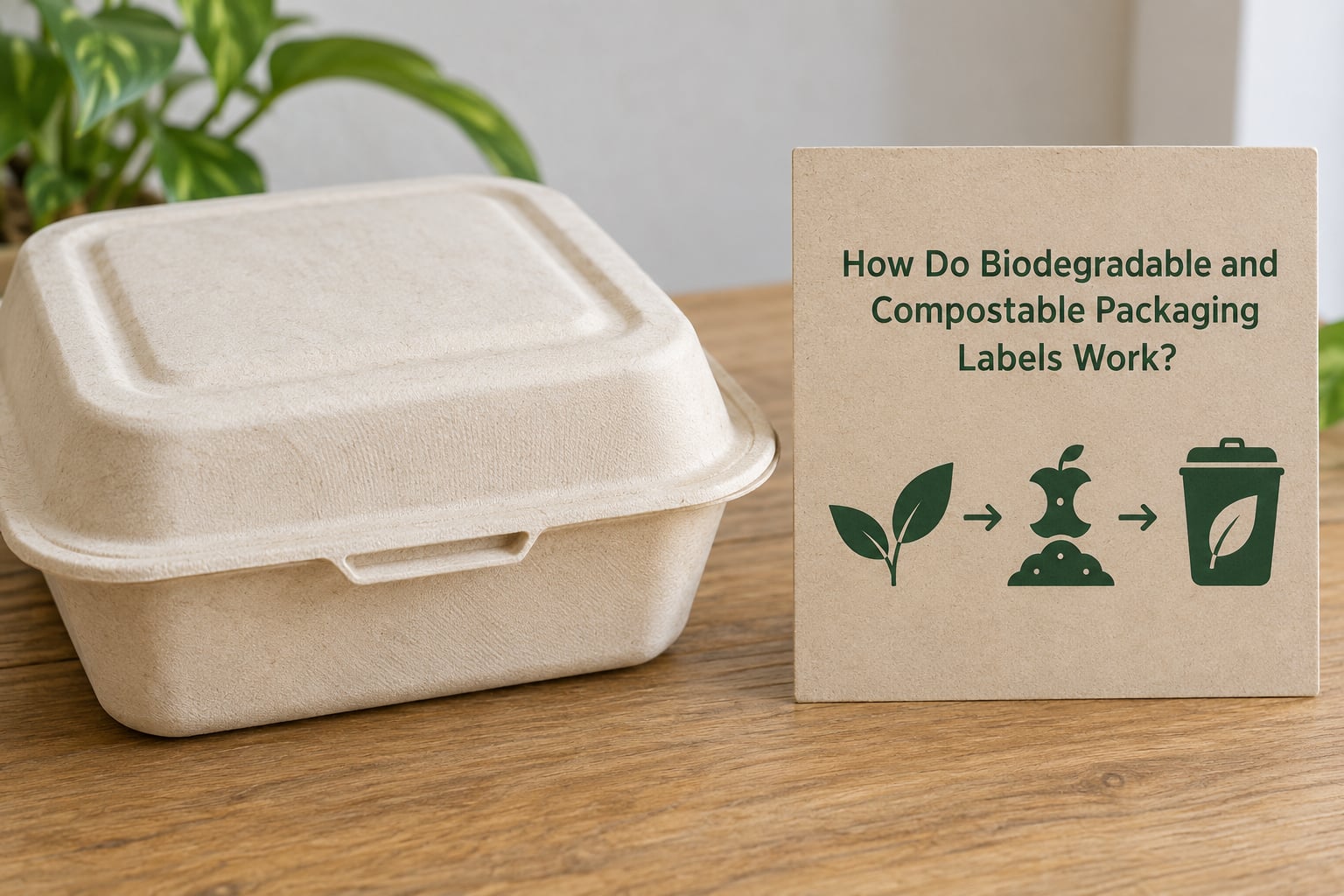
Certification marks carry a specific promise. Once you can tell them apart, a pack tells you a lot more than its materials.
- Seedling and tick marks: a family of compostability marks used by certifiers such as TÜV Austria, DIN CERTCO and the AUSTRIA OK compost scheme. Some versions cover industrial composting, others home composting, and the standard number underneath, such as EN 13432, tells you which. The seedling symbol on its own, without a standard number and a certifier name, is decoration.
- BPI Certified: the US mark for compostable packaging and products, verifying conformity to ASTM D6400 and related standards.
- CMA Certified: the Canadian mark covering compostable products and their industrial composting process.
- The Green Dot: not a compostability mark. It signals that the producer contributes to packaging recovery systems and means nothing about biodegradation. It appears next to compostable claims surprisingly often.
- Recycling code 7, other: the resin identification code for materials not covered by the standard categories. Compostable plastics usually sit here, which is a good reason to read the words rather than trust the chasing arrows.
How to Read What Biodegradable Really Means on Packaging
Six checks, roughly in the order you would hold the pack.
- Turn it over. The front of a pack carries marketing. The back carries the standard, the certifier and the disposal instructions, usually in several languages.
- Find the material. PLA, PBAT, starch blend, cellulose and so on. A word like plastic or bioplastic tells you nothing; the polymer family does.
- Look for a standard number. EN 13432 in Europe, ASTM D6400 in the United States. A number means someone tested it to thresholds. A phrase without one is advertising.
- Check which environment it covers. Industrial or home. If the pack says certified compostable and nothing about home conditions, assume it needs a commercial facility.
- Identify the certifier. The body’s name should be legible. A certification body you have never heard of, or a mark with no standard behind it, is not worth much.
- Read the disposal line, then check it locally. The instruction on the pack only counts if your collection accepts it. When in doubt, residual waste is the honest bin, not the recycling one.
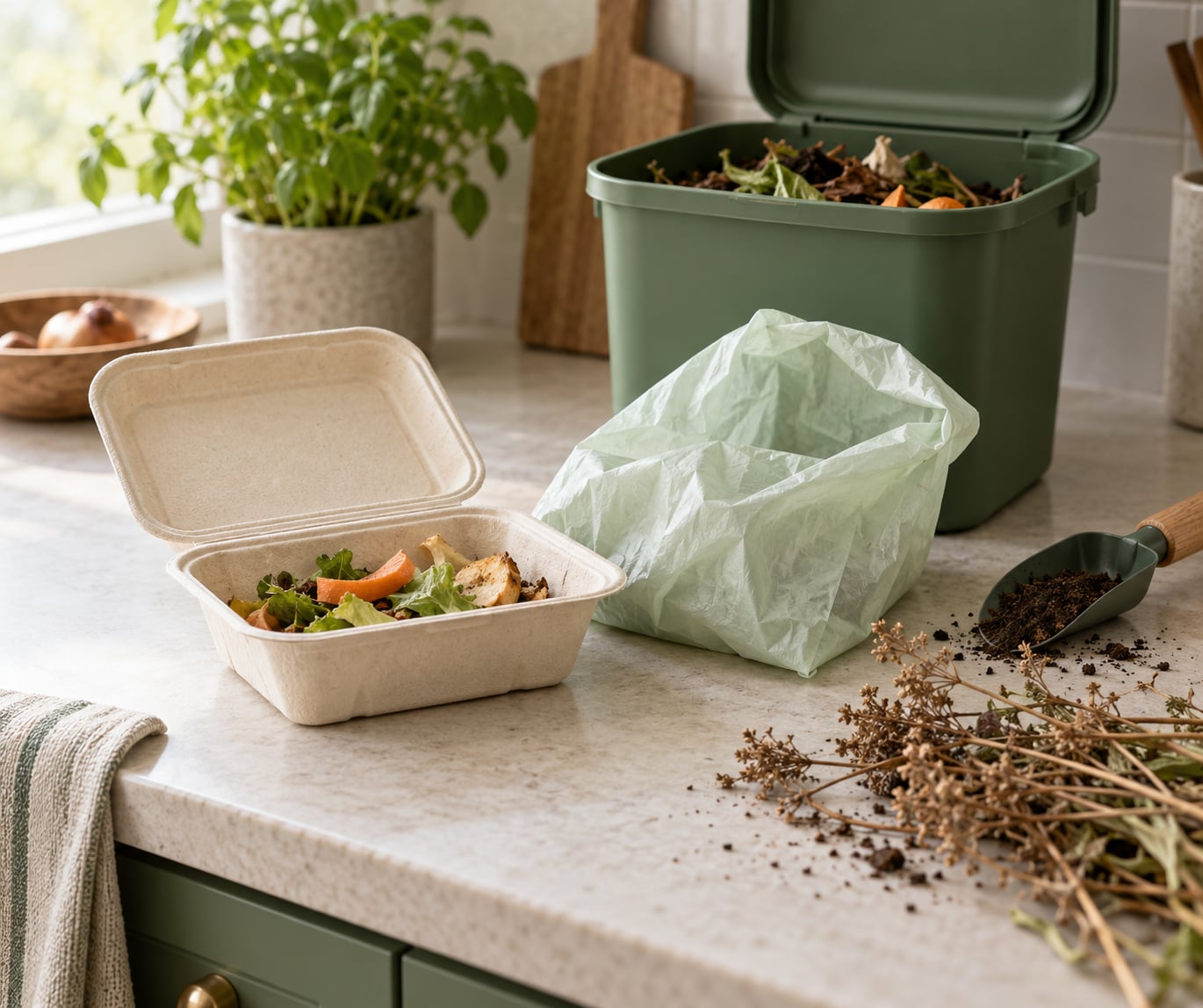
That last step is where good intentions usually go wrong. Buy a certified compostable bag, use it for food scraps, and if your local organics collection is not set up for compostables, the bag has been collected as rubbish and the certification was never exercised.
What Should Consumers Look for on Biodegradable Packaging?
A workable decision takes about a minute once you know the order to look in. Material first, then certification, then your own infrastructure, and only then whether the purchase is worth making at all.
- Identify the material. PLA and cellulose behave differently from PBAT blends under heat and moisture, and the material tells you what conditions the product needs.
- Establish the certified environment. Industrial or home. This single distinction removes most of the confusion on the shelf.
- Verify the certifying organisation and the standard number printed beside its mark.
- Check that your collection accepts it. In Spain, where EN 13432 is the harmonised standard, composting access still varies a lot between municipalities. Your ayuntamiento publishes which streams it collects, and compostable packaging is usually a separate question from food waste.
- Put it in the right bin. Never in plastics recycling, and not in residual waste if your organics stream will genuinely process it.
- Prefer reuse or less packaging. Reuse sits above recycling, and reduction sits above everything else in the waste hierarchy. A compostable pack is a reasonable choice for a situation with no reuse option, not a substitute for avoiding the item.
For brands and packaging teams, the same logic runs in reverse: a substantiated claim needs the standard, the test report, the certificate number and the local route to disposal, documented before the artwork is printed. Marketing that cannot be defended with a certificate is a liability rather than a feature.
Frequently Asked Questions
Does biodegradable packaging dissolve like food?
No. Biodegradation needs microorganisms plus warmth, moisture and oxygen, none of which exist inside sealed packaging. A buried bag will not dissolve in the soil like a banana peel; it will break into fragments as soil life works on it, and the timeline depends entirely on temperature and moisture. That is also why compostability is normally tested on the material itself rather than on a whole package.
Can biodegradable plastic be put in a household recycling bin?
Almost never. Compostable and biodegradable plastics usually carry resin code 7, which signals a material recycling systems are not designed for. Mixed into a plastics load they cause residues that foul sorting equipment and can downgrade the whole batch. Put them in the organics bin only where your local collection genuinely accepts certified compostables, and in residual waste everywhere else.
Why can something be certified compostable but not break down at home?
Because most packaging is certified for industrial composting, where aerated facilities hold material above 55 degrees Celsius. A garden heap or worm bin works closer to 20 to 40 degrees and slows dramatically in winter. Products certified for home composting exist and carry a separate mark. Without that mark, assume a heated facility is required, which in practice means checking your municipality accepts the item.
Is biodegradable packaging better than recyclable packaging?
Not as a general rule. Recyclable packaging keeps material in use and retains its value, provided your local stream actually accepts it and the item is clean. Compostable packaging suits items contaminated with food, too small to sort or made from mixed materials that cannot be recycled. That is what biodegradable really means on packaging in practice: one route for hard-to-recycle items, not a superior option for everything.
Does biodegradable mean a product has no environmental impact?
No. Producing compostable polymers often needs industrial conditions and energy, and a certified item only performs as designed if it reaches the right facility. If yours does not, it is ordinary waste with a better-sounding label. Biodegradable also says nothing about ecotoxicity, so a material can break down fully and still leave residues that harm soil life. Standards exist precisely because the word alone covers none of these points.
How long does biodegradable packaging take to break down?
It depends on the claim and the conditions. EN 13432 and ASTM D6400 require 90 percent conversion within about six months and 90 percent disintegration within twelve weeks under industrial composting. In soil, in the sea or in landfill, no timeframe applies, because breakdown does not occur. Oxo-degradable packaging is a different case again: fragments can appear within months, while the material itself never converts.
Conclusion
Start by refusing the bare word. A biodegradable claim without a named environment, a named timeframe and a standard number is a slogan, and slogans go on the front of packs for a reason.
Then work down the pack. Find the material, find the standard number and the certifier, decide whether it is certified for industrial or home composting, and check whether your municipality actually collects it. If the answer to that last question is no, reuse the item or choose less packaging, because a claim that cannot be used is not an environmental benefit.