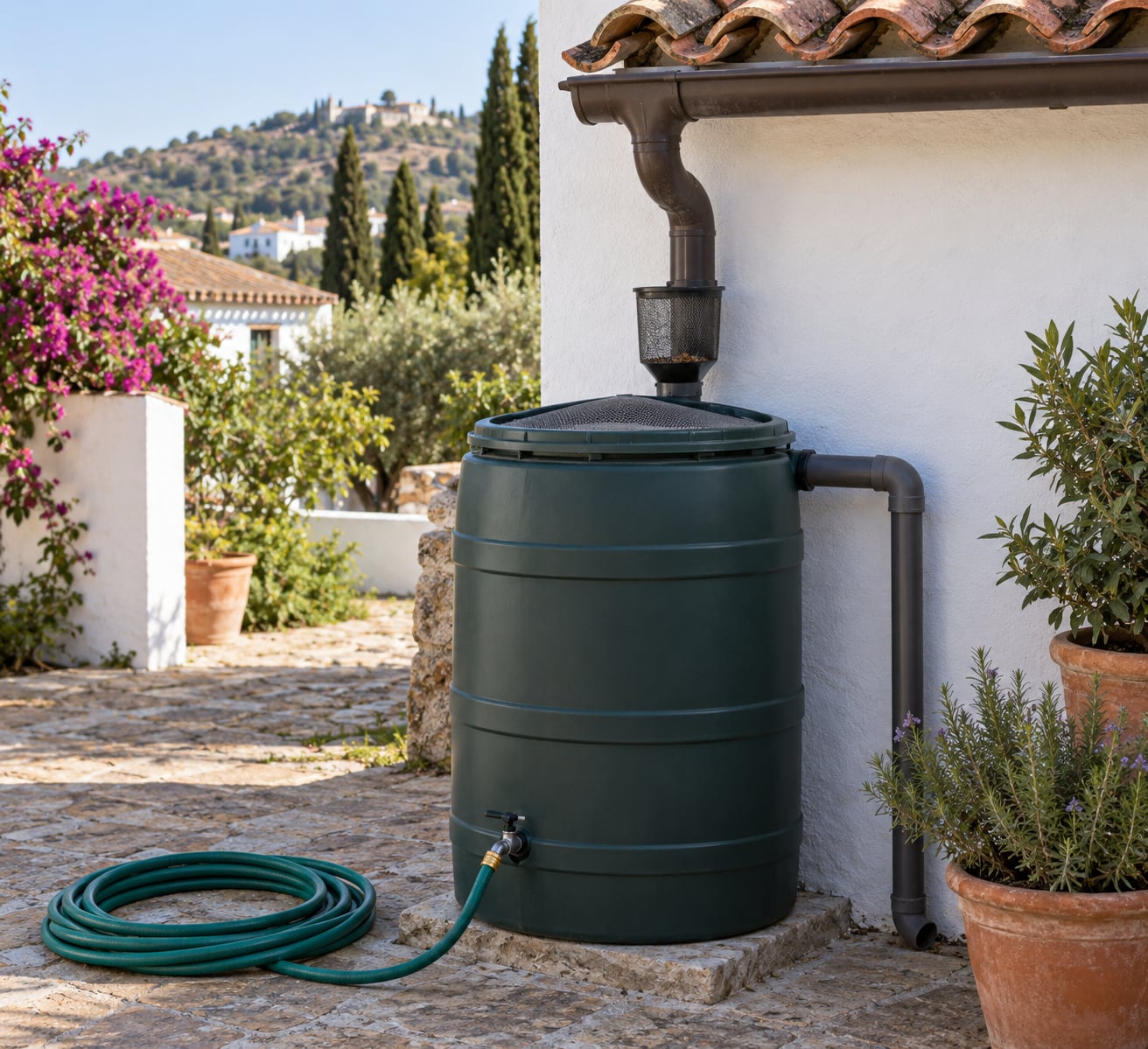
Collecting rain from your own roof is legal in Spain and in Andalusia in the vast majority of cases. What decides whether a system is compliant is not the collection itself, but the volume you store, what you do with the water, whether you touch shared drainage, and whether the installation touches works that need a municipal licence. Most garden-scale projects take a weekend and basic tools; anything structural, elevated or electrical is not a weekend job.
The confusion around this topic is mostly American. Almost every guide you will find online quotes litre and gallon caps from US states, which tells you nothing about what applies in a Spanish municipality. This guide is written for Andalusian houses, gardens and smallholdings, and it names the bodies and documents that actually decide your case.
Table of Contents
- What You Need
- The system components
- The paperwork and the people
- What you should not do yourself
- Step-by-Step
- Check Whether Collection Is Allowed on Your Property
- Choose a Safe, Appropriate Collection System
- Confirm How to Harvest Rainwater Legally at Home
- Have the System Installed Safely
- Treat the Water for Its Intended Use
- Test the System and Put It into Service
- Common Mistakes
- Maintenance and Seasonal Tips
- Frequently Asked Questions
- Do I need a permit to harvest rainwater in Andalucía?
- Can I legally use collected rainwater for drinking at home?
- Can a tenant install a rain barrel without the owner’s permission?
- Is a rain barrel better than an underground cistern for a home garden?
- Who should install a rainwater tank, pump or overflow system?
- Start by Confirming the Local Rules
What You Need
Four things, really: a collection system, paperwork that proves what you are allowed to touch, a source for the local rules, and a list of jobs you must hand to someone qualified.
The system components
- Catchment surface: the roof itself. Note its area in square metres, because rainfall volume calculations start there.
- Conveyance: gutters, downspouts and a diverter that sends runoff to your tank instead of the mains drainage line.
- First-flush diverter: discards the first few litres of each storm, which carry most of the roof dust, moss and bird mess.
- Filter: a mesh or disc filter rated above your tank size, plus a mosquito-resistant inlet screen.
- Storage: a barrel, a cistern or an underground aljibe, sized for your roof and your demand.
- Pump and overflow: a submersible pump with a pressure switch, and an overflow pipe that carries surplus water away from the foundation.
The paperwork and the people
Before anything else, get your title deed or lease, the cadastral reference, and any community rules that apply to your building. In a shared development, the statutes of the owners’ community can be stricter than municipal law, and they are the document neighbours will actually enforce.
Then identify your authorities. The Ayuntamiento handles urban planning and works licences. The Confederación Hidrográfica del Guadalquivir administers water rights on the Guadalquivir basin, which covers most of the region. For anything touching domestic water intended for human consumption, the rules come from the state water law, principally Ley 9/2018 de Aguas de Andalucía, alongside the national drinking-water framework and the Código Técnico de la Edificación requirement DB-SH for water supply installations.
What you should not do yourself
Three categories of work belong to qualified professionals. Anything structural on the roof: lifting tiles, altering rafters, fixing anchors. Anything that carries load or sits at height: elevated tanks, wall brackets, platforms and ladders. Anything electrical: pumps, pressure switches, float controls and any socket within reach of the water.
Installing a barrel on a patio at ground level, running a garden hose and fitting a first-flush diverter are within reasonable DIY scope. Anything else needs a professional, and the building code is not something you can argue with later.
Step-by-Step
Check Whether Collection Is Allowed on Your Property
Start with the property documents, not the equipment catalogue. Read the deed or lease for conditions on exterior works, roof modifications, visible structures in the garden, and any clause about altering drainage.
Then check the community rules if you share the building or the roof. Facades, courtyards, roof terraces and shared patios are exactly the surfaces people want to collect from, and exactly the ones that generate disputes with neighbours.
Finally, look at what sits below you. If your downspouts currently discharge into a shared sewer or a neighbour-bound channel, redirecting them changes who drains where. That can affect a right of way or an easement, even when you own every drop you catch.
How you know it worked: you have a written note of which authority answered, what they said, and the date. If the wording is ambiguous, ask the council in writing and keep the reply. Vague advice from a forum is not a permission.
Choose a Safe, Appropriate Collection System
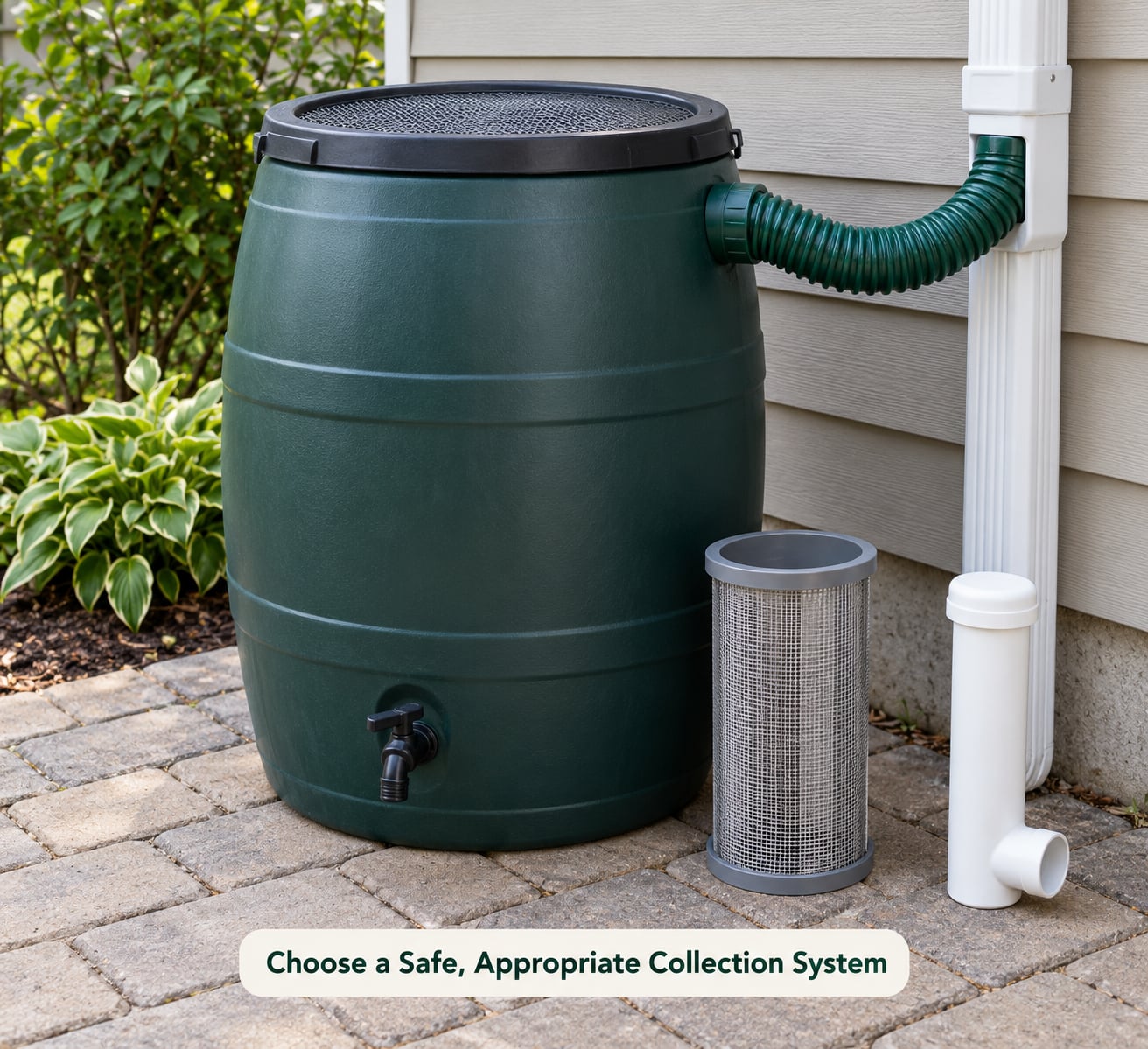
Match the system to the job, not to the ambition.
- Rain barrel, roughly 200 litres: a downspout, a screened lid and a tap. Suits a small patio, filling a watering can, or one raised bed.
- Wall-mounted or elevated tank, 500 to 2000 litres: good gravity pressure for an irrigation line. Needs proper anchors, a ladder-safe position and a plan for overflow.
- Underground cistern: hides the tank, keeps water cool and needs a sump, a liner or a watertight shell. Excavation and structural loads make this a professional job with a real chance of needing planning permission.
Roof type matters. Metal roofs shed water fast and cleanly. Tile roofs carry moss and sediment, so they need a more generous filter. Flat roofs need a proper drainage slope and a sediment trap, because water sits and picks up debris.
And size it against rainfall reality. In a dry summer, a large cistern can sit empty for months, which brings us straight to mosquito and stagnation problems.
How you know it worked: you can say in one sentence what the system is for and roughly how much water you expect in a typical month, which is usually enough to keep you from over-building.
Confirm How to Harvest Rainwater Legally at Home
This is where people get stuck, so let us separate the genuinely legal part from the part that needs a check. Catching rain falling on your own roof and using it on your own land for irrigation, cleaning or toilet flushing is normally unrestricted in Andalusia. No permit is usually involved for a small barrel, and most municipalities will not ask you about a modest tank in a garden.
Three things change the picture. First, volume and permanence: a large tank, a dedicated buried cistern or a structure fixed to the façade can trigger a municipal works licence under local planning rules, because it alters the appearance or the drainage of the property. Second, the destination: routing harvested water into the drinking supply of the house is a different legal question entirely, addressed below. Third, interference: if your change pushes water onto a neighbour’s land or alters a shared drainage route, you have created a civil problem regardless of what the council permits.
Do also separate collecting from diverting. Collecting rain that lands on your roof is passive. Building a bund, wall or ditch that redirects water which would have flowed elsewhere is a different act with a different legal footprint.
How you know it worked: the Ayuntamiento has confirmed in writing that your planned size and position need no licence, or has issued one.
Have the System Installed Safely
Follow the manufacturer’s specification and the local building requirements at the same time. Where they disagree, the stricter one wins.
The safety essentials are boring and non-negotiable: a mosquito-resistant screen or closed lid on every opening, a secure lid, a defined overflow route that discharges away from foundations and never onto a neighbour, and protection against backflow. That last point matters when you plumb harvested water to a toilet or a washing machine, because a cross-connection can contaminate the drinking supply.
Any work at height, any structural modification, any pump or pressure switch wiring goes to a qualified installer who can certify the work. Keep that certificate. If you sell the house or need to make an insurance claim, it is the difference between a system and a liability.
How you know it worked: you have an installation certificate, a written overflow route, and a shut-off that isolates the harvested water from the potable line.
Treat the Water for Its Intended Use
Treat harvested rainwater according to where it goes, not according to how clean the roof looks. A roof collects whatever is on it: dust, pollen, moss, bird and bat droppings, leaves, and pesticide residues from treated surfaces. Untreated roof water is not drinking water, and its age in the tank does not change that.
- Garden irrigation: untreated water is acceptable for most ornamental beds and lawns. Avoid edible crops that are eaten raw if you cannot control what has been applied to the roof.
- Washing cars, cleaning tools, flushing toilets: suitable with basic filtration. Toilets and washing machines need a backflow-prevented, physically separated pipe with clear signage, never a shared connection.
- Drinking and cooking: do not assume this is fine. Achieving a legally compliant potable status means treatment designed to a recognised standard, a sanitary survey of the catchment, routine monitoring, and the involvement of the relevant health authority. This is not a weekend DIY upgrade.
If you want drinking-quality water, the realistic route is professional design and treatment with testing, plus formal verification. Budget for that conversation early, because it changes the system you should buy.
How you know it worked: you can label every outlet on the property as harvested non-potable water, and nothing crosses into the drinking supply by accident.
Test the System and Put It into Service
Run the whole system before the first real storm. Open the tank, look for signs of leakage at joints, walk the overflow route and confirm it discharges where you intended, then run the pump and the tap until flow is steady.
Flush the tank thoroughly after installation. Any construction debris, plastic fragments or sealant residue sitting in there would end up in your irrigation line.
Then check that every outlet you use is on the approved list from the previous step. A hose bib that quietly reaches the kitchen sink is the classic failure.
First-use checklist: joints dry, overflow path clear, pump running, tank flushed, outlets labelled, shut-off tested. Then write down the date you started using it and set your maintenance reminders.
Signs to isolate the system: any joint that weeps, a lid that no longer closes, an overflow that discharges near a wall or doorway, a pump that runs continuously, or a smell from the tank. Isolate, drain down what is needed, and call a professional rather than patching it yourself.
Common Mistakes
Treating roof water as drinkable. This is the most serious error on the list. The fix is not a filter cartridge; it is accepting that untreated harvested water is for irrigation and cleaning, and that drinking use needs designed treatment, testing and verification.
Connecting storage to the mains supply. A shared pipe without a backflow device puts harvested water into your drinking supply. The fix is a physically separated, clearly labelled non-potable line with backflow protection at every connection point.
Leaving the tank open or unscreened. Open water in warm weather produces mosquitoes, insects and vermin, and complaints follow. The fix is a fitted screened lid, sealed pipe entries, and a skimmer overflow that removes floating debris before it settles.
Ignoring overflow capacity. A tank without a defined overflow will eventually spill at the wrong moment, usually against a wall. Size the overflow for a heavy storm on your roof area and discharge it well clear of the building.
Skipping the authorisation check. Installing first and asking later is how people end up removing a finished tank. The fix is a written answer from the Ayuntamiento before you break ground.
Letting the system carry too much weight. Water weighs about one kilogram per litre, so a 1000-litre tank puts roughly a tonne on its base. Full tanks on weak paving or suspended floors fail without warning. The fix is a properly designed plinth or base rated for the full load, not for the empty weight.
Redirecting shared drainage. Cutting a downspout that previously fed a shared channel or a neighbour-bound channel can create a drainage dispute. The fix is to leave shared routes untouched or agree the change in writing with everyone affected.
Maintenance and Seasonal Tips
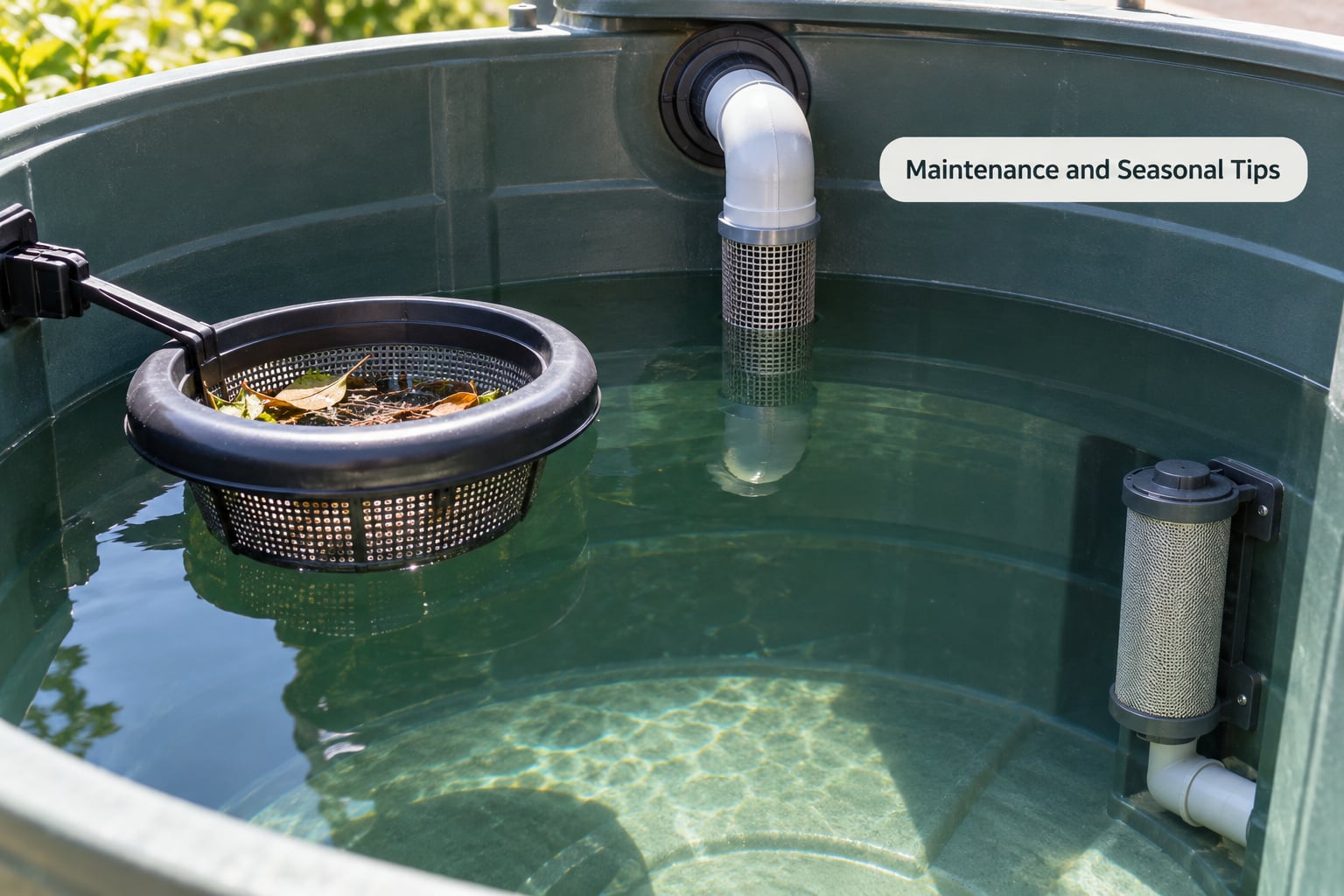
A straightforward rhythm keeps a system working for years. Clean the filter four to six times a year, more often if you have tall trees nearby. Inspect the inlet screen and the first-flush line after every major storm, since a blocked first-flush line quietly stops diverting anything.
Open the tank once or twice a year and check the floor for sediment, the seals for cracking, and the interior for light penetration. Check the pump and pressure switch at the start of the irrigation season rather than waiting for the first failure.
Andalusian summers set the specific conditions. Aim for dark, cool storage; coolness matters for both water quality and insect pressure. Keep the tank shaded where possible and closed. If it is too warm to keep cool, that is a good argument for a buried cistern rather than a surface barrel, and for reducing surface capacity.
In autumn, clear leaves from the gutter and the tank inlet before the leaf season peaks, because a clogged inlet floods the overflow channel. In winter, after a storm season of repeated downpour, check the overflow route and the pump inlet for debris. Through long dry spells, run the system down periodically so you are not drawing from months-old standing water.
Always follow the manufacturer’s own maintenance schedule. Where the manual and this rhythm differ, the manual wins, and a professional who installed the system can usually tell you which interval your specific setup needs.
Frequently Asked Questions
Do I need a permit to harvest rainwater in Andalucía?
For a small barrel or a modest garden tank, usually not. Larger systems, buried cisterns, elevated tanks fixed to a facade, or anything that visibly alters the property can fall under municipal planning and works rules, so check with your Ayuntamiento before you start. Keep the written reply. Water rights on the Guadalquivir basin are a separate question and concern extraction rather than collection.
Can I legally use collected rainwater for drinking at home?
Not by default. Untreated roof water carries dust, animal droppings, pesticide residues and bacteria, and no amount of storage makes it potable. Using harvested water for drinking requires designed treatment to a recognised standard, a sanitary assessment of the catchment, routine sampling, and involvement of the relevant health authority. Treat any claim that a simple filter makes roof water drinkable with real caution.
Can a tenant install a rain barrel without the owner’s permission?
Get the owner’s written permission first, even for something as small as a barrel. A lease can restrict exterior works, garden structures and changes to drainage, and community rules can add further conditions. Installing without permission can become a repair-cost dispute at the end of the tenancy. Ask for consent in writing, describe where the barrel will sit, and confirm who maintains it.
Is a rain barrel better than an underground cistern for a home garden?
For irrigating a few beds, a barrel is simpler, cheaper and quick to install. For supplying a full garden or an irrigation line, a cistern holds far more and stays cooler, which helps water quality. A barrel is the better choice when your real aim is filling a watering can or one raised bed. Choose the cistern when you want reliable pressure and volume through the dry months.
Who should install a rainwater tank, pump or overflow system?
A qualified installer should handle structural work, elevated tanks, excavation, and anything electrical such as pumps, pressure switches and float controls. A ground-level barrel with a diverter hose and a first-flush unit is reasonable DIY work. Whatever the route, get an installation certificate for the professional work, since insurers and future buyers will ask about it.
Start by Confirming the Local Rules
If you do one thing before anything else, ask your Ayuntamiento in writing what your planned system needs, given its size, position and intended use. That single letter tells you whether you need a licence, a technical report or nothing at all, and it removes most of the anxiety that drives people to install first and hope for the best.
Once you have it, size the system to a real use rather than to a storage target, keep the water closed, screened and routed only to non-potable outlets, and put the maintenance rhythm in your calendar before summer arrives. Collect the rain freely. Just do it in the right order.