To volunteer for conservation work near you, start with whoever manages the land closest to home: your municipal parks and environment department, the authority running the natural areas in your province, or a local environmental nonprofit. Ask whether they run supervised volunteer days this season. Almost all local roles are free, need no qualification, and take one morning or a few hours a month.
In Andalusia that usually means municipal parks, river corridors, coastal dune systems and protected areas inside the Natura 2000 network, where the managing body is often the only organisation with a volunteer list. Group sizes run from a dozen on a school-ground survey to a hundred on a shoreline cleanup, and the more specialised the task, the longer the induction.
Worth knowing before you commit: overseas wildlife placements usually need roughly two weeks before a volunteer is genuinely useful, while local days are deliberately built for one-offs. Locals get the best results when they name a specific cause rather than asking for any volunteering at all.
Table of Contents
- What You Need
- Step-by-Step: How to Volunteer for Conservation Work Near You
- 1. Define the kind of conservation work you want to do
- 2. Search for conservation work in your own area
- 3. Check the organizer and project before signing up
- 4. Contact the organizer with specific questions
- 5. Prepare for the activity and protect yourself
- 6. Attend, contribute safely, and keep contact details
- Common Mistakes
- Tips for Finding a Reliable Project
- Frequently Asked Questions
What You Need
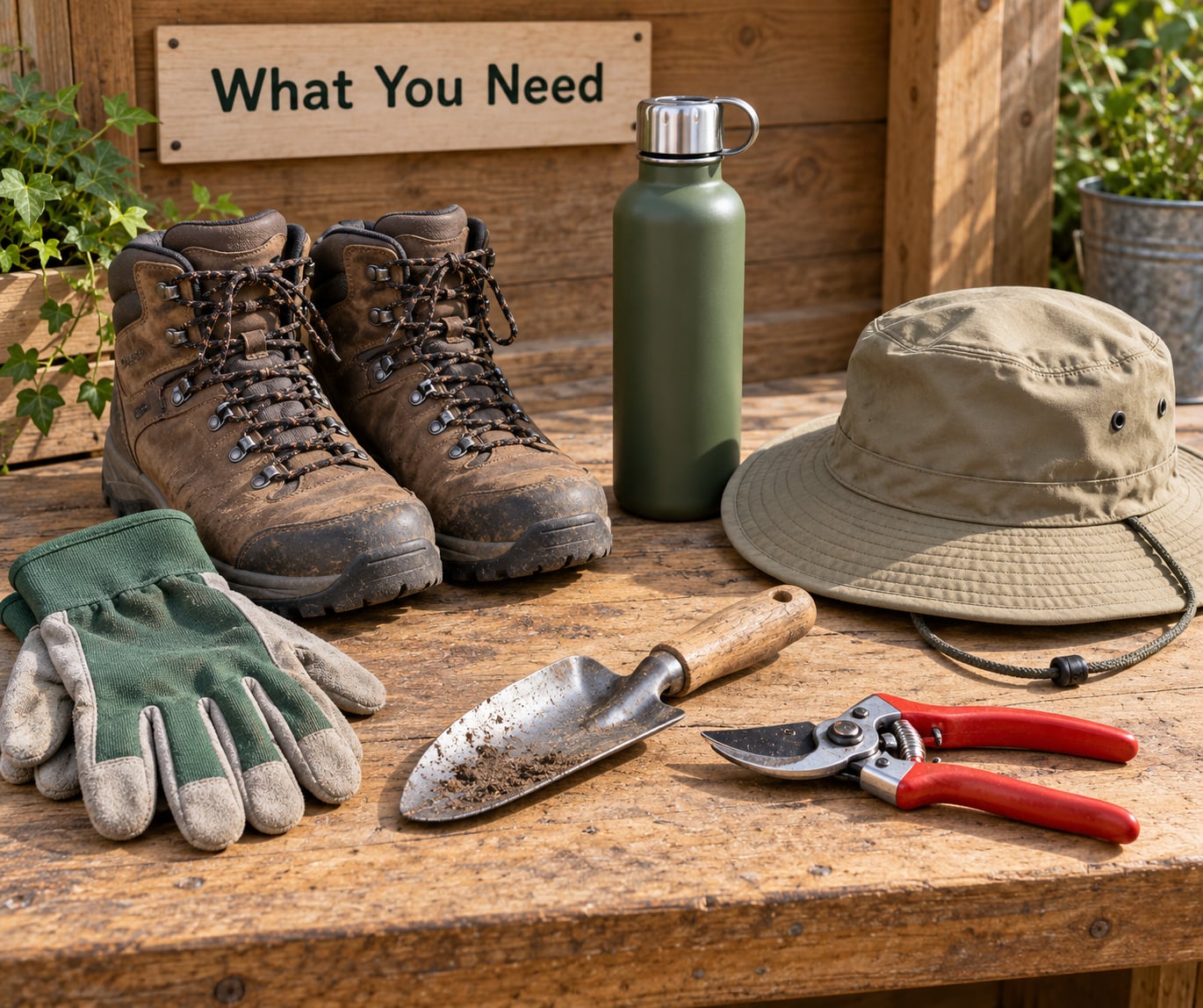
Getting these sorted before your first email saves a wasted morning at a meeting point in the sun.
Documents and personal details
- Photo ID. Almost every organiser asks for it once, to complete the volunteer file.
- Age and guardian details if you are under 18, plus a contact phone number for a parent, guardian or emergency contact.
- A background check only for roles near schools, involving children, or handling animals. Ask before you fill anything in, because a police clearance takes weeks in some cases.
- Vaccination records for fieldwork where ticks, mosquitoes or mammal contact are likely. Rarely required for a beach cleanup, common for cave and bat surveys.
Clothing and personal equipment
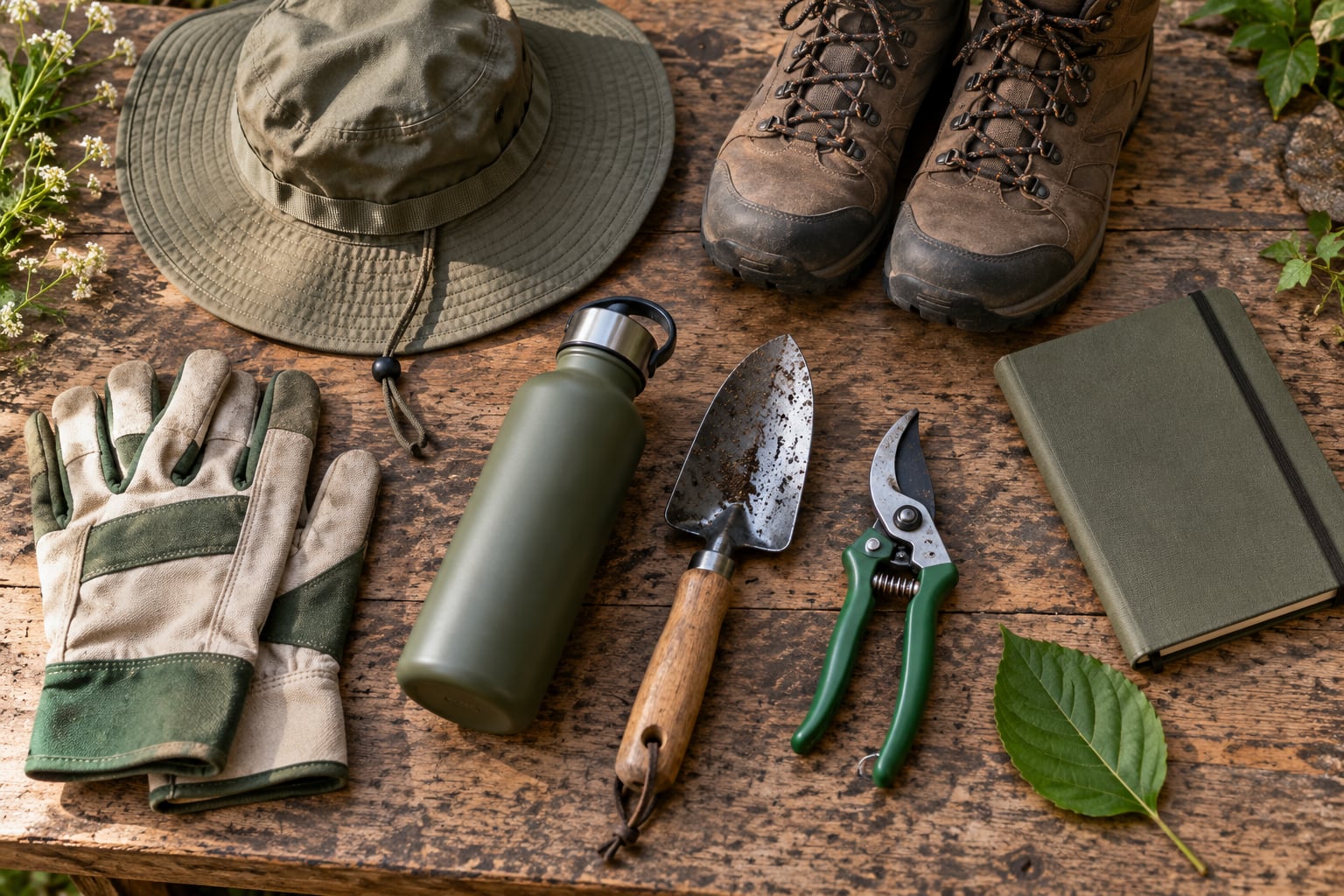
Start from the task, not the season. Clean-ups and litter picks mean sturdy closed shoes, gloves and a bag the coordinator confirms they have for you. Tree planting adds long sleeves against scrub, a spade if you own one, and a hat. Wildlife monitoring means binoculars, a notebook and a pen, and often a quiet stance rather than gloves.
Heat is the factor most new volunteers underrate. Bring more water than seems reasonable, sunscreen applied before you leave, and layers for a cold morning. Groups that run summer sessions usually supply shade, tools and first-aid kit; ask rather than assume.
Fitness, transport and contact details
Physical demand varies more within a task type than between them. Invasive removal is repetitive bending and pulling for three hours straight. Nesting box checks are ladders and crouching. A cleanup can be an hour of slow walking. Tell the coordinator about back, knee or shoulder limits and ask whether there is a lower-intensity version of the same session.
Also settle transport and arrival in advance: where the meeting point is, whether parking exists, how late you can arrive before being left behind, and whether the group shares lifts. Keep a phone number that someone answers, since many coordinators work from a desk two days a week.
Step-by-Step: How to Volunteer for Conservation Work Near You
1. Define the kind of conservation work you want to do
Decide before you search, because it changes who you contact. Habitat restoration and tree planting run from autumn to early spring. Litter cleanups and dune work run year-round and suit spontaneous sign-ups. Invasive species control follows the plant’s growth cycle. Wildlife monitoring, nesting box checks and nest surveys belong to spring and early summer, with training. Wetland maintenance and trail care run across the year but need steady weekly help rather than a single morning.
Then weigh accessibility and travel. If you cannot walk far on uneven ground, or you only have weekday evenings, say so now rather than at the meeting point on Saturday morning.
2. Search for conservation work in your own area
Search by place, not by task. Typing a town name plus phrases like voluntariado ambiental, limpieza de ríos or grupo de fauna in your own language surfaces local groups that English keywords miss. Add your province and, if you know it, your postcode, and the activity: plant nursery, river clean-up, invasive removal, bird count.
Search engines push international programme pages for these queries, which is why so many results are flights and accommodation rather than a morning in a municipal park. Work through four channels instead: your municipality’s environment or parks page, the authority managing the natural areas near you, environmental nonprofits registered in your autonomous community, and volunteer platforms and environmental networks that filter by province.
3. Check the organizer and project before signing up
Confirm the organisation is a public body or a registered nonprofit, then read what it publishes about volunteers. You are looking for a named contact, a volunteer policy with minimum age and availability windows, safety briefing and insurance arrangements, and a description of what the session achieves.
Ask where the work takes place and who holds the land. A project on public land managed by a named body is straightforward. Work on private land needs an access arrangement the coordinator can explain. Then walk away from red flags: any request for payment to volunteer locally, an urgent demand for identity documents over chat, no named coordinator, or a promise of direct contact with wildlife that nobody could supervise. The rule is simple enough to state plainly: no credible organisation working with wildlife lets untrained volunteers handle animals directly.
4. Contact the organizer with specific questions
One short message, sent to a person, gets the most useful answers. Ask for the location and date, the meeting point and time, what the task involves hour by hour, how physical it is, whether equipment and water are provided, the age limit and any accessibility notes, whether transport can be shared, whether training or a background check is required, what happens if the weather cancels, and what to bring.
Add one line about availability and one about experience. Coordinators can match you far better when they know you are free on Saturday mornings and have never done fieldwork before.
5. Prepare for the activity and protect yourself
Check the forecast the evening before and again that morning. Confirm the kit list, charge your phone, and pack water, sun protection, closed shoes, gloves and any medication you need. If the group asked for a waiver, sign it before travelling.
On the day, follow the project leader’s instructions rather than your own method, especially with cutting tools, ladders and wildlife handling. Lift with your legs, take breaks before you need them, keep water within reach, and wash your hands before eating. Report cuts, ticks, wasps’ nests or unstable ground immediately rather than quietly working around them.
6. Attend, contribute safely, and keep contact details
Arrive ten minutes early, sign the attendance sheet, and stay for the safety briefing even if you have done this before. Ask what result the session is meant to produce, whether you are needed for data entry afterwards, and who to ask for a reference.
Write down the date, hours, task, organisation and coordinator’s name in your own file the same evening. Finish by asking when the next session is and whether the group has a membership or regular volunteer rota. One-offs are common; the people who get invited back are the ones who asked.
Common Mistakes
Signing up without reading the requirements. Fix: read the volunteer policy before you write, and put your questions about age, fitness and checks in your first message rather than after travelling.
Assuming every task is accessible. Fix: describe your mobility, vision, hearing or allergy limits plainly in the first email and ask whether a seated or lighter version exists.
Arriving in the wrong clothes. Fix: ask what the previous session volunteers wore. It is the most reliable answer, and it takes ten seconds to get.
Leaving transport and cancellation to chance. Fix: confirm the meeting point, parking or nearest bus stop, the finish time, and who to call on the day.
Working past your own limits. Fix: take the break when the leader calls it, hand over tools you feel unsteady with, and say early that a shoulder or back gives out.
Handing personal data to an unverified organiser. Fix: send documents to a named address on an official domain, ask why each one is needed, and refuse anything sent through a messaging app the organisation did not give you.
Tips for Finding a Reliable Project
- Widen the geography, not the task. A municipality two towns over with a monthly workday is better than a project thirty minutes away that ran once and vanished.
- Ask the people who manage the land. Parks departments, river basin authorities and protected-site managers know which local groups are reliable and which have stopped answering messages.
- Sign up for alerts. Newcomers to a town consistently get better answers when they name a specific cause, and seasonal recruitment emails go out a few weeks before each campaign.
- Start supervised. Introductory sessions and one-off community days carry a briefing and a named leader; arrive, watch how the task is done, then ask for a regular shift.
- Choose projects with a stated outcome. Monitoring with a species protocol, planting with a survival target, or removal tied to a mapped infestation tells you the work is measured. General tidying tells you less.
Frequently Asked Questions
Do I need experience to volunteer for conservation work?
No. Most local conservation days are designed for beginners: the coordinator runs a safety briefing, demonstrates the task and pairs you with someone experienced. The roles that do want prior knowledge are the specialised ones such as species monitoring protocols, nesting box checks or mapping work. Say plainly in your first message that you are new, and ask whether the project runs an introductory session.
What is the minimum age for conservation volunteering?
It depends on the organiser and the task. Cleanups and tree planting often accept under-18s accompanied by a parent or guardian, with 14 or 16 as a common floor. Wildlife handling, animal care, work near live traffic and anything involving machinery usually require 18. Minimum ages are written into volunteer policies, so ask for the figure in writing before you turn up with a friend.
Can I volunteer if I have a disability or limited mobility?
More often than people expect. Desk roles such as data entry, species record checks, grant research, translation and admin support need no physical work at all, and citizen science observation can be done from a balcony or a garden. For on-site roles, ask about seated tasks, accessible paths, toilet access, rest points and whether the group already works with volunteers who use mobility aids.
How do I get to a conservation project if I do not have a car?
Target events based in your own neighbourhood: municipal park cleanups, neighbourhood river and dune groups, school-ground wildlife surveys and city biodiversity days all have meeting points reachable on foot or by bus. Volunteer platforms often list a transport note for each event, and coordinators running a regular rota can share a lift list once the numbers are known.
Can conservation volunteering count as work experience?
It counts as unpaid experience, and it carries real weight when you can describe it precisely. Keep records of dates, hours, organisation, coordinator’s name and the task itself, whether that was monitoring, invasive removal or planting. Field work is what conservation hiring panels ask about. It is not paid work, it is not employment, and you should never describe it as a job on a CV.
Start with one email this week. Find the authority that manages the nearest green space to your house, and ask three things: whether they run volunteer days in the next two months, what a session involves, and who the coordinator is. That single message is usually the whole distance between wanting to volunteer and being booked onto a morning.