No, plastic film and grocery bags do not go in your curbside recycling bin, even when the bin is the one marked for plastics. Thin film wraps around the sorting equipment, jams it, and can contaminate a whole load of good material. The route that works is a separate one: collect the film clean and dry, bundle it, and take it to a participating store drop-off bin or a municipal collection site.
That answer is the easy part. The questions that follow it are the ones people actually get stuck on: which bags count as film, whether the bin outside the supermarket is still taking them, what to do with the pile of poly mailers from online orders. This guide walks through all of it, in the order you would do it.
Table of Contents
- What You Need
- How to Recycle Plastic Film and Grocery Bags: Step by Step
- Check the material and the local acceptance rules
- Empty and clean the bags
- Keep film separate from curbside recycling
- How to recycle plastic film and grocery bags at an approved drop-off point
- Reduce, replace, and reuse when recycling is unavailable
- Common Mistakes to Avoid
- Putting bags and film in the curbside bin
- Recycling dirty or multi-layer packaging
- Collecting items the program does not take
- Assuming a drop-off point is still active
- Frequently Asked Questions
- Can I put plastic grocery bags in my curbside recycling bin?
- What types of plastic film can be recycled near me?
- Do plastic bags need to be clean before I recycle them?
- Are grocery-store bag collection bins free to use?
- What should I do with plastic film if there is no drop-off location nearby?
- Are biodegradable or compostable plastic bags accepted in film recycling?
- What to Do First This Week
What You Need
Four things, and you probably already have three of them.
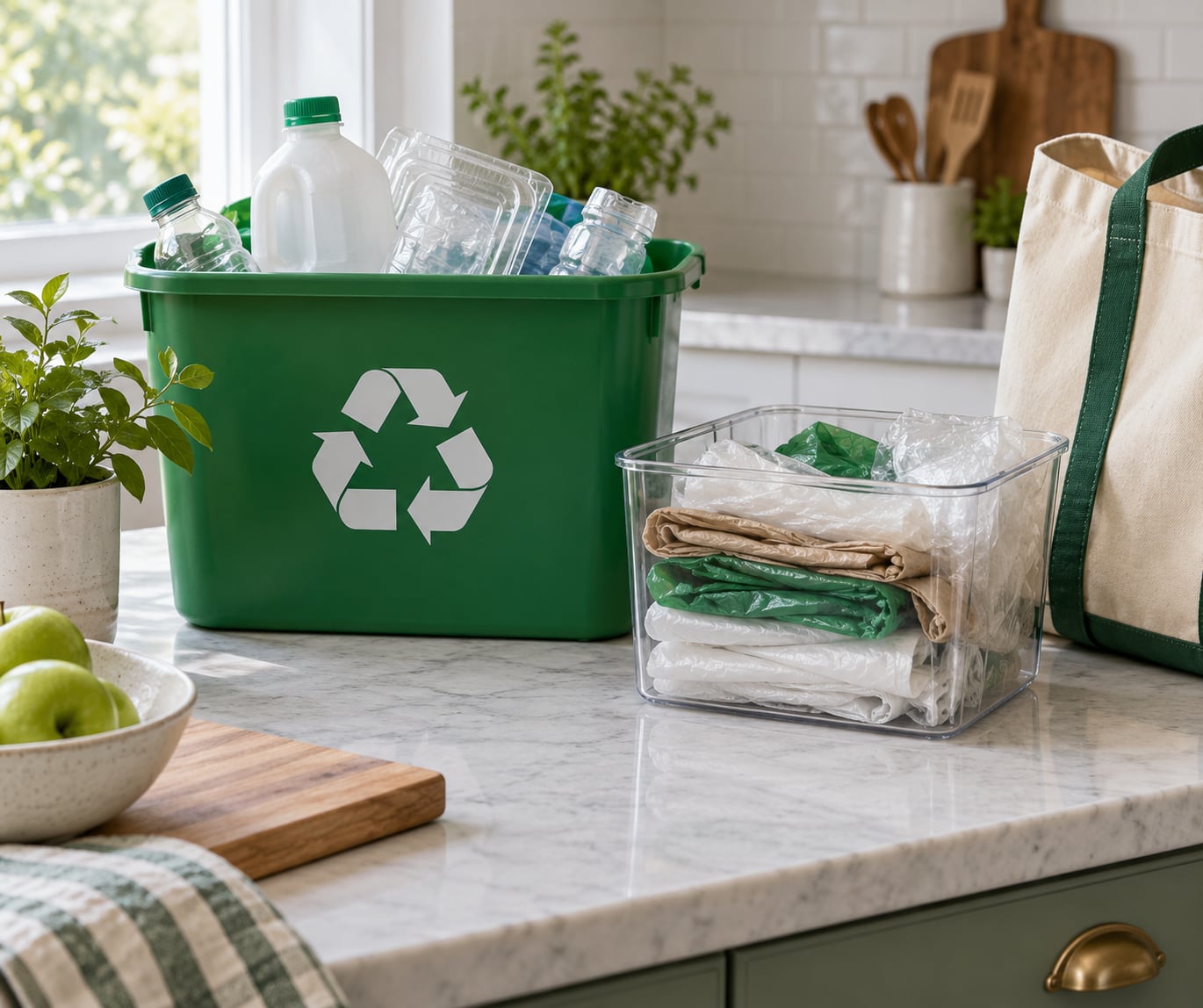
- Clean, dry film. Grocery bags, produce bags, bread bags, zip-top bags, poly mailers, bubble wrap, shrink and case wrap. Empty, with no food or liquid inside.
- A separate collection container. A canvas tote, a large glass jar, or a dedicated bin under the sink. Never the household recycling bin.
- A drop-off point you have verified. Most often a pair of bins at the entrance of a supermarket or big-box store, sometimes a municipal site.
- Basic label literacy. A resin code (a number inside a triangle) and the store drop-off symbol tell you whether an item is film at all, and whether the program wants it.
One honest note before the steps. Roughly 9.1% of the plastic film produced in the United States has actually been recycled, and California’s SB 270 requirement for stores to collect film ended on January 1, 2020. Dropping bags off is still the right default, but it is a better-than-landfill action, not a solution. If you are short on drop-off trips, prevention at the source beats recycling every time.
How to Recycle Plastic Film and Grocery Bags: Step by Step
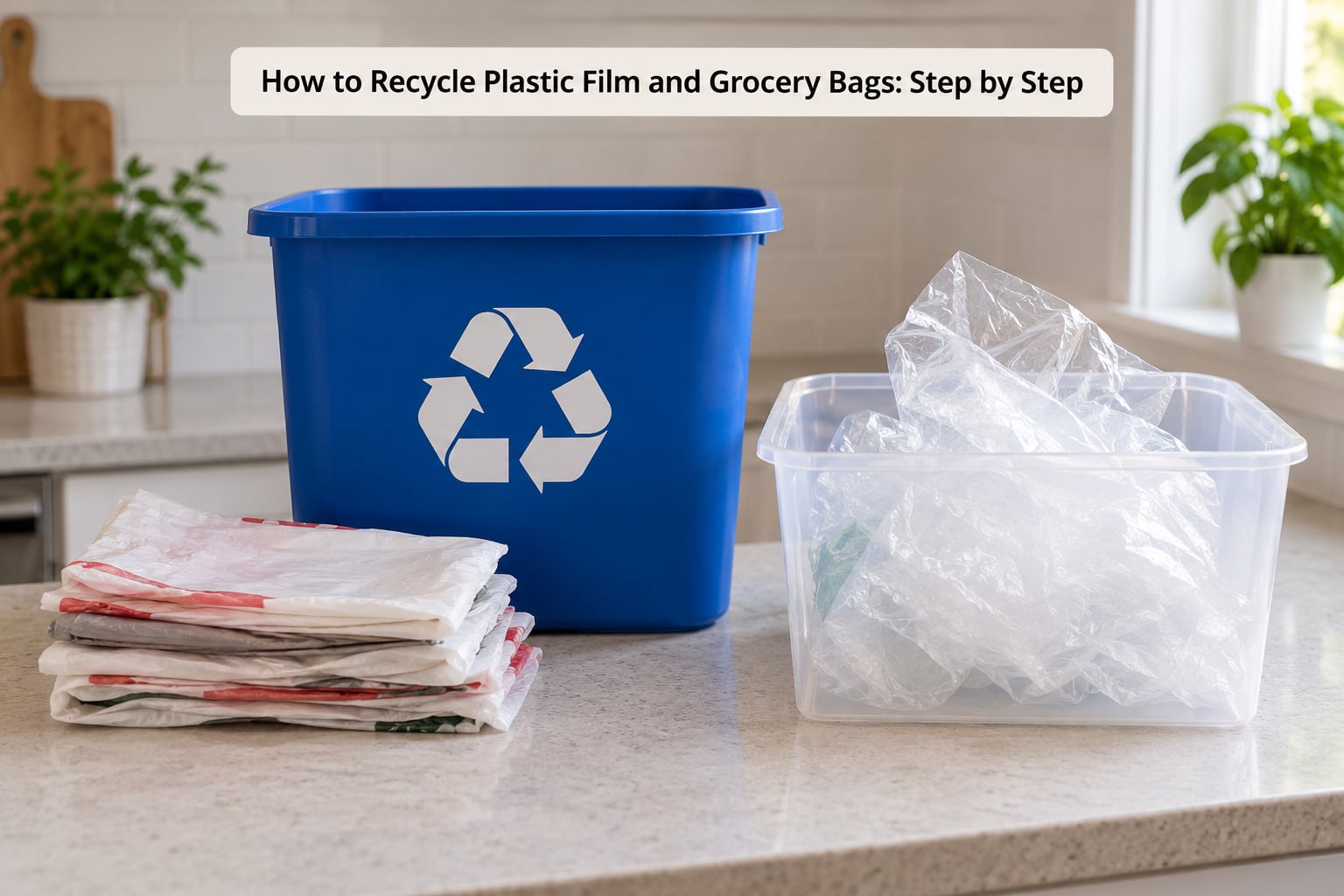
Check the material and the local acceptance rules
Not every plastic bag is film, and the difference decides where it goes. Film is thin, flexible, and stretches. A yogurt tub, a shampoo bottle, or a rigid takeaway container is not film, and those follow your local rigid-plastic rules instead.
Four quick tests, all of which film passes:
- It stretches when you poke it.
- It does not tear like paper.
- It does not crinkle loudly and sharply.
- It is not metallic or shiny silver.
Then check the number in the recycling triangle. Resin #2 (HDPE) and #4 (LDPE) are the two you will see on almost all grocery and mail-order film. No number at all usually means a multi-layer pouch, and multi-layer is a reject. Finally, check your own local guidance, because store programs and municipal rules differ from town to town and change without much notice.
Empty and clean the bags
Clean and dry is the acceptance condition, and the processing plant is the reason. A single greasy bag can spoil the bale around it, and wet film is heavy enough to make the rest of the load unprofitable to handle.
Empty them. Shake out crumbs, rinse off food residue, and let them dry. Peel off paper receipts and labels where they are easy to remove, along with sticky labels, tape, and adhesive strips. For shipping film, cut away the paper slip inside the poly mailer and the cardboard hang tag.
Deflate air pillows and pop the bubbles so they lie flat. Roll larger sheets of stretch or case wrap into tight tubes about the length of your forearm, rather than folding them into sharp creases.
On labels specifically: some programs genuinely do not care, because the shredder handles paper. Removing what comes off easily is the safe habit, and there is no need to scrub a bag for ten minutes over a stubborn sticker.
Keep film separate from curbside recycling
Give it its own home. A large tote in the pantry or a clear jar next to the back door works, and the container is what stops the problem rather than the intention.
Bundle many loose bags inside one larger bag and tie the neck shut. Users have long since settled the “bag inside a bag” debate: nesting is not contamination, it is how the material is meant to arrive. The myths about color and tint matter even less, because unlike rigid plastic, tinted and colored film is still accepted.
What does not work is tying a knot in one bag and dropping it on top of a full curbside container, or leaving a heap in the corner of the car. Film travels on wind and on paws.
How to recycle plastic film and grocery bags at an approved drop-off point
Store bins sit at the front entrance of most large supermarkets and big-box stores in the US, typically in pairs: one for bags, one for film and rigid plastic. Chains that have run these programs for years include Target, Walmart, IKEA, Whole Foods, Safeway, Trader Joe’s, Kroger, Home Depot, Lowe’s, and Wegmans. Participation is location by location, not chain by chain, so treat the list as a starting point rather than a guarantee.
Before you load the car, verify. Call the store and ask whether the film bin is active and where it stands. A quick two-minute call beats a wasted trip with three bags in the trunk, and it also tells you whether the bin is inside or in the parking lot.
Other options worth knowing:
- Municipal sites. Some recycling departments and public works facilities accept film at a staffed site, often during specific hours.
- Volunteer-run programs. Run by a local group or a town sustainability committee, these are the ones people trust most because the chain of custody is visible.
- Mail-back and hardware store collection. Some programs let you mail film in, and a few hardware stores run collection points for packing materials.
- Workplace and school programs. Offices and campuses often install a bin near the mailroom. Ask your facilities team before setting one up yourself.
Mail-order packaging is the biggest pile most households end up with, and it is the easiest to sort. Poly mailers, bubble mailers, and stretch netting are all accepted film, once they are emptied of paper, tape, and labels. Foam pillow inserts are a different material and generally are not accepted in film bins; check the insert’s own instructions before reusing it for your own shipping.
What to avoid putting in the bin: compostable or biodegradable bags, frozen food bags, salad bags, six-pack rings, candy and chip wrappers, and any stiff plastic that does not stretch. Compostable film breaks down in a compost facility, and recyclers handling your material do not want a batch of it that starts degrading mid-sort. Six-pack rings are a known animal hazard and belong in a separate, dedicated return stream if your area has one.
Reduce, replace, and reuse when recycling is unavailable
If the nearest working drop-off point is a 40-minute round trip, the honest answer is that prevention scales better than recycling. Reuse a bag until it splits, then it becomes recycling material rather than a wasted one.
Buy from bulk dispensers or refill stations, where produce comes loose. Choose products with less multi-layer packaging, since those are the ones no film program can take. Keep a cloth tote in the car and a set of hard containers for leftovers so you are not buying a fresh zip-top bag every week. And when a bin is full, overflowing, or gone entirely, that is a sign the local program is under strain, not a reason to start stuffing bags into the blue bin.
Common Mistakes to Avoid
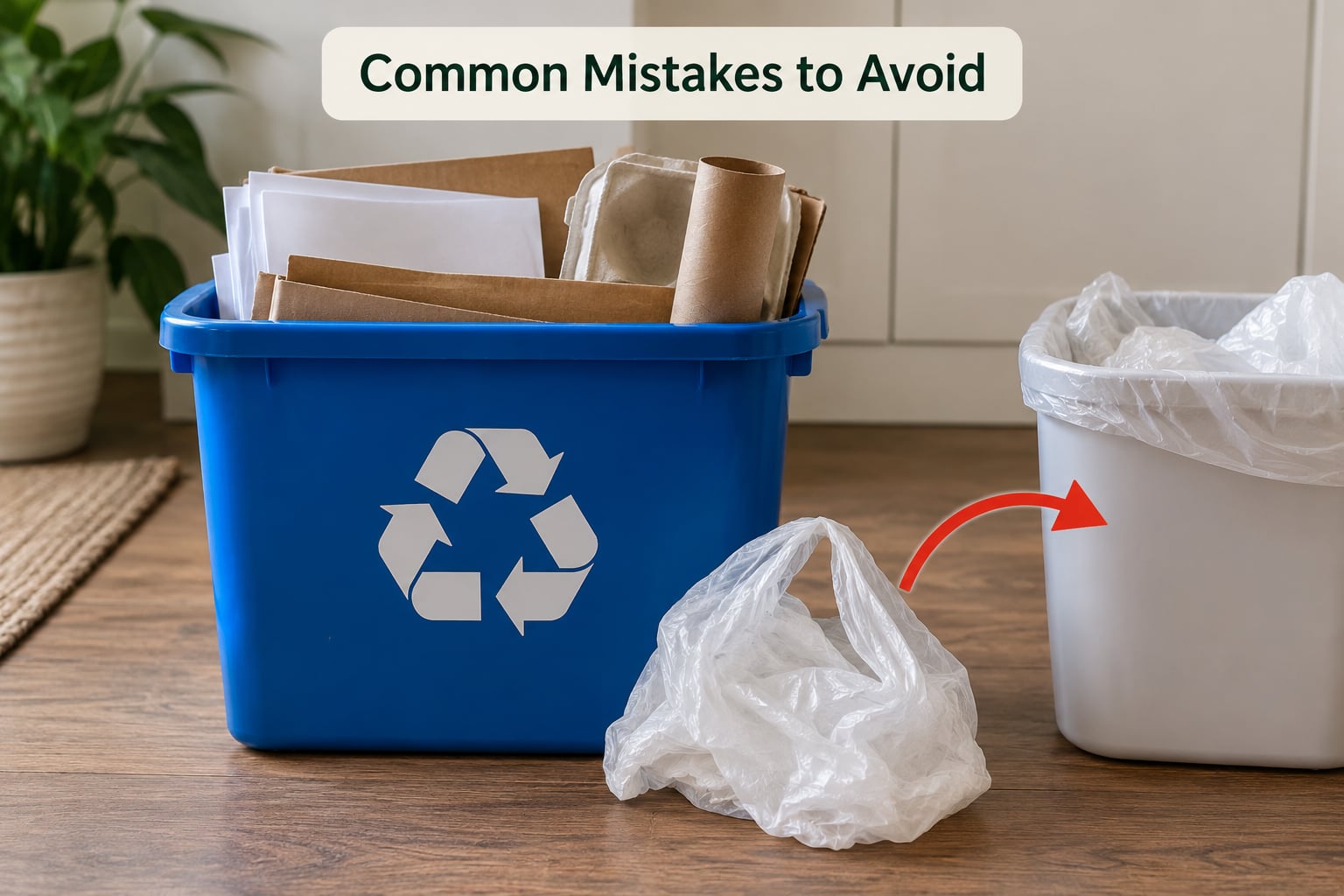
Putting bags and film in the curbside bin
This is the one that causes real damage. Film tangles around screens, rotors, and optical sorters, and a single jam can take out a load of clean paper, glass, and cans. The fix is simple and permanent: one container for film, one for everything else. Prevention is just a matter of where the container sits, so keep the film tote somewhere you will not absent-mindedly grab from when you walk out the door.
Recycling dirty or multi-layer packaging
A greasy chip bag ruins more film than the bag itself was worth. Food residue, liquids, and multi-layer pouches are all rejects, and so is anything wet. Keep the film dry and empty, and if a bag has been through a meat counter, rinse and dry it before it goes near the collection tote.
Collecting items the program does not take
Compostable bags are the most common mistake, because the label reads like a green light. They are not accepted in film collection bins, and neither are six-pack rings, candy wrappers, metallic film, or rigid plastic that does not stretch. If you are unsure, leave it out. A rejected item at a drop-off point is a contamination problem, and one contaminating item can affect the whole load.
Assuming a drop-off point is still active
Bins get full, get moved, and sometimes get removed, and nothing on the site tells you. People report bins that stayed overflowing for weeks and stores that dropped the program with no sign. Call before you go, and treat an overflowing bin as a signal to pick a different location rather than leaving a bag on top of it.
One more habit that pays off: bundle by material type, not by random mix. Bins for “bags” and bins for “film and packaging” are not interchangeable, and stretch wrap packed in with produce bags can be rejected.
Frequently Asked Questions
Can I put plastic grocery bags in my curbside recycling bin?
No. Plastic film and grocery bags are excluded from curbside collection in most places because they wrap around and jam sorting machinery, contaminating the rest of the load. Keep them in a separate container and take them to a store drop-off bin or an approved municipal collection site instead.
What types of plastic film can be recycled near me?
Usually polyethylene film marked resin #2 (HDPE) or #4 (LDPE): grocery and produce bags, bread bags, zip-top bags, dry cleaning bags, poly mailers, bubble wrap, air pillows, shrink wrap, and case wrap. Clean, dry, empty, and free of paper, labels, and tape. Local programs differ, so confirm with your recycling department before a trip.
Do plastic bags need to be clean before I recycle them?
Yes, clean and dry is the standard acceptance condition. Empty out crumbs, rinse off food residue, and let the film dry fully. Grease and moisture are contamination, and a single soiled bag can spoil the surrounding material. Remove receipts, paper labels, and tape where they come away easily, then bundle everything inside one tied bag.
Are grocery-store bag collection bins free to use?
Nearly always, yes. Store drop-off bins at supermarkets and big-box stores are free and take bags, film, and often rigid plastic in a paired second bin. There is no purchase required and no limit at most locations. Call the specific store first, since participation varies by location and bins can be removed without much notice.
What should I do with plastic film if there is no drop-off location nearby?
Bundle it into a single tied bag and hold it until you are near a working site, rather than putting it in the curbside bin. In the meantime, reuse what you can, and reduce new film by buying from bulk dispensers or using refill packaging. Mail-back film programs exist in some regions and are worth checking with your local recycling department.
Are biodegradable or compostable plastic bags accepted in film recycling?
No. Compostable and biodegradable bags are usually rejected by film collection programs, because the material is designed to break down and recyclers do not want their end product degrading. They also contaminate ordinary film bales. Put them in a commercial composting stream if your area has one, and keep them out of the store drop-off bin.
What to Do First This Week
Pick one tote for film and put it somewhere you will actually use it. Then pick your nearest store bin, call ahead to confirm it is active, and make the trip a normal part of a shopping run rather than a special expedition.
Everything else, the cleaning and the bundling, follows from that one habit. Updated for October 2026.