How to recycle motor oil and antifreeze safely is simpler than most guides make it sound: keep each fluid separate, sealed and labeled, then take it to an approved collection point such as an auto parts store, a quick-lube shop, a municipal transfer station or a household hazardous waste facility. Never pour either fluid into a storm drain, a toilet, a storm gutter, soil or ordinary trash. The whole job takes about an hour once you know where to go.
Two things make this job harder than it sounds. Antifreeze is genuinely difficult to place, while used oil is easy, and store policies change without notice, so an online list can send you across town for nothing. Here is what I check every time, in the order that saves the most wasted trips.
Table of Contents
- What You Need Before You Recycle Motor Oil and Antifreeze
- Step-by-Step: How to Recycle Motor Oil and Antifreeze
- 1. Check the Fluid and Identify Its Type
- 2. Find an Approved Collection Site or Service
- 3. Prevent and Clean Any Spills
- 4. Transfer the Motor Oil Into a Sealed Container
- 5. Transfer the Antifreeze Into a Safe Container
- 6. Transport and Recycle Motor Oil and Antifreeze Correctly
- Common Mistakes
- Frequently Asked Questions
- Can I recycle motor oil and antifreeze in my home curbside bin?
- Can I mix used motor oil and antifreeze together for recycling?
- What container should I use to transport antifreeze safely?
- How much used motor oil or antifreeze can I bring at one time?
- What should I do if motor oil or antifreeze spills on the ground?
- Conclusion
What You Need Before You Recycle Motor Oil and Antifreeze
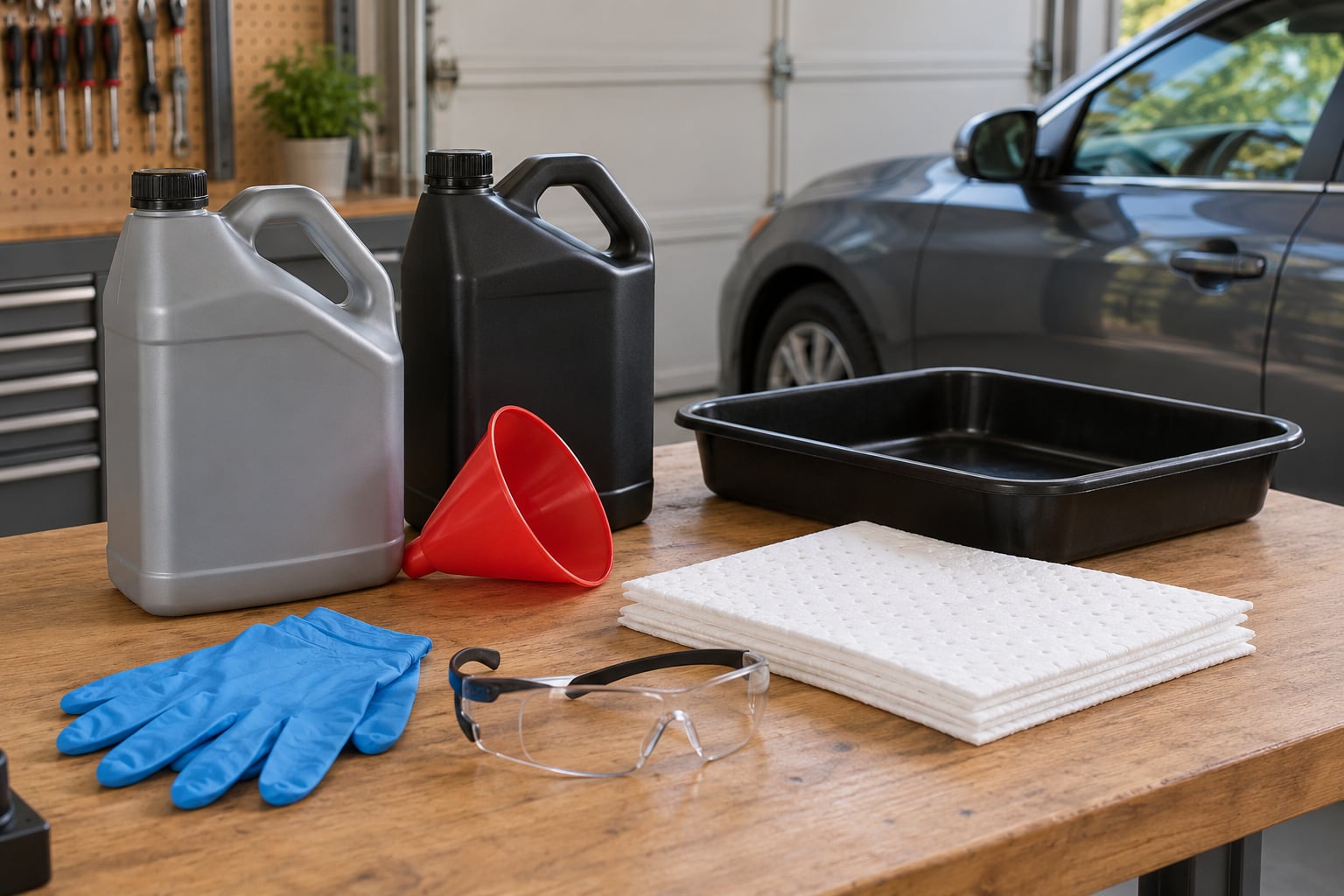
Gather this before you pull the drain plug, because the collection container is the item most people are missing when they start draining.
- Approved containers. Rigid plastic jugs or tight-fitting screw-top cans, sound and free of cracks, with caps that still seal. Never use a milk jug, a water bottle, a soda bottle or a food container.
- A wide-mouth funnel and, if you are draining rather than pumping, a low-profile drain pan that fits under the drain plug.
- Absorbent material. Kitty litter, sand, sawdust or commercial oil-absorbent pads.
- Nitrile gloves and safety goggles. Glycol tastes sweet and attracts pets and wildlife, and used oil is full of the heavy metals and combustion byproducts you are trying to avoid.
- Local facility information. Hours, accepted fluids, whether an appointment or proof of residency is required, and any volume limit.
- Documents, sometimes. Bulk volumes may need a business account or a pre-arranged pickup rather than a walk-in drop-off.
One more item pays for itself: separate containers for oil and antifreeze, labeled before you start. Municipal facilities run two designated tanks for exactly this reason, and unlabeled mixed fluid slows everyone down or gets refused.
Step-by-Step: How to Recycle Motor Oil and Antifreeze
1. Check the Fluid and Identify Its Type
Identify what you are holding before you move it anywhere. Used motor oil is dark, thin and glossy with a fuel smell. Used coolant or antifreeze is usually colored, sweet-smelling and often slightly warm from the engine.
The two words get used interchangeably: antifreeze is the additive that stops freezing, coolant is the finished mixture of antifreeze and water in your radiator. For disposal, treat them as one fluid. What matters for handling is the glycol base, which your product label states.
Do not combine liquids under any circumstance. Oil and coolant mixed in one bucket is a different, more expensive waste stream, and many facilities will simply refuse it. Never mix oil with brake fluid, transmission fluid or power steering fluid either.
2. Find an Approved Collection Site or Service
The reliable way to find your option is a lookup, not a memorized list. Search earth911.com for recycling centers by fluid type, then check your city or county public works hazardous waste page for collection days, and your state environmental agency for accepted facilities.
Auto parts stores such as AutoZone, O’Reilly Auto Parts and Advance Auto Parts commonly accept used motor oil and oil filters, and some locations take used coolant. Quick-lube chains like Jiffy Lube take both, since they generate both. Municipal transfer stations and household hazardous waste facilities are the most reliable option for antifreeze, and most take it without charge.
Call first. Store policies vary by location and change without notice, and a store that takes oil is not guaranteed to take coolant.
3. Prevent and Clean Any Spills
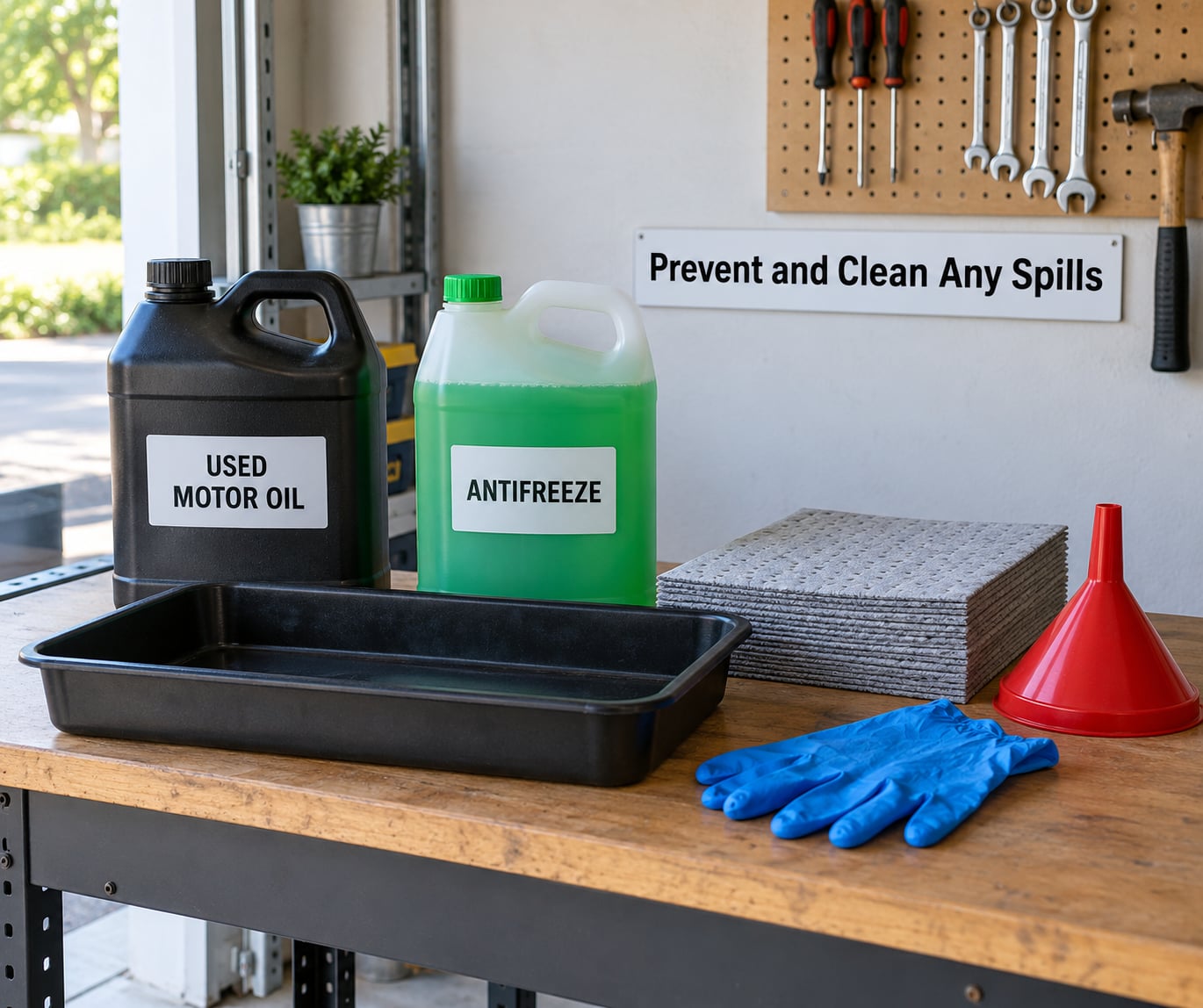
Work on a level, protected surface, ideally on top of cardboard or a plastic sheet over concrete. Set the drain pan or containers on absorbent material before you open anything, and keep a bag of absorbent nearby rather than walking to the garage for it after a leak.
If a spill happens, work from the outside edge inward so you do not push contamination further out. Soak it with absorbent, scoop it into a container, and bag the used pads. Oily soil or gravel underneath gets shoveled into a bag for hazardous waste, not scattered around the driveway.
On skin, wash with soap and water straight away. In your eyes, flush with clean water for a while and then contact a poison control line if irritation continues.
4. Transfer the Motor Oil Into a Sealed Container
Warm the engine briefly so the oil drains fully, park on level ground, remove the drain plug, and let the oil run into your pan or the approved container below. Pull the drain plug out of the pan as soon as it is free, before it disappears under the oil.
Pour the oil slowly through a funnel into the labeled jug, leaving headspace so the fluid does not splash or foam over the cap. Stop at about four-fifths full. Repeat until the container is full, then cap it, wipe the threads and mark it with the contents and the date.
Never reuse a container that leaked or was damaged, and never pour oil into an unlabeled jug. An unlabeled container is rejected at the counter, and a stale container in the garage is how fluids get mixed by accident later.
5. Transfer the Antifreeze Into a Safe Container
Run the engine until the thermostat opens and the cooling fans cycle, then shut it off and drain from the radiator drain plug or petcock valve into a catch container with the engine warmed but not dangerously hot. Block the heater core if the drain lacks a plug, and note how much coolant came out so you refill with the right amount and mix.
Keep the fluid in its original labeled container whenever you can. If you must decant, use an approved container with a tight cap and label it clearly: antifreeze, ethylene glycol, and the date.
Never pour antifreeze into a storm drain, a toilet, soil, trash or any ordinary waterway. It separates from water rather than dissolving in it, it is acutely toxic to dogs, cats and wildlife, and it travels into soil and groundwater intact.
6. Transport and Recycle Motor Oil and Antifreeze Correctly
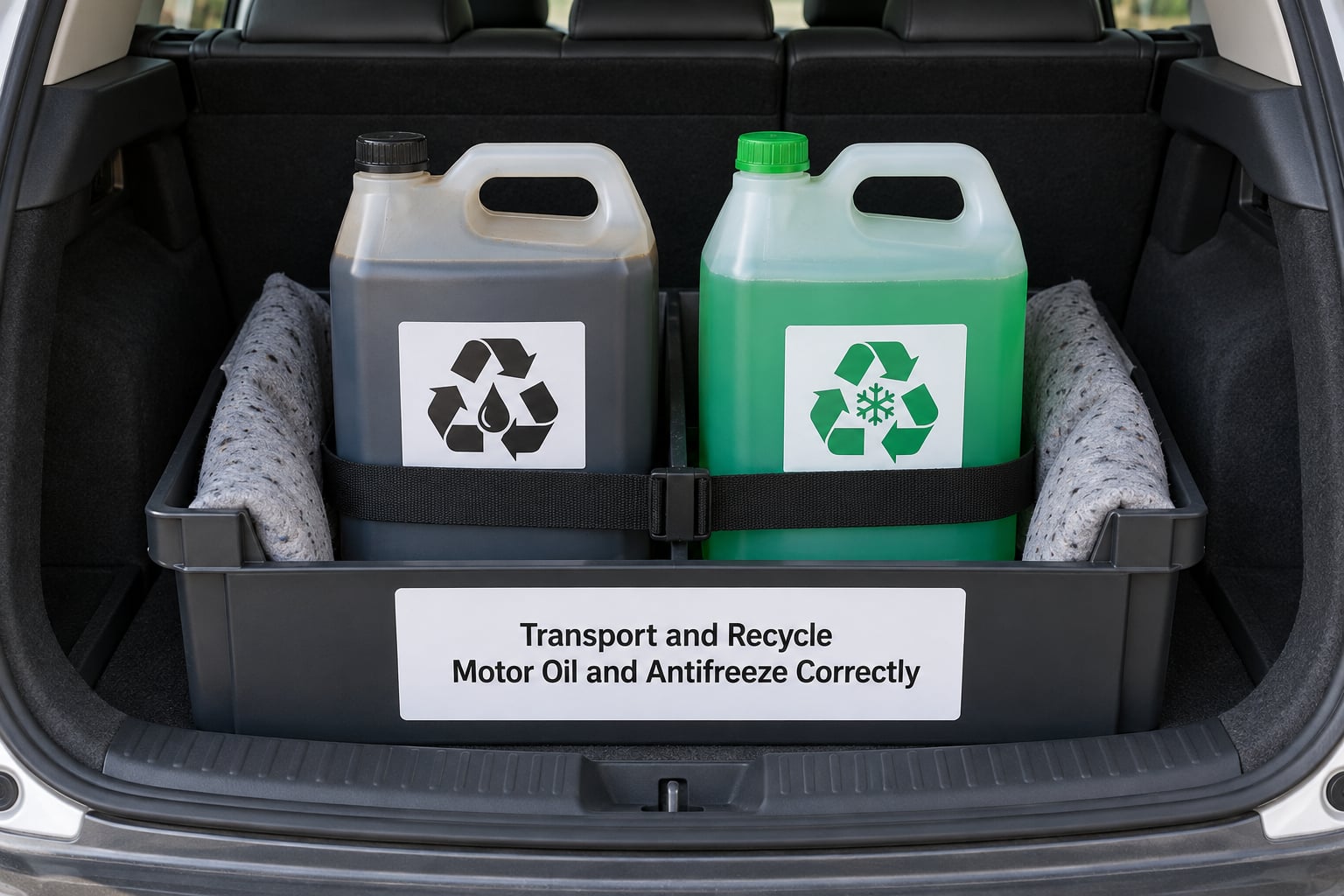
Set each container upright in the vehicle so it cannot tip, and wedge them so a sudden stop does not send one across the floor. Put a layer of absorbent or a cardboard box underneath them. Keep oil and antifreeze capped and separated, with any required documents for the facility in the same trip.
At the counter, tell the attendant what each container holds, hand them over one at a time so they go into the right tank, and ask for a receipt or stamped card if the facility provides one, which matters for business and property managers tracking volumes. Wash your hands and clean the cargo area when you get home.
What happens next is worth knowing. Used motor oil is re-refined, where contaminants are removed and the oil returns to service as base oil, so recycling keeps petroleum in circulation rather than burning it. Used antifreeze is filtered and reprocessed into new coolant, or dewatered into clean water. That loop is the entire point of doing this instead of pouring it out.
Common Mistakes
- Pouring into a drain, toilet or storm gutter. Never do it. Storm drains lead to waterways, and one motor oil change can contaminate up to a million gallons of fresh water with heavy metals and combustion byproducts. Improper disposal is regulated and can carry fines.
- Mixing oil and antifreeze in one container. The correct fix is to keep future collections separate. If they are already combined, call the facility and describe the mixture; some accept it as a special waste, none will recycle it as oil.
- Using food or drink containers. Plastic milk jugs and bottles are not rated for hazardous liquids and break or leak in transit. Use an approved jug or can with a screw cap that seals.
- Overfilling containers. Leave headspace in every jug so oil or coolant does not surge out during transport.
- Skipping labels. Mark contents and date on each container. Facility staff route fluids by what is declared, and an unlabeled jug is a refused jug.
- Ignoring local rules and hours. Household hazardous waste facilities often run one collection day a month. Check the schedule before you drain anything.
- Forgetting the parts, not just the fluid. Oil-soaked absorbent, oily soil, oil filters and empty jugs are a separate waste stream. Ask the facility what each one needs; in many counties the empty containers go in the trash once drained, and filters are accepted with the oil.
Bulk quantities, from a flooded vehicle, a junker or a fleet, follow different rules and usually need a pre-arranged pickup rather than a walk-in. Describe the volume honestly and let the facility route it. If a vehicle flooded and water ended up in the oil, say so; that oil is contaminated and takes a different route than clean used oil.
Frequently Asked Questions
Can I recycle motor oil and antifreeze in my home curbside bin?
Almost never. A few municipalities run curbside programs that accept used motor oil in a sealed container, usually on a set collection day, and those programs are local rules rather than a national standard. Curbside collection is not a reliable route for antifreeze. Leave both fluids out of your recycling bin unless your waste provider confirms in writing that it accepts them, and use an approved drop-off point instead.
Can I mix used motor oil and antifreeze together for recycling?
No. Mixed oil and coolant is a contaminated waste stream that ordinary oil recyclers will refuse, and it has to be handled as a special waste at an additional cost. It also defeats the purpose of recycling, because the two fluids need separate processing. Keep each fluid in its own labeled container from the moment you drain it, and if you have already combined them, call the facility and describe exactly what is in the container.
What container should I use to transport antifreeze safely?
Keep antifreeze in its original labeled container whenever possible. If you are decanting it, use a rigid plastic jug or can rated for liquids, with a screw cap that seals properly and no cracks, leaks or previous antifreeze residue issues. Do not use milk jugs, water bottles or soda bottles, since they can split or leak. Label the container with the contents, the glycol type and the date, then keep it upright and separate from your used oil.
How much used motor oil or antifreeze can I bring at one time?
There is no single national number. Household quantities, typically a few gallons from an oil change or a coolant flush, are accepted by most stores and municipal facilities without appointment. Limits are set locally, so call ahead and ask about volume caps, hours and whether an appointment is needed. Large volumes from a junker, a fleet vehicle or a property maintenance job often require a pre-arranged pickup or a commercial account.
What should I do if motor oil or antifreeze spills on the ground?
Contain it immediately. Work from the outer edge inward, soak the fluid with absorbent such as kitty litter, sand or oil-absorbent pads, then scoop and bag the used material. Soaked concrete may need pressure washing with a degreaser. If the spill reached soil or gravel, remove the contaminated material for hazardous waste disposal rather than spreading it around. On skin, wash with soap and water; flush eyes with clean water and seek advice if irritation continues.
Conclusion
Start by checking your local rules and finding an approved drop-off point before you drain anything. That single call or lookup saves the wasted trip that trips up almost everyone who tries this without it.
Then remember the rule that covers every case: keep motor oil and antifreeze separate, contained in sound labeled containers, and away from drains, soil and ordinary trash. Hand each one to an authorized collection facility, where it is reprocessed and returns to service instead of reaching a waterway.