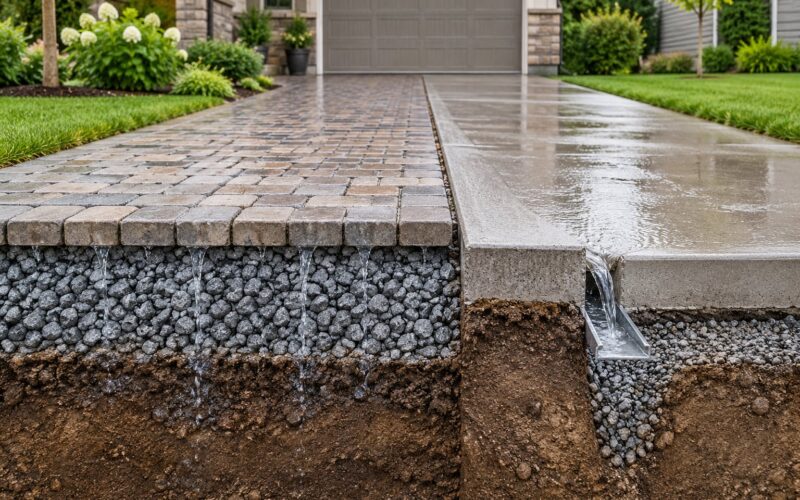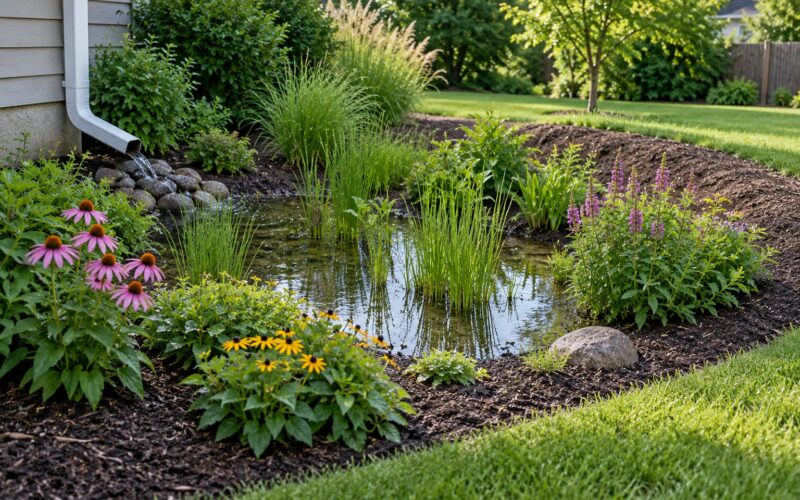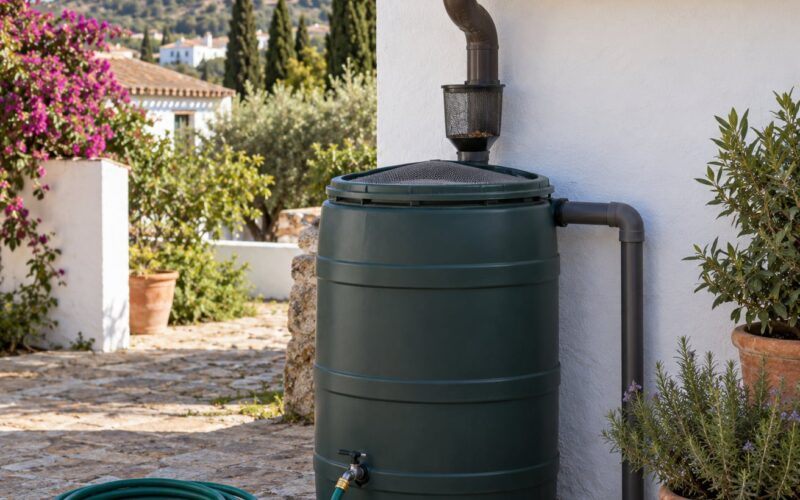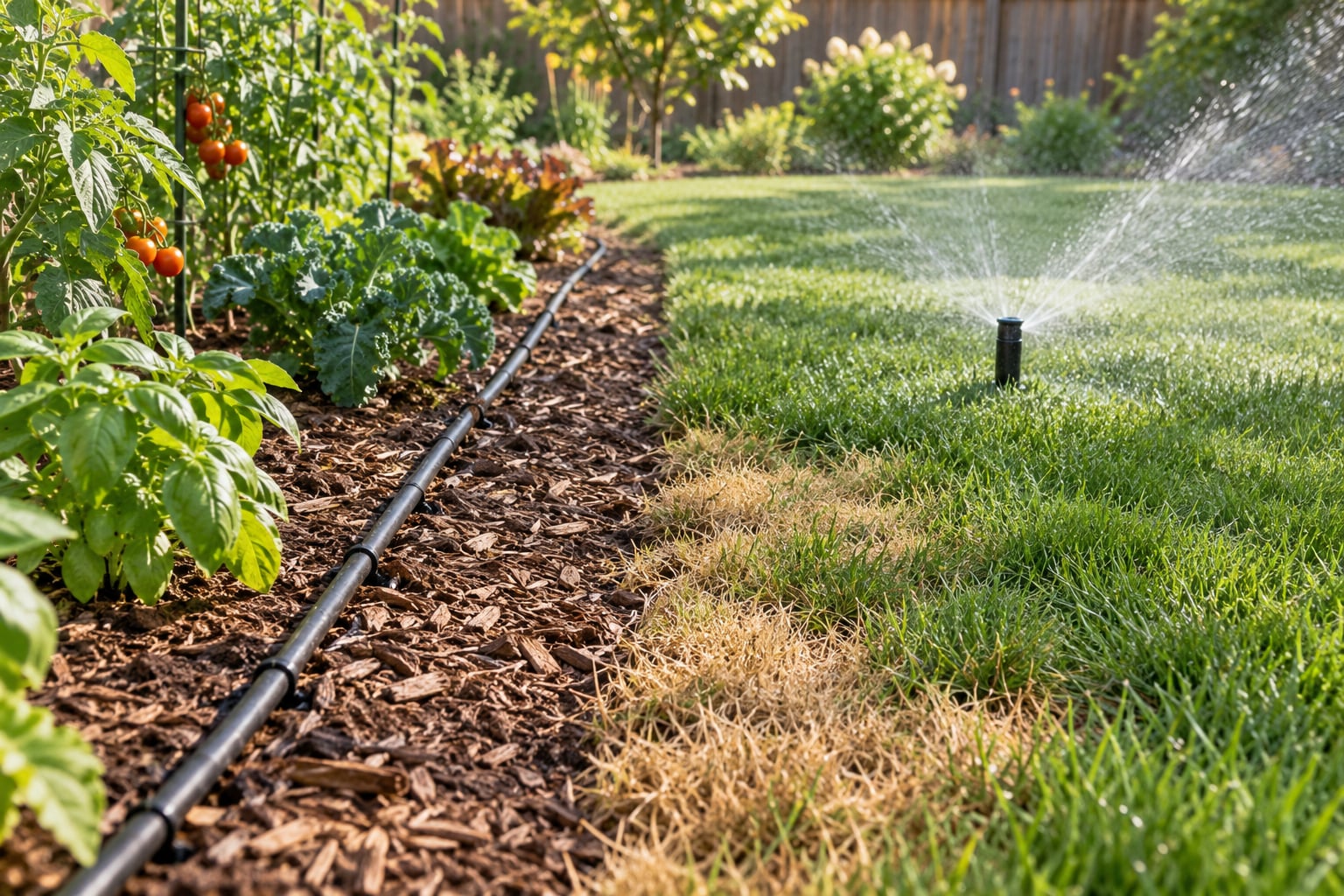
Drip irrigation loses less water than sprinklers on garden beds, shrubs, trees and containers, because it puts water straight onto the root zone instead of throwing it through the air. On turf, the answer flips: grass needs broad, shallow, uniform coverage that only overhead heads deliver well.
Short version of the drip irrigation vs sprinklers which saves more water question: on almost everything except lawn, drip wins on volume, and it usually wins by 30 to 50 percent once you correct an over-watering schedule. But the honest answer for most properties is a zone-based system that runs drip on the beds and sprinklers on the grass. Deciding between them is less about which device is efficient than about where your water is actually going.
Table of Contents
- Drip Irrigation vs Sprinklers: Which Saves More Water at a Glance?
- How Much Water Does Each System Use?
- Drip Irrigation vs Sprinklers: Typical Water Use
- How Do Evaporation, Wind and Runoff Affect the Comparison?
- Which System Is Better for Different Plants and Soils?
- What About Installation, Maintenance and Water Pressure?
- How Can Either System Use Less Water?
- Which Should You Choose?
- Frequently Asked Questions
- Does drip irrigation always save more water than sprinklers?
- Is a sprinkler more wasteful than drip irrigation?
- How often should I water a garden with drip irrigation or sprinklers?
- What type of sprinkler is most water-efficient?
- Can I convert a sprinkler zone to drip irrigation?
- Conclusion
Drip Irrigation vs Sprinklers: Which Saves More Water at a Glance?
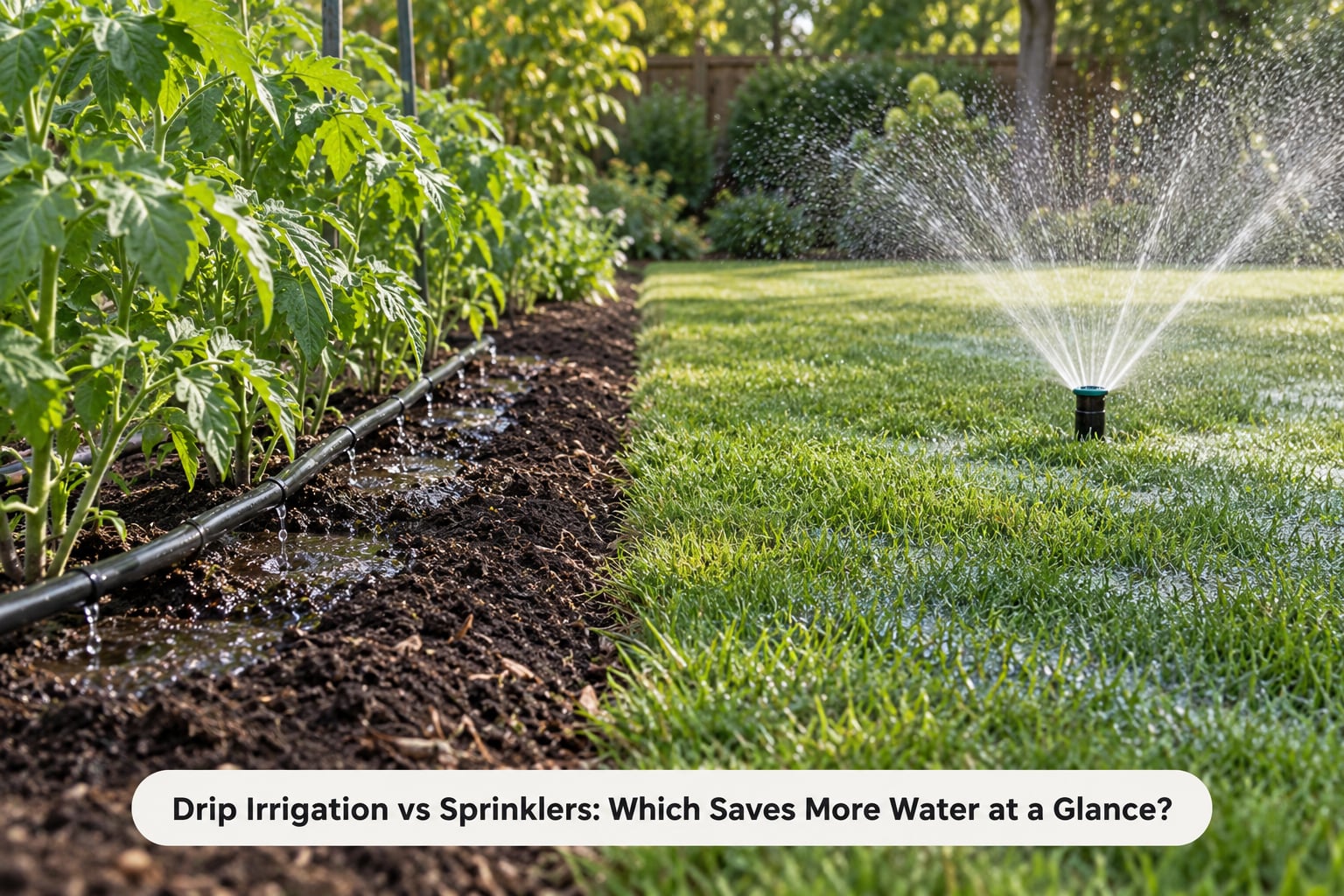
Well-designed drip irrigation usually wins on water saved, with application efficiency around 85 to 95 percent compared with roughly 65 to 85 percent for overhead spray. Efficient sprinkler systems, properly zoned and maintained, close much of that gap on a small lawn. Here is the comparison in one place.
| Factor | Drip irrigation | Sprinklers |
|---|---|---|
| Application efficiency | About 85-95% | About 65-85% |
| Water saved versus sprinkler use on beds | Typically 30-50% | Baseline |
| How water is delivered | Emitters on or just below the soil at each plant | Spray or rotor heads broadcast from above |
| Evaporation and wind drift | Low; almost no water travels through the air | Higher, and rises sharply on hot, windy days |
| Runoff on slopes and compacted soil | Low flow rate soaks in instead of sheeting off | High precipitation rate can pool and run off |
| Best planting | Vegetable beds, shrub borders, trees, containers, orchards | Turf, ground cover, large uniformly planted areas |
| Operating pressure | Low, usually 20-30 psi at the emitter | Higher, commonly 45-70 psi for spray and rotor heads |
| Ongoing maintenance | Flush filters and lines, find clogs, repair chewed tubing | Clean nozzles, correct alignment, watch for leaks and broken heads |
| Weeds and leaf disease | Fewer, because only intended areas get wet | Wet foliage encourages fungal disease and germinates weeds in overspray |
One caveat before you lean on any of those percentages: published efficiency numbers disagree because they are measured under different conditions. Warm, windy, low-humidity days produce the worst sprinkler numbers in the literature and the best drip numbers, because low humidity widens every evaporation loss. A comparison run in the same window on the same crop is the only fair one.
How Much Water Does Each System Use?
Water use has two halves, and only the second one matters for savings. How much water you apply is a choice you make with the controller. How much of that water reaches a root and gets absorbed is what the system decides for you.
Sprinkler water spends real time in the air. On a typical summer afternoon, a meaningful share of what leaves a spray head evaporates before it hits the ground, and wind drift can carry droplets sideways onto a driveway or a neighbour’s fence. Add runoff when the application rate outpaces what the soil can absorb, plus deep percolation below the root zone, and the usable share drops fast.
Drip water travels a few inches from an emitter to the soil. That short trip means far less evaporative loss, which is the entire mechanism behind the 30-50 percent saving quoted so often for beds and orchards. Runtime, spacing, emitter placement and controller settings then matter as much as the type of hardware you own.
Drip Irrigation vs Sprinklers: Typical Water Use
Hourly output is the number worth knowing, because it converts directly into runtime. Flow rates vary by brand and model, so treat these as planning ranges and check the label on what you actually install.
| Application type | Rough output | Typical use |
|---|---|---|
| Inline or button emitter | 0.5 to 2 GPH per emitter | Individual shrubs, trees, containers |
| 1/2 inch drip tape | About 0.5 GPH per 12 inches | Raised vegetable beds, row crops |
| Micro-sprinkler | About 4 to 8 GPH | Beds needing some air movement, wider coverage |
| Fixed spray head | About 12 to 20 GPM | Small lawn and shrub zones |
| Rotor head | About 8 to 15 GPM | Large turf zones |
A worked example makes the gap concrete. A 4 by 8 foot raised bed holds about 1.3 cubic feet of soil. Delivering half an inch of water to that surface needs roughly 40 gallons. Drip tape at 0.5 GPH per foot needs about 96 emitters to deliver 48 GPH, so a single four-foot section soaks that bed in about five minutes. A fixed spray head putting out 15 GPM covers roughly 8.7 gallons per minute, and half an inch over the whole bed takes under five minutes too but pulls far more water than the soil can use in one pass, so a good share runs off or drains past the roots.
The same logic scales up. A thousand square foot lawn needs roughly 62 gallons per week in peak summer for a healthy inch per week, and where that 62 gallons goes depends entirely on how the zone was built.
How Do Evaporation, Wind and Runoff Affect the Comparison?
Four loss pathways explain most of the difference: evaporation, wind drift, runoff and deep percolation. Drip nearly eliminates the first two and shrinks the other two, while sprinklers are exposed to all four.
- Evaporation. Water that sits on a leaf has a large surface area and warm air above it. Spray heads wet foliage directly, so overhead watering loses the most to evaporation.
- Wind drift. Droplets from a rotor head travel far enough to be caught and moved. Drip lines running under mulch are essentially immune to wind.
- Runoff. High precipitation rate on clay or compacted soil exceeds infiltration and water sheets downhill. Low-volume emitters apply slowly enough to soak in.
- Deep percolation. Water moving past the root zone is wasted water and can carry nutrients with it. Slow application reduces this too.
Climate changes the size of the gap more than anything else you buy. In humid, cool conditions, a well-aimed sprinkler zone loses little to evaporation and the two systems can end up within a few percentage points of each other. In hot, dry, windy weather, sprinkler losses climb steeply and drip pulls well ahead. Timing matters inside a single day: an early morning run loses far less than a mid-afternoon one.
Poorly managed either method can waste badly. A drip line left on flat clay soil for an hour will still pond and run off, and a sprinkler zone aimed at half pavement wastes half its output no matter how good the head is.
Which System Is Better for Different Plants and Soils?
Match the system to the plant’s root shape and the soil’s infiltration rate, and the choice usually makes itself.
| Planting or site | Better fit | Reason |
|---|---|---|
| Raised vegetable beds | Drip | Frequent, shallow, even moisture; keeps foliage dry |
| Shrub borders and foundation planting | Drip | Wide spacing between emitters wastes little water |
| Mature trees | Drip | One emitter ring per canopy delivers deep, slow water |
| Containers and greenhouse beds | Drip | Small, frequent doses suit limited soil volume |
| Lawn and turf | Sprinklers | Turf needs broad, shallow, uniform coverage to fill in evenly |
| Large ground-cover field | Sprinklers | Thousands of plants make drip tubing impractical |
| Sandy soil | Drip | Low volume soaks in before it runs through |
| Heavy clay soil | Drip or low-rate micro-sprinklers | Soak and cycle avoids pooling; plain drip may still need short cycles |
| Steep slope | Drip, run tape across the contour | Prevents the runoff a sprinkler zone would shed |
Turfgrass is the real exception, and it is worth being blunt about it. Lawns grow by tillering, which depends on evenly distributed shallow water across the whole surface. Point emitters wet a small circle and leave the rest of the root zone dry, so a lawn watered by drip goes patchy and thin unless subsurface drip is installed under the sod. For a lawn, a zoned sprinkler system is not a compromise, it is the correct tool.
Subsurface drip irrigation sits between the two. Installed below the root zone it eliminates evaporation and drift almost completely and can serve large turf areas, at higher cost and with little room for error when lines are damaged. It is worth considering for new installations on large properties, not for retrofits.
What About Installation, Maintenance and Water Pressure?
Drip runs at low pressure, usually 20 to 30 psi at the emitter, which is a genuine advantage: less pumping energy per gallon delivered, and far less pipe blowout risk. Sprinkler spray and rotor heads typically need 45 to 70 psi, so a sprinkler zone burns more energy for every gallon that reaches the ground.
Maintenance is where drip earns its reputation honestly. Expect to flush or clean the filter every few months, flush the lines after any repair, and replace clogged or damaged emitters. Emitters clog from hard water, algae and fertilizer, and they are also chewed by dogs, cut by garden tools and sliced when mulch is moved. Rodents find tubing attractive too. Plan on an annual walk-through of every bed.
Sprinkler upkeep is less frequent but heavier per visit: pop-up heads that stick and need replacing, nozzles that clog and reduce output, heads knocked over during mowing, and misaligned sprays wasting water on hardscapes. Winterizing means blowing out the lines before the first freeze, which is a job you should not skip.
On cost, the comparison depends entirely on area, layout and how much of the system you already own. Converting an existing sprinkler zone to drip is far less work than installing a new system from scratch, and the sunk cost is real even when it never shows up in a comparison. What is fair to say is that drip lowers the water bill line more reliably over time, while sprinklers cost less to install and more to run.
Local rules matter too. Many water districts restrict sprinkler use by day and hour while allowing drip on any day, which can reshape the economics of a garden in a dry summer. Some utilities offer rebates for converting lawn to drip or for water-wise controllers.
How Can Either System Use Less Water?
Both systems leak water when they are mis-set, and the fixes are the same: measure first, then schedule.
- Water early. Start before sunrise or in the early evening. Less water escapes as vapour, and foliage has time to dry, which lowers disease pressure.
- Group plants by demand. Put thirsty beds on one zone and shrubs on another. Scheduling everything to the thirstiest plant wastes water on the rest.
- Fix overspray first. Misaligned heads throwing water onto pavement are the fastest loss to recover. A catch can will show you where.
- Soak and cycle. Run short cycles with rest between them instead of one long cycle. Soil absorbs more per pass and you lose far less to runoff.
- Keep filters and emitters clean. Clogged emitters deliver less than the design flow, so you run longer and use more water for the same result.
- Mulch bare soil. Mulch cuts evaporation from the surface and keeps soil temperature down.
- Adjust the schedule seasonally. A rain sensor or weather-based controller does this automatically; a manual tweak each season does it well enough.
- Match the application rate to the soil. Slow rates on clay, faster on sand.
Two comparisons worth running on your own property. First, put a catch can or a straight-sided tuna can on the lawn, run the zone for 15 minutes, and measure the depth. Multiply by four for the hourly precipitation rate, then by the zone area, and you have gallons per cycle. Do the same with a measuring jug under one drip emitter for the same window. Second, read your water meter before watering and again 24 hours later, over a month, with one system in use. That measured number beats every published percentage.
Which Should You Choose?
Choose drip for vegetable beds, shrub borders, trees, containers, slopes and anywhere you are trying to stretch a restricted supply. Choose sprinklers for turf, ground cover and large areas planted uniformly. Run both if you have both, and put them on separate zones so each gets its own schedule.
Before buying anything, spend a month measuring. Note which zones run on which days and for how long, read the meter on the first of the month and again at the end, and record which plants looked stressed. Then run the same period with beds moved to drip or with sprinkler runtimes trimmed by a third, and compare the two meter readings. You will get a figure specific to your property and your water price, which is worth more than any national average.
One more honest point on cost: savings show up on the bill only if the schedule changes. A drip system left running for the same wall-clock time as the old sprinkler zone can use more water than before, not less. Measure, then set the schedule, then judge the system.
Frequently Asked Questions
Does drip irrigation always save more water than sprinklers?
No. Drip saves water on beds, trees and containers because it delivers to the root zone with almost no evaporation or drift. It loses its advantage on turf, where grass needs broad uniform coverage, and on clay soil or a slope if you run it too long, where water still runs off. The measured saving also depends on whether the schedule was corrected, not just the hardware swapped.
Is a sprinkler more wasteful than drip irrigation?
Usually, yes, mainly through evaporation, wind drift and overspray onto paths and walls. The gap widens in hot, dry, windy weather and narrows to a few points in cool, humid conditions with well-aimed heads. A correctly zoned rotor system on a lawn is not wasteful. It is doing the job turf requires.
How often should I water a garden with drip irrigation or sprinklers?
By soil moisture and season, not by calendar. Check a finger’s depth in the soil or use a moisture sensor before watering. Deep-rooted beds and trees need long, infrequent soak-and-cycle runs; shallow-rooted greens and containers need frequent short ones. In peak summer, most lawns in warm regions still need roughly an inch of water per week spread across several days.
What type of sprinkler is most water-efficient?
Rotors and high-efficiency nozzles generally outperform fixed spray heads, because they apply water more uniformly at a lower precipitation rate. Many water districts define a water-wise sprinkler as one meeting at least a 70 percent efficiency standard, and paired with drip emitters rated at 2 gallons per hour or less. Verify which definition your local utility actually uses.
Can I convert a sprinkler zone to drip irrigation?
Yes, and it is usually the cheapest way to cut water use on an existing property. Close off the heads or cap the manifold, run new tubing along the beds, add a filter and pressure regulator, and wire the zone to the same controller valve. Re-plan the layout rather than swapping hardware, because drip has to sit at each plant, and expect some digging in established root zones.
Conclusion
The drip irrigation vs sprinklers which saves more water question comes down to one thing: where the water needs to land. Drip wins on almost everything except lawn, because it puts water where roots are instead of into the air, and the difference is usually 30 to 50 percent once schedules are corrected. The right first move is to map which planting areas are turf and which are beds, check soil moisture in a few spots before watering, and compare a month of meter readings before and after a change. Sprinklers stay the right tool for grass; drip wins almost everywhere else.
Sources: University of Rhode Island (approximately 90 percent application efficiency for drip versus 65 to 75 percent for sprinklers); Colorado State University Extension (turf performs best with sprinklers, shrub beds with drip); Oregon State University Extension (drip gives deep watering with less evaporation than surface methods); City of Lakewood, California Urban Water Management Plan (water-wise rotor standard and drip emitter flow limits); W.K. Rec. / K-State subsurface drip irrigation research.