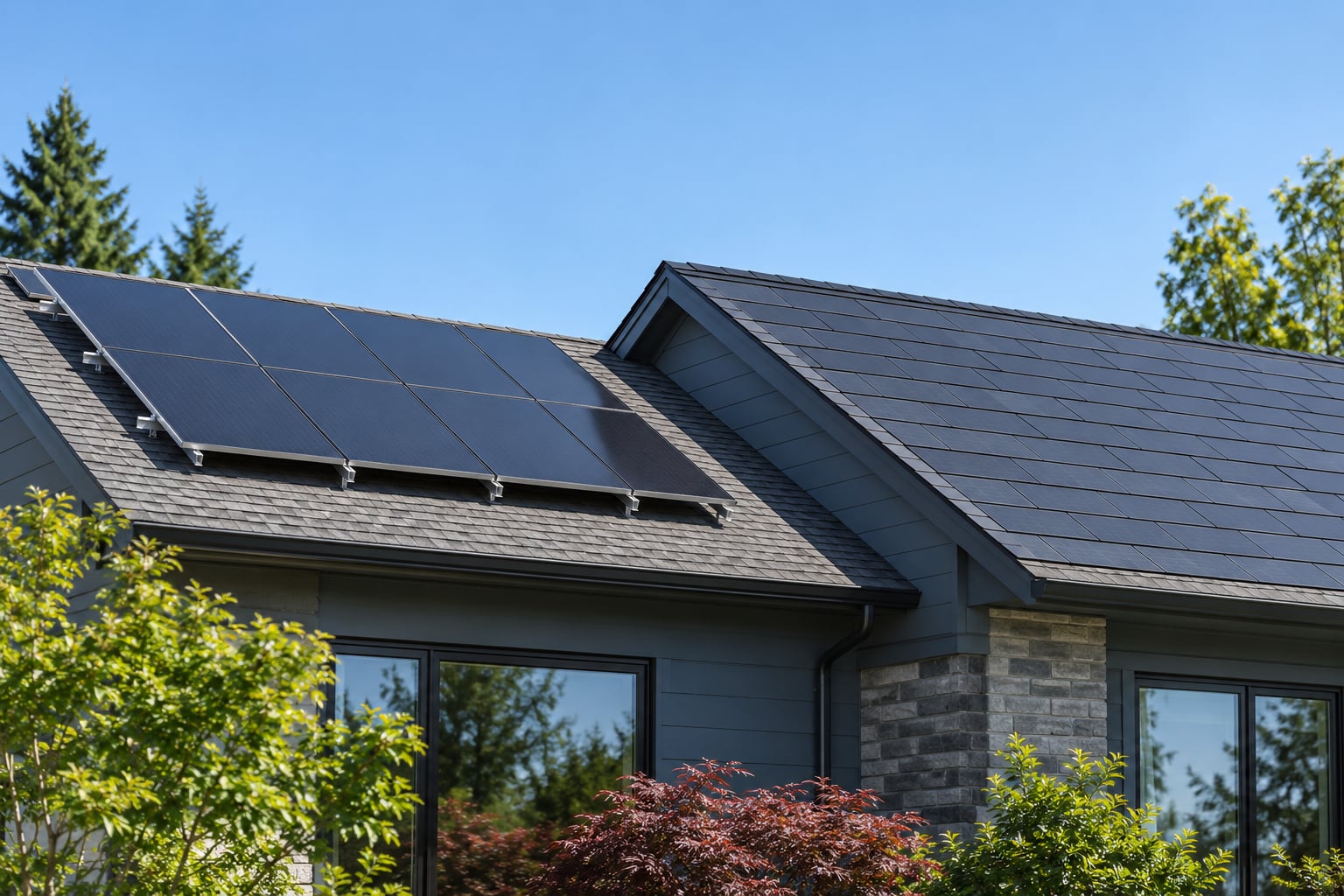
If you want the most electricity for the least money and your roof is in decent shape, solar panels are the better buy. Solar shingles win on looks and on roofs that need replacing anyway. The difference is simple: panels sit on top of your shingles, while solar shingles replace them and become the roof.
That single design choice drives everything else — cost, efficiency, repair complexity and how long the job takes. This guide walks through the practical differences so you can match the system to your house, your budget and your plans for the next twenty years. Costs here are described as ranges and drivers rather than fixed prices, because what you pay changes with your roof, your utility and your region.
Table of Contents
- Solar Panels vs Solar Shingles for Home Roofs at a Glance
- Appearance and Roof Design
- Solar Panels vs Solar Shingles: Efficiency and Energy Production
- Installation and Roof Compatibility
- New construction versus an existing roof
- Finding a crew that can do the job
- Cost and Return on Investment
- Durability, Maintenance, and Warranties
- Which Should You Choose?
- Frequently Asked Questions
- Are solar shingles better than solar panels for a home roof?
- Do solar panels or solar shingles last longer?
- Can solar shingles be installed on an existing roof?
- Do solar panels reduce a home’s resale value?
- How much do solar panels versus solar shingles cost in the US?
- Solar Panels vs Solar Shingles: Where to Start
Solar Panels vs Solar Shingles for Home Roofs at a Glance
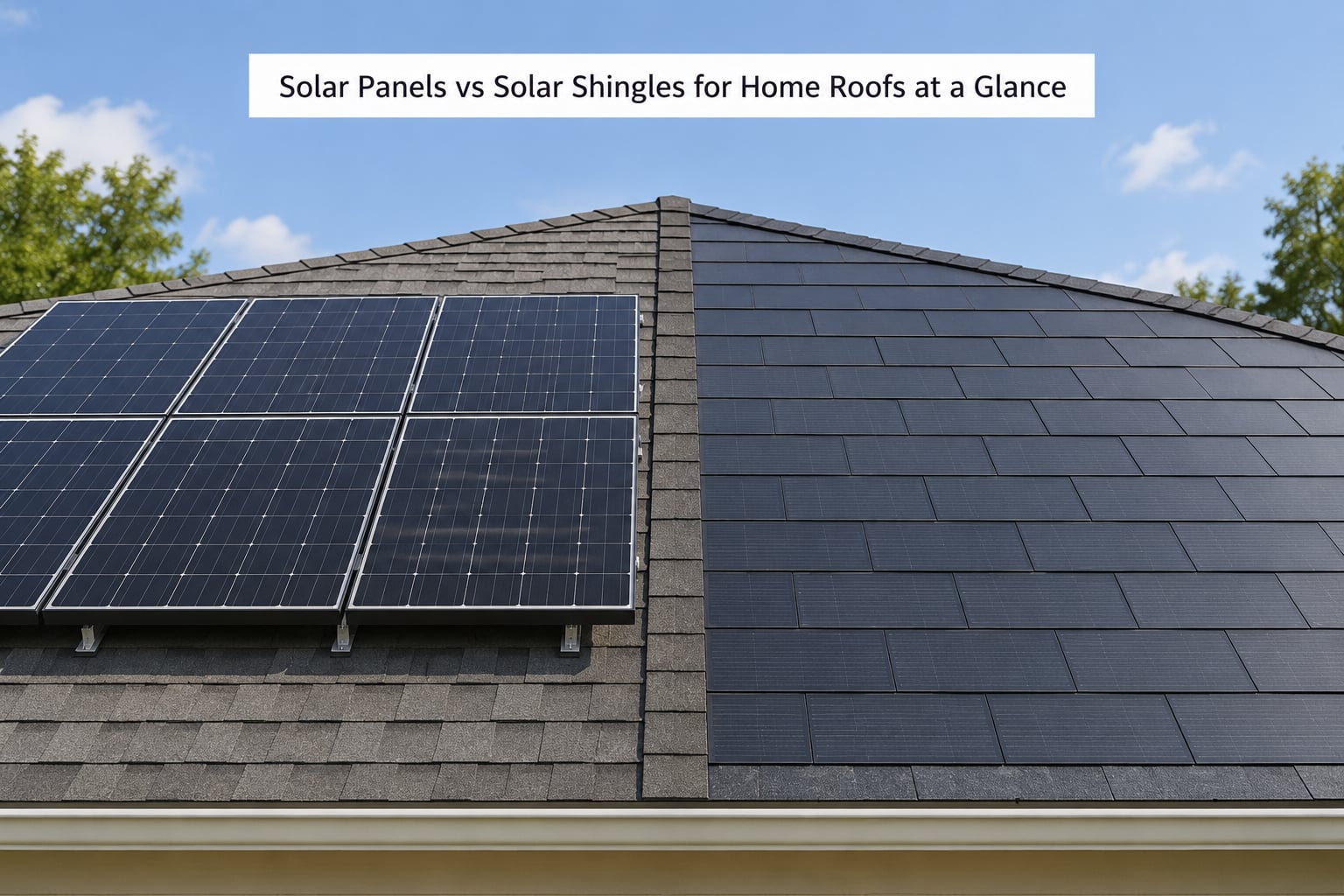
Here is the short version before the details. Every row below is something homeowners actually argue about at the kitchen table.
- Appearance: panels add a visible layer of hardware to your roof; solar shingles look like ordinary roofing from the street.
- Typical system cost: panels are the cheaper route by a wide margin. Homeowners comparing quotes commonly report solar shingle projects running roughly two to three times the price of a comparable panel array, once roof work is counted.
- Efficiency per square foot: conventional modules convert a higher share of the light that hits them, so panels usually produce more power from the same patch of roof.
- Roof coverage: panels can go on almost any usable slope and can be angled toward the sun; solar shingles follow the roof plane exactly, so the roof itself sets the angle.
- Installation: panels leave your shingles in place and usually take a few days. Solar shingles mean a full tear-off, a roofing crew, an electrician and a longer schedule.
- Maintenance: panels are easy to see, clean and swap individually. Solar shingles hide their wiring, and a fault can be harder to trace.
- Durability: panels sit proud of the roof and take the weather directly. Solar shingles are the weatherproof layer, so their warranty has to cover both roofing and power production at once.
- Warranties: panel makers cover power output and hardware separately; shingle warranties bundle a 25-year roofing warranty with a separate 25-year performance warranty.
- Best fit: panels suit most existing homes. Shingles suit new builds, planned roof replacements, and houses with HOA or historic-district rules that make mounted panels a fight.
Appearance and Roof Design
Solar panels are equipment sitting on a roof. You see the frames, the racking and the gap of air underneath, and they read as an addition rather than part of the house. Solar shingles are roofing that happens to make power — from the curb they look like a normal shingle roof in the color you picked.
That difference matters more than most people expect at the start. A panel array changes the silhouette of a house, and on a street with similar homes it stands out immediately. If you are in a historic district or under an HOA with design rules, shingles are often easier to get approved, because reviewers see a roof rather than a machine bolted to one. Homeowners weighing this on roofing forums tend to converge on the same conclusion: the approval process, not the money, is what settles it in a regulated neighborhood.
Roof geometry is the other factor, and it works against shingles. On a simple gable roof, a panel installer can choose the best tilt and lay modules in neat rows across the largest south-facing plane. Solar shingles have no such freedom — the cell angle is whatever your roof pitch happens to be, and a shallow slope caps output.
Complex roofs hurt both options differently. Dormers, chimneys, skylights, valleys and multiple roof planes break up the usable area, and panels skip those awkward spots entirely. Shingles, by contrast, keep generating right up to the obstruction because the roof surface itself is the array, so the loss is more gradual.
One practical point that gets overlooked: a walked-on solar roof needs a defined path for anyone who has to get up there later, for a roofer or a chimney sweep. Manufacturers design certain shingle styles to be walkable and others not to be, so ask about it before you commit to a color and layout.
Solar Panels vs Solar Shingles: Efficiency and Energy Production
Panels win on efficiency per square foot. A mainstream crystalline module converts a bit over a fifth of the sunlight that reaches it, while most solar shingle products land somewhere in the range of ten to fifteen percent. On a small or awkward roof, that gap decides whether your system makes enough power to be worth installing.
That per-square-foot gap is the number that matters, and here is why the two systems diverge. Panels stand off the roof on a racking frame, so air moves behind them and the cells run cooler. Solar shingles sit flush against the deck, so the roof surface transfers heat straight into them on a hot afternoon. Every cell has a temperature coefficient — output falls slightly for every degree above its rated test temperature — and a flush-mounted array spends more of the year on the hot side of that line. In a desert climate that penalty is noticeable; in a mild coastal climate it is smaller than you would expect.
Orientation is where panels pull further ahead. Because the frame is adjustable, an installer can set modules to face south, or split the array east and west if your usage peaks in the morning and evening. The roof pitch sets the shingle angle and cannot be adjusted, so a north-facing plane stays north-facing.
Shading behaves differently too. A single panel knocked loose or shaded by a chimney limb takes one string out of the system, and with microinverters or module-level power electronics the rest keeps running. A shaded shingle string can drag down more of the array, because the electrical path runs through the roof plane. Rooftop vent pipes and satellite dishes also cast small shadows across shingles that would be harmless sitting above a panel’s edge.
Total available area is the quiet advantage of shingles. A roof with several planes may only offer clean mounting zones for a limited number of panels, while solar shingles can cover the whole slope. If your design is constrained by roof area rather than money, that is worth weighing against the efficiency loss per square foot.
On cold and snowy roofs, panels have the edge again — a steeper tilt sheds snow, while a flush shingle surface gives snow somewhere to sit. Homeowners in cold climates writing in on solar forums tend to choose panels for exactly that reason.
Installation and Roof Compatibility
Retrofitting panels is the least disruptive job in home solar. The crew attaches a racking system to the rafters or deck with flashed penetrations, runs conduit to an inverter, and leaves the existing shingles alone. A typical residential array goes up in two to four days with a small crew, and the roof underneath is still the roof you already had.
Solar shingles are a construction project, not an add-on. Every shingle is fastened and wired, flashing is woven into the roof, and the tear-off exposes the deck for days at a time. The job needs crews who can do roofing and electrical work, which is exactly why availability is such a big differentiator in some markets.
New construction versus an existing roof
If you are building, shingles are the cleaner decision. The roof gets built with the solar in it from day one, so there is no double handling of materials and no need to schedule a future tear-off.
If your roof is ten to fifteen years old and still sound, panels are the cheaper call. Homeowners with perfectly good roofs are reluctant to replace them purely for shingles, and they are right to think it through — a roof you did not need to remove is a roof you did not have to pay for.
If a roof replacement is already on the calendar within the next few years, shingles become genuinely competitive. At that point you are comparing the cost of a solar roof against a new shingle roof plus panels, and the gap narrows a lot. That is the scenario where the extra cost buys you the most.
Finding a crew that can do the job
Panel installers are everywhere. Certified solar shingle installers are not. Roofers in the trade point out that these systems need both skills at once, and a crew that only does one of them will either subcontract the other or slow the job down. Ask for a crew that has finished several projects of the same product in your climate, and ask to see one.
Lead times deserve a reality check too. Owners of one widely discussed solar roof brand report waiting six to eighteen months for installation after signing, with a lot of the delay happening before a crew is even assigned. Get the installation date in writing, and ask what happens to your timeline if it slips.
Cost and Return on Investment
Panels are cheaper, and no incentive changes that. When people compare the two, the honest framing is that solar shingles carry a roofing and electrical project plus a solar project, while panels are only the solar project. Most homeowners see quotes for the shingle option landing in the range of two to three times a comparable panel system, and that spread has not closed in the years this technology has been sold in the US.
What drives the panel number: system size in watts, module and inverter brand, whether your electrical panel needs upgrading, roof complexity, permitting, and how many crews are competing for work in your area. What drives the shingle number: all of the above plus a full tear-off, new underlayment, the cost of the solar roofing material itself per square foot, and the specialized crew.
Several things can move a shingle quote down or up by a wide amount, and they are worth asking about directly. Tax treatment of the roof, whether the project is partly a deductible roof repair, whether a battery is included, and how the quote handles a deck that turns out to need repairs once the old roof comes off. A clear quote should separate roofing line items from solar line items so you can see what you are paying for.
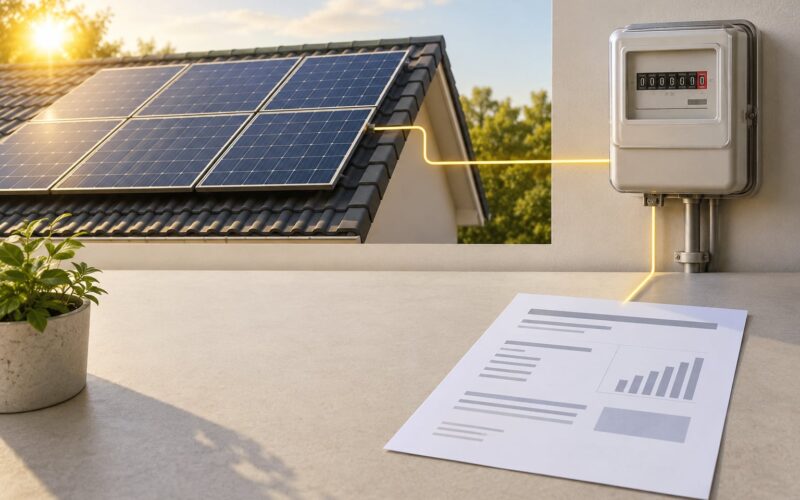
On incentives, the federal residential clean energy credit has applied to many recent systems at a rate around 30 percent of eligible cost, and it has been changing under recent federal legislation, including phase-down steps. The rules depend on when your project is placed in service and on who owns the system, and they differ for a homeowner’s own roof versus a leased arrangement. Check the current schedule with the IRS before you build a budget around it, and confirm with a tax professional how much of a full solar roof counts as eligible cost. State and utility incentives vary widely, so look at what your own region offers.
Payback works out differently for the two. A panel system on a well-sized roof usually reaches a simple payback somewhere in the high single digits to low teens of years. A solar shingle system carries a higher bill, so unless the roof replacement was going to happen anyway, the payback stretches out. Utility rates matter enormously — a household on a high tier with net metering gets a much better return than one on cheap off-peak power, and that can flip the decision.
Financing widens the choice. A cash buyer with a good roof picks panels. A buyer financing a new roof anyway can spread the solar across the same loan, which makes the incremental cost easier to carry.
Durability, Maintenance, and Warranties
Panels have a long service life and a simple failure profile. Most arrays last 25 to 30 years before the modules themselves need replacing, and when one fails you replace one panel or one string. They are visible from the ground, so a roofer or technician can spot a problem without opening anything up.
Solar shingles carry two warranties that people confuse: a 25-year roofing warranty for weather tightness and a 25-year power output warranty. Both matter, and both have exclusions. A leak is a roofing problem, a dark cell is an electrical problem, and the boundary between them sits in a seam that nobody can see from the street.
That leads to the worry homeowners raise most on forums — points of failure. A 20-panel array has 20 units that can fail. A shingle roof can have hundreds, and the wiring between them is hidden under the surface. A single damaged shingle is usually replaceable without redoing the roof, but the diagnosis takes longer and the repair has to be done by someone who works on solar roofing, not a general roofer.
There is one more shingles-only effect worth knowing: attic heat. Because the shingle surface is the roof surface, energy that a panel array would reflect away is absorbed instead, and the underside of the deck runs warmer. On a roof replacement, it is worth asking the roofer about underlayment, radiant barrier choices and ventilation, since you are already paying to open the roof up.
Cleaning is roughly a wash. Neither needs much attention, and neither should be walked on casually. If you have a lot of trees, panels collect dust and pollen on a tilted glass surface; shingles wash off in the rain but collect moss in shaded areas like any roof.
Which Should You Choose?
Choose solar panels when most of these are true:
- Your roof is in good condition and you would rather not replace it.
- You want the lowest total cost and the fastest payback.
- Your roof is small, so output per square foot matters most.
- You want the freedom to tilt the array toward the sun or split it east and west.
- You care about panel-level monitoring and easy individual repairs.
- You live somewhere cold or snowy and want panels to shed snow.
Choose solar shingles when most of these are true:
- You are building a new home and can build the solar into the roof from the start.
- A roof replacement is happening within a few years regardless.
- Your HOA or historic district makes mounted panels difficult to approve.
- Curb appeal is a genuine priority for you and your household.
- Your roof has many small planes where panels cannot be mounted cleanly, and you want the full roof producing.
If you are genuinely torn, the tiebreaker is usually the roof’s remaining life. A sound roof with ten good years left favors panels. A tired roof on a twenty-year-old house favors shingles, because the roofing spend was already on the list.
Frequently Asked Questions
Are solar shingles better than solar panels for a home roof?
It depends on your roof and your priorities. Panels cost far less, produce more power per square foot and are easier to repair, which makes them the better choice for most existing homes. Solar shingles win when the roof is being replaced anyway, when you are building new, or when HOA or historic rules make mounted panels hard to approve.
Do solar panels or solar shingles last longer?
Both last roughly a quarter century or more, but they fail in different ways. Panels sit above the roof, so a failed unit is visible and replaceable on its own. Solar shingles are the weatherproof layer, so their warranty covers both roofing and power output, and a fault means calling a crew that works on solar roofing rather than a general roofer.
Can solar shingles be installed on an existing roof?
Only in the sense that the old shingles come off. Solar shingles replace the roofing material, so a full tear-off and new underlayment are part of the job. That is why the economics change once you compare a solar shingle roof against a new shingle roof plus a panel array, and why replacing a perfectly good roof early rarely pays off.
Do solar panels reduce a home’s resale value?
Usually not. Buyers generally treat a solar system as a selling point rather than a defect, and an owned system usually transfers with the property. Appraisal treatment varies, though, so a low appraisal after your install can sting even when the system is fine. Solar shingles carry an extra question for buyers: will they find a roofer who can service it later.
How much do solar panels versus solar shingles cost in the US?
Panels are consistently the less expensive route, and homeowners comparing quotes commonly report solar shingle projects running roughly two to three times the price of a comparable panel array once roofing work is counted. The gap narrows when a roof replacement was already planned. What you pay depends on system size, roof complexity, electrical upgrades, permitting and incentives in your region.
Solar Panels vs Solar Shingles: Where to Start
Start with a roofer’s opinion on your roof, not a solar sales pitch. Get a clear answer on how many years your shingles have left, then price two quotes: a panel array sized to your usage, and a solar shingle roof. Compare what each quote says about the roofing work, the electrical work and the timeline, line by line.
Most homes end up with panels. The ones that end up with shingles are usually replacing a roof anyway or care more about how the house looks from the street than about the return on the money.