To report wildlife poaching or habitat destruction in Spain, move to safety first, then document what you can see from a distance and send the details to the authority with jurisdiction over that exact spot. The call you make in the first hour matters: 112 for anything urgent, the Guardia Civil for crimes against wildlife and protected species, and the regional or basin body for damage to land, wetlands and waterways. Most successful cases start with a phone call from somebody who happened to be there.
I have talked to rangers, forestry guards and river basin staff about this for years, and the same three things come up every time: reports without a location get closed, reports that involve touching evidence get thrown out, and reports filed days late rarely lead anywhere. None of it is complicated. It just needs doing in the right order.
This guide covers the whole process, from what to write down before you dial, to which body handles which kind of damage, to what happens after you hand the report over. It also covers what not to do, which is the part most people get wrong.
One thing to clear up first: this site does not run a tip line, has no enforcement power and cannot rescue animals or investigate anything. We are a conservation information site. The numbers and routes below are the public ones you can also find on each agency’s own page.
Table of Contents
- What You Need Before You Report
- The exact location, described two ways
- The date and a rough time window
- What was affected, identified as specifically as you can
- Photographs and video from a safe distance
- Witness details
- The authority responsible for that piece of land
- Step-by-Step: How to Report Wildlife Poaching or Habitat Destruction
- 1. Make sure everyone is safe first
- 2. Record the incident without disturbing the scene
- 3. Preserve evidence safely
- 4. Report wildlife poaching or habitat destruction to the right authority
- 5. Submit a complete written report
- 6. Keep a reference and follow up
- Common Mistakes and Reporting Tips
- Confronting or following the suspects
- Posting the location publicly
- Touching or moving evidence
- Waiting to see if you are sure
- Calling the wrong organisation
- Sending a vague report
- Buying to rescue an animal or product
- Frequently Asked Questions
- What should I do first if I see active wildlife poaching?
- Can I report wildlife poaching anonymously in Spain?
- Should I move an injured animal or remove evidence myself?
- Where do I report damage to a protected habitat or wetland?
- What evidence is useful when reporting an environmental crime?
- What should I do if I fear retaliation after making a report?
- Conclusion
What You Need Before You Report
Most of the work happens before you make contact, and it takes about five minutes if you write it down properly. Gather these six things and your report will be usable.
The exact location, described two ways
A name or a pin is not enough on its own. Write the nearest hamlet or track junction, the name of the stream, road or parcel, and if your phone shows it, the coordinates. Refuges and protected areas often have toponyms that differ between the map you carry and the map the agency uses, so add both. Take a wide photograph that shows the surrounding landscape, not just a close-up of the damage.
The date and a rough time window
Note when you saw it and when you last saw the place before that. Officers often need to know whether the site was checked the previous day, because that narrows the search enormously. If you are watching activity repeat, keep a short log of dates, times, vehicle descriptions and how many people came.
What was affected, identified as specifically as you can
“A dead bird” leads nowhere. “A red kite with one wing, on the riverbank below the footbridge, roughly the size of a domestic goose” gives a warden something to work with. For habitat damage, name the feature: a drained channel, a bank cut back to bare earth, a fenced block with tracks, a spoil heap, a pipeline trench, cleared scrub with no permit notice. Species identification apps help, but a clear description is better than a wrong confident identification.
Photographs and video from a safe distance
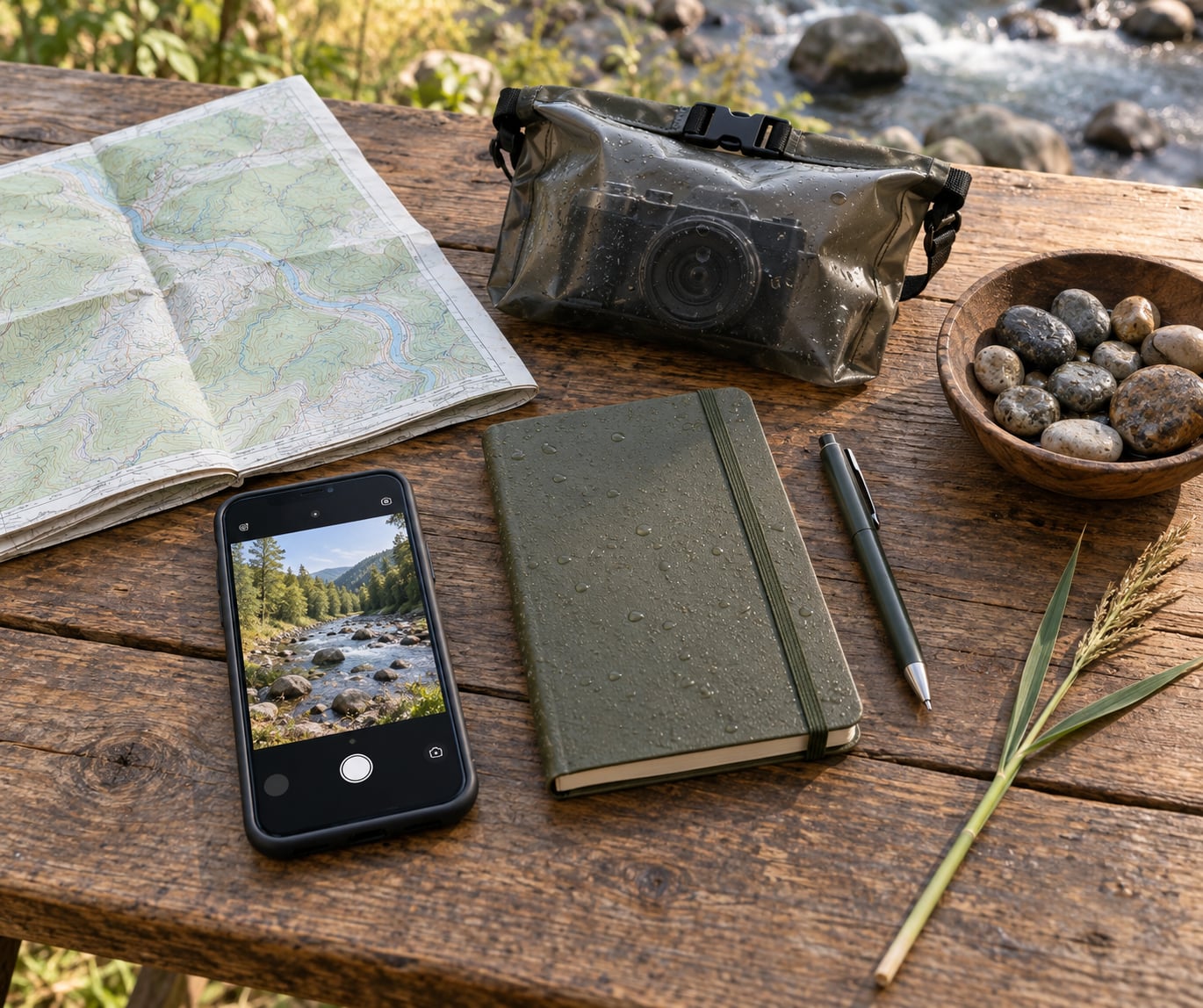
Wide shots first, then detail shots, then anything with scale in it: a familiar object next to a cut, a fence post, a car for a road. Keep the camera’s original file with its timestamp if you can. Do not stage anything back into position after the fact.
Witness details
If anyone else saw it, get a name and a phone number, and note the time you exchanged details. Do not put witnesses in a group chat where the suspect can read it. If a witness prefers to stay unnamed, write that down too and note what they observed.
The authority responsible for that piece of land
This is where most people give up, and the answer is usually simpler than they think. Spain is divided into seventeen autonomous communities plus two autonomous cities, and the body with jurisdiction depends on both where you are and what was damaged. If the incident is inside a national park or national hunting reserve, the park’s own service takes it. If it is in a Red Natura 2000 site, the regional authority and the site manager both have a role. If it is a river, a wetland or an aquifer, the basin confederation is involved. Wildlife crime itself sits with the Guardia Civil, and protected species with the Servicio de Protección de la Naturaleza, usually called SEPR.
Step-by-Step: How to Report Wildlife Poaching or Habitat Destruction
Six steps, in this order. Skipping step one is how people get hurt.
1. Make sure everyone is safe first
Put distance between yourself and any person involved. If a crime is in progress, if there is a weapon, if anyone is injured, if there is fire, or if a chemical or fuel spill is threatening a watercourse, call 112 immediately and describe the situation and the access point for emergency vehicles.
Do not approach, follow, film at close range or try to talk anyone down. Wildlife crime is frequently organised, and the people doing it are sometimes armed and sometimes connected to networks with a lot to lose. Retaliation against people who report is a real concern in rural and remote communities, and it is one of the top worries people raise when they ask about reporting.
Keep children and dogs away, especially at dusk. Snares, wire and damaged ground are the reasons behind that instruction more than any other.
2. Record the incident without disturbing the scene
Stay where you can see the area and do not walk into it. Walk-ins destroy tracks, scatter remains and remove scent, and they put you where you have no business being.
Write down what you can observe: the extent of damage, the direction vehicles came from, tyre marks, boot prints, gates that have been forced, litter left behind, the time of any noise or engine you heard, and whether anything looks recent. Note access routes, because a 4×4 and a patrol car are not always looking for the same track.
Record how you found the place. If a dog led you there, if a fence had been cut, if someone had told you about it, that is all part of a useful picture.
3. Preserve evidence safely
Photograph and film from where you stand. Start wide, then move closer by lens or zoom rather than by walking. Capture the position of every item in the frame rather than one close-up of a single object.
Do not collect anything. Do not pick up remains, plants, soil, cartridges, wire, poisons or weapons, and do not move a dead animal to the roadside to make it visible, not even with gloves on. Handling evidence without a warrant and without a trained scene process breaks the chain of custody, and officers may then be unable to use it, which helps nobody and may destroy the only prosecution that was available.
Write down witness details while you are there, and leave. If you do end up touching something in a genuine emergency, for instance moving an injured animal out of traffic, say so honestly in your report. Officers can work around a declared emergency move; they cannot work around an undisclosed one.
4. Report wildlife poaching or habitat destruction to the right authority
This is where the phrase turns into a phone call or a form. Use the table below to match the damage to the body that can act on it, then send the report to that body and, where it seems relevant, to a second one as well. Sending a copy of the same facts to two competent authorities costs nothing and often speeds things up.
| What you saw | Who to contact | How |
|---|---|---|
| Poaching, illegal killing of protected species, snares, illegal firearms use, trafficking | Guardia Civil, Environment section (UCI) | 112 for urgent cases, or the published non-emergency line for the area |
| Protected species, dead birds of prey, bat roosts, nests, poisoning | Servicio de Protección de la Naturaleza (SEPR), regional government | Regional environment line, plus the Guardia Civil if a crime is suspected |
| Inside a national park or national hunting reserve | The park’s own service | Park ranger post or the regional environment line |
| Drainage, dredging, bank works, discharge into a river or wetland | Confederación Hidrográfica for that basin, plus the regional water authority | Online complaint form plus written submission with evidence attached |
| Protected habitat altered inside a Red Natura 2000 site | Regional government environment department and the site manager | Regional environment line; ask for the Red Natura 2000 site record |
| Illegal timber clearing, roads, quarrying, earthworks on rural land | Regional forestry service, environmental police, municipality if unpermitted works are suspected | Written complaint with the parcel reference from the cadastre |
| Off-road damage, unauthorised tracks, motorbikes in a reserve | Regional environment department, park service where relevant, municipality | Written complaint with photos and coordinates |
| Selling live animals, eggs, ivory, shells or other parts online | Guardia Civil, plus the platform’s own reporting tool | Screenshot first, then report both the seller and the listing |
Contact routes change between autonomous communities, so search for the body using its official name plus your region rather than a generic term. Write the report yourself instead of dictating it into a phone line if you can, because a written record is the one that survives. If you are travelling and you saw the offence abroad, report it in that country to its national wildlife or customs authority, and separately report the purchase or import at home to your own customs service.
5. Submit a complete written report
Keep it factual and chronological. Agencies act on dates and locations, not on impressions. Your report should contain these things:
- Your name and a phone number or email you actually read, and whether you are willing to be contacted
- The exact location in two forms: written description and coordinates
- Date, time window and how you came to be there
- What you observed, described concretely rather than interpreted
- Species, plant community or habitat feature affected, with your confidence level stated plainly
- Evidence files attached, with original timestamps intact
- Witness names and contacts, and who is already aware that you reported
- What you think is happening and what you would like checked, marked clearly as your view
- Whether there is immediate risk to people, livestock or water supply
Number your paragraphs and label attachments. If you are submitting a form that asks for a single narrative box, paste the same structure in order rather than compressing everything into one sentence.
6. Keep a reference and follow up
Save the reference number, the date, the name of whoever took your report and the channel you used. Agencies differ on how much they will share, but a reference is standard on formal written complaints and many tip channels too. Keep every original photo in a second place.
If nothing happens within a reasonable period, follow up in writing with the original reference number rather than making a fresh report. A repeat submission starts the process again; a follow-up moves the existing one.
Stay alert to continuing damage and to any change in how people treat you after reporting. If you feel unsafe, say so in the follow-up, because that changes how the case is prioritised and it can trigger a conversation about personal safety measures. If damage continues after a report, photograph the new date’s damage and report it as a separate incident with its own dates.
Common Mistakes and Reporting Tips
These are the errors that cost people their reports, and most of them are made in the first ten minutes.
Confronting or following the suspects
Never. Not to reason with them, not to film them at close range, not to ask for an explanation. Report from a distance and let the authority with the powers handle it.
Posting the location publicly
Do not put a live location, a nest, a den, a carcass or an active camera trap position on social media, even in a group you trust. Geotagged images travel, and they travel to people who should not have them. Wait until enforcement has acted.
Touching or moving evidence
Picking up remains, wire, cartridges or soil breaks the chain of custody. Photograph and leave.
Waiting to see if you are sure
You do not need proof. Officers confirm facts, that is their job. A well-described suspicion is worth more than a certain fact reported three weeks late. Report first, correct later if you learn more.
Calling the wrong organisation
Reporting a crime to a body with no jurisdiction produces a referral letter and a delay. Check the table above, and if the answer is genuinely unclear, send the same report to the two most plausible bodies.
Sending a vague report
“Poachers in my area” gets closed as unverifiable. Location, date, species. Those three fields do most of the work.
Buying to rescue an animal or product
If you see a live animal for sale or a suspicious product, do not buy it to save it. That money funds the next capture, and it may put an animal in a worse situation. Screenshot the listing and report it.
A few things that make reports easier to act on: keep your phone’s location and camera settings untouched so timestamps and geotags survive; write the report the same day while the details are fresh; take one extra photograph of the surrounding area because it is the one that lets an officer find the spot; and ask for a reference number every single time, because the person who wants to check on your case six weeks from now will not be the person who took it.
Reporting lines are not equally available. Some run around the clock, some only on weekdays, some only through a form. Check the hours before you rely on a number, and keep two routes open for the same report when it matters.
Frequently Asked Questions
What should I do first if I see active wildlife poaching?
Put distance between yourself and the people involved, keep children and dogs back, and call 112 if there is a weapon, an injury, fire or an immediate risk to people or a watercourse. Do not approach, follow or film at close range. Once you are clear and the emergency is handled, note the time, your position and any vehicle details before you leave.
Can I report wildlife poaching anonymously in Spain?
Partly. Some regional environment services and online complaint forms let you file without giving a name, and you can withhold a phone number, but anonymity is rarely absolute once a case becomes a court proceeding. The Guardia Civil will normally take a named statement because that is what makes evidence usable. If you fear retaliation, say so explicitly when you call, because it changes how the report is handled.
Should I move an injured animal or remove evidence myself?
No, not unless there is an immediate risk of further harm, such as an animal in the middle of a road. Moving remains, wire, cartridges or soil breaks the chain of custody and can make the material unusable. Photograph everything in place, leave it, and describe exactly what you saw. If you had to intervene, declare it in your report and say why, rather than leaving it out.
Where do I report damage to a protected habitat or wetland?
It depends on the water body and the site. Drainage, dredging, bank works and discharges go to the Confederacion Hidrografica for that basin and the regional water authority. Damage inside a Red Natura 2000 site goes to the regional environment department and the site manager. Illegal clearing, tracks and earthworks on rural land go to the regional forestry service or the municipality. Attach parcel references and geotagged photographs.
What evidence is useful when reporting an environmental crime?
Coordinates plus a written description of the place, dated photographs with the original files intact, the specific habitat feature affected such as a drained channel or a fenced block, the extent of the damage, access routes and any permits or notices visible on site. Add witness details and a short timeline. Skip anything you had to move or pick up, and leave that out of the report entirely.
What should I do if I fear retaliation after making a report?
Tell the officer you speak to at the time, not later. Say who else knows you reported, whether you live in the same village or work in the same sector, and whether you share vehicles, roads or equipment with the people involved. Ask what measures are available. In serious cases, Guardia Civil and regional services can coordinate precautions, and a fear of retaliation is a legitimate reason to ask for a case officer rather than a general tip channel.
Conclusion
If you take one thing from this, make the first action small and immediate: move to safety, call 112 if the situation is live, document what you can see without touching anything, and send the report to the authority that has jurisdiction over that exact piece of ground. Write it the same day, keep your reference, and follow up in writing if nothing happens.
Every wildlife case that gets solved started with somebody who noticed something and did not stay quiet about it. You do not need to be certain, you do not need proof and you never have to put yourself at risk. Location, date, species. That is the whole trick.