The short answer to why are my electric bills so high in summer is usually three causes stacked together: you use more kilowatt-hours, each kilowatt-hour costs more at peak demand, or something in your cooling equipment is working far harder than it should. Roughly a 10 to 20 percent rise is normal weather. A jump of 30 to 50 percent is worth investigating.
That is the honest answer, and it is more useful than the one most utility bill leaflets give you. They say usage is up. It might be, but if your rate per kWh also moved, or your tariff charges you more during the hours your air conditioner runs, the arithmetic is different and so is the fix.
This guide walks through what actually drives the number, how to read your own bill line by line, and which levers are worth pulling first. I have laid it out in the order you would actually work through it, because the diagnosis takes an afternoon and can save you a lot more than the usual advice about turning off lights.
One thing to note up front: tariffs, climates and equipment vary enormously by utility and region. Every figure here is a realistic range or a worked illustration, not a quote for your account. Your utility’s own rate schedule and a qualified technician are the authority on your specific setup.
Last updated for the 2026 cooling season. Reviewed each summer as rates and grid conditions change.
Table of Contents
- Why Are My Electric Bills So High in Summer? The Short Answer
- What Makes Summer Electricity Bills Rise?
- How Summer Air Conditioning Changes Your Electricity Use
- Why Can Summer Bills Rise Even When the Price Per kWh Has Not Changed?
- How to Check Whether Your Bill Is Unusually High
- Simple Ways to Reduce a High Summer Electricity Bill
- When a High Bill May Indicate a Fault
- Frequently Asked Questions
- Does hot weather make an electric bill higher even without air conditioning?
- Is air conditioning always the reason summer electricity bills increase?
- How can I tell if my electricity meter is wrong?
- Why are my summer bills higher if my energy rate has stayed the same?
- Can solar panels still increase a summer electricity bill?
- When should I contact a professional about a high electricity bill?
- What to Do First
Why Are My Electric Bills So High in Summer? The Short Answer
Three things stack up in summer. Heat makes cooling equipment run longer and harder, so you burn more kilowatt-hours. Utilities set summer rates higher because demand peaks, so each of those kilowatt-hours costs more. And on a time-of-use tariff, the expensive hours are exactly the hours your air conditioner is working. Add a fourth cause when the numbers do not add up: a fault, such as a blocked filter or a leaking refrigerant line, that inflates usage well beyond what the weather explains.
What Makes Summer Electricity Bills Rise?
Cooling is usually the biggest mover, but it is rarely the only one. Households add pool pumps, a second refrigerator, dehumidifiers, EV charging, or a hot tub in the same weeks the air conditioner starts working harder. On top of that sit fixed costs that do not care how hot it is.
| Factor | Usual effect | Seasonal pattern | How to check it |
|---|---|---|---|
| Cooling demand | Largest single jump in monthly kWh | Tracks hot days, peaks late afternoon and evening | Compare kWh with the same month last year |
| Peak or seasonal rate step | Rate per kWh rises in summer months | Fixed seasonal window, announced before summer | Check the rate line on each bill, not just the total |
| Time-of-use tariff | Evening and late-afternoon hours cost multiples of overnight | Worst exactly when the house is hottest | Compare peak versus off-peak kilowatt-hours on the bill |
| Demand charge | Billed on your highest single demand interval, not monthly total | Spikes on the hottest single day | Find the kW demand figure on the bill |
| Extra summer loads | Pool pump, second fridge, EV, dehumidifier, hot tub | Appears with the hot weeks | Track circuits with a panel monitor |
| Equipment fault | Usage far above what the weather predicts | Often creeps up month over month | Check filter, coils, refrigerant and ducts |
| Standing and supply charges | Fixed daily or monthly cost, flat all year | No seasonal change at all | Separate fixed lines from usage lines |
| Taxes and riders | Percentage of the energy charge, so they rise with it | Follows the energy charge | Look for the tax and regulatory line items |
| Estimated reading | Bill built on an estimate rather than a real meter read | None, but it can misfire badly | Check whether the reading is marked estimated |
| Unpaid bills | Arrears added to the current statement | None | Check for previous balance and payment arrangement lines |
Grid-side costs are worth understanding too, even though you cannot change them. Regulators and utilities recover the cost of new transmission lines, storm repairs and fuel through rate cases, and those changes land on your tariff rather than on your meter. The same four drivers turn up again and again in explanations of rising bills: aging infrastructure, the price of the fuel that sets the marginal cost of generation, extreme weather events, and large new electricity demand from data centres. That last one is regional, but if you live near a new facility it can show up as a rate-case increase rather than a usage problem.
How Summer Air Conditioning Changes Your Electricity Use
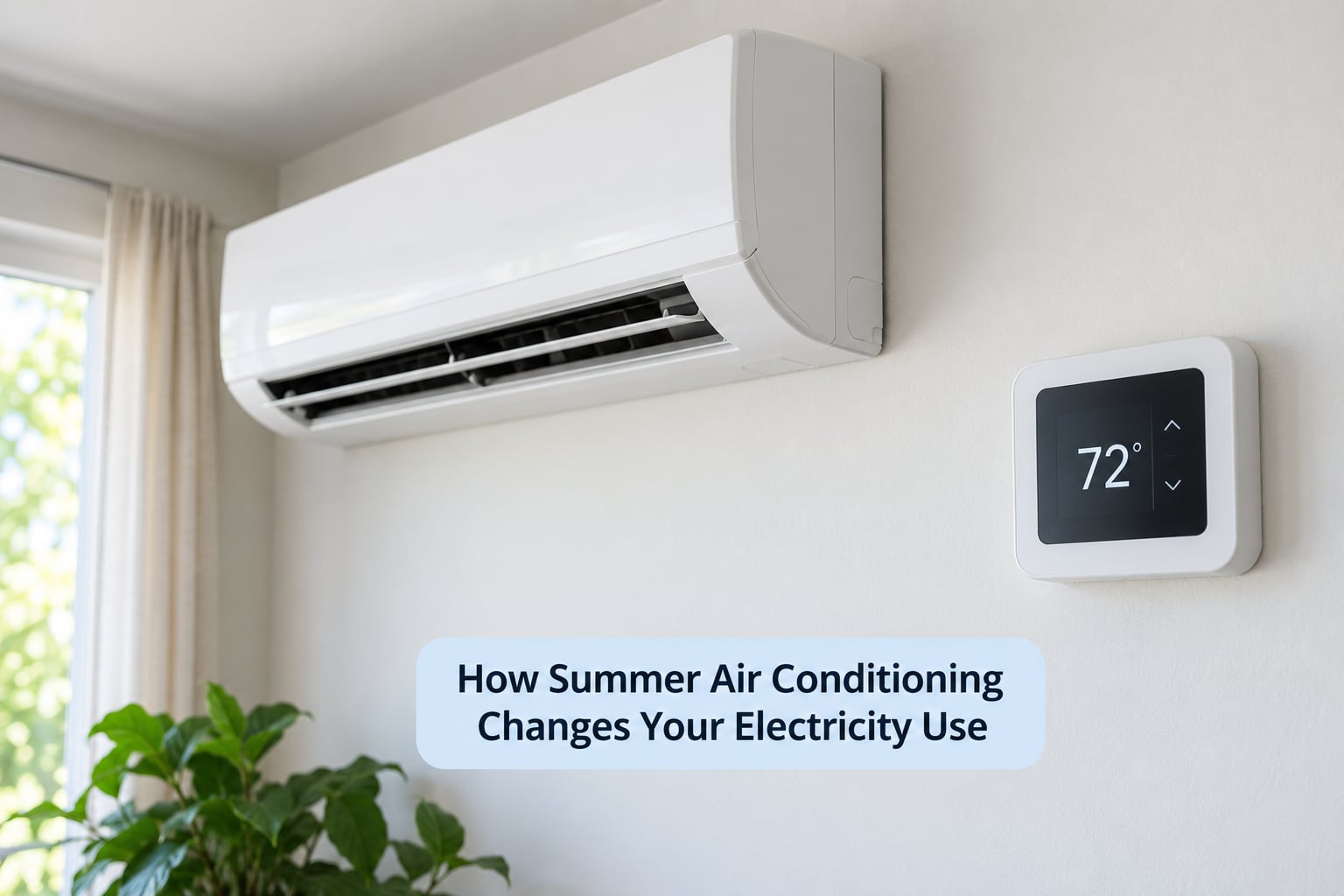
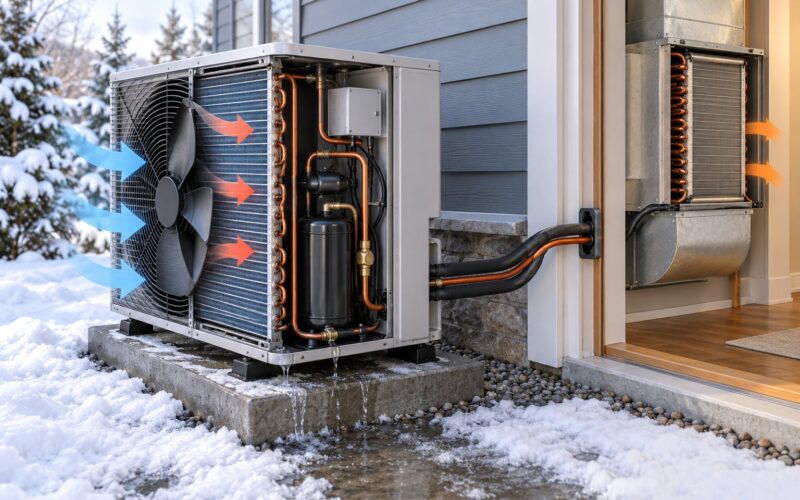
An air conditioner moves heat rather than making cold, and moving heat takes electricity. The compressor does the heavy lifting, and it works much harder when outdoor temperatures climb: the temperature difference the equipment has to overcome shrinks, so it runs longer and draws more power to do the same job indoors.
Humidity is the part most people miss. Removing water vapour from the air, called latent cooling, takes a meaningful share of the total load in humid climates, often well over a third of it. A unit that is slightly too large for the house short-cycles: it runs a few minutes, shuts off, and starts again. The house stays clammy because the coil never runs long enough to wring out the moisture, and you burn more electricity for a worse result.
Beside cooling, the fridge and freezer work harder in hot weather because the kitchen is warmer and the door opens more often. A pool pump, dehumidifier, second refrigerator, heated pool or EV charger all switch on during the same stretch of the season. Electric water heating rises a little too, because more hot water gets used and incoming water is warmer.
A worked example, using typical published consumption figures for a mid-sized home. Household A has a modestly sized system, keeps the thermostat at 25C, runs the pool pump eight hours a day and charges an EV twice a week, using roughly 1200 to 1500 kWh in a peak month. Household B is a larger, less well-insulated home with the thermostat at 21C, a pool pump running continuously, a second fridge in the garage and daily EV charging, landing somewhere around 2500 to 3000 kWh. Same utility, same tariff, more than double the consumption.
Your building, climate, equipment and habits all shift those numbers, which is exactly why comparison against your own history beats comparison against anyone else’s.
Why Can Summer Bills Rise Even When the Price Per kWh Has Not Changed?
A bill is roughly usage multiplied by rate, plus fixed charges, plus taxes. If the rate per kilowatt-hour is identical and the total still jumped, the extra has to come from usage or from a line item people rarely look at.
Time-of-use plans are the big one. Your rate depends on the hour the energy was used, so a month with the same total kWh can cost very different amounts depending on when they landed. Peak windows usually run in the late afternoon and early evening, which is precisely when the house needs cooling most. Some plans also price weekends differently. The reported peak rates on these plans often sit around two to three times the overnight rate, so a household that simply shifts the dishwasher, the laundry and EV charging out of the evening window sees a real reduction without changing comfort at all.
Demand charges work differently again. Instead of billing you for total consumption, they bill you for your highest demand in a short interval during the month, measured in kilowatts rather than kilowatt-hours. One afternoon where the compressor, the oven and the pool heater all start together sets your charge for the whole month. The second reading, before your fixed costs are added, is where you find it.
A few other line items catch people out. Ratchet clauses lock in your highest billing-period demand of the past year, so one brutal August can keep charging you long after the weather breaks. Some tariffs set a minimum consumption block that is billed regardless of what you actually use. Estimated readings, where the bill is built from an average rather than a meter read, can be badly wrong after a month of unusual consumption. And a previous unpaid balance sitting on the statement can double the total without a single extra kilowatt-hour being used.
How to Check Whether Your Bill Is Unusually High
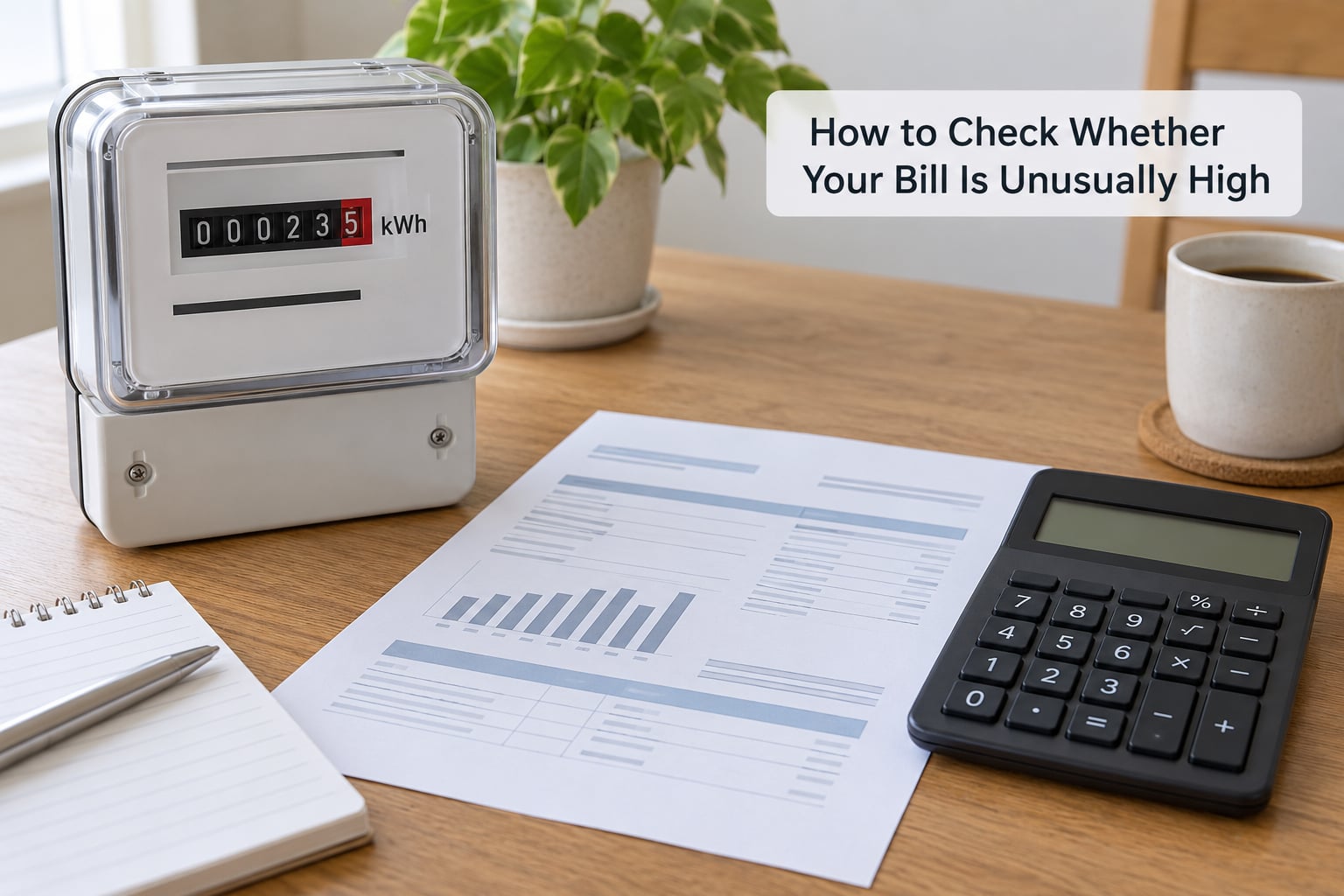
Work through these in order. Each step takes a few minutes and removes one possible explanation.
1. Compare against the same month last year, not last month. Month-on-month comparisons mislead badly in spring and autumn. A like-for-like year-on-year comparison removes the seasonal question entirely and leaves the real change visible.
2. Calculate the percentage increase in kilowatt-hours. Subtract last year’s kWh from this year’s, divide by last year’s figure, and multiply by 100. Between 10 and 20 percent is ordinary for a hotter summer. Between 30 and 50 percent points to a fault, a rate change, or a new load.
3. Check whether the reading is estimated or actual. If it says estimated, your real consumption is unknown, and the next bill will correct it one way or the other. If your real meter reading does not match the number the utility used, submit your own reading with a photo.
4. Separate fixed charges from usage charges. The line items should be itemised. The supply or standing charge does not move with the weather, so a rising fixed charge means a tariff change rather than a consumption change.
5. Write down the rate per kWh on both bills. If the kWh fell and the rate rose, or the rate held and the kWh rose, you now know which half of the bill you are dealing with.
6. Check the tariff’s peak window and any demand charge. Then look at whether your consumption clustered there. Some utilities publish hourly usage through a smart meter portal or an app, which makes this step easy rather than guesswork.
7. Compare meter behaviour against expected cooling use. If the compressor runs constantly and the house is still not cool, consumption is not the problem. Efficiency is.
Once you know which of the three causes applies, escalate accordingly. Your utility handles tariffs, estimated readings and billing errors. Your distributor handles the meter itself. A national or state consumer-rights body handles disputes you cannot settle with the supplier.
Simple Ways to Reduce a High Summer Electricity Bill
Work down this list in order, highest impact first.
Set the thermostat higher, and leave it there. Every degree you add to the cooling setpoint cuts the load noticeably. Changing it around all day wastes compressor cycles without improving comfort. Use a programmable or smart thermostat so the house pre-cools before the hottest part of the afternoon and drifts up overnight.
Use fans to make a higher setpoint feel tolerable. A ceiling fan moves air across your skin at a fraction of central air’s cost, so 26C with airflow often feels better than 23C without it. Turn fans off when the room is empty, since they add heat rather than remove it.
Block the heat coming in. Close blinds or curtains on sun-facing windows during the day, especially west-facing ones. Insulate and draught-strip the attic and any window air-conditioning units, which leak a surprising amount of hot outdoor air when fitted badly.
Keep the cooling equipment clean and maintained. Replace the filter every one to three months, rinse or brush the outdoor condenser coil, keep the unit clear of debris and make sure the indoor unit’s fan is set to Auto rather than On, since On overrides the thermostat.
Shift flexible loads away from peak hours. Run the dishwasher, laundry, pool pump and EV charging overnight or in the morning on a time-of-use plan. Stagger them so several large appliances never start in the same few minutes.
Stop the loads nobody counts. A second fridge in the garage works harder than the one in the kitchen. Unplug old entertainment gear and standby devices through smart power strips, and stop running the pool pump continuously when nobody is swimming.
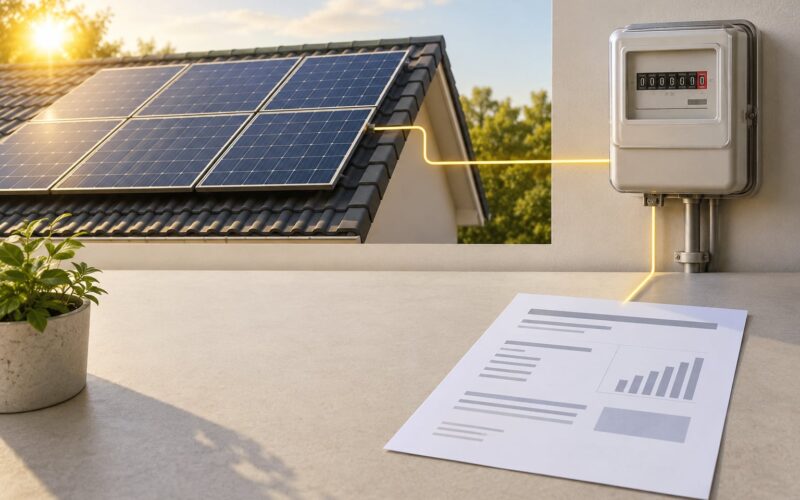
Review your solar export or net-metering arrangement. If panels sit idle while you pull power from the grid in the late evening, you may be paying retail to import power you generated yourself. Check whether your utility pays for exports and what the rate is.
Do not attempt electrical work yourself. Panel work, wiring changes, capacitor replacement and any modification to your meter belong to a licensed electrician, and refrigerant work on an air conditioner belongs to a qualified HVAC technician. Seal any ductwork from the attic or crawlspace rather than the vents in occupied rooms, since closing every register can starve the system and raise static pressure.
When a High Bill May Indicate a Fault
Certain patterns point at equipment rather than weather. Consumption that keeps climbing month after month while the temperature stays flat is one. So is a bill that stays high after you raise the thermostat for a week. A home where the system runs constantly but never reaches setpoint, ice forming on the refrigerant line, repeated short cycling, water dripping from the ceiling near a vent, or a unit cycling on and off every few minutes all suggest something mechanical.
Unusual noises also matter: loud rattling or grinding when the fan starts, hissing near the outdoor unit, or repeated tripping of a breaker. Treat a burning smell, buzzing, scorch marks or warm faceplates as urgent.
If you notice any of those, switch off the equipment at the thermostat or the isolator switch and stop using it until it is inspected. Do not open an electrical panel, remove a condenser cover or work near live wiring. Leave the unit and the meter alone, and contact a licensed electrician for anything electrical or a qualified HVAC technician for cooling equipment, along with your utility if the meter itself seems faulty.
Frequently Asked Questions
Does hot weather make an electric bill higher even without air conditioning?
Yes, but less dramatically. Without cooling, hot weather still raises consumption because the refrigerator and freezer work harder in a warmer kitchen, water heating demand climbs slightly, and more residents are home in daylight hours. Heat also reduces the efficiency of electronics and makes motors run harder. As a rough guide, homes with no air conditioning often see a modest seasonal bump, while homes with central cooling commonly see the 10 to 20 percent rise typical of a hot summer. Check the kWh line on your bill to see which pattern yours follows.
Is air conditioning always the reason summer electricity bills increase?
Usually, but not always. In hot climates cooling is typically the largest single summer load, often accounting for a large share of the bill. In milder areas it may be a smaller share, and other loads take over: pool pumps, second refrigerators, dehumidifiers, EV charging and heated pools all switch on during hot weeks. A time-of-use tariff can also raise the bill without any change in consumption if usage simply shifted into expensive hours. Read the kWh figure and the rate figure separately before deciding which one moved.
How can I tell if my electricity meter is wrong?
Look for patterns rather than trusting one bill. Compare your meter’s displayed consumption with what the utility billed, submit your own readings on high-usage months, and watch whether the meter reading increases while your household is empty for several days. A meter that keeps advancing with no load and no fridge running is a genuine fault. Contact your distributor, not the retailer, since the meter is usually their equipment, and ask for a meter test. Never open the meter or disturb its seals yourself.
Why are my summer bills higher if my energy rate has stayed the same?
Because a bill multiplies usage by rate, and only one of those has to change. If the rate is flat and the total rose, you used more kilowatt-hours, which in summer usually means cooling running longer or a fault adding load. Fixed supply charges, taxes and riders also sit outside the per-kWh rate, and a time-of-use plan can charge more for the same kilowatt-hour depending on the hour. Check for a demand charge billed on your highest single interval, and for arrears from earlier bills appearing on the current statement.
Can solar panels still increase a summer electricity bill?
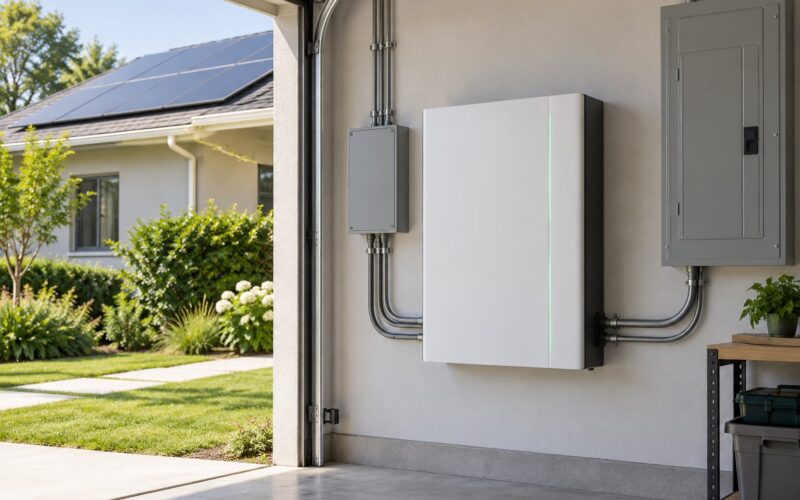
It happens, usually for one of three reasons. Your panels may generate at midday while your household draws power in the evening, so you import at retail rates during expensive hours. Some tariffs pay little or nothing for exported energy, which wastes generation. Or the panels have underperformed, through shading, dirt or an inverter fault, leaving you importing more than you should. Review your export compensation rate and check production against expected output in your utility’s portal. A solar installer can assess the system safely.
When should I contact a professional about a high electricity bill?
Contact your utility when the issue is billing: a suspected meter fault, an estimated reading you can correct, a tariff you did not know you were on, or a demand charge you do not recognise. Contact a licensed electrician for burning smells, buzzing, scorch marks, warm outlets or a repeatedly tripping breaker, and stop using the affected circuit until it is checked. Contact a qualified HVAC technician when the system runs constantly without reaching setpoint, ices up, short-cycles, leaks water or makes unusual noises.
What to Do First
Pull out this year’s and last year’s bills for the same month and subtract the kilowatt-hours. That single number tells you whether you are looking at weather, a rate change or something wrong, and everything after it depends on the answer.
If the kWh figure is out of line, check whether the reading was estimated, then look at the fixed charges and the rate per kWh. Identify your largest summer loads, apply the safe efficiency measures above in order, and keep a note of what changed so you can compare against the next bill. If a fault is suspected, escalate it to the utility, a licensed electrician or an HVAC technician rather than trying it yourself.