Most expiration dates on packaged food are quality markers, not safety cutoffs. The trick is reading the wording first (best-by, sell-by, use-by, freeze-by all mean different things), then checking the food itself and the conditions it was kept in. Here is how to read expiration dates without throwing away food that is perfectly fine to eat.
It takes about two minutes per item, and the biggest payoff is on the items people discard most often: yogurt, cheese, milk, opened condiments and frozen food. A surprising share of household food waste comes from treating a printed date as a deadline, when in most cases the date only predicts flavor and texture.
A few words before we start. This is general food-safety information for home kitchens, not medical advice. If you are pregnant, immunocompromised, caring for an infant, or cooking for someone over 65, be more conservative than the guidance here, and talk to your clinician about your household’s specific risk.
Table of Contents
- What You Need to Judge a Date Without Wasting the Food
- Read the whole date field, not the number alone
- Know the storage history
- Have the official guidance nearby
- Expect limits your senses cannot detect
- Step-by-Step: How to Read Expiration Dates and Judge the Food
- Step 1: Read the full date and the wording printed next to it
- How to read a coded expiration date
- Step 2: Identify the food and how it was stored
- Step 3: How to read expiration dates against real storage times
- Step 4: Inspect the food using more than the date
- Step 5: Use food-safety boundaries for higher-risk foods
- Step 6: Store, freeze, or use the food before quality declines
- Common Mistakes That Lead to Wasted or Unsafe Food
- Frequently Asked Questions
- What does a best-before date mean?
- Is a use-by date a strict safety deadline?
- Can I eat food that is past its date but looks and smells normal?
- How long can leftovers and opened foods safely be kept?
- Does food that smells bad always need to be thrown away?
- How should I decide whether frozen food is still safe?
- Conclusion
What You Need to Judge a Date Without Wasting the Food
You do not need equipment to do this. You need three things: the packaging in front of you, an honest account of how the food has been stored, and a way to compare the printed date with realistic storage times.
Read the whole date field, not the number alone
Turn the package over and find the phrase printed next to the date. “Best if used by,” “best before,” “sell by,” “use by,” “freeze by” and “expires” are not interchangeable, and the same words mean slightly different things in different countries. Write the wording down before you decide anything.
Know the storage history
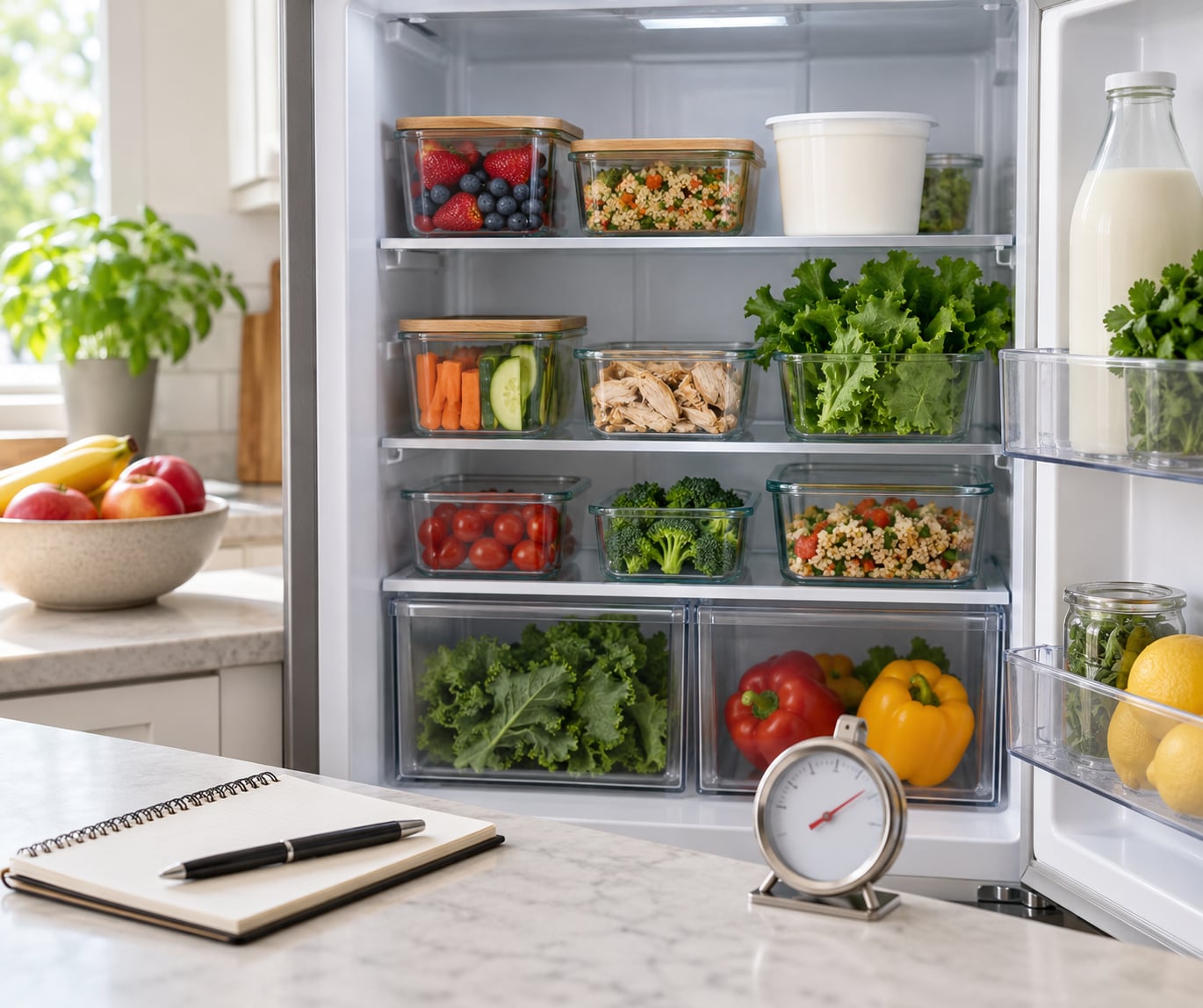
The same jar of olives is a different food after three hours on a warm counter than it is in a cold fridge. Note how long the item has been open, whether it stayed refrigerated, and whether it was frozen. A fridge thermometer is the one small purchase worth making: an unlit fridge, an overstuffed one or a frequently opened door can sit above 40°F, and that quietly eats weeks of shelf life.
Have the official guidance nearby
USDA and FoodSafety.gov publish refrigerator and freezer storage charts, and the USDA FoodKeeper app puts the same tables on your phone. Follow-up instructions on your own package beat any chart, because the manufacturer tested that product. Keep the chart for everything else.
Expect limits your senses cannot detect
Smell and sight catch spoilage, not infection. Salmonella, E. coli O157:H7 and Staphylococcus aureus toxin can be present in food that looks, smells and tastes completely normal. That gap is why the steps below never ask you to taste food to test it, and why temperature control and cooking times carry more weight than the date.
Step-by-Step: How to Read Expiration Dates and Judge the Food
Work through these six steps in order for any item you are unsure about. Stop at the first step that gives you a clear answer; there is no reason to inspect a dented can twice.
Step 1: Read the full date and the wording printed next to it
Start with the word, because the word tells you what the manufacturer promised. “Best by” and “best before” promise quality: flavor, aroma, texture, color. “Sell by” is a store-facing date telling a retailer how long to keep the item on the shelf, and it has no safety meaning at all. “Use by” is the one to take seriously on perishable food, and “freeze by” tells you the last date the product will hold its quality in a freezer. Only infant formula and some drugs have federally regulated expiration dates in the United States; nearly everything else is set by the manufacturer.
| Label wording | What the manufacturer promised | What to do after the date passes |
|---|---|---|
| Best by / best before | Peak quality, flavor and texture | Keep if the package is intact and the food passes an inspection; quality may have slipped |
| Best if used by | Same idea, phrased for the shopper | Treat as a quality marker |
| Sell by | How long a store should display it | Say nothing about safety; ignore it for discarding decisions |
| Use by | Usable life for a perishable product | Follow closely, then inspect and use your judgment |
| Freeze by | Quality guarantee for frozen storage | Safe to keep frozen; expect texture loss after the date |
| Expires / expiration | Stands in for a real use-by on perishable or dated medical items | Take seriously; do not taste to test |
Then decode the date itself. A full date such as 06/15/2026 is usually month first in the US and day first in most of Europe, so check what the rest of the package assumes. A month and year with no day, like “best before 06 2026”, means the end of June 2026, not a single day in it.
Products from other countries use a different order again, with “06/06/26” reading as 6 June rather than 6 March. When a day number is 13 or higher, the format is obvious. When both numbers are 12 or under, guess wrong about it and a year of shelf life turns into a month of confusion.
How to read a coded expiration date
Some packages print no readable date at all, only a code. Four steps cover most of them:
- Find the code and count the characters. A three-digit number is usually a day of the year. A run of five to seven characters with letters usually includes a year and a plant, line or packing-shift identifier.
- Read a three-digit number as a Julian day. 001 is January 1, 150 is May 30 in a non-leap year, and 365 or 366 is the last day of the year. Combine it with the year given elsewhere on the package.
- Map the letters. A widely used US scheme puts a single letter for the year first, with A for 2020, B for 2021, C for 2022, D for 2023, E for 2024, F for 2025 and G for 2026. The second letter or digit identifies the plant or line.
- Accept that many codes are not expiration dates at all. A number near the barcode is frequently a production code, a traceable lot number or a price-look-up code, which is there for recalls and refunds rather than for judging freshness.
If a code is ambiguous, the manufacturer’s customer service line or website will decode it in a sentence. Guessing is where people talk themselves into keeping or dumping food they should not.
Step 2: Identify the food and how it was stored
Date rules only work inside the category they were written for. A can of tuna left sealed on a pantry shelf and a pouch of cooked rice sitting in the fridge are different foods with entirely different risk profiles, even if the dates look identical.
Sort the item mentally into one of five groups. Shelf-stable unopened goods, like sealed cans, dry pasta, rice and unopened jars, rely on the package and the food’s own acidity or low water content to stay safe. Refrigerated perishable foods, like milk, meat, dairy and cut produce, need a fridge at or below 40°F. Frozen foods stop spoilage bacteria but not freezer burn. Opened and resealed packages, like condiments, oils and spices, start a second clock the day the seal breaks. Cooked and served foods, like leftovers, carry the shortest windows of all.
For the last group, the clock runs on two variables: temperature and time. Food should move into a refrigerator within two hours of being served, or within one hour when the air is above 90°F. Everything between 40°F and 140°F is the danger zone, where bacteria such as Salmonella and E. coli multiply fast enough to matter within a couple of hours.
Also record the opening date. A jar of pesto, a bag of shredded cheese and a tub of margarine each have an after-opening window that the printed date knows nothing about, because the package was sealed when the date was set.
Step 3: How to read expiration dates against real storage times
Now compare the printed date with a realistic storage window for that food in your conditions. The table below covers the everyday refrigerator and freezer staples; the follow-up directions on your specific package take priority over anything in it.
| Food | Refrigerator at 40°F or below | Freezer at 0°F |
|---|---|---|
| Raw poultry and ground meat | 1 to 2 days | 4 to 12 months |
| Steaks, chops, roasts, raw fish and shellfish | 1 to 2 days | 4 to 12 months |
| Cooked leftovers and cooked meat | 3 to 4 days | 2 to 3 months |
| Cooked fish and shellfish | 3 to 4 days | 2 to 3 months |
| Deli sliced meat and hot dogs, opened | 3 to 5 days | 1 to 2 months |
| Bacon and cooked sausage | 5 to 7 days | 1 to 2 months |
| Raw or cooked turkey | 1 to 2 days | 3 to 4 months |
| Eggs in shell | 3 to 5 weeks | 9 to 12 months |
| Milk | 5 to 7 days | 3 months for quality only |
| Yogurt, sour cream, dips | 1 to 2 weeks | Not recommended |
| Hard cheese, grated cheese, butter, soft cheese | 3 to 4 weeks | 3 months for soft varieties |
| Cut melon, cut fruit, cut vegetables, cooked vegetables | 3 to 4 days | 2 to 3 months |
| Berries, leafy greens, broccoli | 3 to 7 days | 8 to 12 months for quality |
| Cooked beans and rice | 3 to 4 days | 2 to 3 months |
| Egg substitute, opened | 7 days | Not recommended |
| Homemade soup and stew | 3 to 4 days | 2 to 3 months |
For unopened shelf-stable goods, the chart is different again. Low-acid canned vegetables and meat, and boxed or bagged dry goods, hold indefinitely if the seal is intact. Acidic canned foods such as tomatoes, fruits and pickles are generally fine for one to two years past the date for quality. Any can that bulges, leaks, smells off when opened or shows serious rusting goes out regardless of the date printed on it.
Use the same logic on condiments after opening. Ketchup, mustard, hot sauce, mayonnaise and pickles usually keep for months in a refrigerator. Vinegar-based dressings last longer than oil-based ones, and once oil separates or oxidizes and turns bitter, flavor is gone. Ground spices lose potency in a few months, while dried herbs and whole spices keep for a year or more in a cool, dark cabinet.
Step 4: Inspect the food using more than the date
With the wording and storage history settled, look at the food. Work through these checks, and treat any of them as disqualifying.
- Check the package. Look for a swollen or bulging can, a leaking seal, a cracked jar, a dented seam, heavy rust or a vacuum seal that popped without an obvious reason. A dent on the flat top or bottom can break the seam, so treat deep dents with any rust, swelling or leak as unsafe.
- Look at the food. Discard food with visible mold on a soft or moist item, any slime, discoloration that is not a normal part of the product, or a swollen, foamy or fizzy appearance.
- Smell it, off the food and then in it. Sour, putrid, ammonia-like or musty odors in a product that should not have them signal spoilage. Fermented smells are normal in items like yogurt, sauerkraut and aged cheese.
- Feel the texture. Sliminess on cooked meat, wet or sticky canned fish, or dry, hardened bread at the far end of its life are quality signals. Dryness and freezer burn are quality problems, not safety problems.
- Check the temperature. If you have a thermometer, perishable food sitting above 40°F has been out of range. Two hours above 40°F is the limit; more than that and discard.
Understand the blind spot in all of this. Harmless spoilage bacteria smell and look obvious. Pathogens often do not. Listeria monocytogenes grows at refrigerator temperatures on ready-to-eat food and leaves no smell or visible sign, which is the reason deli meats and soft cheeses get short windows. Bacillus cereus spores survive cooking in cooked rice and pasta, and Staphylococcus aureus toxin forms on food held warm for hours and stays toxic even after reheating. No date on a package can detect any of that.
Step 5: Use food-safety boundaries for higher-risk foods
Some categories deserve firm limits, and a passed date is the least of your concerns with them.
Never taste food to test whether it is safe. That rule covers reheated rice, questionable canned goods, meat past its window and anything with an unusual smell, because the organisms you cannot smell are the ones you cannot detect that way either.
For cooking, use the official minimum internal temperatures. Poultry reaches 165°F (74°C) measured in the thickest part. Ground meat reaches 160°F (71°C). Whole cuts of beef, pork, lamb and fish reach 145°F (63°C) with a three-minute rest. Reheat leftovers and casseroles to 165°F (74°C) throughout, and use a food thermometer rather than a timer, since carryover cooking and microwave hot spots make time a poor proxy for temperature.
Be stricter for high-risk eaters. Pregnant people, children under five, adults over 65 and anyone with a weakened immune system, diabetes or a chronic illness should apply shorter windows, avoid raw sprouts and unpasteurized dairy, and choose pasteurized eggs. For this group, treat use-by dates on deli meat, hot dogs, soft cheese, smoked seafood and refrigerated smoked fish as hard boundaries rather than suggestions.
Infant formula is the clearest exception to the general rules. Federal regulation sets a use-by date on every infant formula container, and the date reflects measured nutrient content and vitamin potency. Prepare formula as the label directs, use it within two hours of preparation, discard what remains after feeding, and switch to a fresh container rather than topping off. Formula is a case where the printed date genuinely is a safety limit.
One practical shortcut circulates for leftovers, often called the 2-2-2 rule: refrigerate within two hours, eat within two days, freeze for two months or more. Treat it as a memory device, not a safety standard. Official guidance gives cooked leftovers 3 to 4 days in a refrigerator held at or below 40°F, so the honest version of the rule is: two hours to the fridge, then eat well before the fourth day, or freeze on day two.
Step 6: Store, freeze, or use the food before quality declines
Once you know the food is good, the remaining work is keeping it that way and using it before the window closes. A few habits do most of the work.
Adopt first in, first out. Put new purchases at the back of the fridge and move older containers to the front, or use a clear drawer so what you will eat next is what you reach for first. Restaurants and school cafeterias use this system because it works; a labeled bin for the oldest items in your fridge does the same job.
Date what you open. A strip of masking tape and a marker beat a date printed on a package you can no longer read, and they cover the cases the printed date misses: opened deli meat, cut produce, grated cheese, opened cans of tuna and vegetables, and homemade sauces.
Seal what you reseal. Push out the air from a bagged loaf or a container of leftovers before closing it, and use a shallow airtight container for cut produce so moisture does not sit against the cut surfaces. Air and moisture drive mold and freezer burn, and both are avoidable.
Freeze on day two for perishable leftovers, and cool food in shallow containers first so it chills fast and freezes evenly. Label frozen containers with the date you froze them; most frozen food keeps indefinitely at 0°F, so a package scanned free of ice crystals and kept solid the entire time is still safe after the quality date. The USDA’s chart lists quality windows by month instead, which is a good reason to note your own date.
Plan meals around the near-date bin. Soft, overripe bananas, bruised stone fruit and wilting greens rarely spoil overnight but are forgettable by day four. Move them to the front of the fridge for the next two dinners: banana bread, a fruit compote, roasted vegetables with a hard cheese grated over them, soup, a frittata, pesto, salsa. It takes a minute of planning to rescue food that had no chance in the back of a drawer.
Finally, separate what you can compost from what you must discard. Moldy bread, peels, coffee grounds, wilted greens and vegetable scraps belong in a compost bin, and a counter compost pail or a municipal organics program handles them without a plastic bag. Food that spoiled through bacterial growth, anything from a leaking can, sealed packages and animal products go in the trash, and this is worth taking seriously: food scraps that reach a landfill break down anaerobically and generate methane, so the environmental case for avoiding waste is strongest for the food you never throw away.
Common Mistakes That Lead to Wasted or Unsafe Food
Treating every date as a hard safety deadline. Best-by and sell-by dates are quality and retail signals, and treating them as safety lines is the single largest cause of avoidable waste in home kitchens. The fix: identify the label wording first, every time, and let the category of food decide how much weight it carries.
Throwing food away for appearance alone. Slight discoloration, a layer of oil on a sauce or a dry patch from freezer burn is a quality problem. The fix: smell it and check the package instead of judging from one visual cue.
Tasting questionable food to see if it is fine. A taste test proves nothing, because the pathogens that make people sick often leave no taste at all, and staph toxin survives reheating. The fix: when a food is past its window and looks or smells wrong, discard it without sampling.
Treating smell as proof of safety. A food can pass every sensory check and still carry Listeria, which grows happily in a refrigerator and produces no odor. The fix: keep food at or below 40°F, and let cooking temperatures rather than your nose handle the pathogens.
Leaving perishable food out too long. Two hours in the danger zone of 40°F to 140°F is the ceiling, and one hour when it is above 90°F. The fix: put food away promptly, and clear leftovers within the window rather than during the next one.
Ignoring the after-opening clock. A jar of opened pickles and a sealed jar are different foods with different timelines, and the printed date describes the sealed product. The fix: date opened packages yourself and use the after-opening guidance on the label.
Buying the same food again while the old container sits untouched. A second carton of milk on the shelf does not make the first one fresher. The fix: check the fridge before the shopping list, and shop from a list built around what you already have.
A few prevention habits cover most of these at once. Keep a refrigerator thermometer in a middle shelf, run a weekly check while making coffee, freeze perishable food on the day you would have eaten it, and treat the near-date bin as the most urgent shelf in the kitchen rather than the one at the very back.
Frequently Asked Questions
What does a best-before date mean?
A best-before date is a manufacturer quality marker: the date after which flavor, aroma, texture or color may slip from what the product was designed to deliver. It is not a federal safety cutoff in the United States, and the food can still be safe and perfectly edible after it passes. Treat it as a signal to eat the item soon, not as a line in the sand.
Is a use-by date a strict safety deadline?
Use-by dates sit closer to a real limit, but they are still set by the manufacturer rather than by federal law, and for most shelf-stable products they describe quality. On perishable refrigerated food, treat the use-by date as the point where your margin disappears: apply official storage times, cook to safe internal temperatures and never taste food to test it.
Can I eat food that is past its date but looks and smells normal?
Often yes, for best-by and sell-by foods that are shelf-stable, unopened or properly stored and show no spoilage signs. It is a different answer for perishable food that has been unrefrigerated, for anything from a bulging can, and for high-risk foods eaten by pregnant people, young children, older adults or anyone immunocompromised. Appearance and smell cannot rule out pathogens such as Salmonella or Listeria.
How long can leftovers and opened foods safely be kept?
Cooked leftovers and opened deli meat keep 3 to 4 days in a refrigerator at or below 40°F, and hot dogs or bacon 5 to 7 days. Freeze them by day two if you will not eat them in time. Reheat leftovers to 165°F throughout, refrigerate within two hours of serving, and follow the after-opening instructions on condiments, oils and spices, which the printed date does not cover.
Does food that smells bad always need to be thrown away?
An unpleasant odor usually means spoilage, with exceptions such as fermenting yogurt, sauerkraut, kimchi and some aged cheeses, where sour or sharp smells are normal. A bad smell also only proves the food is unappealing, not that it is safe, since dangerous bacteria and toxins produce no odor. The rule stands: never taste food to test it, and discard anything that smells wrong to you.
How should I decide whether frozen food is still safe?
If the food has stayed solid or the ice crystals are still there, it is generally safe even if the quality date has passed, because freezing stops spoilage bacteria. Check for torn packaging or ice crystals that indicate a thawed and refrozen cycle, then judge quality from freezer burn. If the item has thawed completely, bacteria can have grown while it was soft, so discard it.
Conclusion
Start with the words beside the date, not the number itself. Best-by and sell-by are quality signals, use-by and freeze-by carry more weight on perishables, and only infant formula has a federally regulated date you should treat as fixed. Then check the food, check how it was stored, compare both against official refrigerator and freezer times, and discard anything with a failed package, visible mold or an off odor, without tasting it.
Most kitchens waste far less food the week they start doing that, and the food they do keep tends to be better.