How to cut food waste at home step by step comes down to a fixed order of operations: find out what you already own, plan meals around it, shop with a list, store food so it stays fresh longer, then use, freeze or compost everything that is left. The first audit takes about 20 minutes and the weekly routine about 15.
It matters more than most people expect. The U.S. Environmental Protection Agency reports that households throw away more food than any other level of the food chain, and the UNEP Food Waste Index puts global consumer-level waste at around a third of everything produced. Wasted food that goes to landfill rots without air and gives off methane, so the same leftovers in your fridge cut both your shop and your footprint.
Nothing here needs new equipment. It needs order: you stop buying more, start using what is already there, and only compost the true remainder at the end.
Table of Contents
- What You Need
- Step-by-Step
- Step 1: Find the food you already waste
- Step 2: Plan meals before you shop
- Step 3: Shop with a list and rotate what you buy first
- Step 4: Store food for visibility and freshness
- Step 5: Freeze food before it becomes waste
- Step 6: Turn leftovers into planned meals
- Step 7: Compost what you cannot use
- Common Mistakes
- Frequently Asked Questions
- What is the safest way to store leftovers to prevent food waste?
- Can I refreeze food that has been thawed or frozen?
- How can I use stale bread and soft vegetables instead of throwing them away?
- What is the best way to reduce food waste when cooking for one person?
- Is food still safe after its use-by date has passed?
- What food scraps can I put in a home compost bin?
What You Need
You need five things, and four of them are free.
- A shopping list that lives on your phone or stuck to the door. Written before you leave, not remembered in the aisle.
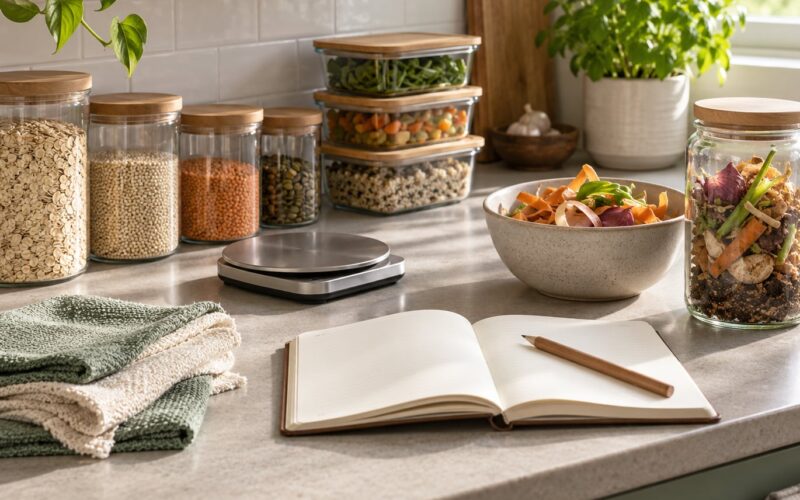
- Clear containers so you can see food without moving three things to look at the fourth. Glass or clear plastic, same size where you can, so they stack.
- Masking tape and a marker, or a roll of masking labels. Every leftover gets a name and a date the day it goes in.
- One “eat first” spot: a clear bin in the fridge or a shelf at eye level that only holds food to be eaten in the next two days.
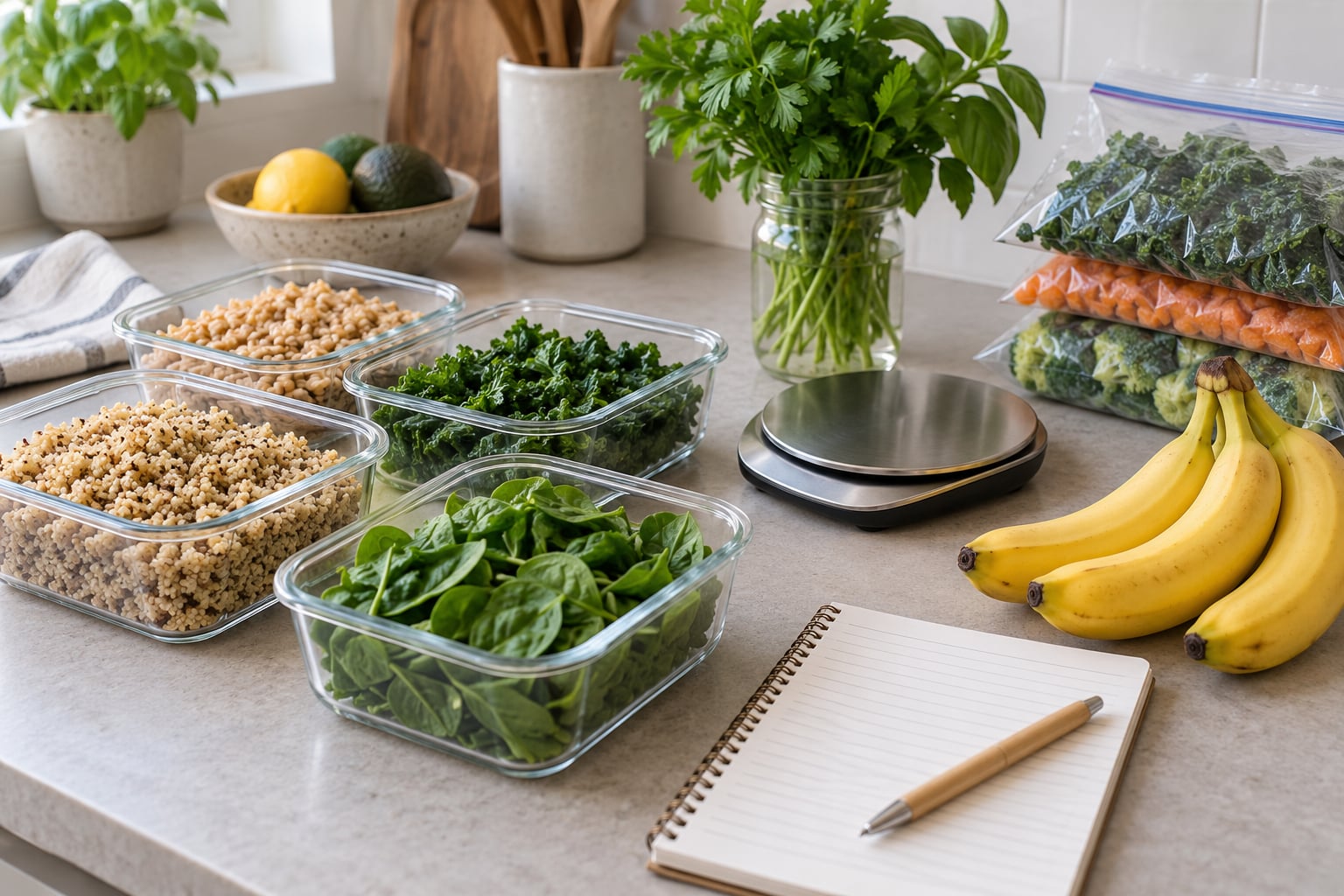
- Optional extras: a small kitchen scale so portions stop being guesswork, flat freezer bags for single servings, and a compost bin if you have any outdoor space at all.
The habits matter more than the gear. A person with mismatched tupperware and a written list will beat a person with perfect containers who shops hungry.
Step-by-Step
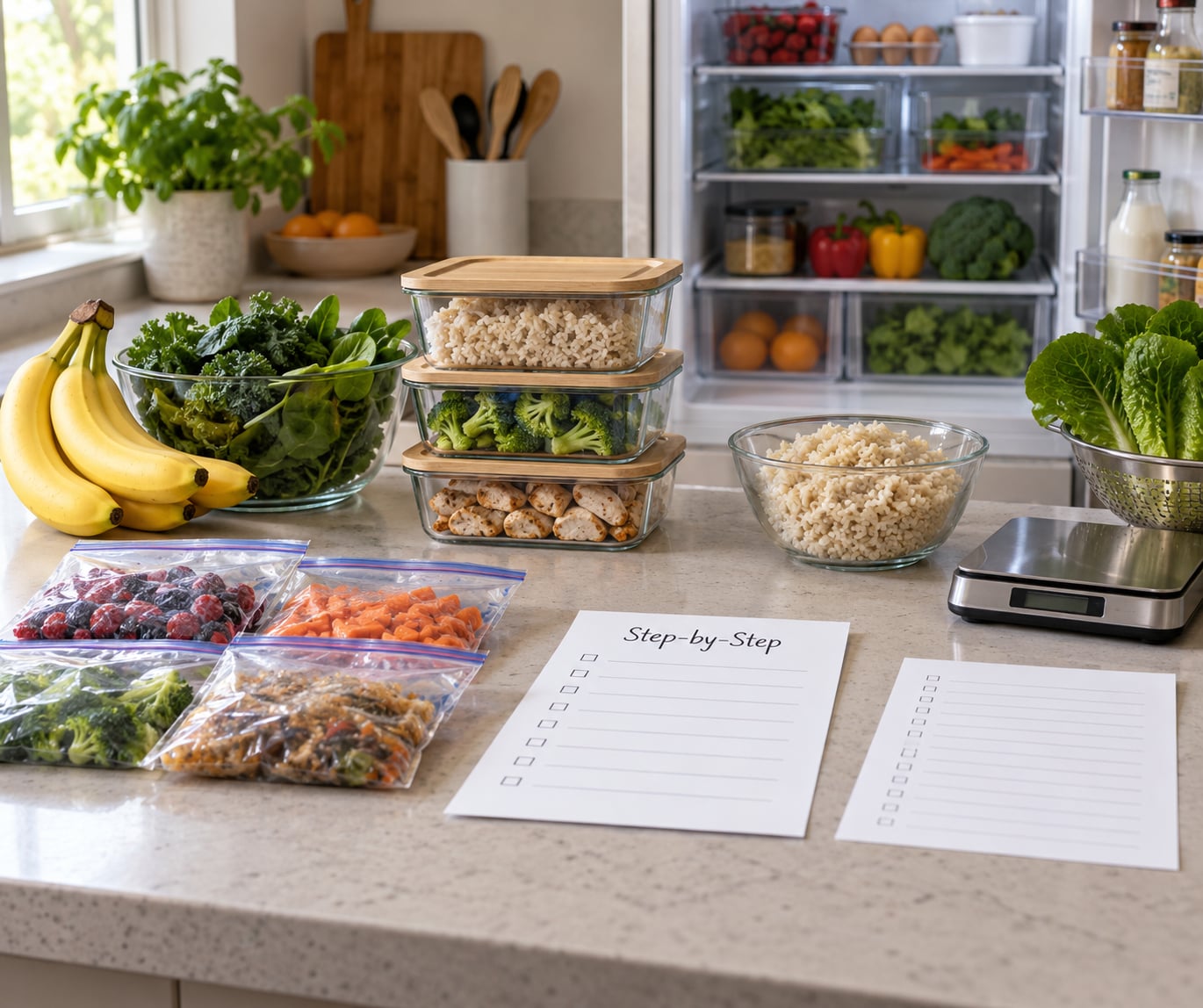
Here is the whole system in one view. Work down it in order for the first month, then it runs on its own.
| Step | What you do | Time it takes |
|---|---|---|
| 1. Audit | Record everything you throw away for seven days and sort it into categories | 20 min once |
| 2. Plan | Check the fridge, freezer and pantry, then build meals around what needs using first | 15 min weekly |
| 3. Shop | Buy only what the list says, and put older groceries at the front of the shelf | Same trip, less time in store |
| 4. Store | Refrigerate within two hours, use clear containers, label and date, oldest at the front | 5 min per grocery run |
| 5. Freeze | Freeze bread, cooked grains, single portions and soft vegetables before quality drops | 10 min weekly |
| 6. Use up | Plan leftovers as meals, serve smaller portions, reheat to safe internal temperatures | Part of normal cooking |
| 7. Compost | Compost the genuine remainder instead of paying to have it hauled away | 5 min weekly |
Notice where the leaks sit. Almost every wasted item traces back to a gap between planning, shopping and cooking, not to a failure at the bin. The sequence matters more than any single trick: plan first, shop second, cook third.
Step 1: Find the food you already waste
You cannot fix a problem you have not measured. For one week, write down every item that goes in the bin and the reason: spoiled produce, stale bread, an ingredient bought and never used, food left on a plate, or something forgotten at the back of the fridge.
Those five categories tell you where your waste actually comes from. Most households find one category dominates. People who cook plant-heavy diets often throw away perfectly good leaves, stems and peels, while others waste cooked food that sat in a container nobody opened.
At the end of the week, sort the living food into an eat-first bin and write down your single biggest recurring problem. That one problem is what you fix first, and it is usually not the one people guess.
Step 2: Plan meals before you shop
Planning around what you already own is the step that does the most work, and the step most households skip. Before writing any menu, take sixty seconds at the fridge door, the freezer and the pantry and list what needs to disappear this week.
Build the week around those items. If half a bag of spinach is wilting, it goes into a pasta sauce or an omelette tonight, not into a plan for a fresh salad on Thursday. Schedule leftovers as planned meals, not as whatever is left at 9pm, and count them when you write the shopping list.
Quantities change with your household. Two adults do not buy a whole cabbage because the bag looked efficient. One person who cooks for four leftovers each week can batch-cook deliberately. A household with three teenagers needs bigger volumes but fewer varieties, because variety is what turns into forgotten produce.
If your week is unorganised, a repeating skeleton works better than a fresh plan every Sunday: the same four or five dinners rotating, so you always know what you have and what you can turn it into.
Step 3: Shop with a list and rotate what you buy first
Shop from the written list and nothing else. Buying unplanned extras is the single largest source of avoidable household waste, and shopping on an empty stomach makes it worse because you make more impulse decisions.
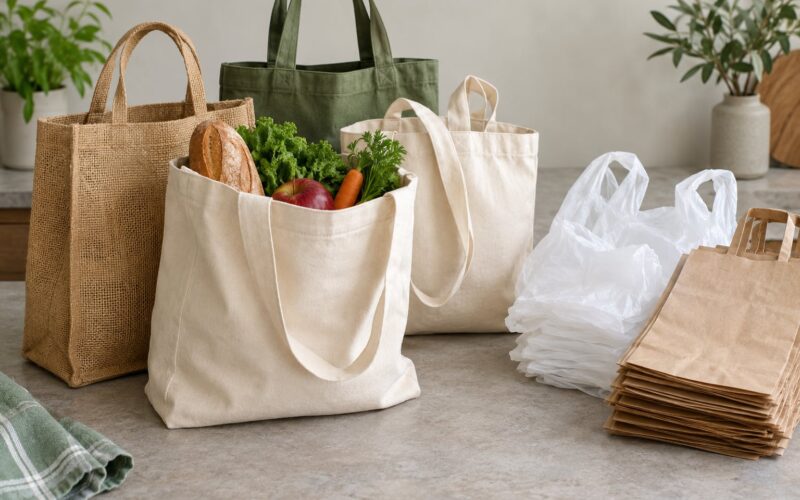
Choose loose produce when it exists, and pick package sizes you will genuinely finish before the food turns. Check dates before you buy, but do not reject food that still looks and smells fine over a date stamp.
About those dates: under U.S. Food Safety and Inspection Service guidance, a best-by date is about quality, not safety. A use-by date is the point after which food should be eaten for safety reasons. Sell-by dates relate to the store’s inventory. Plenty of perfectly good food is discarded over a date label that was never a safety test in the first place.
At home, rotate stock. Unload the new groceries to the back of the shelf, drawer or freezer and move the older items forward. Same in the fridge: older containers go to the front, new ones behind them, so the next person to open the door sees the food that needs eating.
Step 4: Store food for visibility and freshness
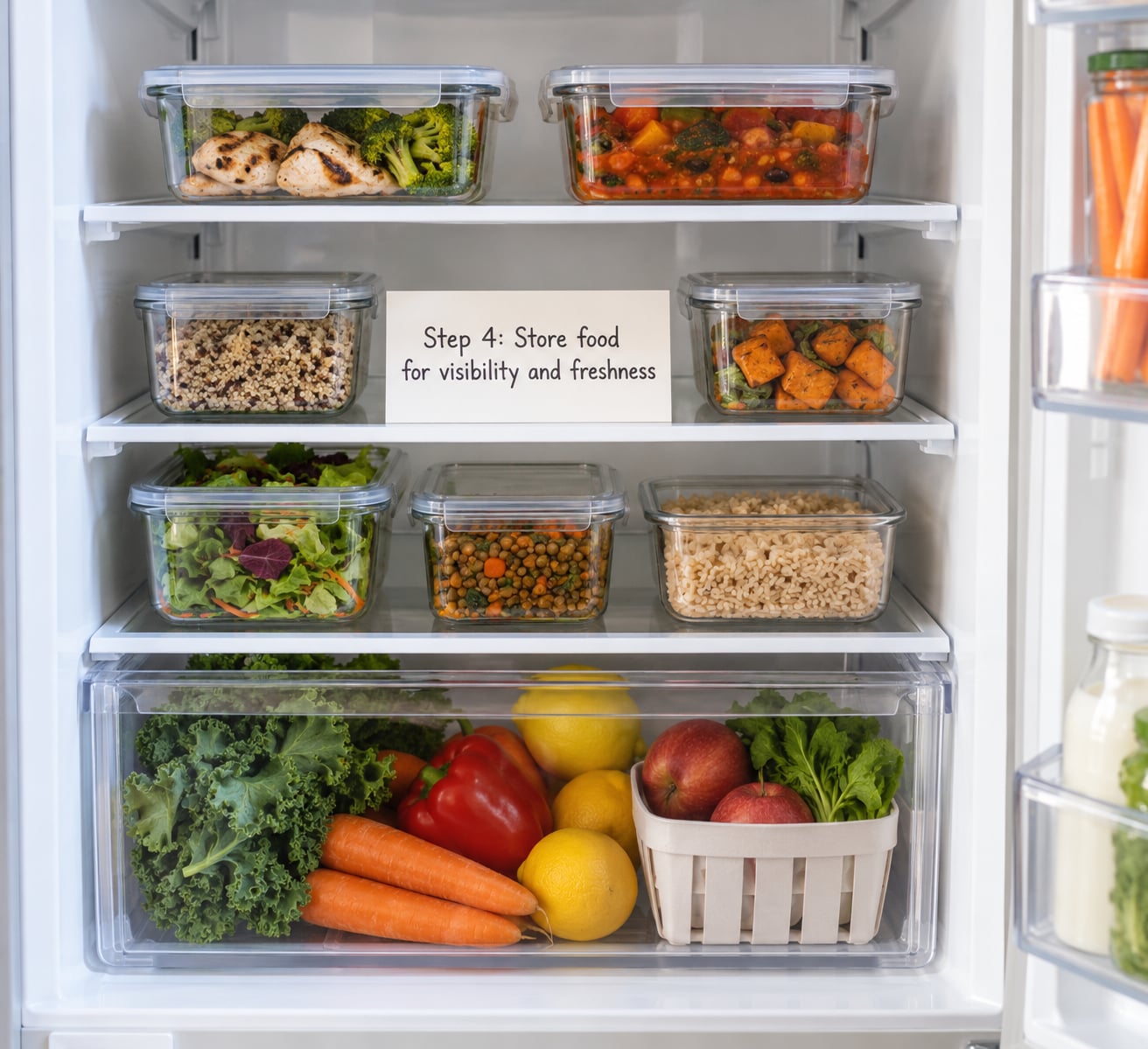
Keep the refrigerator at 40°F (4°C) or below and get perishables into it within two hours of cooking, or one hour on a very hot day. Storage only extends what is already fresh, so nothing gets rescued by moving it later.
Use clear containers so leftovers are visible without rearranging the shelf. Label each with the contents and the date, then put the oldest at eye level and the newest behind it. When someone opens the fridge at 7pm, the first thing visible should be dinner.
Several small habits make a real difference. Dry leafy greens properly before storing them, keep herbs upright in a jar of water in the fridge, keep carrots and celery submerged in water in a container in the crisper, and leave bread on the counter or in a paper bag rather than in plastic, where it goes mouldy faster. Cheese and opened jars belong back in the fridge, sealed.
Realistic storage times keep you honest. Cooked rice, cooked vegetables and leftovers generally last three to four days in the fridge. Raw poultry and ground meat keep one to two days, raw steaks and chops three to five, and most cut fruit and vegetables about a week.
Step 5: Freeze food before it becomes waste
The freezer is the most useful tool in the kitchen and the most commonly misused one. Frozen food gets forgotten because it is invisible and unlabelled, so freezing only works if you can see what is in there later.
Freeze bread on the day you buy it, especially if it is discounted or you will not get to it. Freeze cooked rice, grains and pasta in single portions, roasted vegetables, grated cheese, chopped herbs in small ice-cube trays, and blended smoothie packs. Portioning before freezing is the change that most often makes frozen food actually get eaten.
Write what it is and the month on the bag, and press out the air or use a freezer-safe box so nothing fuses into one solid block. When clumped items do happen, spread them on a plate and microwave them loose for 30 to 60 seconds to separate them before use.
Not everything freezes well. Raw onions, eggs, lettuce and other salad leaves, mayonnaise, milk and soft cheese all turn watery or separate. Cooked cream sauces and custards also suffer. Freeze these only if you plan to blend them into something smooth.
Thaw in the fridge when you can, and refreeze food that was thawed in the refrigerator. Food thawed in cold water or a microwave can be refrozen only once it has been cooked.
Step 6: Turn leftovers into planned meals
Cooking exactly the right amount is harder than cooking well, so cook a catch-all dish often: soup, curry, chili, stew, stir-fry or a grain bowl takes almost any vegetable, any protein and whatever grain is in the cupboard. Soft leaves, broccoli stems, carrot tops and celery ends all work once cooked.
Portion size matters as much as cooking. Serve less than you think, offer seconds rather than loading plates, and let people finish before serving seconds. Plate waste, food cooked and then not eaten, is the part most waste guides ignore, and in many households it is the biggest share of the bin.
Cool leftovers quickly in shallow containers, refrigerate within two hours, and reheat until steaming hot all the way through. For safe minimum internal temperatures, follow USDA guidance: 165°F (74°C) for poultry, 160°F (71°C) for ground meat, and 145°F (63°C) for whole cuts of meat and fish.
If a portion is too big for one person to eat twice, freeze half before you serve it. Bread ends become croutons or a thick soup; wilted greens go into soup or a frittata; vegetable peelings and mushroom stems simmer into stock.
Step 7: Compost what you cannot use
Composting is the last step, not the first. Its job is to take unavoidable peels, bones and coffee grounds out of the landfill, where they would otherwise rot without air and produce methane, and the effect is much smaller than just eating the food.
A basic home bin needs greens (coffee grounds, fruit and vegetable scraps, fresh garden clippings) and browns (dry leaves, shredded cardboard, plain paper) in roughly equal volumes, kept damp rather than wet. Turn it every week or two. Skip meat, fish, dairy, oils and oily dressings in a small backyard bin.
Renters and apartment dwellers have options beyond the backyard. Many cities run curbside organics collection, and some buildings share a bin or a freezer for scraps. A countertop bin handles smaller volumes in a flat, and a worm bin works indoors in a corner as long as it stays out of direct sun.
Anything your local program tells you to put in recycling or organics collection, put there. Rules differ by municipality, so check what your area actually accepts rather than guessing.
Common Mistakes
Almost every household runs into the same handful of problems, and each has a simple fix.
- Buying too much. Shop from a written list, and skip the trip when you have not eaten what the last trip bought.
- Not recording leftovers. Label the container the same day. Food nobody knows about gets thrown out.
- Poor visibility. Clear containers and an eat-first bin at eye level beat a tidy-looking top shelf.
- Treating best-by as use-by. A best-by date is a quality marker. Smell it, look at it, and only discard food that has genuinely spoiled.
- Freezing food too late. Freezing preserves quality, it does not repair spoilage. Freeze while the food is still good.
- Storing food wrongly. Damp greens, bread in plastic and unsealed jars cause most of the avoidable early spoilage.
- Leaving small portions unused. Half a jar of sauce, one onion, a few soft carrots. Freeze or cook these deliberately rather than letting them slide.
Two things keep it going: a five-minute inventory every Sunday, and one clear box at the front of the fridge where anything in danger goes. Everything else is detail.
Frequently Asked Questions
What is the safest way to store leftovers to prevent food waste?
Cool leftovers in shallow containers so steam escapes, then refrigerate them within two hours of cooking, or one hour on a hot day. Keep your refrigerator at 40°F (4°C) or below, use clear airtight containers, and label each one with the contents and the date. Store them at the front of the shelf rather than the back, so you see and eat them first.
Can I refreeze food that has been thawed or frozen?
Yes, usually, as long as safety is intact. Food thawed in the refrigerator can be refrozen without cooking, though quality drops slightly. Food thawed in cold water or a microwave must be cooked before it can be frozen again. USDA guidance allows refreezing food kept above 40°F (4°C) for no more than two hours, or one hour above 90°F (32°C).
How can I use stale bread and soft vegetables instead of throwing them away?
Stale bread is not spoiled bread, and it is easier to use than most people think. Cut it into cubes and toast them for croutons or soup, or pulse it into breadcrumbs for meatballs and casseroles. Soft vegetables go into soups, curries, stir-fries and frittatas, where wilting does not matter. Vegetable peelings and mushroom stems simmer into stock, and wilted greens blend straight into sauces.
What is the best way to reduce food waste when cooking for one person?
Stop cooking large family recipes, because a single portion of leftovers is the most common thing to be thrown out. Buy vegetables loose, skip multi-packs you cannot finish, and shop more often for smaller amounts instead of once a week for a large shop. Cook one-pot meals you can eat over two days, freeze single portions immediately, and cook a catch-all dish such as soup, curry or a grain bowl whenever produce needs using.
Is food still safe after its use-by date has passed?
It depends on what the date means. A best-by date is about quality, not safety, and food past it is usually fine. A use-by date is about safety for perishable items such as meat, fish, dairy and ready-to-eat food, and the U.S. Food Safety and Inspection Service advises eating those by that date or discarding them. When in doubt, smell it and look at it, and follow the specific product label.
What food scraps can I put in a home compost bin?
Fruit and vegetable scraps, coffee grounds, tea leaves without plastic bags, eggshell/cardboard, and fresh garden clippings all compost well, as long as they are paired with dry browns such as shredded cardboard, dry leaves or plain paper so the mix is roughly half green and half brown. Keep meat, fish, dairy, oils and oily dressings out of a small backyard bin. Local rules differ, so check what your area accepts.
Start tonight rather than Monday: pull out everything in the fridge and freezer, put anything that needs eating in one clear box at the front, and plan the next three meals around what is in that box. Do the same thing again next Sunday, and the bin gets noticeably lighter within a month. Last updated October 2026.