You can start a zero waste kitchen on a budget by spending nothing for the first month: measure what you throw away for a week, eat down what you already own, and only buy a replacement when the item you would replace has actually worn out. The biggest waste in most kitchens is edible food, and food is the part you can fix this week with a notebook and a clear shelf.
It takes about an hour to set up the tracking and maybe a month to see a real difference. The whole thing is closer to tightening a few habits than to renovating a kitchen, and it usually lowers the grocery bill instead of raising it.
Table of Contents
- What You Need — and What to Skip for Now
- Step-by-Step: How to Start a Zero Waste Kitchen on a Budget
- 1. Track What You Throw Away for One Week
- 2. Use What You Already Have First
- 3. Make a Low-Cost Waste Station
- 4. Plan Meals Around the Ingredients You Have
- 5. Store Food for More Useful Time
- 6. Choose Reuse Only Where It Saves Money
- 7. Review, Adjust, and Repeat
- Common Mistakes — and the Budget-Friendly Fix for Each
- Buying the whole reusable kit at once
- Treating date labels as deadlines
- Buying produce in bulk because it looks generous
- Sealing everything airtight
- Putting food waste in the general bin
- Buying recyclables instead of refusing them
- Frequently Asked Questions
- How can I start reducing kitchen waste without buying anything?
- What is the lowest-cost way to store extra food without buying new containers?
- How do I stop buying groceries that will not get used?
- Is a zero waste kitchen realistic for a small family or a shared apartment?
- What should I do with food that is already going bad?
- Start With One Easy Swap
What You Need — and What to Skip for Now
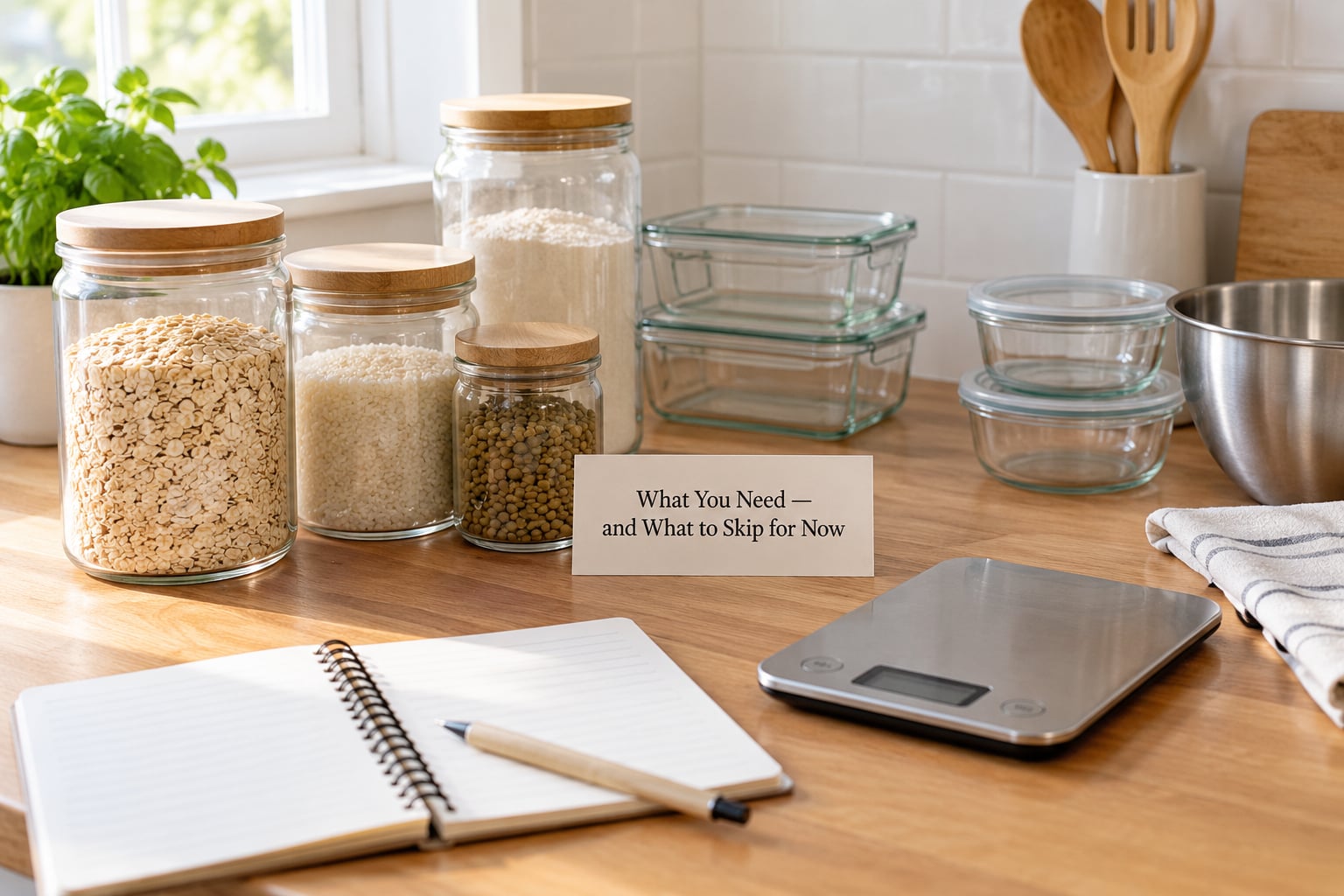
Nothing on this list costs money, and that is the point. You need somewhere to write, somewhere to put scraps, and a clear idea of what food you currently own.
- A notebook or phone spreadsheet for the waste log. Paper works fine.
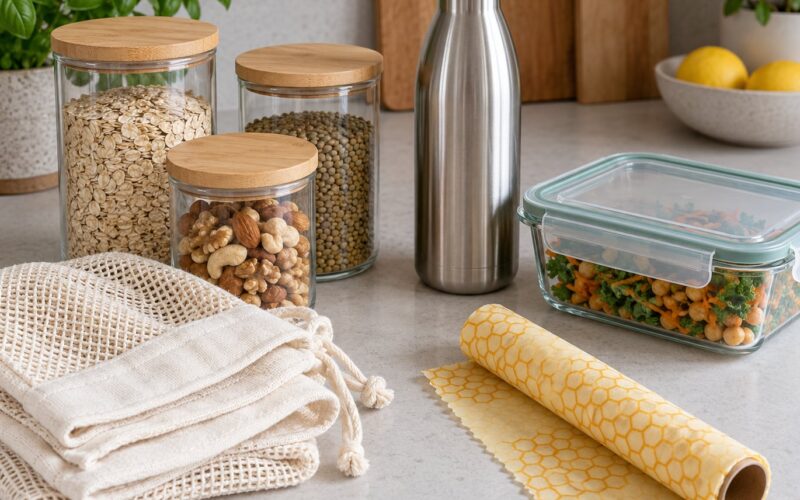
- Containers you already own — glass jars from past sauce, plastic tubs, a loaf pan with a lid. Wash them and keep them near the fridge.
- Paper or masking-tape labels for anything you freeze or portion out.
- Basic cleaning supplies you have: dish soap, a brush, hot water. Vinegar and baking soda handle most of the rest.
- Your local collection rules — check what your municipality actually accepts for recycling and organics, and what counts as contamination. Rules differ in every Andalusian town and change over time, so ask rather than assume.
- A simple shopping list, paper or phone, that you can read at the store.
Now the anti-buying list, which matters more for a tight budget than any gadget. Hold off on bamboo cutlery sets, storage containers sold as starter bundles, countertop composters with pumps and filters, and any “eco” version of something you already own in working order. Come back to those in a few months, when you know which problem they would actually solve.
Step-by-Step: How to Start a Zero Waste Kitchen on a Budget
1. Track What You Throw Away for One Week
Every evening, jot down three lines: what went in the bin, roughly how much, and why. Write the reason, not just the item — “bought too much basil”, “froze it and forgot about it”, “expired label but still fine” tell you different things. Seven days is enough to see the pattern, and almost everyone finds one repeat offender eating up the list.
It worked for me because the reasons were embarrassing in a useful way. Two weeks of the same forgotten bag of spinach is a shopping problem, not a storage problem, and you cannot fix it with a better container.
2. Use What You Already Have First
Before you buy anything, take stock by date rather than by assumption. “Use by” on many packages is a quality guideline, not a safety cutoff; “use by” dates on infant formula, cut leafy greens and other highly perishable items are treated more strictly. When something is in doubt, smell it, look at it, and if you would not eat it, neither should the charity bin.
Sort into three columns: eat this week, freeze this week, and pass on now. Prioritise what is closest to turning, and plan two meals around the oldest items before shopping.
3. Make a Low-Cost Waste Station
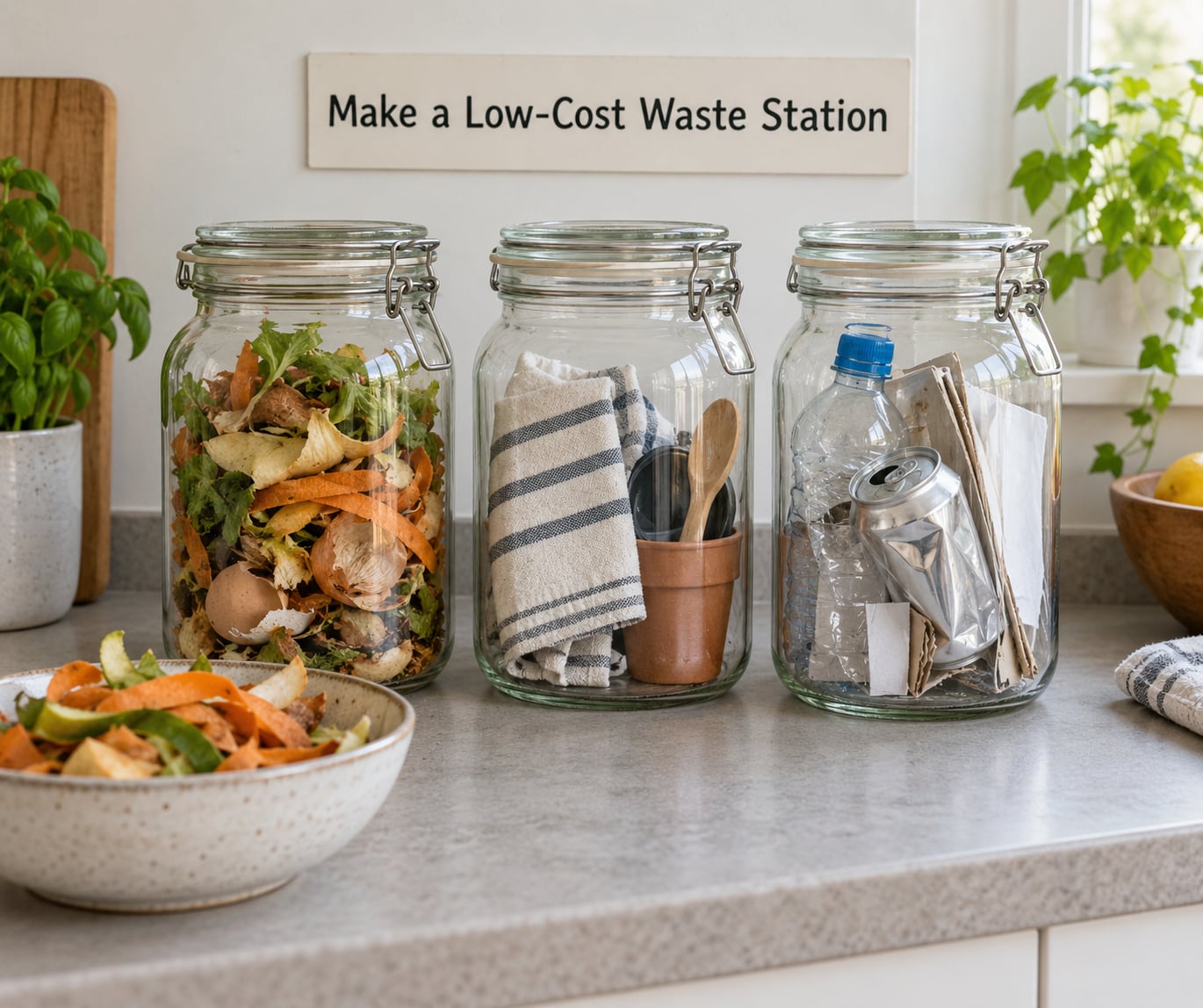
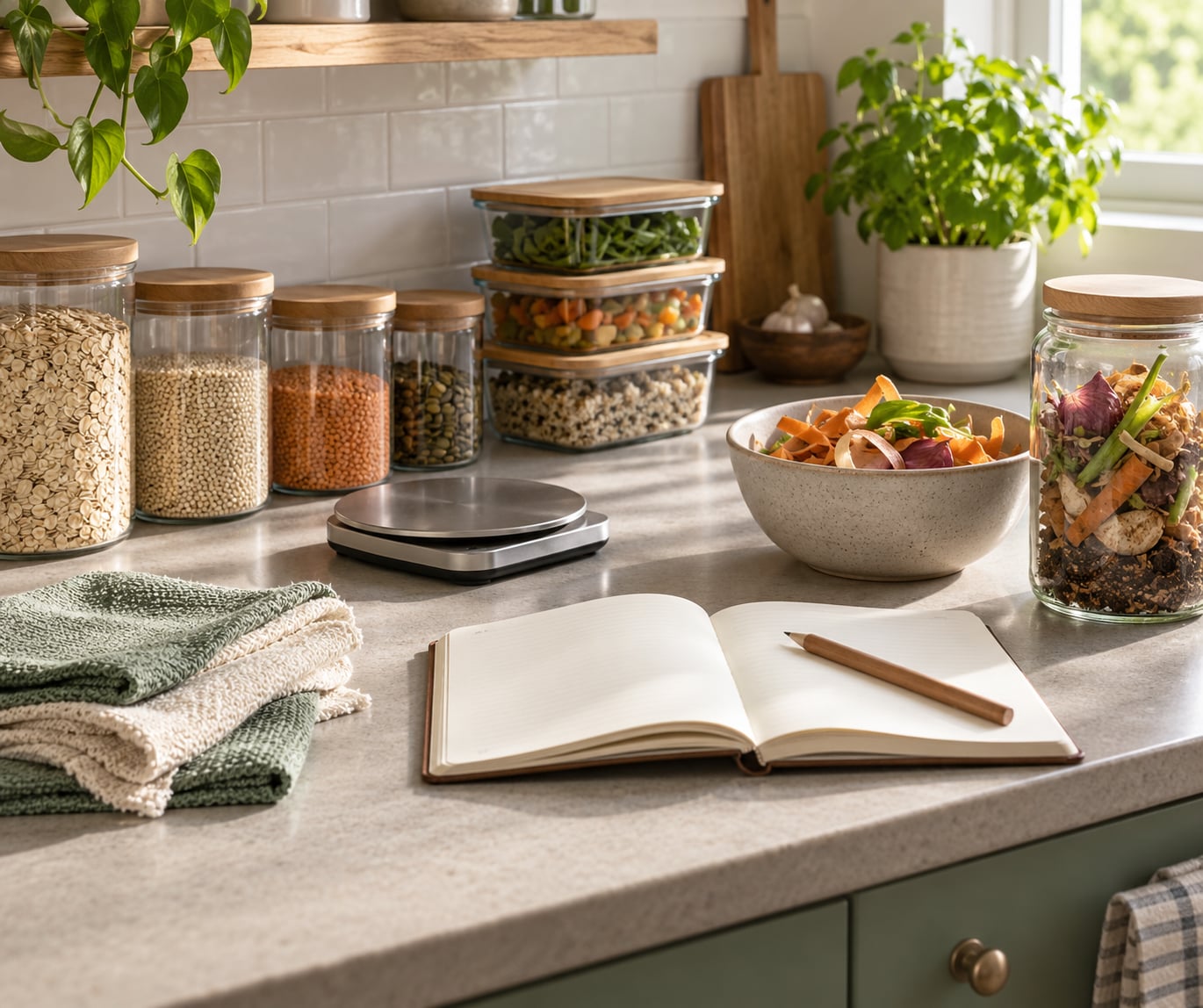
Three containers and a strip of tape is the entire system. Label one “compost”, one “share or donate”, one “recycling”, and put them where you empty your food scraps so nothing has to travel far.
Keep the compost jar in the freezer if you can. Frozen peels and onion ends stop smelling, and you pull out a bag whenever you simmer broth. Keep separate anything oily, meat-based, dairy-heavy or cooked in oil — most home systems and many municipal collections reject those, and they are the fastest way to give up on composting.
4. Plan Meals Around the Ingredients You Have
Work backwards from the oldest three items instead of forward from a recipe website. Two open-ended staples plus one or two perishables makes a meal; that is enough structure for a household of any size and it leaves room for what you find in the fridge.
Then write the shopping list, and check it against the pantry. Most duplicate purchases come from buying a second jar of something you already have behind the rice. Add the item to the list only after that check, and if the list is short, that is a good sign rather than a problem.
5. Store Food for More Useful Time
Storage is the cheapest waste reduction available. Separate fruit that releases ethylene gas — apples, bananas, ripe pears, tomatoes — from vegetables and leafy greens that spoil faster around it, and keep that produce in the crisper where the humidity is higher.
Cut stems off herbs and stand them in a jar of water like flowers; they usually outlast the bag in the drawer by days. Freeze bread, cheese, and any single portion you will not eat before it turns. Cooked food belongs in the fridge for about three to four days under standard USDA guidance, and freezing anything raw you will not use within a couple of weeks is the reliable rescue.
Keep food safety intact while extending time. Refrigerate poultry and leftovers promptly and reheat them to 165°F, ground meat to 160°F, and whole cuts or fish to 145°F. Storage tricks extend food life; they do not rescue food that has sat warm for hours, and anything that smells off goes in the bin, not in the compost jar.
6. Choose Reuse Only Where It Saves Money
Judge each disposable on how often you use it, what the disposable version costs you, how long the reusable lasts, whether it goes through the dishwasher, and whether your collection accepts the alternative. Paper towels become rag cloths the day the cloth wears out, not the day you get the urge to buy something.
The cheapest high-impact swaps are the ones you make from things in a drawer: cut rags from worn-out t-shirts, use jars for pantry staples and drink bottles, and make a counter spray from white vinegar and water, with citrus peels soaked into the vinegar for a week first if you have them. Buy one thing at a time, only when the thing you are replacing fails.
7. Review, Adjust, and Repeat
Run the same one-week log again. Compare it to your baseline by weight or by bag count, not by memory, then find the two largest remaining categories. Change one or two things, not the whole system.
People who quit usually quit after trying to change everything in a fortnight and watching a single spoiled item feel like failure. One repeated fix per month beats a total overhaul you abandon in three.
Common Mistakes — and the Budget-Friendly Fix for Each
Buying the whole reusable kit at once
The upfront spend lands before any saving does. Fix: run one container down to the point where you would replace it, then swap that one. Cut your first rags from a shirt you were going to discard.
Treating date labels as deadlines
Discarding good food to respect a date that is really a quality marker is the most expensive habit on this list. Fix: use smell and appearance for fresh produce, and keep strict attention on formula, cut greens and ready-to-eat items.
Buying produce in bulk because it looks generous
Bulk is only cheaper when you finish it before it turns. Fix: buy the quantity you can realistically eat in three meals, and freeze the rest the day you get home.
Sealing everything airtight
Produce that needs air wilts faster in a sealed box, and trapped moisture encourages mould. Fix: use vented containers or a paper bag for greens, and perforated packaging for anything soft.
Putting food waste in the general bin
Organic waste in a landfill rots without oxygen and releases methane, a greenhouse gas far more potent than carbon dioxide. Fix: check your municipality’s organics collection, and if there is none, freeze a scrap jar and use a worm bin or bokashi setup sized for your space.
Buying recyclables instead of refusing them
Recycling the same jar twelve times costs more than one jar that stays in your kitchen for a decade. Fix: refuse the item at the shop when you already own a version of it.
A small warning that budget readers hear often: the first month can feel like more waste, because you are suddenly noticing food that was always going off in the back of the fridge. That is not failure. It is the audit catching what you never used to see.
Frequently Asked Questions
How can I start reducing kitchen waste without buying anything?
Start with the food, not the equipment. Keep a one-week log of what you discard and why, then eat down what you already have. Turn worn-out t-shirts into cleaning rags, keep a jar in the freezer for vegetable ends, and use containers and jars you already own for anything that needs storing. Every one of those steps costs nothing and most of them cut food waste in the first month.
What is the lowest-cost way to store extra food without buying new containers?
Use what is already in your cupboard. Glass jars from bought sauces, plastic tubs matched with a reusable lid, and even a loaf pan with a plate over it all work for bread, chopped vegetables and cooked meals. Label anything going into the freezer with masking tape and the date, and buy a dedicated storage container only when a real gap appears in what you own.
How do I stop buying groceries that will not get used?
Shop from a written list built after you check the pantry and the fridge, so you do not buy a second jar of something you already have. Buy quantities you can realistically eat in three meals, and treat the shopping itself as a meal-planning session rather than a top-up. When something does spoil, write down why, because the pattern is usually a repeated purchase rather than bad luck.
Is a zero waste kitchen realistic for a small family or a shared apartment?
Yes, with adjustments. In a shared kitchen, use one clearly labelled scrap container and keep it small enough that nobody minds it, and check whether your building or municipality already collects organics. In a small flat with no yard, freezing a scrap jar, a small worm bin, or bokashi in a lidded bucket under the sink all work. Keep the system at the size your space and your neighbours will actually tolerate.
What should I do with food that is already going bad?
Use it first if it is still safe. Softening vegetables, overripe fruit and tired herbs go into a soup, curry, frittata, smoothie or a batch of roasted vegetables. If it smells off, has mould on a soft texture, or has been warm too long, stop there and put it in the compost or organics bin. Never compost meat, dairy, oily or cooked-in-oil scraps in a home system, because they cause odour and pests.
Start With One Easy Swap
Do the one-week waste audit this week and write down the reason next to every single item. Then pick the most frequent avoidable waste and fix that one thing.
For most kitchens the first change is the same: eat what you own before shopping, and keep a written list. No purchases, no gadget, no new routine. Start there, repeat the audit next month, and add one replacement only when something you already use wears out.