Plastic free swaps that actually make a difference are the ones you touch every single day, not the ones that look impressive in a drawer. Packaged food, the bathroom shelf, takeaway containers and drink bottles remove far more plastic per year than a rarely used gadget ever will. Everything below is ranked by how much plastic it keeps out of your bin and whether you will still be using it in a year.
The reason to rank them at all is simple. Around 400 million tonnes of plastic are produced worldwide each year, and only about 9% of that has ever been effectively recycled, according to the OECD Global Plastics Outlook. Roughly 11 million tonnes reach the ocean annually, UN Environment Programme figures put it. When 91% of plastic is never recycled, the only lever big enough to move the number is taking it out of the stream before it is ever made.
That is also why a bin full of carefully sorted plastic is a disappointing result. Recycling sits at the bottom of the reduce-reuse-recycle hierarchy, and this guide keeps it there.
Table of Contents
- Plastic Free Swaps That Actually Make a Difference
- How the swaps compare by impact and effort
- How to Tell Whether a Swap Is Genuinely Better
- Greenwashing claims and what they usually mean
- Which Plastic-Free Swaps Should You Make First?
- How to Avoid Bringing Plastic Back Into the House
- Shopping
- Kitchen and food preparation
- Cleaning
- Disposal
- What to Do When Reusable Options Are Not Practical
- How to Measure Progress Without Perfect Statistics
- Frequently Asked Questions
- Are plastic free swaps that actually make a difference always better for the environment?
- What are the most useful plastic-free swaps for a small kitchen?
- How often should reusable food containers and water bottles be replaced?
- Do reusable products need special washing to stay hygienic?
- What should I do if I cannot avoid disposable packaging while traveling?
- Start With the Swap You Will Actually Repeat
Plastic Free Swaps That Actually Make a Difference
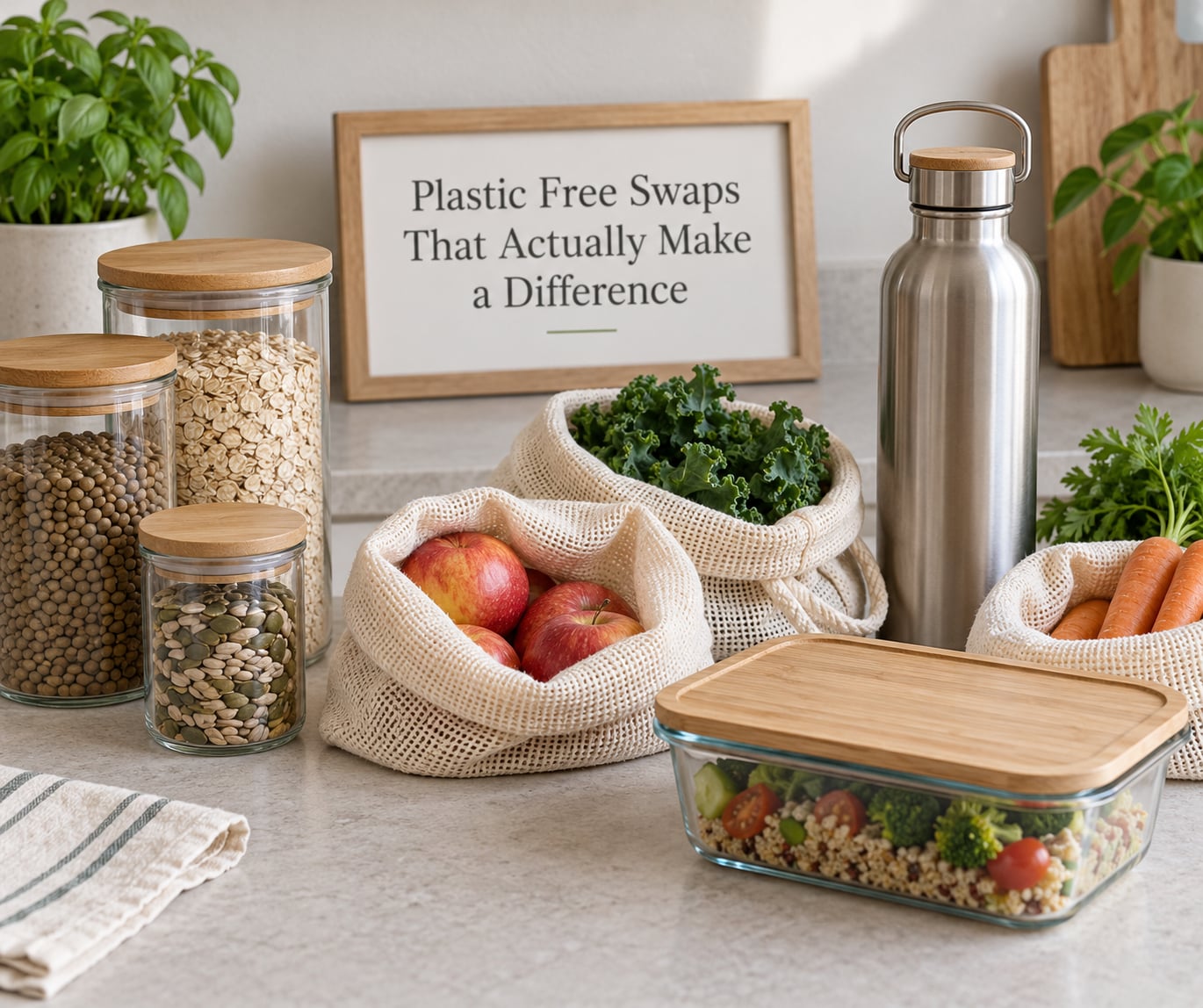
A swap counts as meaningful when it passes five tests: the item it replaces is used often, you will still be using the replacement in a year, the replacement is easy to clean and store, its material has a real second life, and it fits the way you already shop and cook. Miss any one of those and the swap is mostly decoration.
How the swaps compare by impact and effort
| Swap | What it replaces | How often you hit it | Relative impact | Effort |
|---|---|---|---|---|
| Refuse packaging at the till | Produce bags, deli containers, receipt-free checkouts | Every shop | Very high | Low |
| Bathroom refills and solid bars | Shampoo, conditioner, body wash, hand wash bottles | Every few days | Very high | Low |
| Reusable bottle | Single-serve drink bottles and cans | Daily | High | Low |
| Glass or steel food containers | Disposable takeaway boxes and bags | Several times a week | High | Medium |
| Bread and produce bags | Thin carrier bags | Weekly | Medium | Low |
| Reusable cup | Paper takeaway cups | Most weekdays for some people | Medium | Low |
| Reusable food wrap | Cling film | Weekly | Medium | Low |
| Reusable cutlery and straw set | Disposable cutlery and straws | A few times a month | Low | Low |
| Bamboo cutlery or a novelty keeper | Something you use twice a year | Rarely | Negligible | Low |
Worked example, because people like numbers: a 500 ml PET bottle weighs roughly 25 g. Drink one every other day and that is about 180 bottles a year, close to 4.5 kg of bottle for a single person. Do the same arithmetic with a 20 g produce bag used three times a week and you get roughly 3 kg. Now do the arithmetic on a bamboo knife used twice a year and the figure is not worth writing down.
The table is a frequency ranking, not a scorecard. A swap in the top row beats anything below it almost every time, which is why the order matters more than the individual item.
How to Tell Whether a Swap Is Genuinely Better
Start with lifespan. A container that survives two years of daily use has removed two years of disposables. A container that cracks in month three has removed three months of disposables and added a replacement to buy, which is the opposite of a win.
Next, be honest about washing. A swap that needs a dishwasher after every use will get skipped, and a swap that gets skipped is worse than no swap because you still own the unused item.
Then think about what the material becomes. Glass and aluminium have genuine reprocessing markets in Spain and across the EU, so a broken jar is not a dead end. Polypropylene and PET containers usually get downcycled into something lower grade, which means the plastic comes back as fibre for carpet or strapping rather than as another jar.
Greenwashing claims and what they usually mean
| Claim on the label | What is really going on |
|---|---|
| Widely recyclable | Widest recycling schemes often only handle bottles, and almost never flexible film or mixed trays. |
| Compostable | Most compostable packaging needs industrial composting. Home compost piles and Spanish municipal green waste streams reject most of it, so it ends up as general waste. |
| Biodegradable or bio-based | PLA and PHA are bio-based but not compostable in a garden. They need controlled industrial conditions and often contaminate the recycling stream instead. |
| Bamboo textile | The plant fibre is real; the resin that holds it together is often a synthetic polymer and the item still goes to general waste. |
| Plastic-free | Sometimes accurate, sometimes it describes only the outer packaging while the refill pouch inside is conventional plastic. |
Two habits catch most of this. Read the disposal instruction rather than the front of the pack, and check whether your local waste service actually accepts the item before you buy it. Buying a compostable bag your council will not collect is the same as buying a plastic bag.
Which Plastic-Free Swaps Should You Make First?
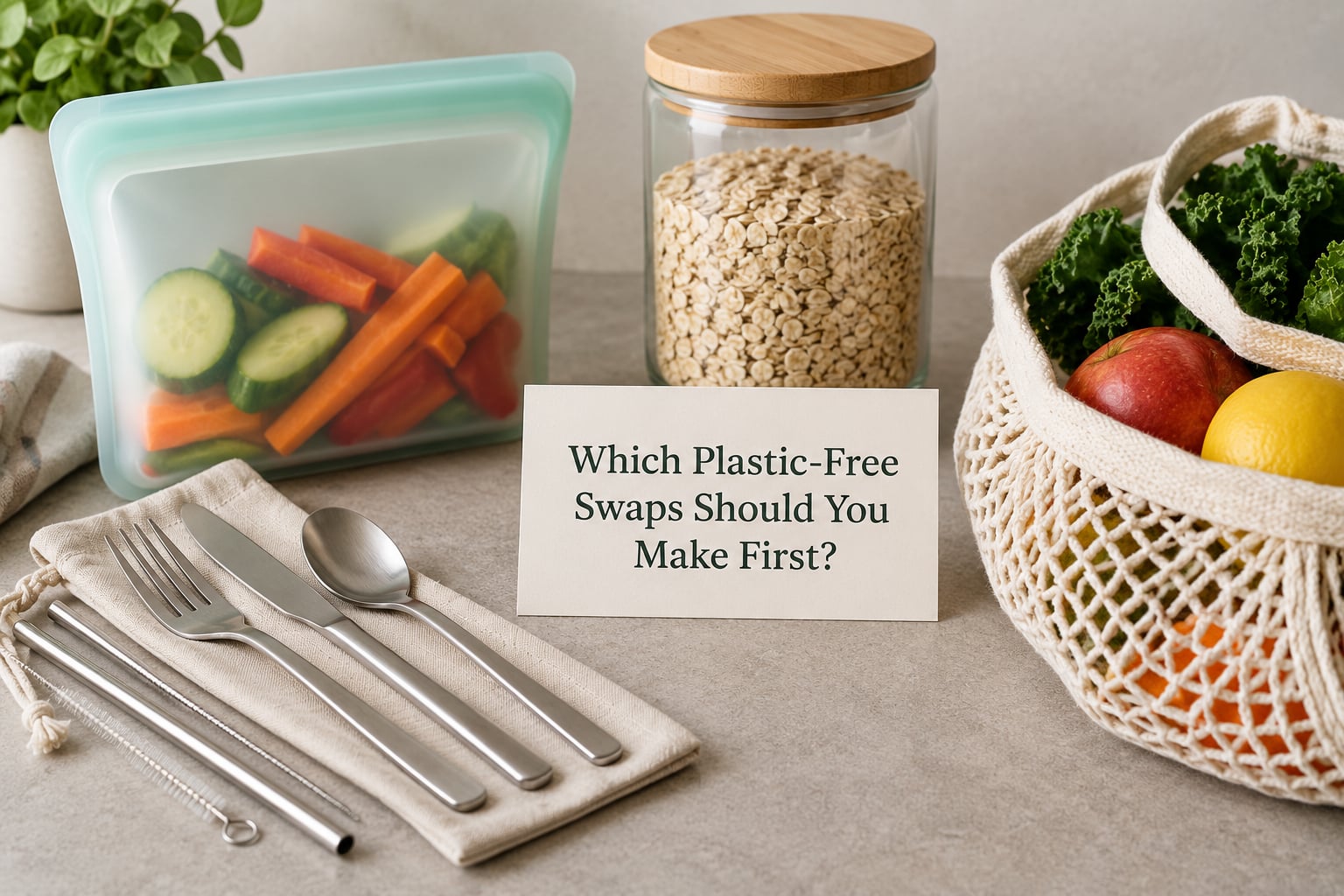
Make refusing packaging your first swap. It costs nothing, needs no new equipment, and people consistently report it as the change that removes the most plastic, because the counter, the deli and the produce aisle are where plastic enters the house in the first place. Saying no to a bag at the till is also the only swap with no purchase to forget at home.
Second is the bathroom shelf. Shampoo, conditioner, body wash and hand wash are four plastic bottles that get emptied and binned roughly every six to twelve months, over and over, and a refill or a solid bar removes that cycle rather than just one bottle.
Third, keep a bottle where you actually forget things, usually by the keys or in the bag, and a set of glass or steel containers in the cupboard you use most. Everything after that is worthwhile but smaller.
For the first month, skip bamboo cutlery, novelty snack bags, a bamboo toilet brush you will use twice, and anything sold as a complete kit of twelve items you only need two of. Community discussions on reducing single-use plastic keep landing on the same pattern: one habit that sticks beats a total overhaul that collapses in week three.
How to Avoid Bringing Plastic Back Into the House
Systems beat willpower here. A rule you follow automatically keeps working on the day you are tired.
Shopping
Keep a bag of bags by the door and the bags in the car. Choose loose produce over bagged, and if a shop only offers pre-packed fresh food, ask whether they will open it into your container. Refuse the receipt and the loyalty card unless you actually use the discount, because both are plastic every visit. Buying naked goods from a bulk dispenser removes the single largest source of household packaging.
Kitchen and food preparation
Work out what you will actually eat this week before you shop, because most plastic packaging comes from food bought with good intentions and thrown away later. Store it in glass or steel with a silicone or bamboo lid, cool the hot food first so the glass does not crack, and wash in a dishwasher-safe set rather than a hand-washable set you resent.
Cleaning
Concentrated refill liquids in the bottles you already have do most of the work here. Make your own solution in a spray bottle for the jobs that do not need a branded product, and replace the plastic-headed kitchen sponge on a schedule rather than when it starts to smell. Set a calendar reminder for the bottle that actually holds the product, not the outer carton.
Disposal
Learn what your council accepts before you need it, and keep the food-scrap and glass banks on the route you already walk. Ask for a carton-free drop-off or a container return at collection. This last one is the step most people skip: a reusable container you do not bring back has quietly become a single-use one.
What to Do When Reusable Options Are Not Practical
Some situations genuinely are not the moment to refuse. Fresh food from a deli with no alternative container, an item that has to stay sterile, medical supplies, items for someone with limited grip strength or dexterity, and travel where washing facilities do not exist all fall here.
Disposable packaging is a reasonable choice for sterile single-use medical items, for a packed sandwich bought on a train with no water on board, and in a workplace kitchen that has no storage space for your containers. Someone managing a chronic illness should not be told that reuse matters more than their treatment.
Even then you can cut something: refuse the cutlery and the straw and condiments, bring your own water, keep a container in the bag specifically for travel, and take the plastic home to sort rather than leaving it wherever you stop.
How to Measure Progress Without Perfect Statistics
Track four things for a month and nothing else. Count how many single-use plastic items came into the house in a week. Weigh the plastic you binned once a month, if your council weighs collections. Note what you spent on refills and consumables. And count repeat purchases, which is the real signal.
Your own weekly counts will always beat any global estimate for your household, and they are the only figure you can actually act on. Where you do not have exact figures, a rough range is more honest than a false precision, and a photo of one week’s packaging sorted on a table takes about two minutes.
What the numbers will not tell you is whether you have eliminated plastic. Households that feel they have failed are usually comparing themselves to a zero-waste ideal that was never reachable, because medical supplies, food safety and accessibility all depend on single-use materials. A steady drop in repeat purchases is the goal; a perfect total is not.
Frequently Asked Questions
Are plastic free swaps that actually make a difference always better for the environment?
No. A reusable item that sits unused for two years performs worse than the packaging it replaced, because you paid for it in materials, energy and money. A compostable bag your local facility rejects is no better than a plastic one. Judge each swap on how often you will use it, how long it lasts, and whether it can actually be washed, stored and disposed of in your real routine.
What are the most useful plastic-free swaps for a small kitchen?
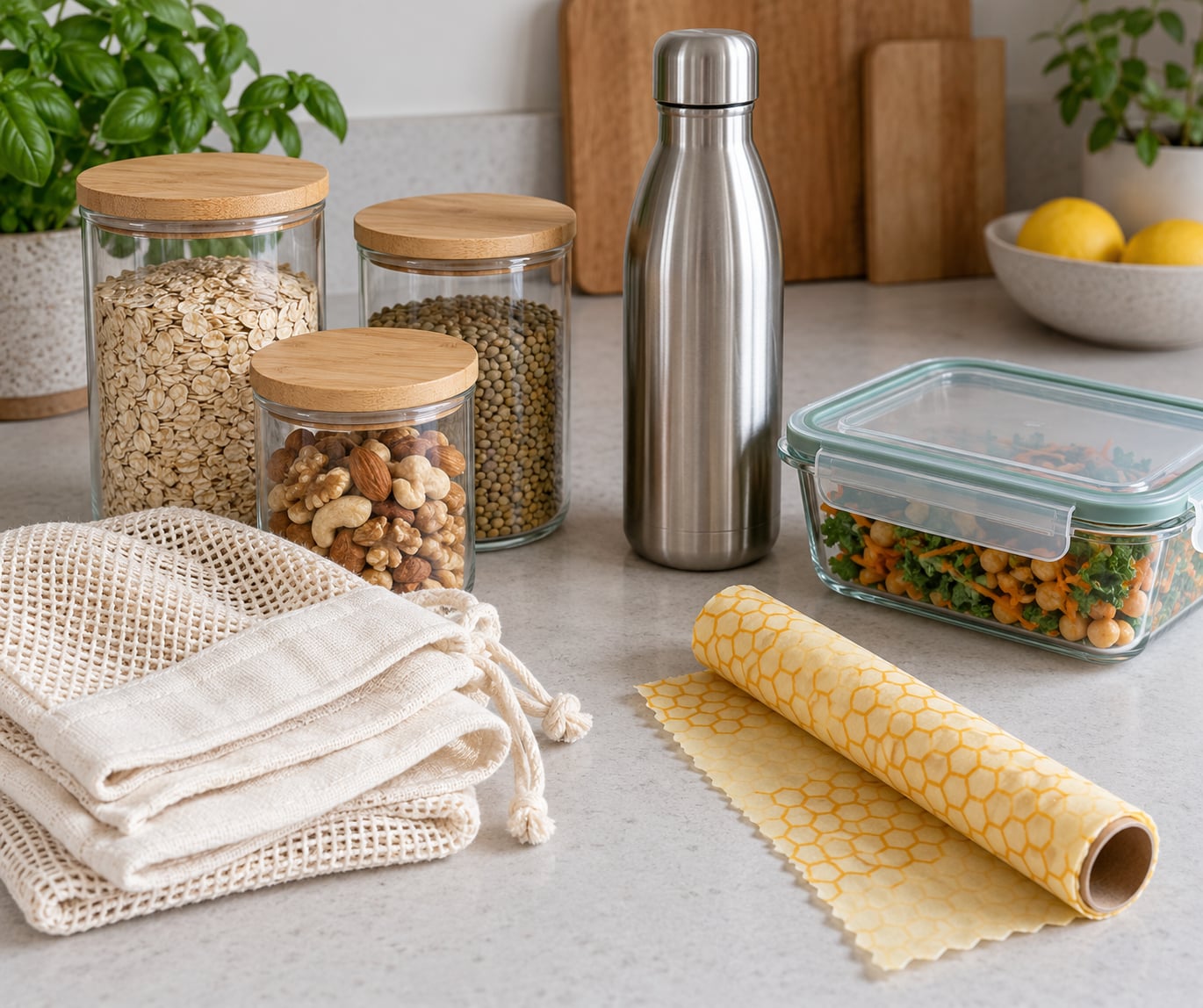
Three carry most of the weight: glass or steel containers for anything you would bag or box, a roll of beeswax or silicone wrap in place of cling film, and buying dry goods in bulk or by weight. Add a knife and a board you keep for years rather than replacing, and a scourer made from natural fibre instead of a plastic-headed sponge. Skip storage gadgets for things you rarely cook.
How often should reusable food containers and water bottles be replaced?
Replace them when they stop working, not on a schedule. Glass containers typically last years if you avoid thermal shock from hot food going straight into cold glass. Bottles and steel bottles last as long as the seal, the coating and the hinge hold up, which is usually a couple of years. Retire any item that is cracked, cloudy, or shedding flakes, since damaged plastic can move particles into food.
Do reusable products need special washing to stay hygienic?
No special products are needed. Wash glass, steel and silicone in a hot dishwasher as you would any dish, and dry containers fully before storing food so nothing sits damp. Wooden boards and bamboo items need hand washing and drying upright, and beeswax wrap needs only cool water and mild soap. Replacing or rewashing a sponge every few weeks matters far more than any cleaning method.
What should I do if I cannot avoid disposable packaging while traveling?
Accept it for the trip and reduce it rather than refusing and travelling with dirty containers. Bring your own bottle, refuse the cutlery and straw, ask for no condiments, and order food that comes with less packaging where you can. Carry a small folding container for trips back and a tote for shopping. Travelling is a good test of which habits have genuinely stuck.
Start With the Swap You Will Actually Repeat
Pick the room you generate the most packaging in, usually the kitchen, and count a week of what comes in. Choose the one item on that pile you use daily, buy the version that will last, and put it where the disposable one used to be so the habit has no decision in it.
Use it for a month before adding anything else, and check your weekly count again. One swap that survives the month is worth more than twelve purchases that sit in a cupboard, and it is the only plastic free swap that actually made a difference for you.