Clothes rarely wear out from being worn. They wear out from heat, friction, detergent residue and sunlight, and every one of those four is something you control. Wash less, wash cold, use less detergent, air-dry instead of tumbling, fold knits instead of hanging them, and mend a hole the week you find it. That routine costs nothing and keeps most garments in rotation for years rather than seasons.
The rest of this guide walks through the whole loop: what to gather, how to wash and dry, how to store, how to repair, and how to buy less in the first place. Read it once and most of it becomes habit within a month.
Table of Contents
- What You Need
- Step-by-Step: A Care Routine That Keeps Garments Going
- How to Make Clothes Last Longer by Washing Them Correctly
- How to Dry Clothes Without Damaging Fibers
- How to Fold and Store Clothes for Longer
- How to Repair Clothes Before Replacing Them
- How to Buy Less and Choose Clothes That Last
- Common Mistakes and Their Fixes
- Extra Tips for a Longer-Lasting Wardrobe
- Frequently Asked Questions
- What is the 3-3-3 rule for clothes?
- Does 100% cotton last longer than polyester?
- Does washing clothes make them weaker?
- Is it better to air dry everything or use a dryer on low?
- Does vinegar stop clothes from fading?
- How do I store clothes long term without wrinkles or musty smells?
What You Need
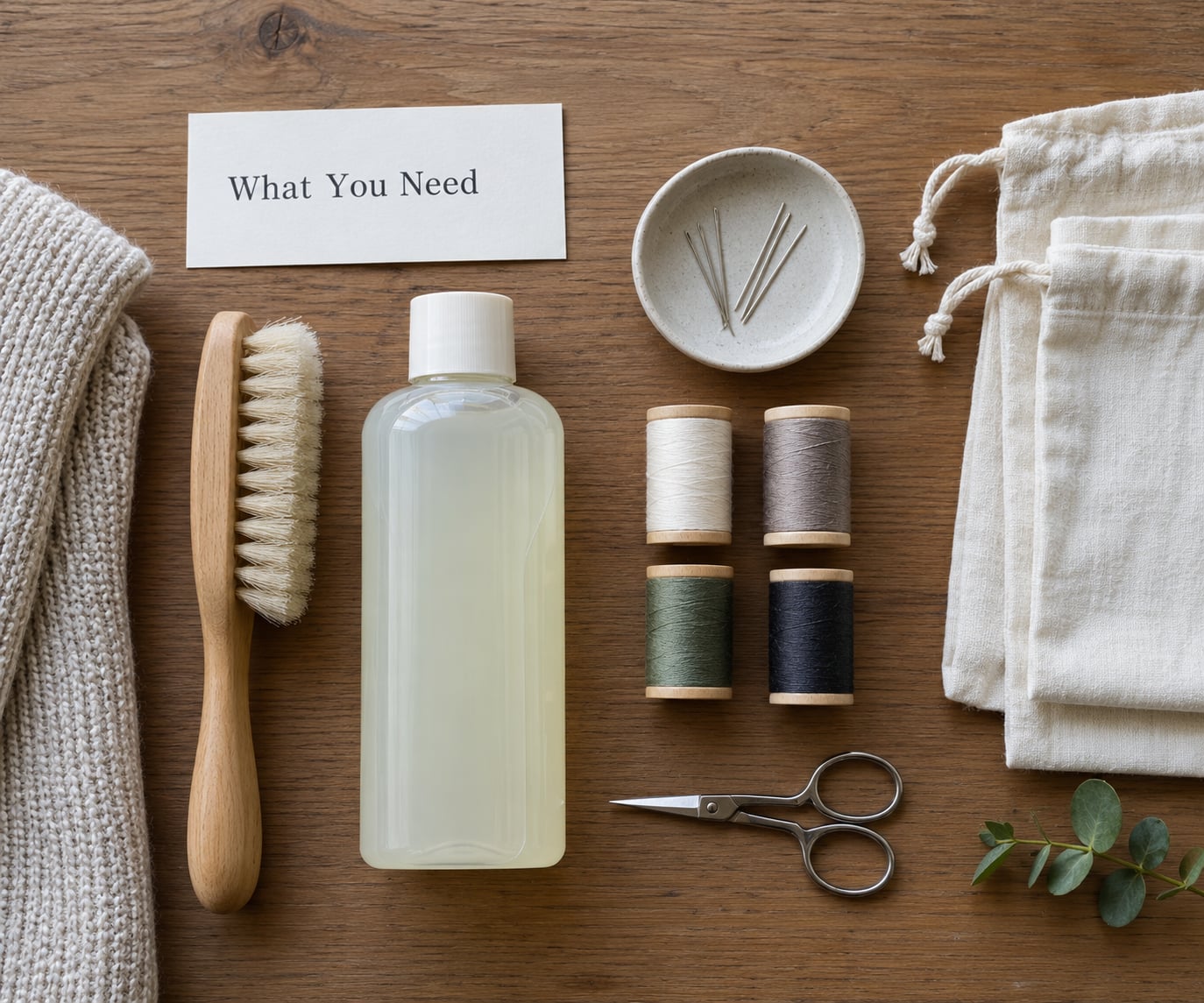
None of this needs a big budget. Most of it is a shoebox of odds and ends that most people already own and keep in a drawer.
Start with the information rather than the equipment:
- Your care labels. Read them once, properly, and note which of your regular pieces need cold water, a delicate cycle, no tumble or hand wash only. A phone photo of the label in the wardrobe is enough.
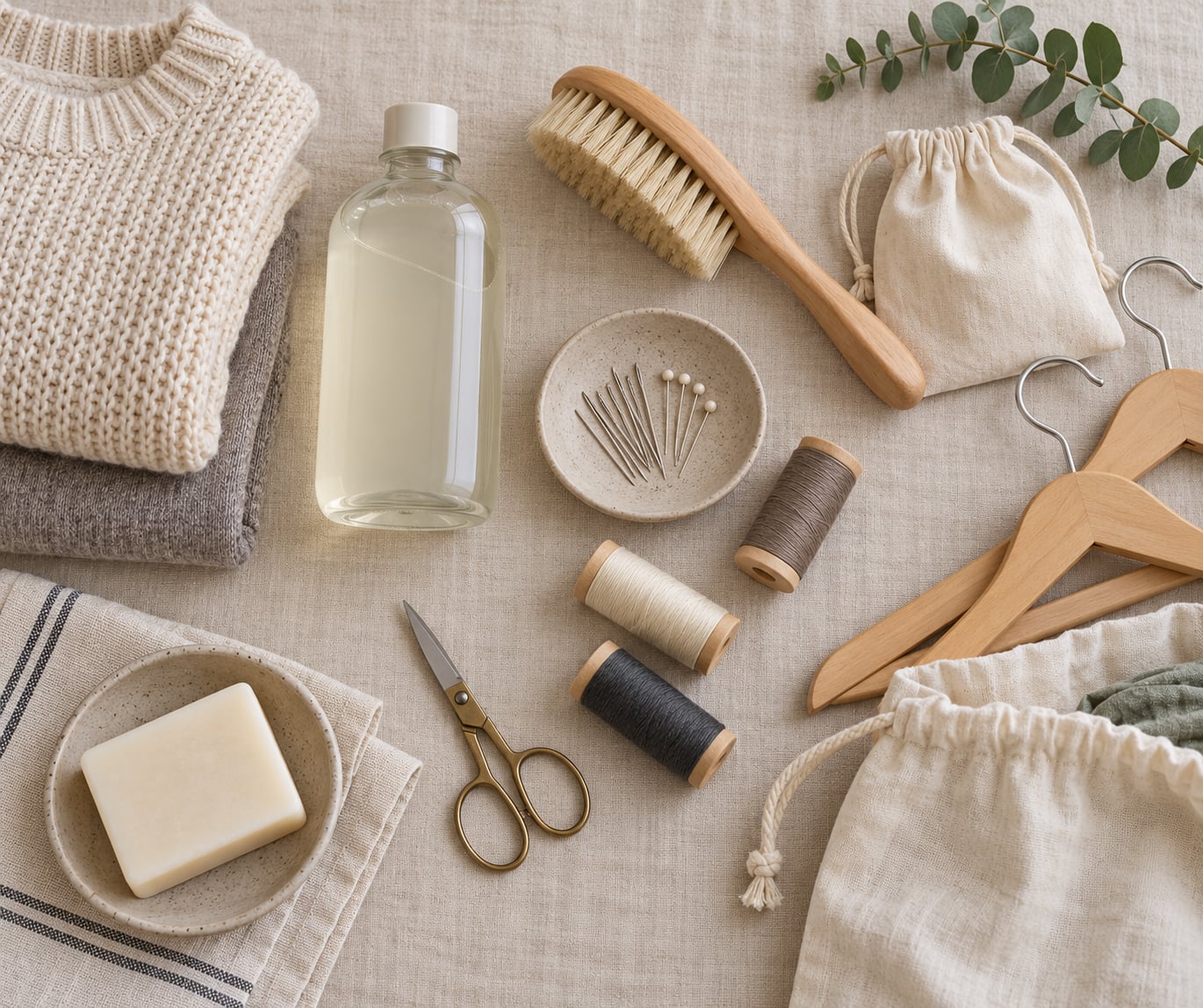
- A mild liquid detergent. Liquid dissolves fully and leaves no powder residue, which is one of the main causes of dull, stiff and brittle fabric over time. Skip anything heavily scented or with bleach.
- A soft-bristle brush or a lint roller for the pilling that appears on knitwear after a few wears.
- A sewing kit: needles in mixed sizes, polyester thread, a needle threader, sharp small scissors, a pincushion, and a small box of spare buttons in the sizes you actually lose.
- Repair supplies: iron-on interfacing, a couple of fabric patches, invisible zip, elastic by the metre, fusible hem tape, and a darning yarn or wool for socks.
- Storage materials: wide wooden or well-padded hangers, breathable cotton bags instead of plastic, acid-free tissue for anything you store for a season, and cedar blocks or lavender sachets for drawers.
- Mesh laundry bags for anything with a zip, a hook, a beaded detail or a stretch panel.
- A stain pen kept in the bag you carry, because a stain treated in ten minutes behaves very differently from one found the next morning.
- A simple care plan. A calendar reminder for a seasonal check of hangers, storage and mending is worth more than any single gadget.
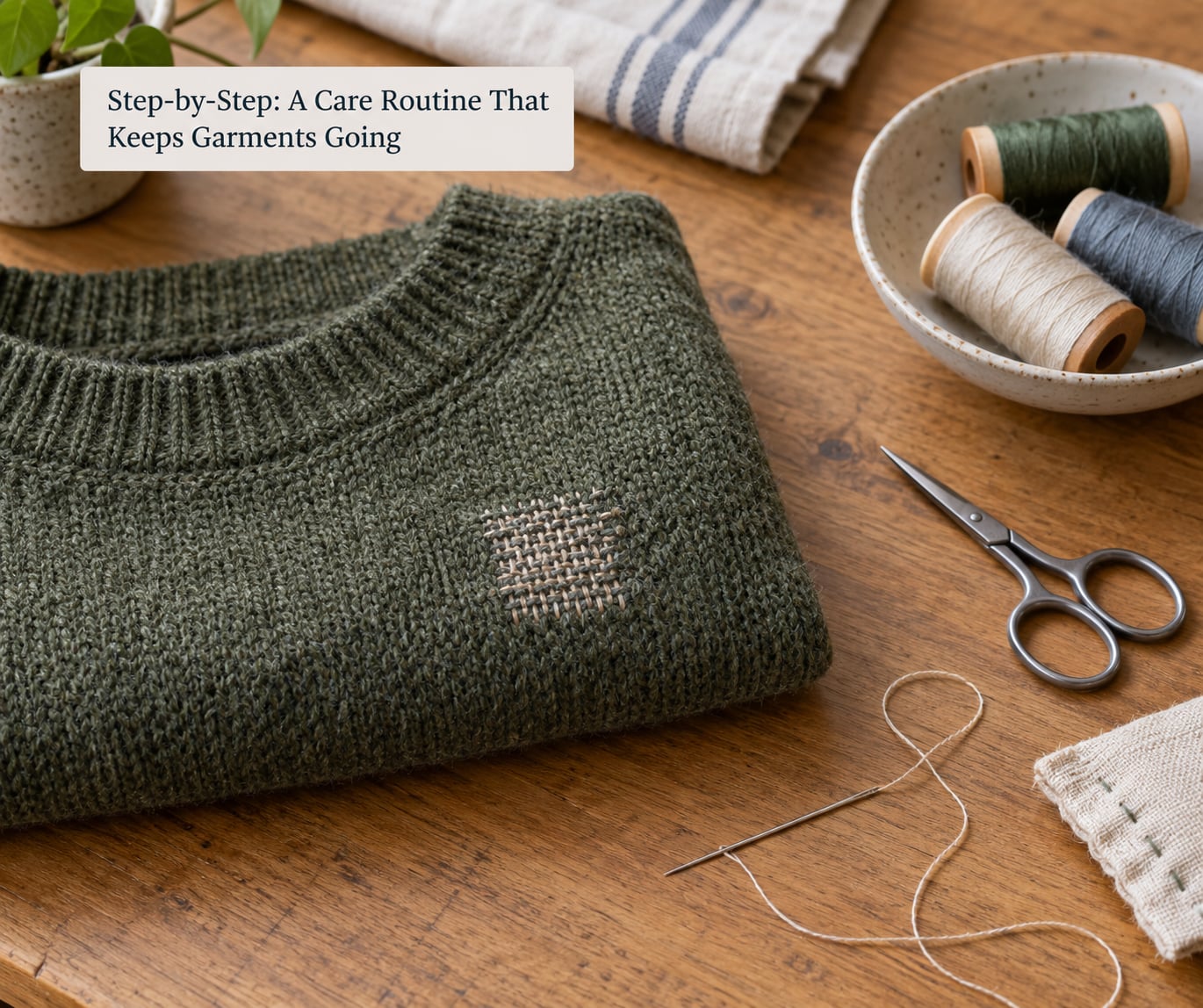
Step-by-Step: A Care Routine That Keeps Garments Going
How to Make Clothes Last Longer by Washing Them Correctly
Wash less than you think you need to. The most common habit worth changing is not the temperature, it is the frequency. Most people on the r/minimalism forum land on the same rule: wear an item at least three times before washing it, and rely on the sniff test rather than the calendar. A worn T-shirt or a pair of trousers does not need a wash after every outing.
Airing is enough for most of the gap. Hang a garment overnight near an open window, or hang it in the bathroom while you shower, and most of the smell leaves without detergent. A spray of vodka and water works on stubborn odours, and a splash of white vinegar in the rinse neutralises the rest.
When you do wash, work through this order. You know it worked when the load comes out smelling neutral, the colours look the same as they went in, and nothing feels stiff or scratchy.
- Empty the pockets and check the label. Pens leak, lip balm hardens in the fabric, and zippers snag other garments if left undone.
- Sort by fabric weight and colour. r/laundry regulars load jeans and chinos separately from cotton-heavy loads of socks and underwear, and keep darks away from lights. Colour bleeding is one of the fastest ways to ruin two good garments at once.
- Turn delicate pieces inside out so abrading seams and zips rub against themselves rather than the face of the fabric.
- Put anything structured in a mesh bag. Lace, silk, fine knits and anything with a zip or hook go in the bag.
- Choose cold or lukewarm water, 20 to 30C, on a gentle or delicate cycle. A normal cycle’s agitation is the single biggest source of friction wear, and it is why sturdy cotton and denim cope better than delicate viscose or silk.
- Measure the detergent. Use the minimum that does the job, and cut it further in soft-water areas. A two-thirds reduction is reasonable if your water is already soft. Excess detergent does not clean better; it deposits a film that makes fabric stiff and dull and, over time, brittle.
- Leave out fabric softener. It works by coating fibres in a film, which dulls wicking fabrics, holds onto odour and reduces the absorbency of towels and tees.
- Do not overfill the drum. Clothes need room to move. A packed load rubs against itself and stays wetter for longer.
- Treat stains the moment you see them. Blot, never rub, work from the outside of the mark inward, and give the detergent a few minutes before rinsing. Oil, sweat, wax, grass and blood all behave differently and all respond to speed.
Two pieces of maintenance that get skipped: clean the lint filter roughly monthly, and run the machine hot and empty when it starts smelling. Both are free and both affect every garment you own afterwards.
How to Dry Clothes Without Damaging Fibers
Drying is where a lot of the damage happens, and it is the one stage you can do entirely without heat. Air-drying is the single habit most often named as the biggest life-extender in wardrobe discussions, and the reasoning is simple: heat drives moisture out of fibres quickly, and fast water loss leaves fibres stiff, brittle and prone to shrinking.
Shake each item out while it is still damp and reshape it. Pull hems, cuffs and waistbands back to where they belong, smooth sleeves flat, and smooth collars. A garment that is reshaped damp dries into the right shape; the same garment dried crumpled in a basket keeps the crease.
Hang things away from direct sun, or turn them inside out. Ultraviolet light is the slowest and most permanent cause of fading, and it works on the dyes rather than the fibres, which is why a faded shirt is not repairable the way a torn seam is.
When the dryer really is the only option, use the lowest heat setting, a short cycle, and wool or dryer balls instead of dryer sheets, which leave a thin film that works against fabric over time. Skip the dryer entirely for wool, cashmere, silk and anything with elastic in it, and never tumble dry a garment that shrank once, because it will shrink further.
How to Fold and Store Clothes for Longer
Storage does two kinds of damage: it stretches things and it dampens things. Both are preventable with a few rules.
- Hang only what is designed to hang. Knits, especially sweaters and cardigans, stretch under their own weight. Fold them and shelve them, or file them in a drawer. Wire hangers are the enemy of structured jackets, a point that comes up constantly in r/malefashionadvice; wide wooden or padded hangers spread the weight and keep shoulders where they belong.
- Give the closet room. Crammed garments are crushed and permanently creased. Leave space between shoulders so air can move.
- Store in a cool, dry, ventilated room. Bathrooms and basements are the two places to avoid, because humidity brings mould and musty smells with it.
- Use breathable cotton, never plastic, for longer storage. Synthetic bags trap moisture against fabric and can go yellow over time.
- Clean before you store. Moths are attracted to body oil, sweat and food traces, not to wool itself. A garment worn once and put straight into a cedar-scented box is still a target.
- Use cedar blocks or lavender sachets for drawers, and check stored knitwear every few months. Many people lose a whole drawer to moth damage before they notice a single hole, because the damage starts at the base of the fibre and works outward.
- Wrap folded knits in acid-free tissue for seasonal storage, and refold them along different lines a few months apart so the same creases never set permanently.
- For musty smells or light mould, air the garment in daylight for a few hours, wash it as the label allows, and dry it completely in the sun. Never store or fold anything damp.
How to Repair Clothes Before Replacing Them
Mending is the part of this topic that almost every guide skips, and it is the part that most directly answers the second half of your question. A garment with one problem is a repair. A garment with several problems across the main seams and panels is a replacement decision, and the honest threshold matters.
Start with the jobs you can do in ten minutes:
- Missing button: pin the button through the buttonhole, thread the needle, and sew through the holes four or five times before knotting underneath. Duplicate the button onto the inside of the lining as a backup anchor.
- Small hole in a knit or sock: darn it. Pick a matching yarn, weave the threads across the hole in a loose lattice from the back, then trim the ends. On a sweater, place the patch or fusible behind the hole first so the darning is not the thing that wears out.
- Knee or elbow: iron the patch to the inside of the fabric, then stitch around the edges on the inside, so all the stitching is out of sight.
- Split seam: iron the seam flat, backstitch across the split, then stitch along the original seam line in matching thread.
- Elastic gone in a waistband: safety-pin the old elastic, open the seam, cut it out, thread new elastic through with a bodkin, resew the seam, and press.
- Pilling: remove it with a fabric comb, a pilling shaver or a hand-held razor on a flat surface, working slowly so you do not cut the base fibres.
Send it to someone else for set-in sleeves, structured tailoring, leather and suede, invisible zips, or anything where a bad attempt would be visible. Local sewing cafés, community repair events and alteration shops offer these at low cost, and a jeans hem or a trouser taper is quick work.
Decide with a simple rule. If the failure is one zip, one button or one tear and the rest of the garment is sound, repair. If two or more main seams have opened, the fabric is worn through to the point of being transparent, or the elastic and fabric have both failed, buying new is the more honest use of your money and your time.
How to Buy Less and Choose Clothes That Last
The cheapest garment is the one you already own. Before replacing anything, check whether the problem is repairable and whether the same item exists already in another form in your wardrobe. Repair or reuse first, shop second.
When you do need something new, judge it on construction rather than on the label. The useful checks are quick once you know them.
- Seams: look for stitching that is straight and dense, with no pulled threads or skipped stitches. Taped or overlocked seams at stress points such as armholes and crotch seams are a good sign.
- Buttons and fastenings: check whether they are stitched with a shank and a thread, and whether there are spares sewn into the inside seam.
- Fibre content and weight: a stated percentage matters more than a vague blend. Denim with a high cotton content and a weight on the label will outlast a thin stretch version every time.
- Care label detail: a garment with a real, washable label listing temperature and cycle is a garment someone expects you to own for years.
- Fit and shape: buy for the shape you want it to keep, and avoid garments that only look right once they have stretched to your body.
- Cost per wear: divide what you paid by the number of times you expect to wear it. A garment worn 150 times is a different purchase from one replaced after five, and the price tag alone does not tell you which one you are buying.
That last habit also covers the wardrobe audit. Once a season, pull everything out, group it by what you actually wear, and deal with the gaps rather than the pile. Most people find a handful of unworn items and a small list of genuine gaps, which is a better basis for buying than anything a shop suggests.
Common Mistakes and Their Fixes
Almost all early garment failures trace back to one of these:
- Washing on a schedule rather than by condition. Fix: wear it three times, sniff it, and only then wash.
- Hot water on everything. Fix: 20 to 30C unless the label says otherwise, and reserve hot loads for towels, bedding and underwear where a hotter wash is genuinely useful.
- Ignoring the care label. Fix: read it before the garment is in the drum, not after it has shrunk. It is the only instruction the maker gave you for that specific construction.
- Overfilling the machine. Fix: leave enough room for items to move, and run two smaller loads rather than one packed one.
- Skipping the mesh bag. Fix: anything with a zip, hook, lace or embellishment goes in a bag on the delicate cycle.
- Using too much detergent and fabric softener. Fix: dose to the label minimum, cut further in soft water, and drop the softener entirely.
- Storing clothes damp, or in a humid room. Fix: dry everything fully, keep storage in a cool ventilated space, and use cotton bags rather than plastic.
- Hanging knits and using wire hangers. Fix: fold knitwear and use wide wooden or padded hangers for everything that hangs.
- Leaving pills and loose threads until the hole exists. Fix: de-pill monthly and catch loose seams early, when a few stitches hold.
- Letting one garment absorb five years of use. Fix: repair it properly, or replace it once, rather than wearing a broken thing for a year out of guilt.
- Buying on impulse to solve a small problem. Fix: before you buy the new shirt, ask whether the old one needed a wash, a de-pill or a ten-minute repair.
Extra Tips for a Longer-Lasting Wardrobe
A few habits that cost nothing once they are set up:
- Give your wardrobe a weekly five minutes. De-pill a jumper, hang up things that drifted, and check for a loose button while you are at it.
- Rotate what you wear. Wearing the same five items in rotation gives everything else a rest, and it is a fast way to notice which pieces you never reach for.
- Reserve garment bags for special pieces. Everyday clothes stored in plastic covers collect moisture; use them for coats, suits and occasion wear only.
- Decide your repair threshold before you need it. Decide now that a single tear or failed button means a repair, and two failed main seams means a replacement. Making that call in advance stops both the guilt spiral and the false economy of a bad repair.
- Keep a spend-by-year note. Divide what you have spent on clothing by the number of items you still own and wear. It is the most honest measure of your buying habits, and it does not need an exact figure to be useful.
- Follow the end of life in order: repair first, then pass it on, then a brand or retailer take-back scheme, then textile recycling through your local council. A worn garment is not waste until it hits the last of those four.
Frequently Asked Questions
What is the 3-3-3 rule for clothes?
It is a community rule rather than an official standard. In the minimalism community it usually means wearing an item at least three times before washing it, and adding no more than one new garment every three months. The first half is the practical bit: fewer washes means less friction, less heat and less detergent on the fabric, which is the fastest route to longer-lasting clothes.
Does 100% cotton last longer than polyester?
In practice, cotton usually outlasts polyester in the garments people buy most, because cotton fibres are stronger in the wash and polyester breaks down under repeated agitation and heat, becoming thin and then holey. Polyester does have advantages: it dries fast, resists creasing and holds colour well. The smarter answer depends on the garment, not the label.
Does washing clothes make them weaker?
Not in itself. Washing on a gentle cycle with cold water and a small amount of mild detergent is gentle on fabric. What weakens clothes is the combination of high heat, heavy agitation, strong chemicals and drying while stiff. A garment washed warm once and air-dried flat will outlast the same garment washed hot on a normal cycle and tumbled every time.
Is it better to air dry everything or use a dryer on low?
Air-drying is better for garment life, and it is the single habit most often named as the biggest life-extender. When air drying is impractical, a low-heat tumble with dryer balls is a reasonable compromise, and cold or warm water plus a short low dry suits most everyday loads. Wool, cashmere, silk and anything with elastic should stay out of the dryer entirely.
Does vinegar stop clothes from fading?
No, and it is worth being clear about that. Vinegar helps neutralise odour and mild detergent residue, but fading comes from ultraviolet light and repeated washing that loosens surface dye, and vinegar does not stop either. To slow fading, wash less, wash cold, turn dark garments inside out, dry them out of direct sunlight and avoid harsh detergents.
How do I store clothes long term without wrinkles or musty smells?
Wash everything before storing it, because moths and smells follow body oils and sweat rather than the fibre. Fold knits, hang structured pieces on wide wooden or padded hangers, leave space between items, and use breathable cotton bags instead of plastic. Keep the storage room cool, dry and ventilated, and use acid-free tissue for anything you are putting away for a season.
If you do one thing this month, count how many times you washed an item you could have aired, then halve it. The next thing is to put a sewing kit somewhere you will actually use it and mend the next loose button. These habits are what make clothes last longer and avoid replacing them, and in 2026 they cost nothing at all.